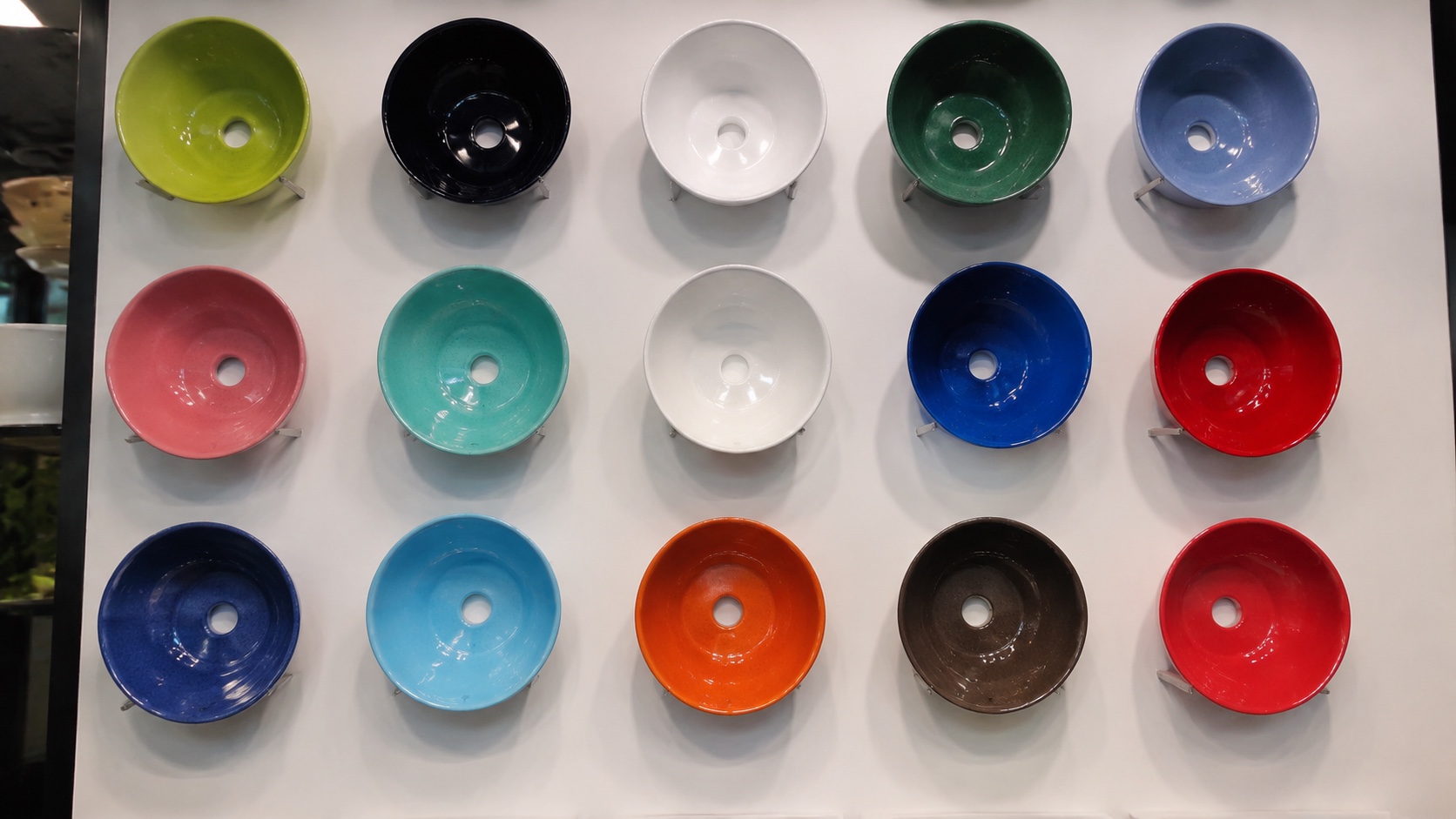
If you've renovated a bathroom recently — or simply wandered through a sanitaryware showroom — you've probably noticed a kind of ceramic washbasin that wasn't common a few years ago. It isn't a tidy circle or rectangle. It comes in all sorts of irregular shapes: some look like a seashell, some like a lotus leaf, some like a piece of naturally cut stone.
This kind of basin has a name. It's called an art basin.
This guide answers the questions buyers ask most: what exactly is an art basin, how it differs from a regular basin, which colours and finishes are available, how to choose one, and where it works best.
Key takeaways
- Beauty first, function second — an art basin is a ceramic washbasin whose sculptural, irregular shape is itself a decorative element, not just a place to wash.
- A genuine trend, not a fad — rising taste, social-media inspiration and the demand for individuality have pushed it into the mainstream.
- Made by slip casting — irregular forms can't be roller-formed; high-pressure casting and automated trimming have brought the price within reach.
- Colour and finish are the payoff — matte, glossy, textured and hand-painted glazes give an art basin its character; choosing depth, tap height and overflow correctly keeps it practical.
01 The definition
What is an art basin?
Let's start with a simple definition. An art basin is a ceramic washbasin whose shape isn't limited to the traditional round or square — one designed to be decorative, not just functional.
Conventional under-counter, above-counter and semi-recessed basins are all built around a single idea: usability. Regular shapes, standard dimensions, easy installation.
An art basin follows a different logic. It is beautiful first and useful second. Its form, its lines and its curves are themselves a decorative element — set in a bathroom, it reads more like a piece of art.
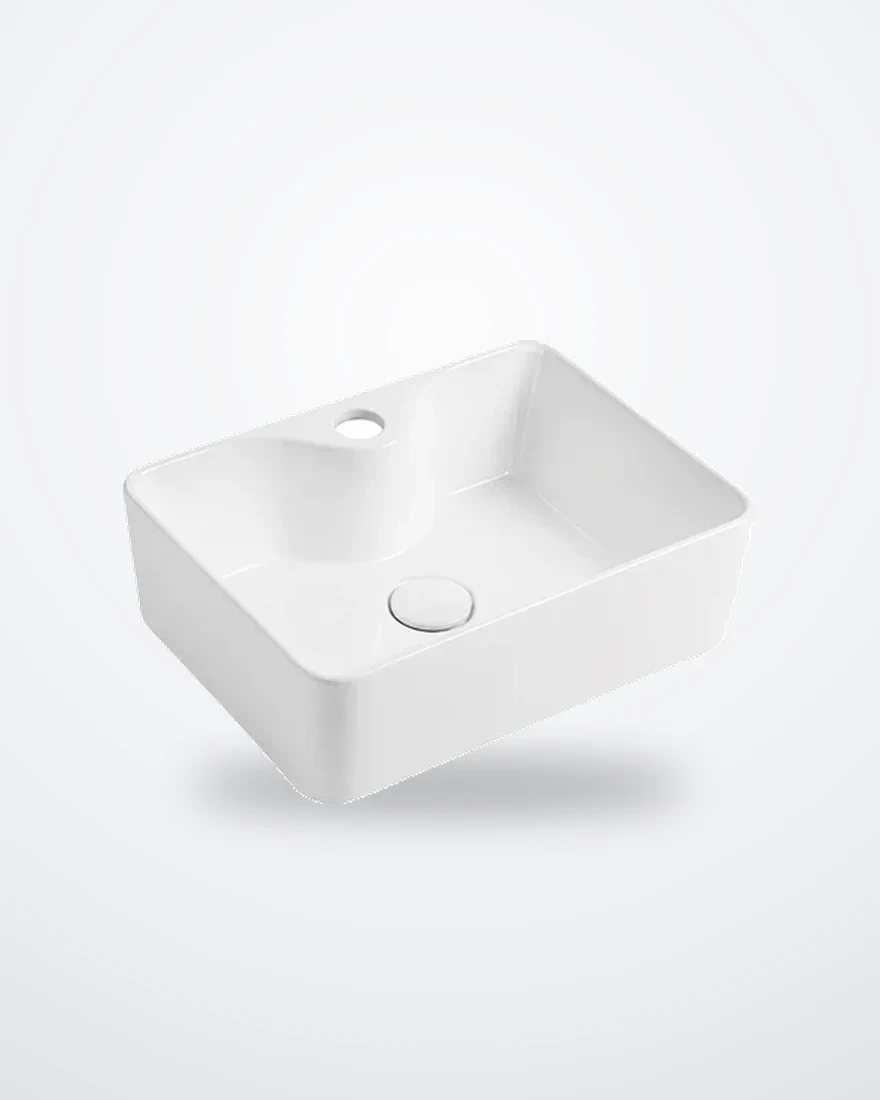
An example: a traditional above-counter basin is round and bowl-shaped, neat and orderly. An art basin might be an asymmetric oval, a wavy lotus-leaf rim, or a geometric form with a raised, textured surface.
02 The trend
Why are more people choosing art basins?
The trend comes down to four reasons.
Rising aesthetic standards
People renovating a bathroom used to care mainly about whether a basin worked and how long it would last. That has changed. The bathroom is no longer just a place to wash up — it has become an important private space in the home, and plenty of buyers are now willing to spend time and money making it look good. The art basin fits that demand perfectly: it keeps the bathroom from looking like everyone else's.
Picture it: a plain white basin next to one with curves, texture and the presence of a small sculpture, both set in the same bathroom. The whole space moves up a class.
Social media inspiration
Search "bathroom design" or "bathroom renovation" on TikTok, Facebook, Instagram or Pinterest, and you'll notice something: the most-liked rooms feature art basins more and more often.
That's because the art basin is so photogenic. Its irregular form and distinctive glaze look great on camera. People see someone else's bathroom photo, fall for it, and go looking for a similar basin when it's their turn to renovate.
A stronger demand for individuality
Younger buyers don't want their home to look like the one next door.
Renovations used to be uniform — the neighbors all used much the same basin. Not anymore. People want a style that's genuinely their own. Because art basins vary so widely, you can find one that truly matches your taste and is unlikely to show up in anyone else's home — something an ordinary basin simply can't offer.
Advances in ceramic technology
The fact that art basins can be made at all comes down to progress in ceramic forming.
Traditional round and square basins can be mass-produced by roller forming — low cost, high efficiency. But an art basin's irregular shape can't be roller-formed. It has to be slip-cast: liquid clay slurry is poured into a plaster mold and the body is removed once it sets.
Slip casting once relied heavily on manual labor, with low output and high reject rates, which is why art basins used to be expensive. With high-pressure casting and automated trimming, production costs have come down, and the art basin has gone from a luxury item to something within reach.
An art basin is, put simply, a basin that doesn't look like an ordinary basin. Its rise is no accident — rising taste, social-media inspiration, the demand for individuality and better manufacturing have come together, and more people are willing to spend a little extra.
03 The comparison
Art basin vs regular basin
The clearest way to understand an art basin is to place it next to a regular one. A standard washbasin is engineered for predictable installation and everyday use; an art basin is engineered to be seen. They share the same ceramic body and the same slip, but almost every decision after that is different — shape, glaze, mounting and price. The table below sums up how the two compare for a buyer specifying a bathroom.
How the two compare
| Aspect | Regular basin | Art basin |
|---|---|---|
| Design priority | Function first — usable, familiar | Appearance first — decorative statement |
| Shape | Round, oval or rectangular, standardised | Irregular, sculptural, often asymmetric |
| Colour & finish | Mostly white gloss | Colours, matte, textured, hand-painted glazes |
| Forming | Roller-formed, high volume, low cost | Slip-cast, more labour per piece |
| Mounting | Under-counter, drop-in, semi-recessed | Usually above-counter (countertop art basin) |
| Typical use | Everyday family and utility bathrooms | Powder rooms, feature vanities, hospitality |
| Price | Lower, commodity pricing | Higher, but far more attainable than before |
Neither is "better" in the abstract — they answer different briefs. A busy family bathroom with two children is usually better served by a hard-wearing regular basin, while a guest powder room or a boutique-hotel vanity is exactly where an art basin earns its place. Many projects use both: regular basins where they are used hardest, and an art basin where guests will notice it.
04 Colours & finishes
Colours, glazes and finishes
Colour and surface are where an art basin does most of its work. Because the piece is slip-cast and glazed by hand rather than run through a high-speed line, the glaze options open up well beyond the plain white of a commodity basin. This is also the detail that most often decides a purchase, so it is worth knowing the main families before you specify.
Colours and coloured glaze
A coloured ceramic basin — deep green, matte black, terracotta, sand, grey or a soft off-white — is the fastest way to give a vanity a designed look. Colour is fired into the glaze rather than painted on top, so it does not wear off with use. Muted, earthy tones tend to date more slowly than bright primaries, which matters for hospitality and rental projects.
Matte vs glossy
A glossy glaze reflects light, reads as clean and modern, and wipes down easily. A matte glaze is softer and more contemporary but shows water spots and fingerprints a little more, so it suits lower-traffic bathrooms. Many ranges offer the same shape in both, which lets a buyer match an existing tap and hardware finish.
Textured and relief surfaces
Some art basins carry a raised pattern, fluted ribs or a stone-like texture pressed into the body during casting. These catch light beautifully and photograph well, but the recesses need a little more attention when cleaning — a trade-off worth flagging to end customers.
Hand-painted and marbled effects
At the top of the range, glazes are applied to imitate marble veining, ink-wash gradients or reactive crackle effects. Because each piece is finished individually, no two are identical — part of the appeal, but also a reason to agree tolerances and reference samples before a bulk order.
05 The buyer's checklist
How to choose an art basin
An art basin only looks good if it also works. Most complaints trace back to a handful of measurements that were skipped at the specification stage, so run through these before you commit to a shape.
Basin depth. Shallow sculptural bowls splash more. For a basin used every day, aim for enough internal depth to contain the water; save the very shallow, dramatic forms for a powder room that sees light use.
Tap height and reach. Above-counter art basins sit high on the countertop, so a standard deck tap is often too short. Pair the basin with a tall vessel tap or a wall-mounted spout, and check the spout clears the rim and reaches the drain area.
Overflow or no overflow. Many art basins have no overflow hole, which keeps the form clean but means you must use a matching slotted-free waste. Confirm the waste type before ordering so the basin and drain match.
Size against the vanity. Irregular shapes still need a footprint that fits the countertop with room for a tap behind and a little clearance at the front. Ask the supplier for the true outer dimensions and the drain position, not just the nominal size.
Glaze and colour in context. View colour samples under the room's real lighting, and match the basin finish to the tap and hardware. For projects, order a reference sample and agree colour tolerance in writing.
For a fuller breakdown of the trade-offs — the downsides, who an art basin suits and does not, and three practical buying tips — see our art basin buying guide. If you are unsure how it compares with other mounting styles, our note on above-counter vs under-counter vs drop-in basins is a useful companion.
06 Where it fits
Where an art basin works best
An art basin rewards the spaces where people slow down and look. A guest powder room is the classic home: light use, high visibility, and a single striking basin can carry the whole room. On a feature vanity in a main bathroom, an art basin lifts an otherwise standard fit-out, provided the shape is deep enough for daily use.
In hospitality and commercial projects — boutique hotels, restaurants, showrooms and retail — an art basin is a low-cost way to signal quality to guests, which is why it appears so often in design-led interiors. It suits renovations where the owner wants individuality, and it is a natural fit for brand owners building a designer bathroom basin range. Where it is a poor fit is the high-traffic family or utility bathroom, where a hard-wearing regular basin with an overflow is the sensible choice.
07 Questions buyers ask
Art basin FAQ
What is an art basin?
An art basin is a ceramic wash basin whose shape is not limited to the traditional round or square — it is designed to be decorative as much as functional. Its sculptural form, colour and glaze act as a decorative element in the bathroom, so it reads more like a piece of art than a plain fixture.
What is the difference between an art basin and a regular basin?
A regular basin is built around usability — regular shapes, standard dimensions and easy installation. An art basin is beautiful first and useful second; it is usually above-counter, comes in more colours and finishes, and is slip-cast rather than roller-formed, which is why it costs more.
Why is an art basin more expensive?
Its irregular shape cannot be roller-formed, so it has to be slip-cast — clay slurry poured into a plaster mould and the body removed once it sets. Slip casting is more labour-intensive with higher reject rates, though high-pressure casting and automated trimming have brought costs down significantly.
Are coloured art basins hard to keep clean?
The colour is fired into the glaze, so it does not fade or wear off, and a glazed surface wipes clean like any ceramic. Matte and textured finishes show water spots and need a little more attention than a glossy glaze, which is worth mentioning to end customers.
Do art basins have an overflow?
Many do not, because an overflow hole would interrupt the clean form. In that case you pair the basin with a slotted-free (non-overflow) waste. Always confirm the waste type before ordering so the basin and drain match.
Can an art basin be made in a custom colour or shape (OEM/ODM)?
Yes. Because each piece is slip-cast and glazed individually, shapes, colours and finishes can be developed to a buyer's brief. Share your reference shapes, target colours and volumes, and we can slip-cast samples before a bulk order.
An art basin is a basin that doesn't look like a basin — and for the right room, that is exactly the point.