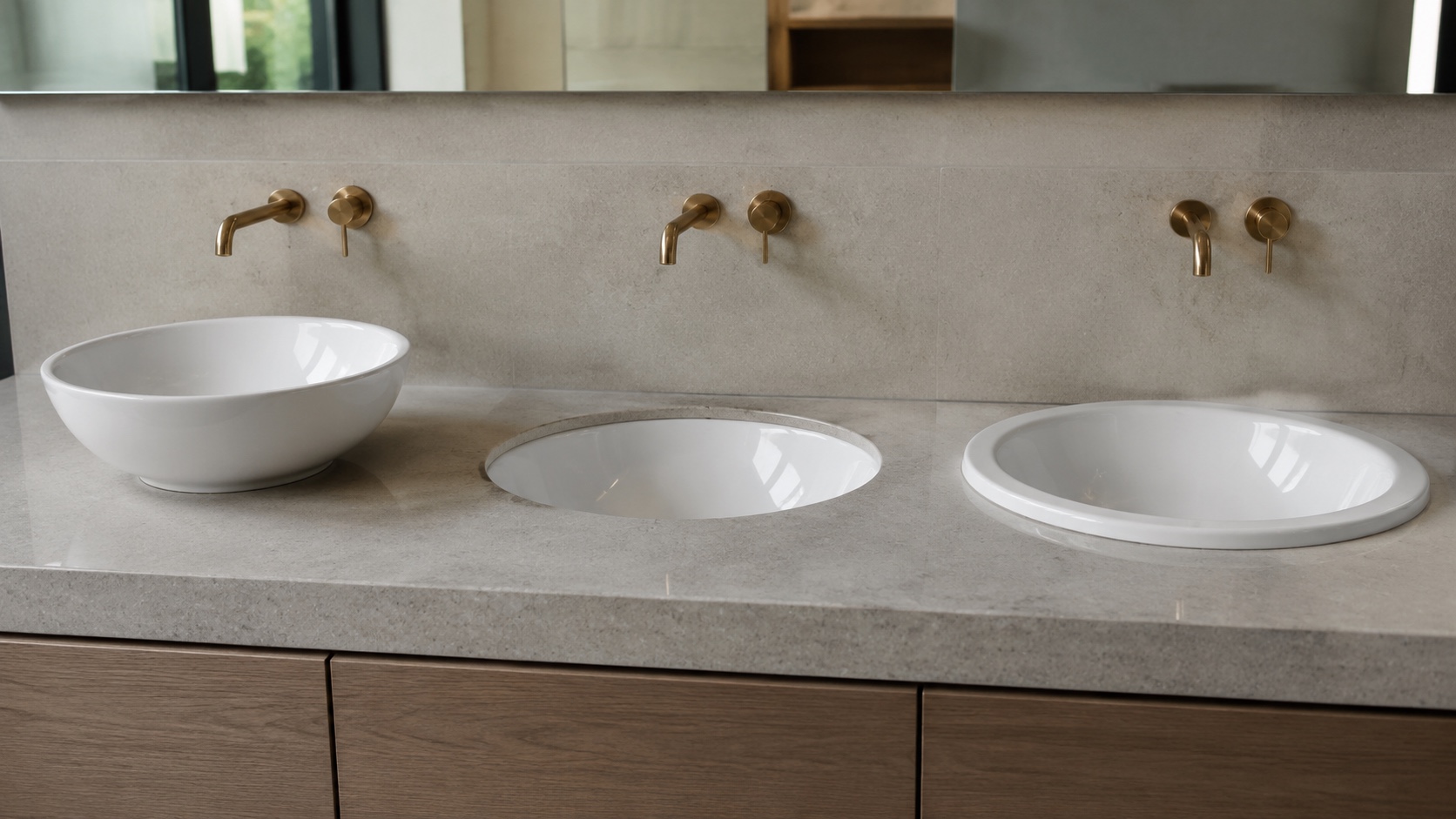
Guangdong Chengda Intelligent Technology is a specialist ceramic washbasin and counter-sink manufacturer, supplying high-quality bathroom products to customers in more than 50 countries. In our day-to-day sourcing and installation conversations, the difference between the three main types of bathroom sink — above-counter, under-counter (undermount) and drop-in — is one of the questions we are asked most often. This guide uses a single cross-section to make the core difference clear, then walks through the pros and cons of each and how to choose the right basin for your countertop.
Key takeaways
- Above-counter — the rim rests on top of the worktop. The simplest to install, and the countertop carries the load.
- Under-counter — the rim is hidden below the surface, so water and crumbs wipe straight into the bowl. Needs clips and strong adhesive.
- Drop-in (flush) — the rim sits level with the worktop for a seamless top. The most precise machining of the three.
01 Rim above the worktop
Above-counter basin
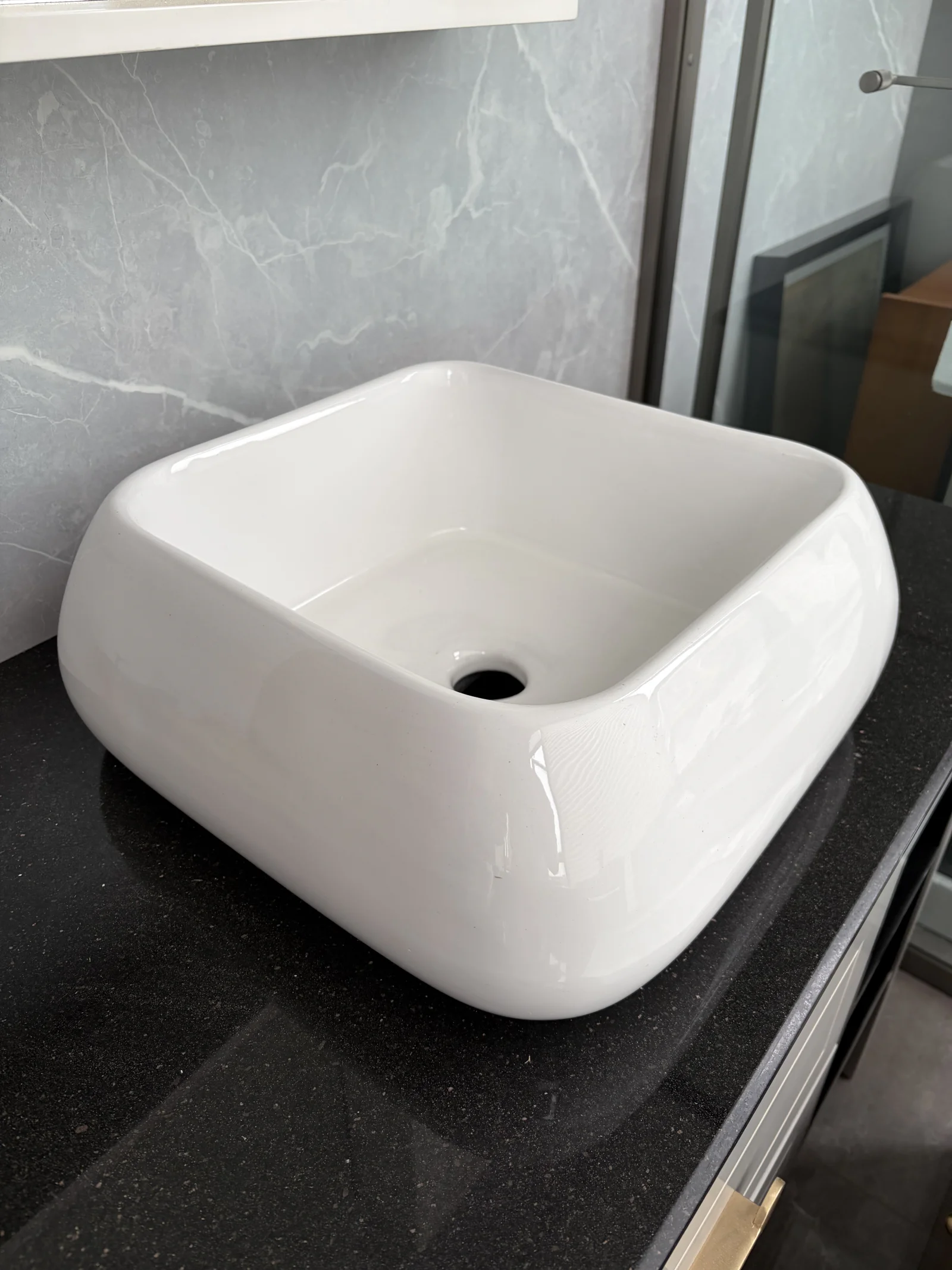
The rim of the bowl rests directly on top of the cut-out in the countertop, so once installed the whole mouth of the basin sits above the surface. Seen from the side, the rim looks like a raised brim sitting on the counter, with a visible seam where basin and worktop meet. Installation is simple: cut an opening in the countertop to match the basin's mouth, drop the bowl into the hole, and run a bead of silicone or sealant along the seam between the rim and the counter. Because the bowl rests on the worktop, the full load is carried by the countertop itself, which makes for a stable, solid structure. Many bathroom pedestal basins, and a good number of kitchen art basins, are installed this way.
Pros and cons. An above-counter basin — also called a countertop or vessel basin — is the most forgiving of the three to fit and to replace, which is why it dominates hotel refurbishments and fast retail rollouts. The raised bowl becomes a design feature and pairs well with an art basin in a matte or coloured glaze. The trade-offs are practical: the exposed silicone seam needs occasional re-sealing, the higher rim raises the effective tap height so the faucet and waste must be specified to match, and splashes can pool on the surrounding worktop. For most buyers it is the lowest-cost, lowest-risk mount to install across many rooms.
02 Rim below the worktop
Under-counter basin
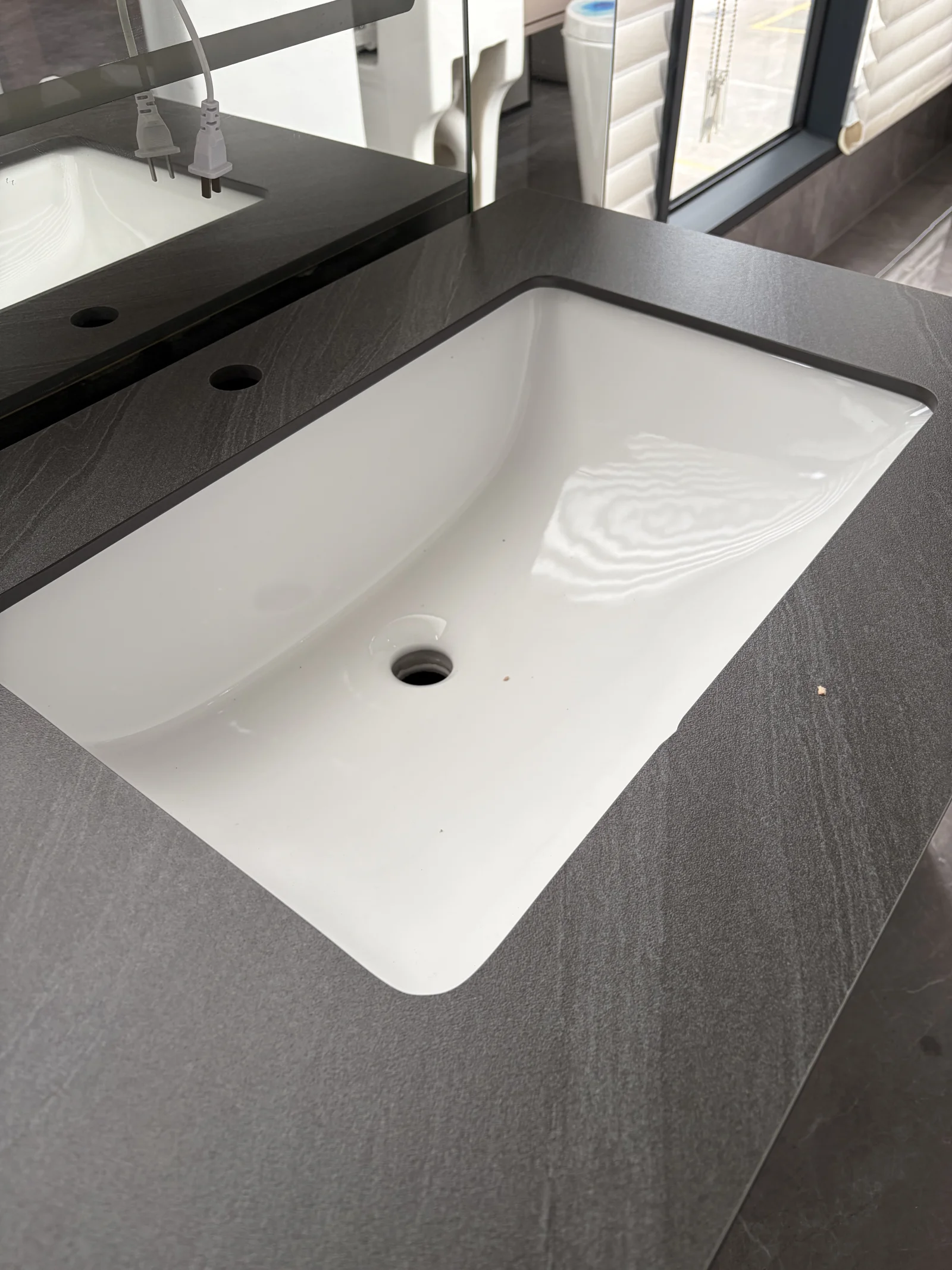
The bowl is mounted beneath the cut-out, with the rim fixed to the underside of the countertop using dedicated brackets and adhesive. Once finished, the countertop completely covers the rim — you cannot see the edge of the basin from above, and the bowl sits entirely below the surface. Installation is more demanding: the bowl is first secured to the underside of the counter, then reinforced with purpose-made clips and a strong adhesive, so the workmanship really matters. The reward is a clean worktop — water and crumbs on the surface can be swept straight into the bowl by hand or with a cloth, leaving the counter neat and tidy.
Pros and cons. Because nothing interrupts the worktop, an undermount (under-counter) basin reads as the most premium of the three and is the default in stone and solid-surface vanities. In exchange you pay for it in fabrication. The countertop has to be a waterproof material — natural stone, quartz or solid surface, not laminate — the cut-out edge is polished, and the mounting clips and epoxy must be rated for the filled weight of a ceramic bowl. Replacement later means detaching the basin from underneath, so plan the plumbing access. This is the mount to choose when a seamless, wipe-clean surface matters more than install speed or cost.
03 Rim flush with the worktop
Drop-in basin
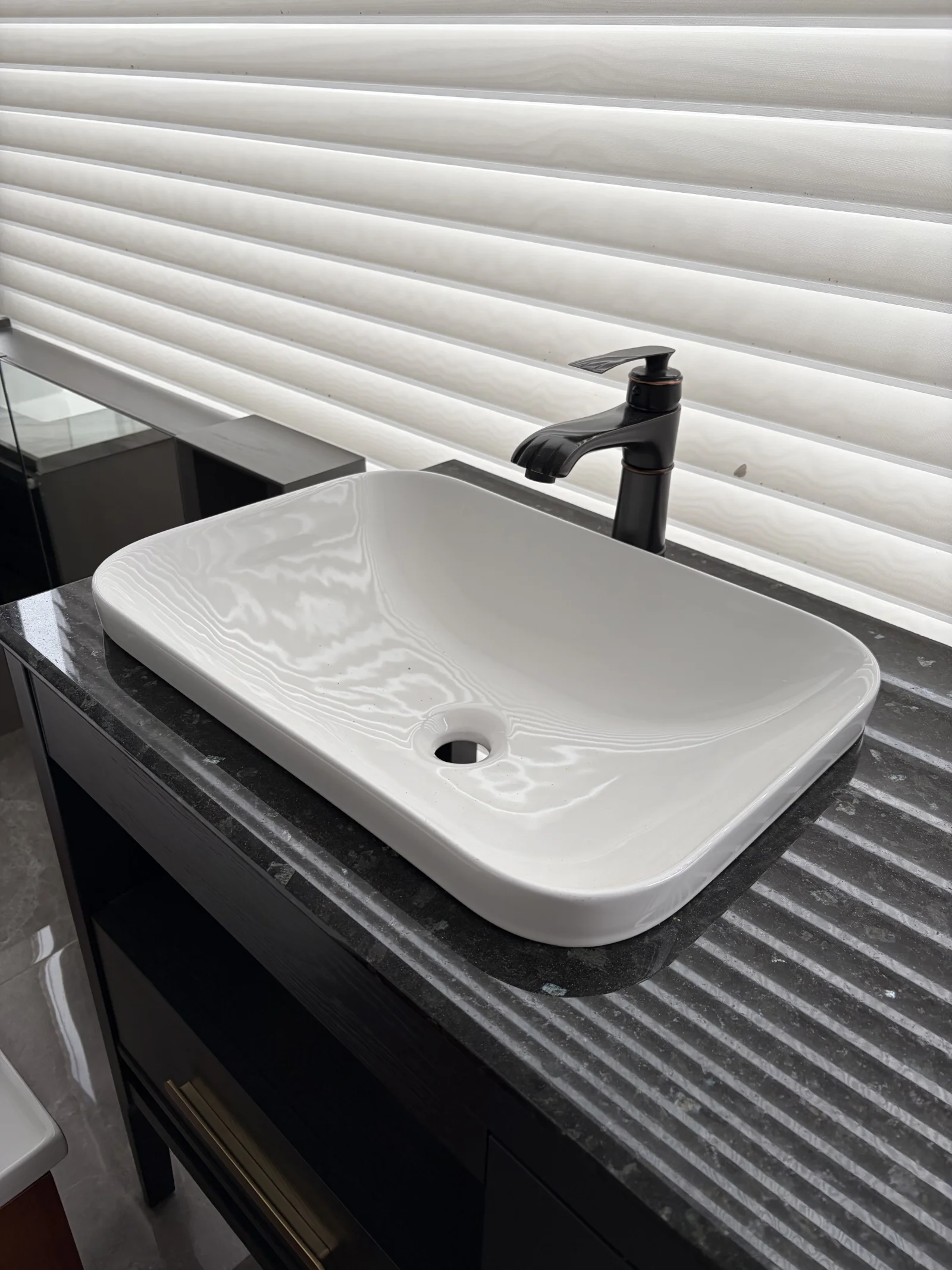
Also known as a flush-mounted basin. During installation, a layer is ground away around the edge of the cut-out to the thickness of the basin rim, creating a recessed step. The rim drops into that step so that it sits on exactly the same plane as the countertop. The finished rim neither rises above nor sits below the surface — the two are perfectly flush. This method calls for precise grinding of the countertop, with high demands on cut-out accuracy and grinding depth, and usually requires professional machining equipment.
Pros and cons. A flush or fitted basin gives much of the seamless look of an undermount while keeping the rim visible and fully supported, which many buyers prefer for durability. The difference between a drop-in and an undermount sink comes down to that rim: drop-in sits level and supported on a machined step, undermount hangs below and hidden. Done well, the join is barely detectable and the surface stays easy to wipe. The catch is tolerance — the recessed step must be ground to the exact rim thickness, so the basin and countertop have to be matched with tight accuracy in the workshop or on site. Note that a drop-in basin here means the rim finishes flush with the worktop; in some markets "drop-in" also describes a self-rimming basin whose rim overlaps the counter, so confirm terms on a drawing before ordering.
04 Decision guide
How to choose the right basin
The right mount usually comes down to three things: the countertop material, the look you want, and who installs it. Start with the worktop. Laminate and timber tops reliably take only an above-counter or drop-in basin, because an undermount exposes the raw cut edge to standing water. Stone, quartz and solid surface accept all three. This single factor decides the countertop basin vs undermount question for most bathrooms before style even enters the picture.
Then weigh finish against maintenance and budget. An undermount gives the cleanest surface but the highest fabrication cost; an above-counter is the quickest and lowest-cost to fit and to swap; a drop-in sits in between, offering a near-seamless top with a supported rim. Match the hardware too — rim height changes the tap and waste you need, and whether the faucet is deck-mounted or wall-mounted depends on the mount you pick. For project buyers, throughput matters: above-counter basins ship and install fastest across many rooms, which counts on a hotel floor plan, while undermounts suit a smaller run of premium vanities.
Standard bathroom basins run roughly 400–600 mm wide, but always confirm the cut-out template against the specific model before the countertop is cut — a few millimetres decide whether the rim seats correctly. Whichever type you choose, a well-fired vitreous china body resists staining and crazing across all three mounts; why we fire at 1,250 °C explains why the body density behind that matters for a basin that stays white for years.
05 Recap
The difference in one line
To finish, picture a single cross-section: the rim of an above-counter basin sits above the worktop, the rim of an under-counter basin sits below it, and the rim of a drop-in basin is flush with it. The essential difference between the three comes down to one thing — the relative height of the rim against the countertop.
The three basins at a glance
| Type | Rim position | Install difficulty | Worktop cleaning | Load path |
|---|---|---|---|---|
| Above-counter | Above the worktop | Low | Visible seam | Carried by worktop |
| Under-counter | Below the worktop | High | Crumbs sweep into bowl | Clips + strong adhesive |
| Drop-in | Flush with worktop | Highest | No visible seam | Supported by recessed step |
06 FAQ
Bathroom basin types: frequently asked questions
Which is better, an above-counter or an undermount basin?
Neither is universally better — it depends on your countertop and priorities. An undermount gives a seamless, wipe-clean surface and a premium look, but needs a waterproof stone or solid-surface top and skilled fabrication. An above-counter basin is faster and lower-cost to install and easy to replace, at the cost of a visible seam and a higher effective tap height. For high-volume projects, above-counter usually wins on speed; for premium vanities, undermount usually wins on finish.
Can you put an undermount basin in a laminate countertop?
It is not recommended. Undermount mounting leaves the cut edge of the worktop exposed to standing water, and laminate or timber cores swell and delaminate over time. Undermount basins belong in natural stone, quartz or solid surface. On a laminate top, choose an above-counter or a self-rimming drop-in basin instead.
What is the difference between a drop-in and an undermount sink?
The rim position. A drop-in (flush-fitted) basin sits level with the worktop, supported on a machined recess, with the rim still visible. An undermount hangs below the surface and is completely hidden, so the counter can be wiped straight into the bowl. Undermount looks cleaner but costs more to fabricate; drop-in is easier to align and keeps a supported, durable rim.
Is a drop-in basin the same as a flush-mount basin?
In this guide, yes — we use "drop-in" to mean a basin ground flush into the countertop. Terminology varies by market: in some regions "drop-in" also refers to a self-rimming basin whose rim overlaps the top of the counter. Because the words overlap, always confirm the intended profile on a dimensioned drawing before you place an order.
What countertop cut-out size do I need for a basin?
It is set by the specific model, not by the type. Bathroom basins commonly fall in the 400–600 mm width range, but the cut-out and, for drop-in and undermount, the grinding depth must follow the manufacturer's template exactly. Ask your supplier for the cut-out drawing for the chosen basin before the countertop is cut.