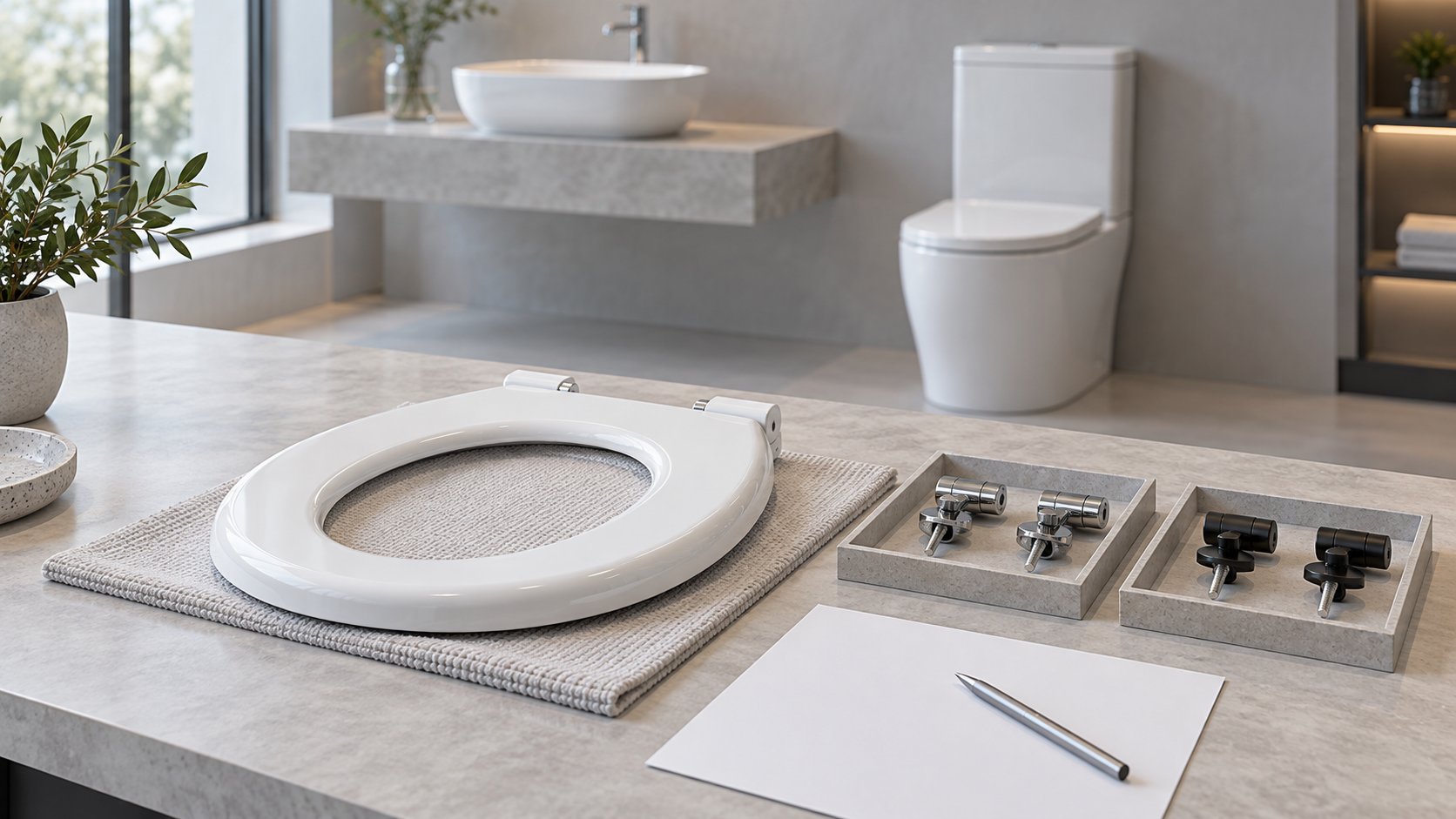
A supplier says the approved valve is unavailable and offers an alternative. The ceramic looks unchanged, the price is similar, and the shipment is approaching. Treat this as a new decision about the supplied combination: identify the proposed difference, check what it affects, then record whether that specific change is accepted.
The workflow below is a practical purchasing method. It gives the buyer, factory and inspector one shared record, with a worked fictional example and a blank form. Agree responsibilities in the order; the form itself is not a test report or product certification.
01 BATHROOM KNOW-HOW
Identify exactly what was approved
Start with the signed sample record, drawing revision and included-parts list. Identify the ceramic model and the actual valve, seat, waste, connector or fixing kit involved. A sample photograph is useful, but a hidden component may have no readable identity in that view. Ask for its part code and supplier information.
SGS explains that an approved reference sample helps compare a production batch with the ordered product. Keep that reference intact while reviewing the proposed alternative. Our bathroom-fixture sourcing guide covers the earlier stage of approving the complete supply package.
02 BATHROOM KNOW-HOW
Replace “equivalent” with a specific change description
Put the original and proposed identifiers beside each other. Record the reason for the change, affected quantity, intended production lots and whether any units already contain the alternative. Separate a proposal from a change already made; the latter needs stock identification as well as a purchasing decision.
Ask which interfaces, operation, appearance, service parts, instructions and packaging differ. For a valve, a similar-looking body does not establish the same connections or operation in the assembled toilet. Geberit's compatibility information describes named valves and cistern arrangements. That is a useful example of specific compatibility evidence, not proof that an unnamed substitute will fit.
03 BATHROOM KNOW-HOW
Ask for evidence of the affected relationship
Match the review to the change. A different seat needs the relevant fit, support, movement and hardware checks on the intended pan. A different waste needs its interfaces and installed drainage arrangement reviewed. A changed carton insert needs a packing review. Do not turn a photograph of an isolated part into approval of the finished assembly.
List the comparison, trial or document review required, who will perform it and the agreed acceptance criteria. Record the actual result against each item; leave unperformed work pending. If the change may affect a declaration, listing or destination requirement, ask the responsible manufacturer or assessment body to review the exact scope before making a compliance claim.
Identify the part before collecting evidence. Kohler's support workflow uses a product model to find diagrams with part names and numbers. Apply that identification discipline to your supplier's records rather than selecting a component solely because its photograph resembles the old one.
04 BATHROOM KNOW-HOW
Worked example: a valve substitution remains on hold
The following is entirely fictional. The codes, order and status illustrate a purchasing record; they are not Chengda products, test results or a real customer case.
Example order EX-01 specifies toilet assembly DEMO-PAN with valve DEMO-A, linked to sample record EX-SAMPLE-01. The supplier proposes DEMO-B because DEMO-A's delivery date has changed. Both valves appear in the same photograph, but no written compatibility statement or assembled trial record has been supplied.
The buyer records: proposed change pending; DEMO-B not released for this order. The next evidence is an identified comparison, the manufacturer's installation information and the agreed complete-assembly checks. The supplier must identify any already-substituted stock separately. Price and delivery discussions continue, but they do not close the technical questions.
If satisfactory evidence later arrives, the buyer records its references, the authorised quantity and production scope, and the approver's decision date. If it does not arrive, the pending status remains. This example demonstrates the decision sequence without inventing a successful test.
05 BATHROOM KNOW-HOW
Copy this blank change-request record
Use one record for one clearly defined change. Enter document names and revisions so another person can retrieve the evidence. A blank field means information is missing, not that the item passed.
| Field | Complete for this change |
|---|---|
| Reference and scope | Request ID: ___; order: ___; model: ___; affected quantity/lots: ___ |
| Approved baseline | Sample record: ___; original part/revision: ___; drawing/list revision: ___ |
| Proposed alternative | Part/revision/supplier: ___; reason: ___; already used in production? ___ |
| Affected relationships | Fit/function/appearance/service/packing/documents: ___; unknowns: ___ |
| Evidence and criteria | Required check: ___; agreed criterion: ___; responsible person: ___; evidence/result: ___ |
| Decision and release | Pending/approved for stated scope/rejected: ___; approver/date: ___; conditions and quantity: ___ |
| Record and stock updates | Updated parts list/sample/inspection file: ___; old/new stock identification: ___; recipients: ___ |
06 BATHROOM KNOW-HOW
Make the decision visible to production and inspection
After approval, update the parts list, sample reference, relevant instructions and inspection file together. State whether the decision applies to this order, a named lot or future orders. Do not let a one-order concession become an undocumented permanent replacement. Keep the previous revision available for identifying earlier deliveries.
Send the released record to purchasing, production, inspection and the receiving or maintenance team. Ask how cartons and records will distinguish the two combinations if both remain in circulation. The pre-shipment inspection guide provides the wider shipment checks; inspectors also need the correct approved revision for the goods in front of them.
For repeat or customised supply, include this decision trail in the OEM/ODM project file. When a later order is placed, refer to the approved combination explicitly. A tidy change record answers a practical question months later: which version did we actually buy, and what evidence supported it?
Official references
FAQ COMMON QUESTIONS
Frequently asked questions
Is the substitute approved if its dimensions match?
Matching dimensions answer only part of the question. Review the affected operation, interfaces, instructions and other agreed requirements before approving the identified combination.
Must every component change repeat every original test?
Do not assume one universal test package. Have the responsible parties define the review from what changes and the applicable requirements, and record why each check is needed or not applicable.
Can a delivery-date agreement count as component approval?
Keep the decisions explicit. Record the accepted component, evidence, quantity and production scope separately from the commercial delivery discussion.
What if the change is discovered during inspection?
Record the actual identifiers and affected stock, compare them with the approved record, and obtain a disposition decision before treating that combination as released.
NEXT · RELATED READING