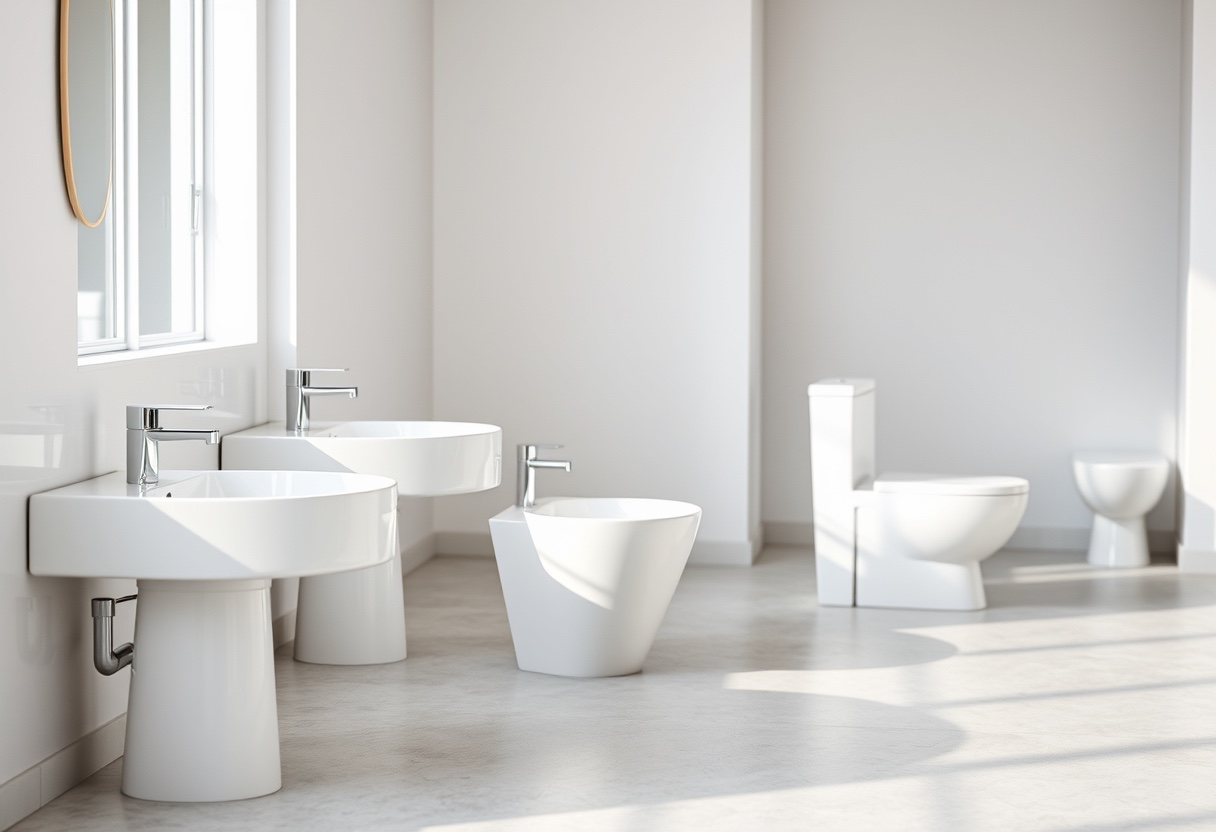
Sourcing OEM and ODM bathroom products is mostly a sequence of decisions: who owns the design, who pays for the tooling, what gets customized, and which market certifications gate the project. Get those right early and the rest — MOQ, lead time, price — falls into place. This guide walks importers, brand owners and project buyers through how ceramic sanitary ware is actually developed and produced, so your first inquiry is sharp and your first order arrives the way you expect.
Key takeaways
- OEM = your design, our production; ODM = our design, your brand — ODM is faster and cheaper because the mold already exists.
- Tooling, MOQ and certification are the three levers that decide cost and timeline more than unit price does.
- Define your market before you open a mold — trap type, flush volume and certs are built into the product, not added later.
01 THE CORE DISTINCTION
OEM vs ODM: what you are really choosing
The two terms describe who originates the design. With OEM (Original Equipment Manufacturing) you bring your own drawings, specifications and brand, and the factory builds to your print. With ODM (Original Design Manufacturing) the factory already owns a proven design that you rebrand and lightly adapt — color, logo, packaging. A clean way to remember it: OEM is your design, our production; ODM is our design, your brand.
Sitting on top of both is private label (white label): the factory ships a finished, already-developed product carrying your brand and packaging, without changing the product itself. It is the lightest, fastest form of customization. In practice most real programs are a blend — an ODM body with OEM-level branding and a few dimensional tweaks.
OEM vs ODM at a glance
| Factor | OEM (your design) | ODM (our design) |
|---|---|---|
| New tooling | Required | Already exists |
| MOQ | Higher (amortize mold) | Lower |
| Lead time | Longer | Shorter, proven |
| Differentiation | Full, exclusive | Shared base design |
| Upfront cost | Mold + samples | Sample fee only |
ODM is a good fit if
- You want speed-to-market and a private-label catalog.
- Budget for new tooling is limited.
- A proven shape with your branding is enough.
Go OEM if
- You need a unique, ownable design.
- You can commit to a higher MOQ.
- IP control and exclusivity matter to your brand.
02 WHAT YOU CAN CHANGE
The realistic customization levers
For ceramic sanitary ware, customization is not unlimited — it follows what slip-casting and glazing allow. The practical levers are:
Five things you can specify
Branding — logo printed or embossed on the product, box and accessories. Packaging — color box, gift box, EPE/foam, multilingual manuals, EAN/UPC barcode, FSC carton. Sizes & shapes — basin diameter and depth, tap-hole and overflow config, toilet rough-in (305mm / 400mm), S-trap or P-trap. Glaze — matte or glossy, color glaze, nano easy-clean finish. Smart toilets — firmware/UI language, voltage and plug, remote layout and feature set.
Note that branding levers (logo, packaging) are usually free to change, while geometry levers (a new shape, a different size) often mean new tooling — which moves the project from ODM into OEM territory.
03 TOOLING & MOQ
Molds, minimums and who owns the tooling
Ceramic basins and toilets are made by slip-casting liquid clay into plaster or resin molds, then drying, glazing and firing at roughly 1,200°C. Each distinct shape needs its own mold, and plaster working molds wear out after a limited number of casting cycles — so high-volume runs need duplicate molds. This is why new tooling carries real cost and lead time.
Mold cost for a new ceramic shape runs from a few hundred to several thousand USD each. It is a one-time charge, separate from the unit price, and factories often amortize or refund it against a committed order quantity. MOQ follows the same logic: it is quoted per SKU and per glaze color, because each color needs its own production and color-matching run. For Chengda, MOQ is flexible and confirmed by model, glaze color and packing plan; trial orders and OEM/ODM programs can be discussed instead of applying a hard minimum.
Put exclusivity in writing
An OEM design can leak to competitors without a signed clause. Before tooling, agree an NDA, a design-ownership clause, and exclusivity (the factory will not sell your exact mold or design to others, or in your territory). Clarify who owns the mold and whether you can move it to another factory.
04 DEVELOPMENT & TIMELINE
From brief to mass production
A custom ceramic product follows a predictable path. Knowing it helps you plan launch dates honestly.
Standard development workflow
| Stage | What happens |
|---|---|
| 1. Brief | Drawings, reference samples, specs |
| 2. Quotation | Price, MOQ, feasibility, tooling |
| 3. Design confirm | 2D/3D sign-off (ODM) |
| 4. Prototype | Hand or 3D-printed sample (non-production) |
| 5. Tooling | New tooling, about 45 days |
| 6. PPS | Pre-production sample from real mold — your last approval gate |
| 7. Mass production | Casting, drying, glazing, firing |
| 8–9. QC & ship | Inspection, packing, export |
The pre-production sample is the only sample made from your actual production mold. A hand prototype shows intent; the PPS shows reality. Approve nothing for mass production before you sign off the PPS.
Indicative lead times: in-stock items can ship immediately; standard production is about 15 days; new-mold OEM projects take about 45 days for tooling and sample approval before production. Smart toilets add electronics assembly and certification time on top.
05 MARKET COMPLIANCE
Certifications gate the design
Certifications are market-specific and must be defined before tooling, because they shape the trap, flush volume and tap-hole layout. North America generally looks to cUPC/IAPMO, CSA and low-lead rules (plus WaterSense for efficiency); Europe and the UK to CE, WRAS and EN standards (EN 14688 for washbasins, the EN 997 family for WC pans); Australia to WaterMark plus WELS labeling; Saudi Arabia to SASO via the SABER platform.
The importer or brand owner placing goods on a market is normally the legally responsible party for compliance and labeling, while the factory supplies compliant product, test reports and audit support. Certification support varies by product and market — always request the available test reports before ordering rather than assuming a blanket approval exists.
06 QC, PACKING & EXPORT
Quality control and getting it home intact
Define quality as an AQL-based inspection plan (ISO 2859-1 / ANSI Z1.4) with agreed acceptance levels for critical, major and minor defects. For ceramics, add product-specific checks: dimensional and installation fit, glaze and crazing defects, water-absorption rate, flush/drainage and leak/load testing, and carton drop/transit testing — because ceramic ware is fragile and breakage happens on the road, not in the kiln.
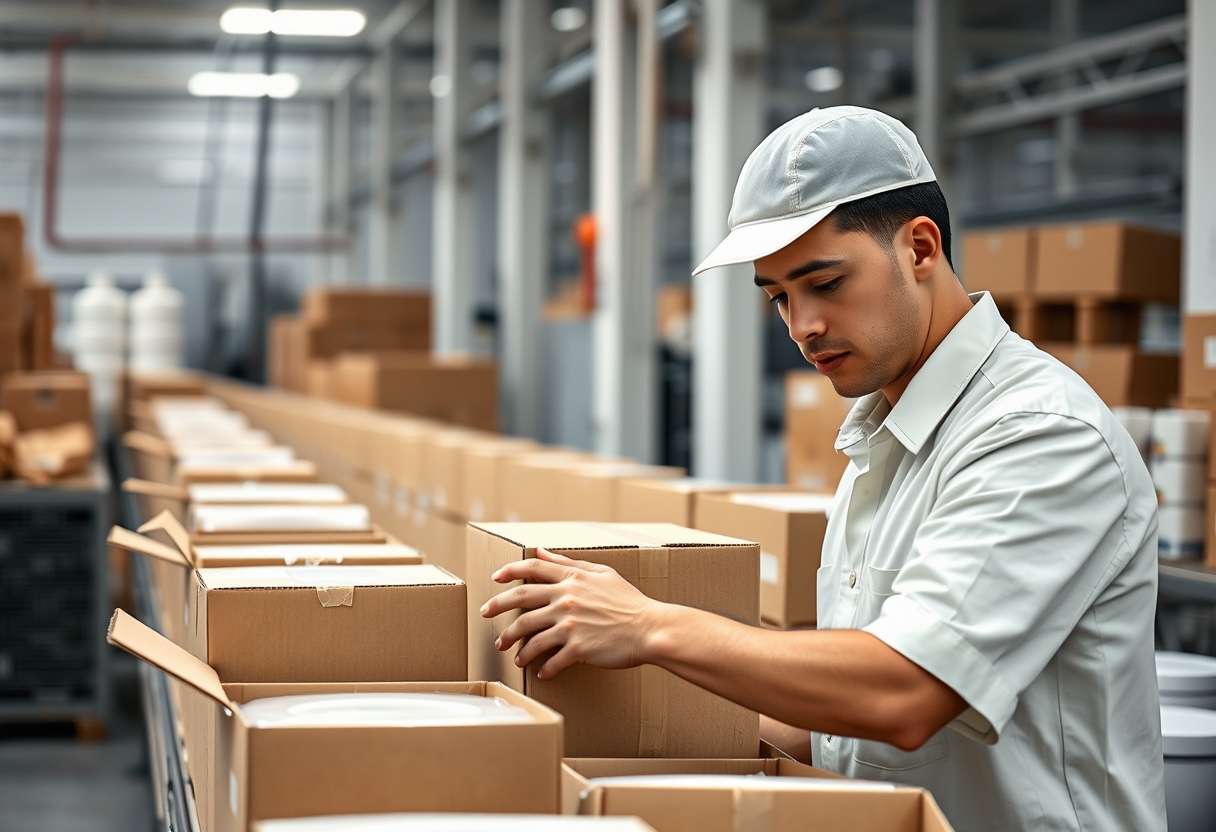
For export, standard incoterms are EXW, FOB (e.g. FOB Shenzhen or Guangzhou) and CIF. Ceramic ware ships in 20ft or 40HQ containers, and a single container can mix several SKUs, colors and categories — basins, toilets, cabinets — to balance assortment and freight, as long as each SKU still meets its own MOQ and the container's volume and weight limits. This is where a full-line maker such as Chengda can consolidate a mixed program into one shipment.
07 START YOUR INQUIRY
What to send so the quote is accurate
The fastest way to a real quotation is a complete brief. Send: your target market and required certifications; drawings (STEP/IGES) or a physical reference sample; logo artwork (vector/AI) and packaging needs with correct GS1 barcode numbers; destination voltage, water-pressure and trap standards; and your target price, MOQ and timeline. With that, a factory can quote tooling, MOQ, unit price and lead time in one pass instead of three.
Sourcing OEM and ODM bathroom products well is less about finding the lowest price and more about defining the brief — design ownership, tooling, market compliance — before the first mold is cut.
FAQ COMMON QUESTIONS
Frequently asked questions
What is the difference between OEM and ODM for bathroom products?
OEM means the factory produces to your own design, drawings and brand specifications. ODM means the factory already owns the design and you rebrand and lightly customize it. ODM with an existing mold has a far lower MOQ and shorter lead time than OEM that requires brand-new tooling.
What is the MOQ for custom ceramic basins or toilets?
MOQ is flexible and confirmed by SKU, glaze color, packing plan and project type. Stock and trial orders can be discussed, and OEM/ODM quantities are quoted case by case instead of using one hard minimum for every buyer.
How much does a mold cost, and who owns it?
A new ceramic mold runs from a few hundred to several thousand USD as a one-time charge, often amortized or refunded against a committed order. Always confirm in writing who owns the mold, whether it is exclusive, and whether it can be moved to another factory.
Can I use my own brand logo and packaging?
Yes. Private-label scope covers logo printing or embossing, custom color boxes, EPE foam, multilingual manuals, warranty cards and EAN/UPC barcodes. You supply approved vector artwork and the correct GS1 barcode numbers.
Which certifications do I need, and who is responsible?
It depends on your market — cUPC/WaterSense for North America, CE/WRAS/EN for the UK and Europe, WaterMark/WELS for Australia, SASO/SABER for Saudi Arabia. The importer is usually the legally responsible party; the factory supplies compliant product and test reports. Certification support varies by product and market, so request available test reports before ordering.
How long does a custom OEM bathroom product take?
In-stock items can ship immediately. Standard production takes about 15 days; new-mold OEM projects take about 45 days for tooling and sample approval before production. Smart toilets add electronics assembly and certification time.