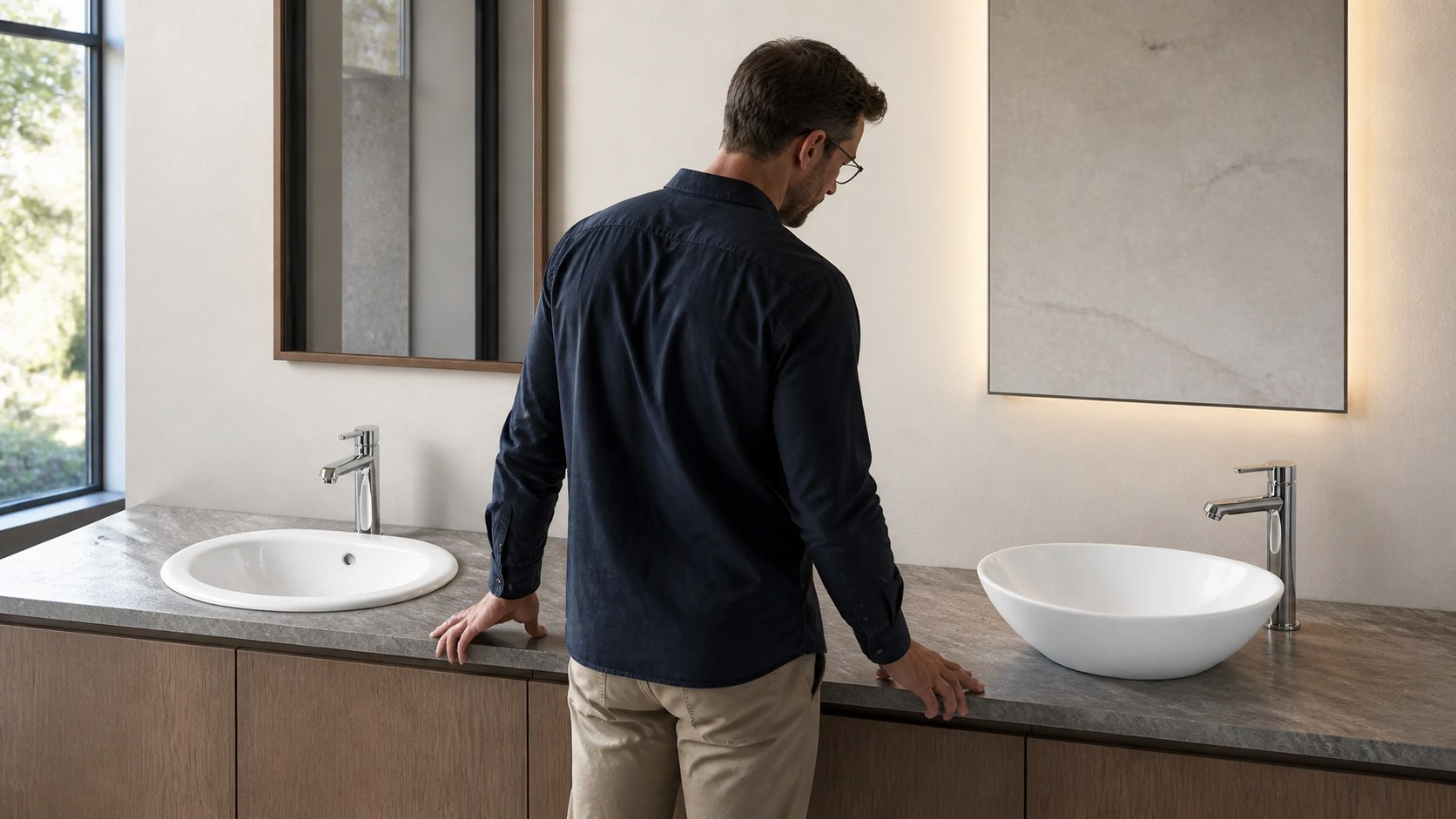
Choosing a bathroom sink overflow vs no overflow changes more than the appearance of the bowl. It affects waste-body configuration, whether the outlet can close, faucet flow, user operation, cabinet clearance and functional testing. This guide uses Chengda A101, A203, A207, CB0118 and CB0218 to show how project buyers should identify every opening and approve the complete drainage system.
Key takeaways
- Identify the real opening: a faucet hole, overflow entry and drain sit in different positions and perform different jobs.
- Match the waste body: connect an overflow channel correctly, and use the approved free-flow strategy for a no-overflow bowl.
- Test under control: verify faucet flow, drainage, overflow path and every underside joint without creating a flood.
01 OVERFLOW BASICS
What does a bathroom sink overflow do?
A bathroom sink overflow is a secondary passage that begins at a small opening high on the bowl wall and returns excess water to the waste assembly. It is intended to provide another drainage route when water rises while the main outlet is closed or restricted. Opening, channel and waste must form one system; an unconnected decorative hole is not an overflow.
An overflow reduces risk but is not permission to leave a faucet unattended. Its capacity can be lower than the incoming faucet flow, and soap, debris, a mismatched waste or a blocked channel can reduce performance. Water may still pass the rim if the inflow exceeds the complete drainage path. Manage faucet flow and operation as well as the ceramic feature.
A no-overflow basin has no secondary opening or channel. Water leaves only through the main drain, so the waste and operating method must suit that condition. Many manufacturers pair no-overflow basins with a free-flowing, non-closing waste; destination rules and the approved product system control the final choice. Do not treat overflow status as a minor styling detail after the basin has been ordered.
02 VISUAL IDENTIFICATION
How can you tell an overflow from a faucet hole?
Look inside the bowl first. A visible overflow is normally a small opening high on the inner wall, below the rim and above the normal water level. A faucet hole sits through a horizontal ceramic rim or rear deck and is large enough for a mixer shank. The centred drain is at the bottom of the bowl. These three positions have different functions and should be named separately on drawings and inspection records.
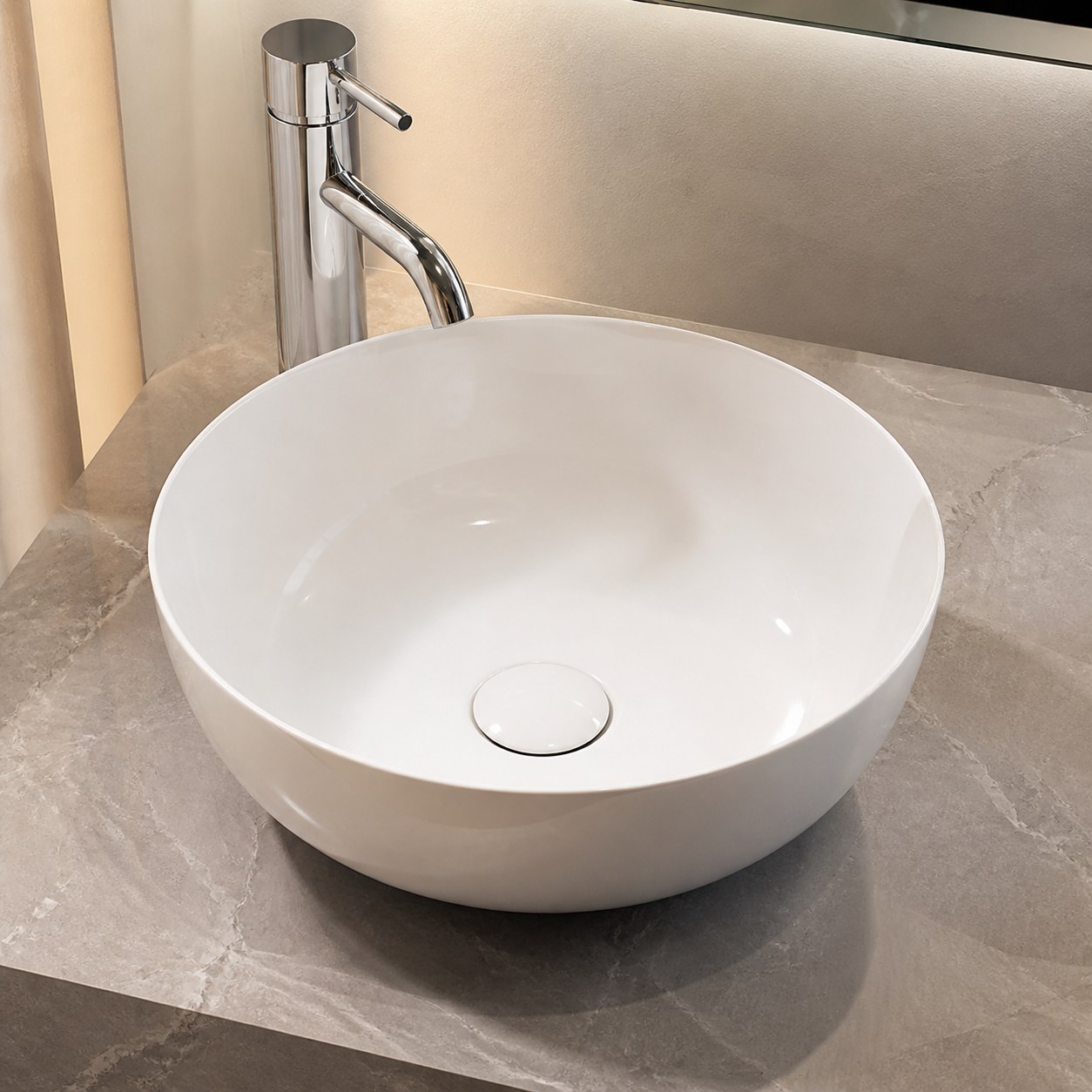
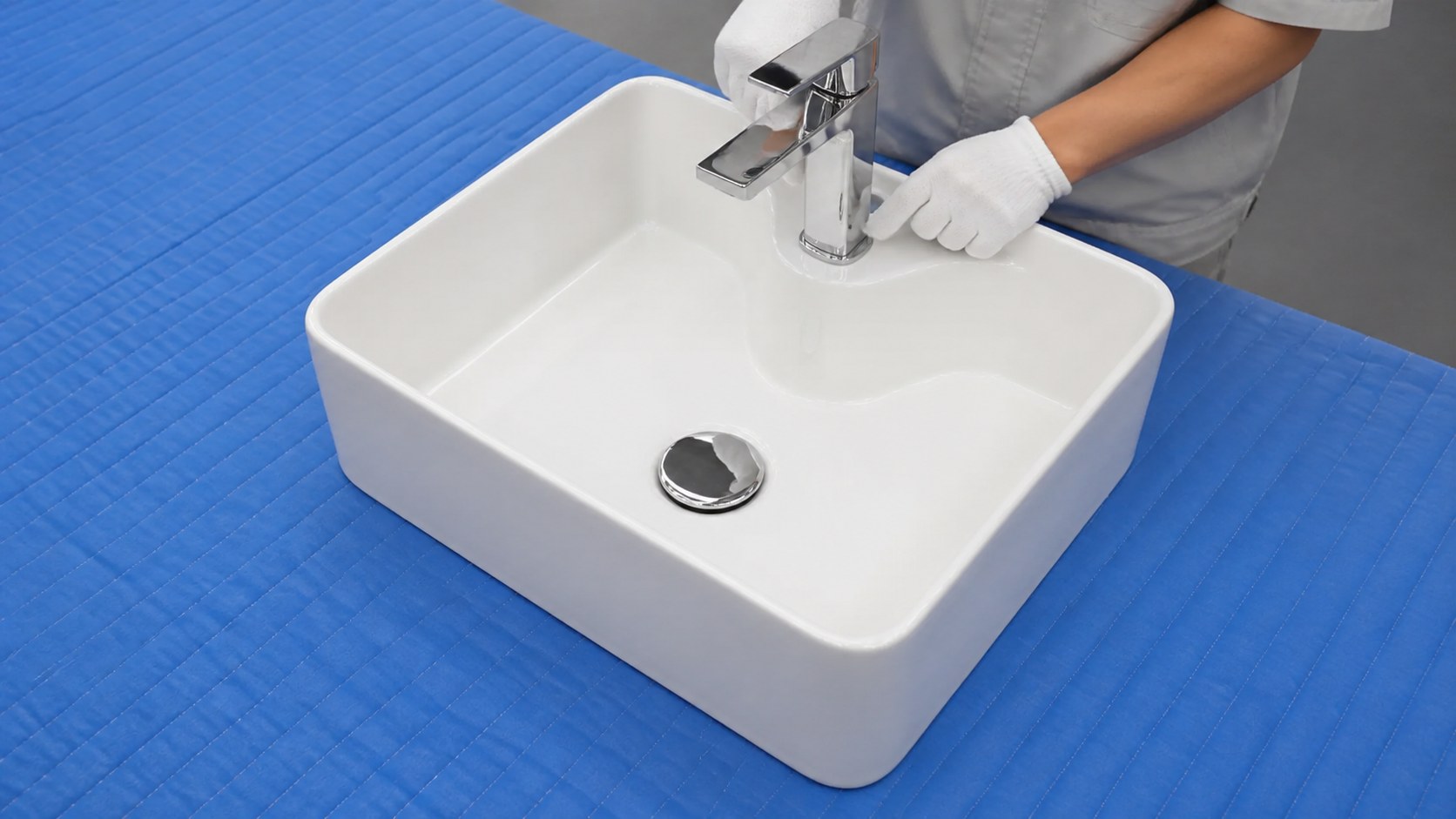
A101 illustrates why photographs can be misread. It has one faucet hole in its distinctive rear ceramic shelf and one centred 45 mm drain, but its inner bowl wall is smooth and has no overflow. The rear hole is not a large overflow. A203 and A207 have no faucet hole and no overflow; their faucet must be mounted separately on the counter or wall according to the approved layout.
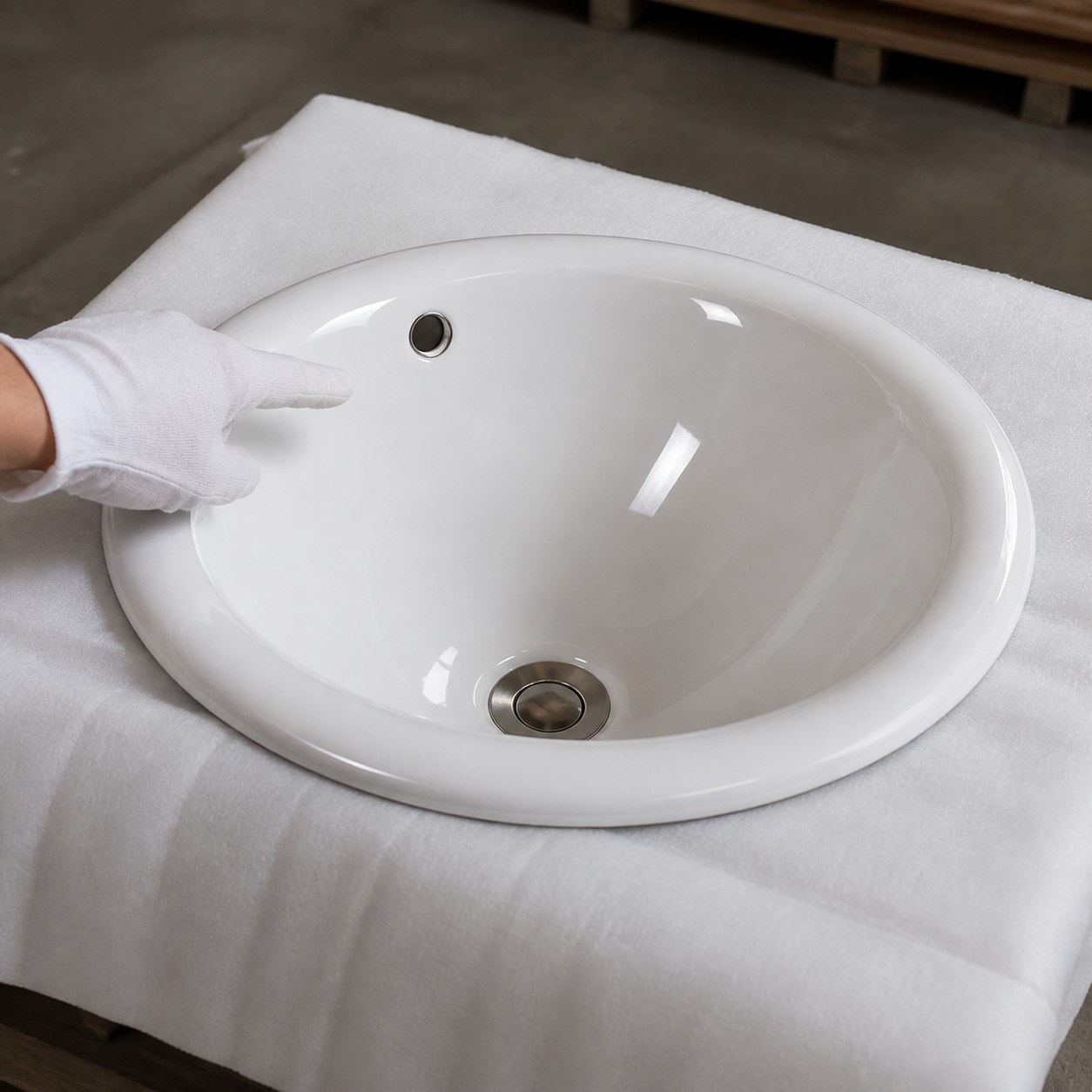
CB0118 and CB0218 each have one small overflow high on the rear inner wall. CB0118 has no faucet hole in the ceramic, while CB0218 also has one separate faucet hole in its rear rim. Keep signed-sample top, bowl and underside photographs. Never infer overflow status from a product title, a front view or the presence of any unspecified hole.
03 CHENGDA EXAMPLES
Which Chengda basins have an overflow?
CB0118 is a 465 x 400 x 190 mm gloss-white oval drop-in basin with one centred 45 mm drain and one small rear-wall overflow, but no ceramic faucet hole. It must sit through a correctly sized counter opening with its support rim evenly seated. The faucet is mounted separately through the counter or another approved surface.
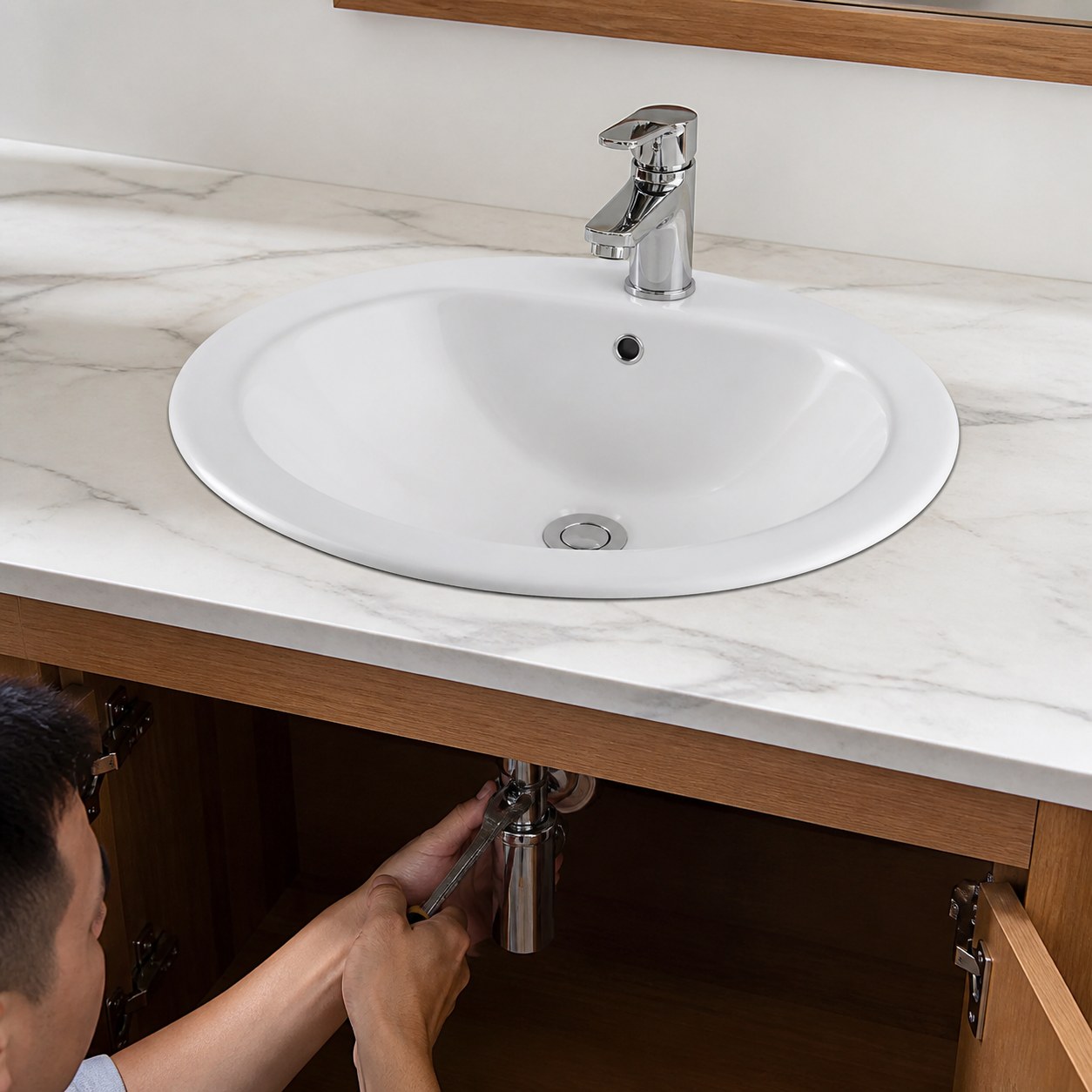
CB0218 is a 470 x 410 x 175 mm oval drop-in basin with one 45 mm drain, one small rear-wall overflow and one faucet hole in the rear ceramic rim. Its overflow and faucet openings remain visibly distinct. Both drop-in products need counter cut-outs, support and sealant details based on their current drawings and signed samples rather than an assumed generic oval template.
The no-overflow examples are countertop vessels. A101 is approximately 480 x 370 x 130 mm with one faucet hole in its rear shelf. A203 is a 415 x 415 x 140 mm round vessel with no faucet hole, and A207 is a 410 x 340 x 150 mm oval vessel with no faucet hole. Each has one centred 45 mm drain and must be matched to the correct faucet location and no-overflow waste strategy.
04 WASTE SELECTION
Do you need a slotted or unslotted basin waste?
A basin with an internal overflow normally needs a waste assembly that gives the hidden overflow channel an entry into the drain. A conventional slotted waste has openings in its body for that purpose. The slot position must align with the ceramic's overflow discharge zone, and the flange, body length, seals and thread must suit the actual drain thickness and destination connection.
A no-overflow basin normally uses an unslotted waste because there is no channel to connect. For A101, A203 or A207, a free-flowing open waste can reduce the risk created by closing the only outlet. Do not assume that every click-clack or pop-up product is acceptable. Some multi-function wastes can be configured for either condition with manufacturer-supplied parts, but their approved installation instructions must be followed exactly.
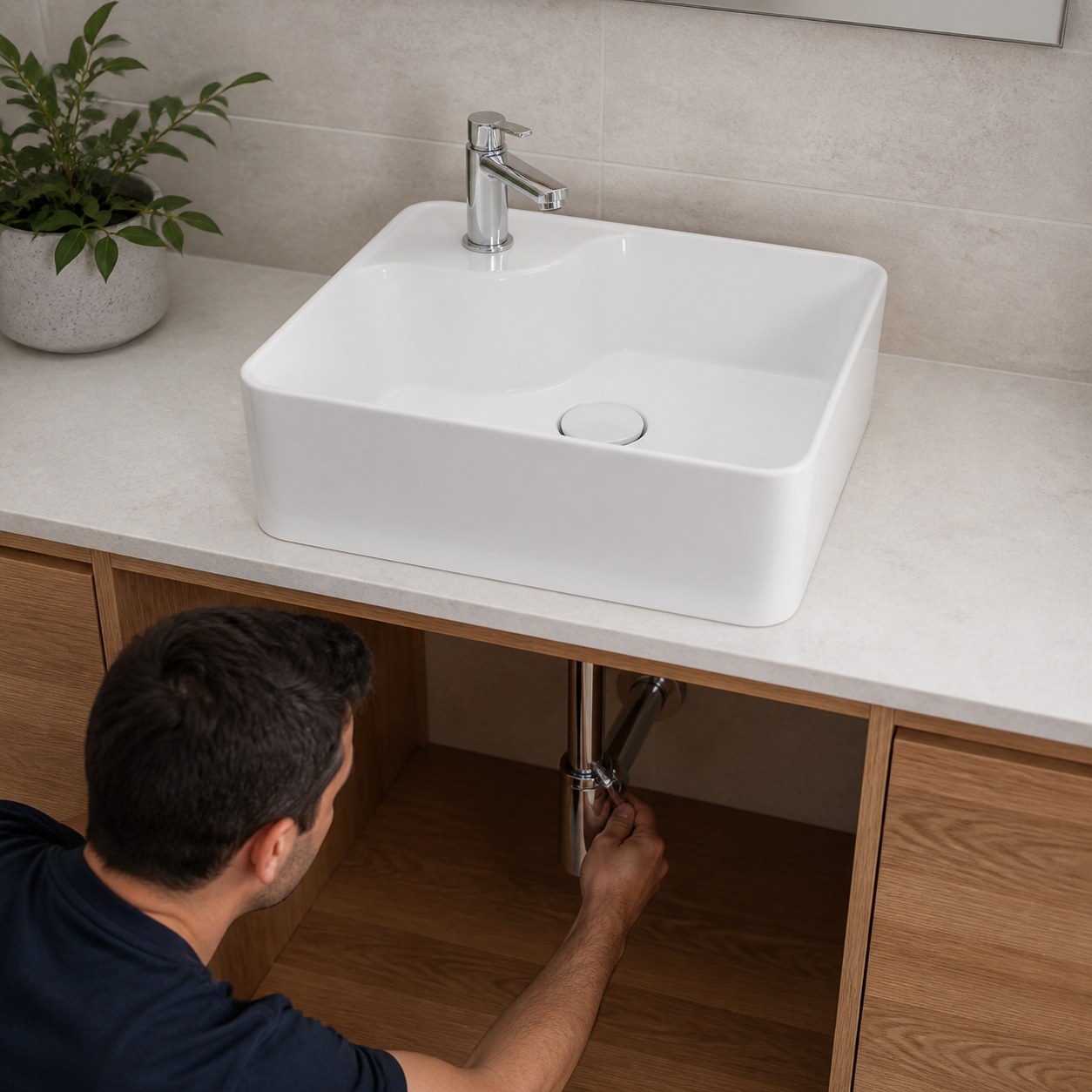
Select the basin and waste as one signed combination. Record whether the outlet closes, the slot or spacer configuration, flange diameter, seals, trap and service clearance. Test the assembly before approving cabinet drawers or bulk purchasing matching finishes. A beautiful waste in the wrong body configuration can isolate the overflow, leak below the ceramic or leave a no-overflow bowl able to fill with the outlet closed.
05 FAUCET & OPERATION
How do faucet flow and user behaviour affect overflow risk?
Faucet flow is part of the safety review. Test the final or technically identical mixer at the expected site pressure, with the waste open and then under the approved closed-outlet condition. Observe the water rise, overflow entry and whether the overflow plus leakage past the plug can keep up. Stop the test before the rim is reached; the objective is controlled verification, not a staged flood.
A no-overflow vessel needs especially clear operation. Use the specified open waste where required, control faucet flow and avoid a spout whose stream can be left running outside the bowl. A wall or tall deck faucet for A203 or A207 must land near the drain without overshooting the rim. A101's mixer belongs in its one rear-shelf hole, with no second control or invented opening.
User profile matters. A supervised residential powder room, a busy restaurant washroom, a hotel guestroom and a healthcare specification can have different cleaning, plug and supervision policies. Do not claim that one overflow condition is universally safer or more hygienic. Confirm the operator's routine, local requirements and approved fittings, then communicate the basin and waste condition to maintenance staff.
06 PROJECT USE
When should a project choose overflow or no overflow?
An overflow basin can suit hotel, apartment and commercial projects that use a closable waste or want a secondary drainage path. CB0218 integrates the faucet hole into the ceramic; CB0118 leaves faucet placement to the counter. In either case, the operator still needs sensible faucet flow, cleaning and periodic inspection of the small opening and hidden path.
A no-overflow vessel can support a clean uninterrupted bowl design and a specific free-flowing waste strategy. A203 and A207 suit layouts with separate deck or wall faucets, while A101 provides its own rear-shelf faucet hole. The absence of an overflow may also be deliberately specified in some specialist washroom systems, but a Chengda project should not infer healthcare suitability or compliance from that feature alone.
Maintenance teams must know whether the waste is slotted, unslotted or a particular configurable model before ordering a new finish or mechanism. Keep photographs of the signed sample, waste body and underside connection with the room asset record. A generic note such as 'chrome pop-up waste' is not enough to preserve overflow function.

07 FUNCTIONAL QC
How should a basin overflow be tested and inspected?
Begin with dry identification. Verify model, installation type, faucet-hole count, overflow count and drain opening against the signed drawing and sample. Inspect the small opening for glaze blockage, deformation or debris, then confirm that the hidden channel reaches the waste zone. For no-overflow units, verify a completely smooth inner wall and make sure no worker has mistaken a faucet hole for an overflow.
Install the approved waste with the specified seals and torque. First run a normal drainage test and inspect every underside joint. For an overflow basin, close the main outlet under controlled conditions and introduce a small, known inflow until water reaches the opening. Confirm that it enters the channel and discharges without wetting the counter, cabinet or floor. End the test if the level continues to rise unexpectedly.
For no-overflow basins, confirm the approved free-flow operation and drainage while keeping water well below the rim. Record faucet flow, waste code and result for both conditions. Clean and dry the ceramic before packing. Model-specific protection must keep the overflow opening, faucet rim and drain from bearing load or contacting loose fittings during transport.
08 ORDER SPECIFICATION
What belongs in an overflow or no-overflow basin order?
State the exact basin model and revision, installation type, dimensions, faucet-hole condition, overflow condition, 45 mm drain, faucet code and mounting position, waste code, slotted/unslotted or configurable setup, closing behaviour, seals, trap, destination connection, counter cut-out or support detail, cabinet clearance, signed sample, functional test, inspection level, packing and spares.
Use photographs and drawings that show each opening from the correct angle. The ceramic supplier can confirm the bowl and channel; the fittings supplier must confirm waste compatibility; the furniture maker must protect installation and service space; the project team must confirm operation and destination requirements. Do not leave overflow compatibility to the installer after separate purchasing decisions have already been fixed.
Send Chengda the project type, basin model, faucet arrangement, required waste operation, countertop or cabinet drawing, destination market and quantity. CB0118 and CB0218 can be coordinated as overflow drop-in basins, while A101, A203 and A207 can be coordinated as no-overflow vessels. One signed, water-tested assembly is the clearest basis for production, inspection and future maintenance.
Name every opening before ordering the waste
Faucet hole; overflow opening; overflow channel; 45 mm drain; waste slots or spacer; closing behaviour; seals; trap; faucet flow; functional test; photo record; carton identification and spare-parts code.
FAQ COMMON QUESTIONS
Frequently asked questions
What is the hole near the top of a bathroom sink?
If it is a small opening high on the inner bowl wall, it is usually the overflow entry. A faucet hole is on a rim or deck and the drain is at the bottom.
Can a sink without overflow use a pop-up waste?
Use only the basin and waste combination approved by the manufacturers and destination rules. No-overflow basins commonly use a non-closing free-flow waste.
Do basins with overflow need slotted wastes?
They need a waste configuration that connects the overflow channel to the drain. A conventional slotted waste is common, but exact geometry and instructions control compatibility.
Does an overflow guarantee that a basin cannot flood?
No. Incoming flow can exceed overflow capacity, and blockage or mismatched parts can reduce drainage. Never use it as a substitute for supervision and flow control.
Which Chengda examples have overflow?
CB0118 and CB0218 have one small rear-wall overflow. A101, A203 and A207 have no overflow.
Is a faucet hole the same as an overflow hole?
No. The faucet hole carries the mixer through a rim or deck; the overflow is a smaller opening high inside the bowl connected to the waste path.