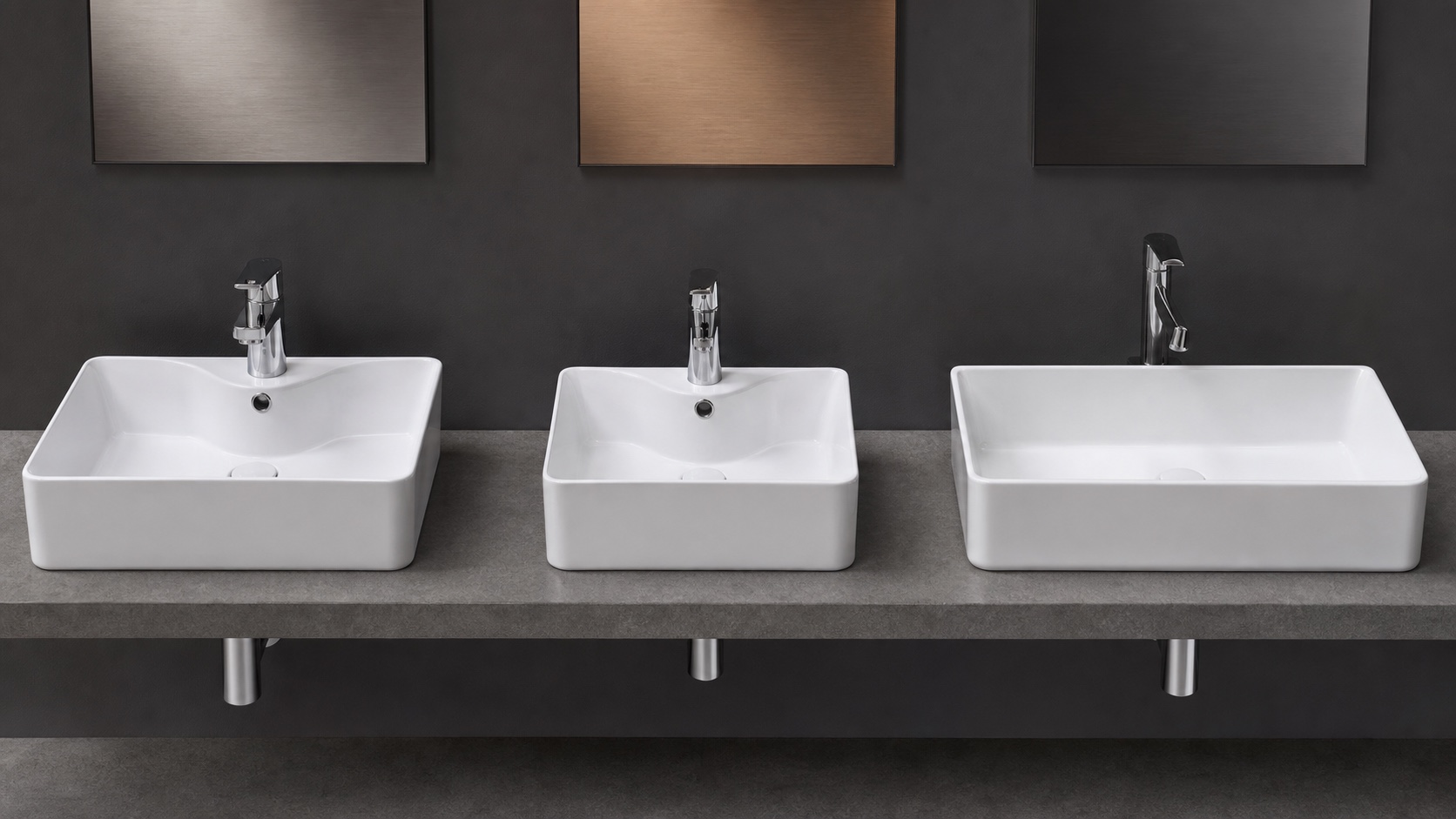
The choice between a countertop basin with tap hole vs without tap hole changes much more than the look of a bathroom. It determines where the faucet is fixed, how much countertop and wall space is required, where the water stream lands, how the installer reaches the fixing nut and whether the finished combination splashes. Importers, retailers and hotel buyers should approve the ceramic art basin and faucet as one working set.
Key takeaways
- With a tap hole: the faucet stands directly on the basin’s own ceramic deck and must fit that hole and access space.
- Without a tap hole: the faucet mounts on the countertop, wall or floor, so rough-in and clearances move outside the basin.
- Test water, not only dimensions: spout reach, height, angle, pressure and bowl geometry determine comfort and splash.
01 PRODUCT DIFFERENCE
What changes when a countertop basin has a tap hole?
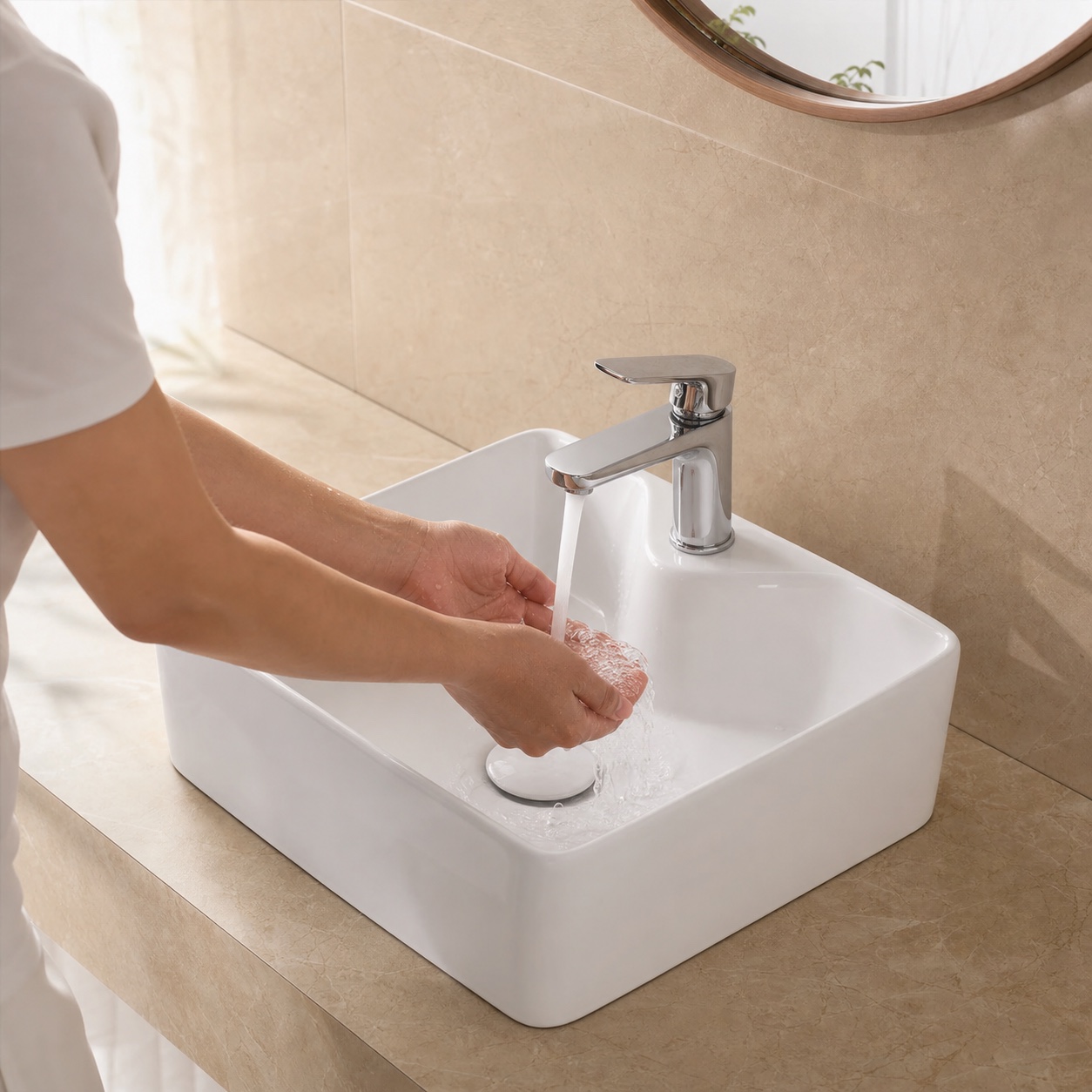
A countertop basin with a tap hole includes a ceramic deck or ledge engineered to receive a compatible faucet. The mixer is mounted on the basin itself, through its own hole. The faucet base, shank, hoses and fixing nut must all fit the available ceramic geometry. The installation is visually compact and can reduce the need to drill a separate faucet hole in the countertop.
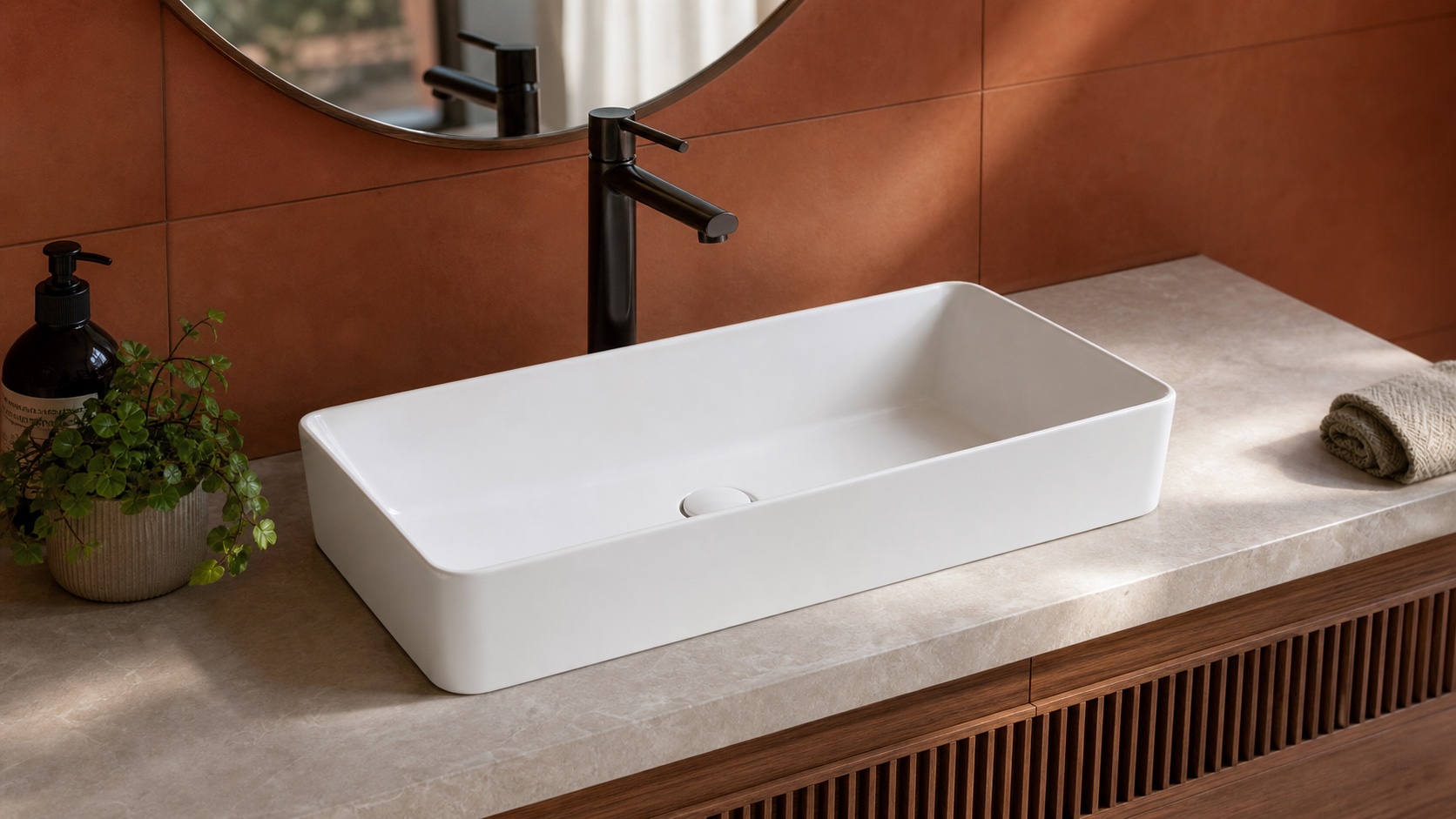
A countertop basin without a tap hole keeps the ceramic form free of a faucet deck. It requires a separately mounted tap, usually on the countertop behind or beside the bowl, on the wall, or occasionally on the floor for a large freestanding composition. This creates more design freedom but moves technical coordination to the countertop and building rough-in.
Do not identify the configuration from marketing names alone. Chengda A101 and A103 are countertop-mounted art basins with a tap hole in the ceramic. A106 has no tap hole. The approved product drawing and physical sample should control the order, because adding or removing a hole affects mould, forming, glaze, packaging and installation.
02 FAUCET CONFIGURATIONS
Which faucet types work with each art basin?
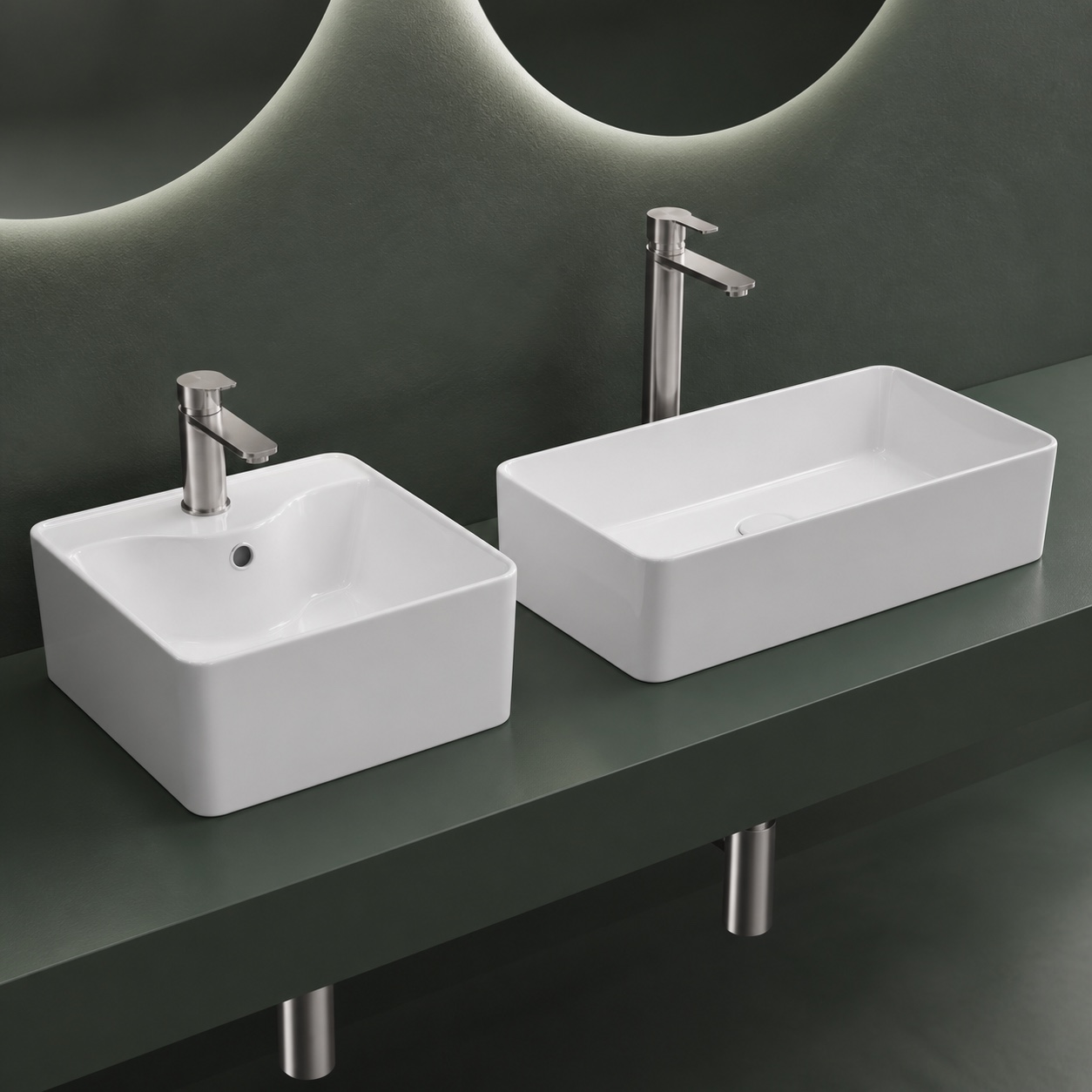
For a basin with its own tap hole, select a faucet that fits the hole diameter, deck thickness and available base area. Confirm that the threaded shank and hoses can pass through and that the installer can tighten the mounting hardware below. A standard-height basin mixer may be appropriate because the faucet already rises from the basin deck, but the correct height depends on the bowl.
For a no-hole vessel basin, a deck-mounted faucet normally stands on the surrounding countertop, not on the ceramic. It often needs a taller body or a different spout geometry to clear the bowl rim. Keep enough counter behind or beside the basin for the faucet base, fixing nut, handle movement and cleaning.
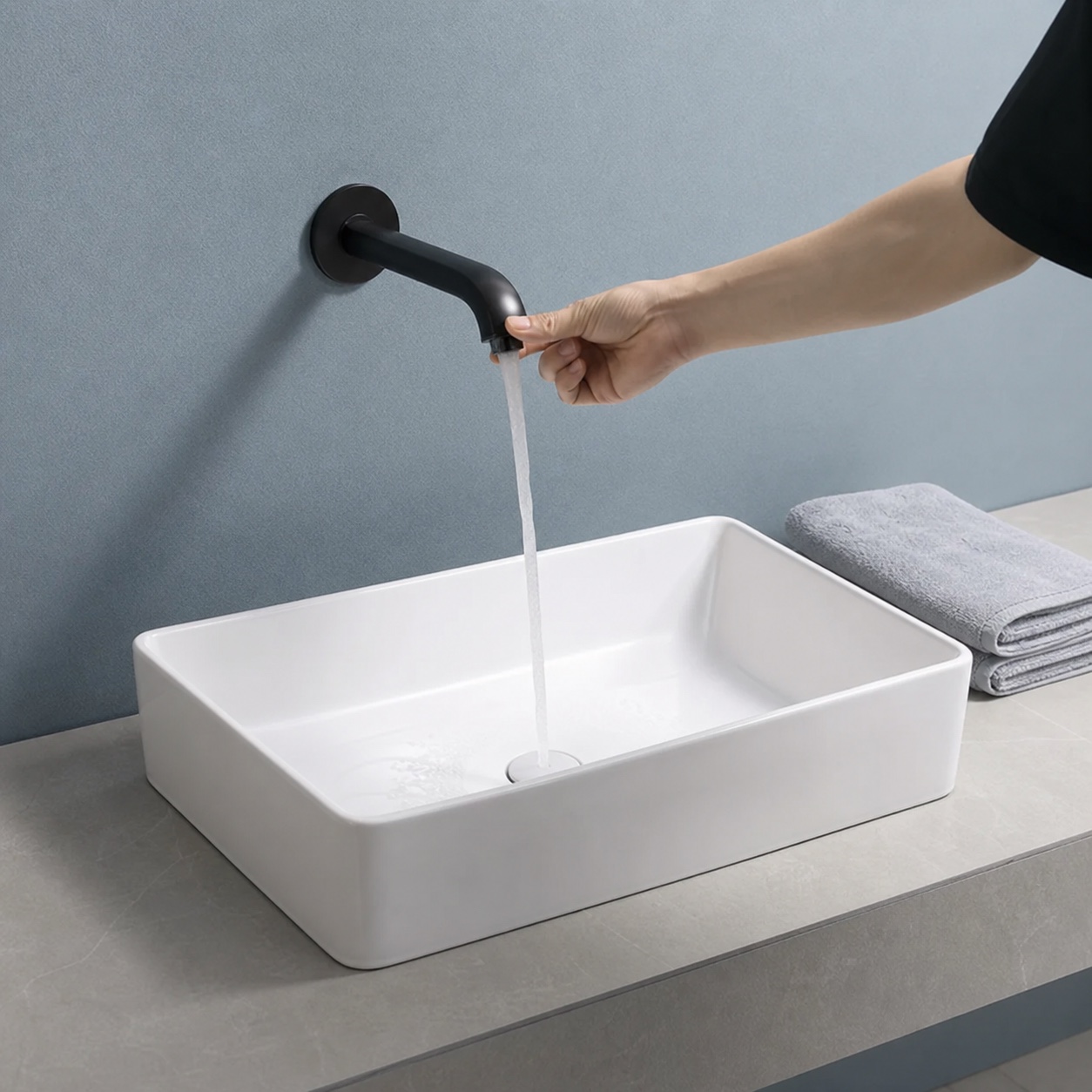
A wall-mounted faucet gives an uncluttered counter but must be coordinated before wall finishing. The concealed body, waterproofing, finished spout height and projection all need approval. A floor-mounted tap is a specialised option requiring structural and waterproofing coordination. Never choose it only because a rendering looks dramatic.
03 WATER GEOMETRY
How do spout height and reach affect splashing?
Draw the water path in section. Measure from the final faucet outlet to the basin rim and intended landing point. The stream should enter the useful bowl area with comfortable hand clearance. If it hits the drain cap directly, it may scatter. If it strikes a steep inner wall too high, water may climb and splash over the rim.
Spout reach is as important as overall height. A tall faucet with short reach can leave the stream too close to the rear edge. A low wall spout with excessive projection can crowd the user. Handle movement must also clear the backsplash, mirror and bowl. Use the exact faucet drawing rather than a generic “tall vessel mixer” symbol.
Then perform a real water test. Assemble the basin, waste and faucet at the intended installation height. Test normal hand washing at the expected pressure range, observe splash outside the bowl, drainage and pooling, and adjust the faucet or aerator if required. This test often reveals problems that no static rendering shows.
04 COUNTERTOP & WALL
How much space does the faucet installation need?
Start with the basin footprint and drain cutout, then add the faucet base, required hole, fixing washer, supply hoses and handle sweep. Check the remaining material between every hole and the counter edge. The countertop fabricator must follow the basin and faucet data and account for the strength of stone, solid surface, timber or other materials.
A basin with its own tap hole can save rear counter depth, which helps compact furniture. However, the ceramic deck must provide enough access below, and the tap position is fixed by the basin. A no-hole basin gives more freedom to place the tap centrally or to one side, but needs additional counter or wall coordination.
Review the backsplash and mirror. A rear-mounted faucet may need clearance for its handle and cleaning. A wall spout must project far enough beyond the rim while leaving comfortable space. If the basin sits close to a side wall, check whether the user can operate the mixer and whether the installer can replace it later.
05 DRAIN & OVERFLOW
Which waste fitting belongs with the basin?
Confirm drain-hole diameter, waste-body length, sealing surfaces, overflow condition and destination-market connection. A basin with an overflow generally requires a compatible slotted waste so overflow water can enter the drain. A basin without an overflow generally uses a non-slotted waste. The exact fitting design must match the ceramic and local plumbing practice.
Chengda A101 has a tap hole and overflow. A103 also has a tap hole and overflow. A106 has neither tap hole nor overflow. These combinations show why product identity must stay attached to the fitting list. A no-overflow basin should not be presented as safer from overfilling; the room and user need an appropriate drainage and operating plan.
Below the countertop, check the waste locknut, trap and drawer. A compact basin may still require a large fixing envelope. Water-test the waste seal and overflow route on approved samples, then keep the same compatible fitting code in the mass-production order.
06 PROJECT & RETAIL FIT
Which configuration is better for hotels and retail?
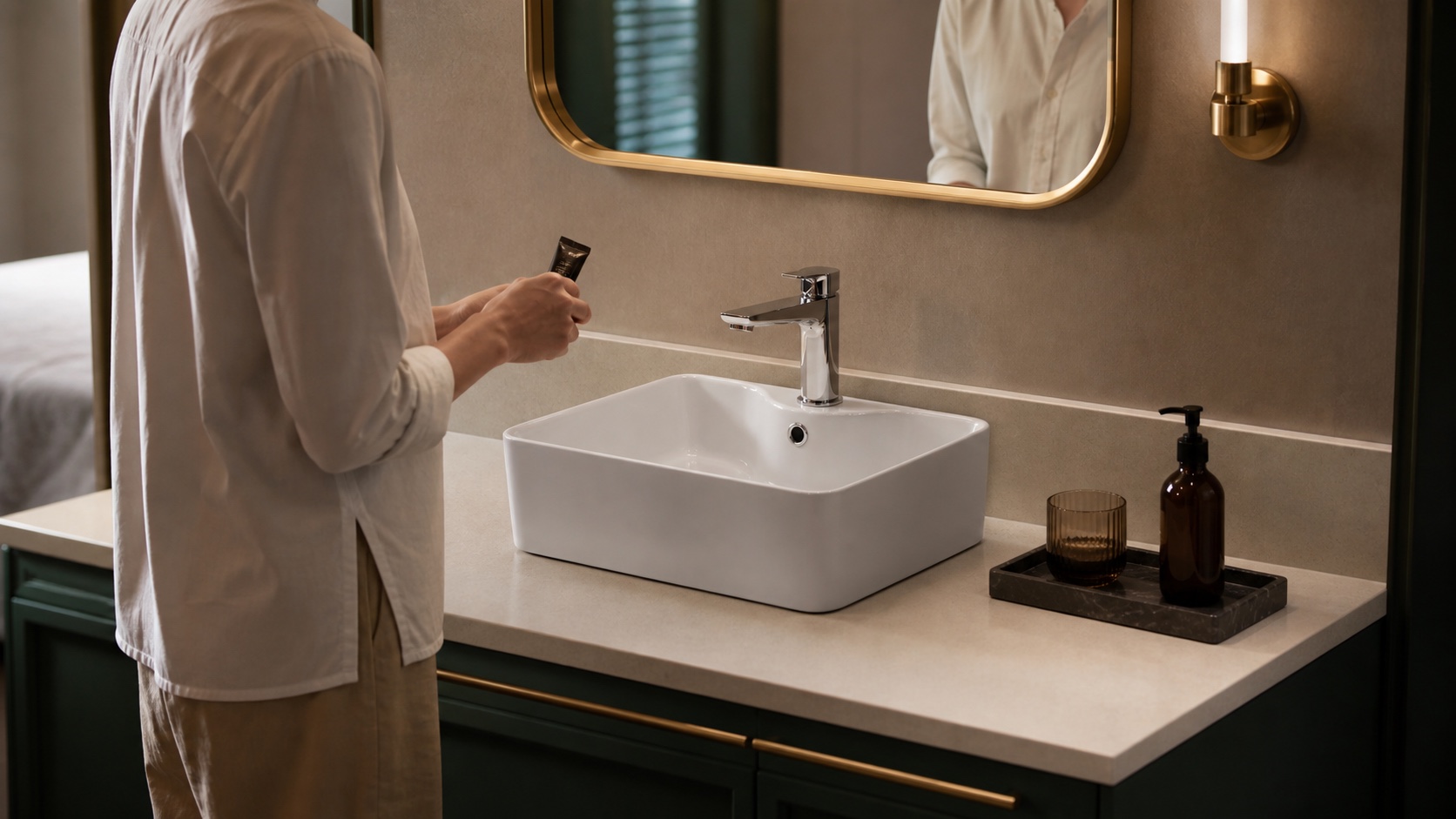
Tap-hole basins are convenient for standardised retail sets, compact vanities and projects that want the ceramic and mixer grouped tightly. They can simplify countertop fabrication because only the drain cutout passes through the top. Buyers must still make sure the basin deck accepts locally available faucets.
No-hole basins suit design-led projects that want a wall-mounted tap, a tall deck-mounted mixer or an asymmetric composition. They also let one ceramic bowl work with different faucet positions, provided the counter and room are designed accordingly. The extra freedom demands stronger drawing control at the project stage.
Hotels should consider room downtime and spare parts. A basin-mounted or counter-mounted faucet is often reachable without opening a tiled wall. A wall-mounted mixer creates a clean surface but needs a dependable concealed body and access strategy. Retailers should display the full approved combination and identify which faucet type is required.
07 SAMPLE & PRODUCTION QC
What should buyers test before mass production?
Measure the basin, drain hole, tap hole where provided, deck thickness, overflow opening and critical centre distances. Check glaze coverage inside holes and underneath visible edges. Confirm that the faucet base sits flat without bridging a curve and that its washer and nut can be installed without contacting the bowl.
Build an approval rig using the intended countertop, faucet, waste and trap. Check installation sequence, hose routing, handle clearance, water landing, splash, drainage, overflow and leakage. Photograph the approved arrangement from above and below so production, inspection and customer service share one reference.
During inspection, sample the exact SKU and verify that no unwanted hole has been added or omitted. Assemble random units with the specified faucet and waste. Compare shape, white colour, surface finish and hole position against the signed sample. Our pre-shipment inspection guide covers the wider order process.
08 ORDER CONTROL
What belongs in a complete art basin and faucet order file?
Keep every hole and fitting intentional
1. Basin SKU. 2. Tap-hole condition. 3. Tap-hole diameter and centre. 4. Overflow condition. 5. Drain-hole size. 6. Faucet model and drawing. 7. Mounting location. 8. Spout height and reach. 9. Countertop drawing. 10. Waste and trap. 11. Water-test result. 12. Finish and signed sample. 13. Spare fittings. 14. Packing and carton identity.
Pack the basin so the tap deck, thin rim and drain area are supported without point loading. Keep the faucet, waste and accessories in their own protected boxes unless the validated carton is designed as a kit. Use clear model linkage so a no-hole basin is not delivered with a faucet intended to stand on the ceramic.
For mixed orders, inspect carton assortment and kit completeness by room or retail set. Include installation information showing the correct faucet location. This is especially important when the same outer basin shape is offered in different hole configurations.
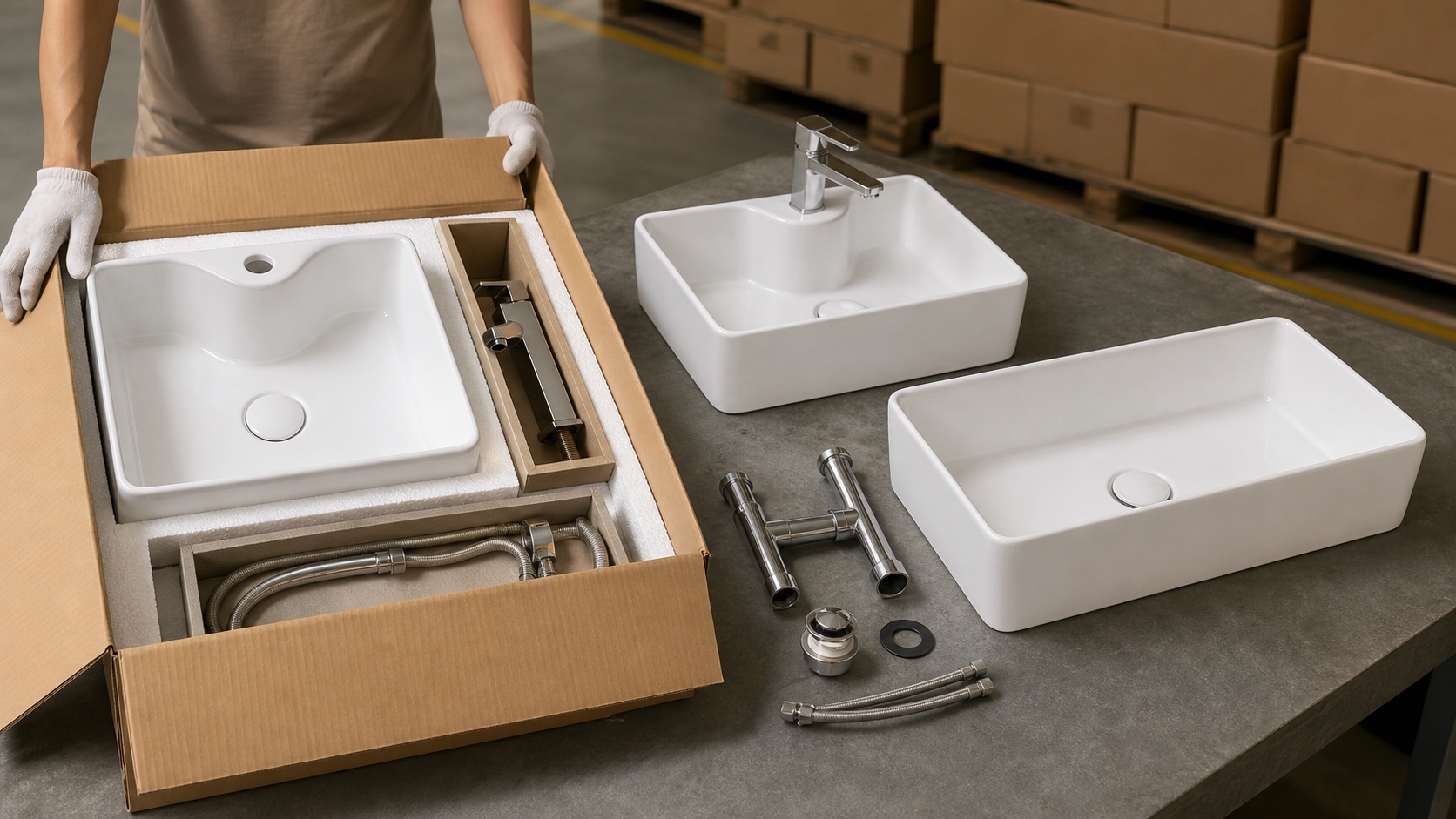
Chengda’s A-series includes countertop art basins with integrated tap holes and minimalist no-hole models. Send the desired basin shape, tap location, faucet drawing, countertop depth, overflow requirement, finish, market and quantity. We can shortlist models, prepare samples, run fit and water tests and coordinate export packing.
Choose a tap-hole or no-hole art basin by the complete water geometry: correct mounting, reach, splash control, drainage and service access matter more than a styled photograph.
FAQ COMMON QUESTIONS
Frequently asked questions
What is the main difference between a countertop basin with and without a tap hole?
A basin with a tap hole accepts a compatible faucet directly on its ceramic deck. A no-hole basin requires the faucet to be mounted on the surrounding countertop, wall or floor, depending on the design.
Can a tap-hole basin use a wall-mounted faucet instead?
Technically some projects may choose an alternative arrangement, but the unused ceramic hole remains visible unless a proper cover is specified. Buyers should order the configuration designed for the chosen faucet.
Does a no-hole vessel basin always need a tall faucet?
No. It may use a tall deck-mounted faucet, a wall-mounted spout or another coordinated solution. Spout height and reach must be checked against the actual bowl and countertop.
How do I reduce splashing from a vessel basin faucet?
Aim the stream into the useful bowl area, avoid striking the drain or steep inner wall directly, and test the real faucet at expected pressure. Bowl depth, aerator and flow rate also matter.
Can the countertop be drilled after the basin arrives?
It can be drilled when the countertop material and installation allow, but the faucet position should be designed in advance using the basin and faucet data. On-site guesswork can create clearance and splash problems.
Should a basin with an overflow use a special waste?
It generally needs a waste compatible with the overflow route, while a basin without an overflow usually uses a non-slotted type. Confirm the actual product and destination-market fitting specification.