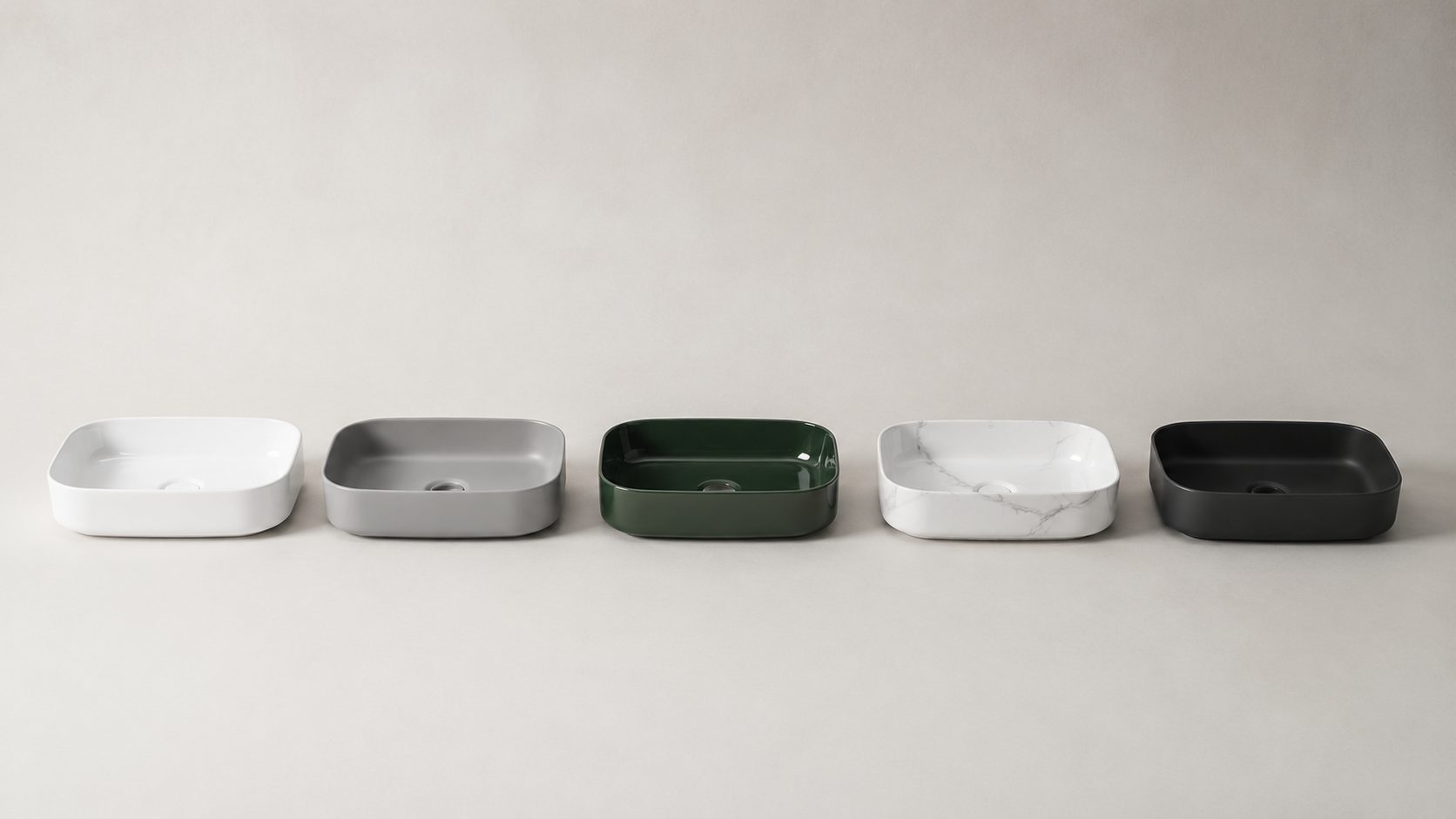
Two ceramic basins can come out of the same mould, from the same clay body, and sell for very different money — because one wears glossy white and the other a hand-poured reactive glaze. For an importer, the finish is not decoration; it is the single line item that most changes your kiln yield, your landed cost, your cleaning story and the market a basin belongs in. This ceramic basin glaze and colour guide walks through glossy white, matte, solid colours, marble-look and reactive art glazes — from the showroom, and from the kiln.
Key takeaways
- Glossy white is the baseline — highest kiln yield, hardest and most stain-resistant surface, easiest cleaning and the lowest price; it is the default for hotels, projects and high-volume programmes.
- Matte and colour cost more — softer looks that hide water spots and lift a retail range, but they show glaze defects more, mark more easily and carry a real price and yield penalty.
- Colour consistency is a spec, not a hope — solid colours and reactive glazes vary between batches, so a glaze code, gloss level, approved master sample and single-batch production must be agreed before you order.
01 AT A GLANCE
Ceramic basin glaze types at a glance
Every finish here sits on the same vitrified ceramic body — what changes is the glaze chemistry, how it is applied and how forgivingly it fires. Before the detail, here is the whole trade-off in one table: yield and price move together, and both move against decorative ambition.
Glaze & colour compared
| Glaze type | Kiln yield | Relative price | Durability & stains | Cleaning | Best fit |
|---|---|---|---|---|---|
| Glossy white | Highest | Baseline (lowest) | Hardest, most stain-resistant | Easiest — wipes clean | Hotels, projects, high volume |
| Matte white / grey | Lower | +10–25% | Softer surface, marks more easily | Needs more care; special cleaners | Design retail, boutique residential |
| Solid colour (glossy) | Lower | +15–30% | Good if glossy; batch colour varies | Easy, but avoid harsh acids | Retail ranges, statement bathrooms |
| Marble-look | Lower | +20–40% | Pattern hides marks; varies by method | Moderate; test cleaners first | Premium retail, feature basins |
| Reactive / art glaze | Lowest | +40% and up | Each piece unique; often semi-matte | Gentle cleaning only | Boutique retail, one-off feature pieces |
02 THE BASELINE
Glossy white: why it is the reference price
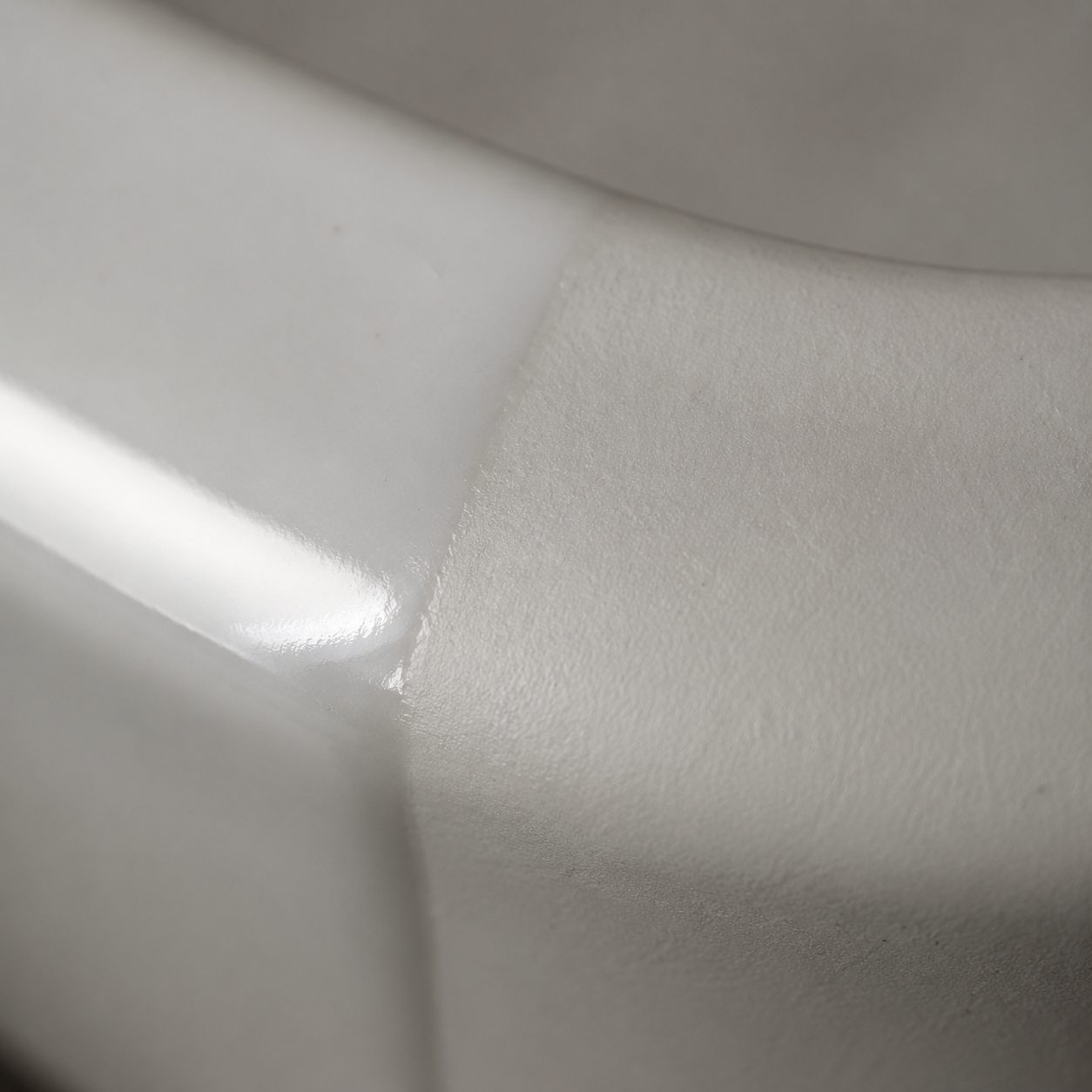
Glossy white is the workhorse of the industry, and every other finish is quoted as a premium over it — for good reason. A high-gloss glaze is fired hard to a dense, fully sealed, non-porous surface. That surface is the most scratch- and stain-resistant finish a ceramic basin can carry: it sheds water, soap scum and toothpaste, wipes clean in seconds and tolerates ordinary household chemicals without dulling. Buyers routinely report that a glossy bowl takes noticeably less cleaning time than a matte one.
It also fires the most forgiving. A clean white gloss hides minor surface variation, so more pieces pass inspection and the kiln yield is the highest of any finish — which is exactly why it anchors the price list. For any programme where cost, cleanability and easy replacement matter most — hotels, apartment fit-outs, developer projects, high-volume retail — glossy white is the safe default, and the finish we quote most.
03 MATTE
Matte finishes: the design premium and its trade-offs
Matte basins — soft white, grey, black, muted colour — have carried the design end of the market for years. A matte or semi-matte glaze scatters light instead of reflecting it, hides water spots and fingerprints in daily use, and reads as calm and contemporary in a photographed bathroom. Satin and semi-matte finishes sit in between, borrowing some of the gloss surface's easy cleaning while keeping a softer look.
The trade-offs are real and worth stating plainly to a client. A matte surface is slightly softer and more open than a high-gloss one, so it is more prone to metal marks and staining — especially in pale mattes — and cosmetics, dyes or coloured liquids left sitting can leave a mark that a quick wipe will not lift. Most of these come off with a suitable non-abrasive cleaner, and a light wipe of mineral oil can refresh water repellency, but the maintenance story is longer than for gloss. Matte also fires less forgivingly: pinholes, streaks and unevenness that a gloss would mask show clearly, so more pieces are rejected and the price sits above the glossy baseline.
Matte sells the photo; gloss survives the housekeeping trolley. Neither is "better" — they answer to different buyers.
04 COLOUR & ART
Solid colours, marble-look and reactive art glazes
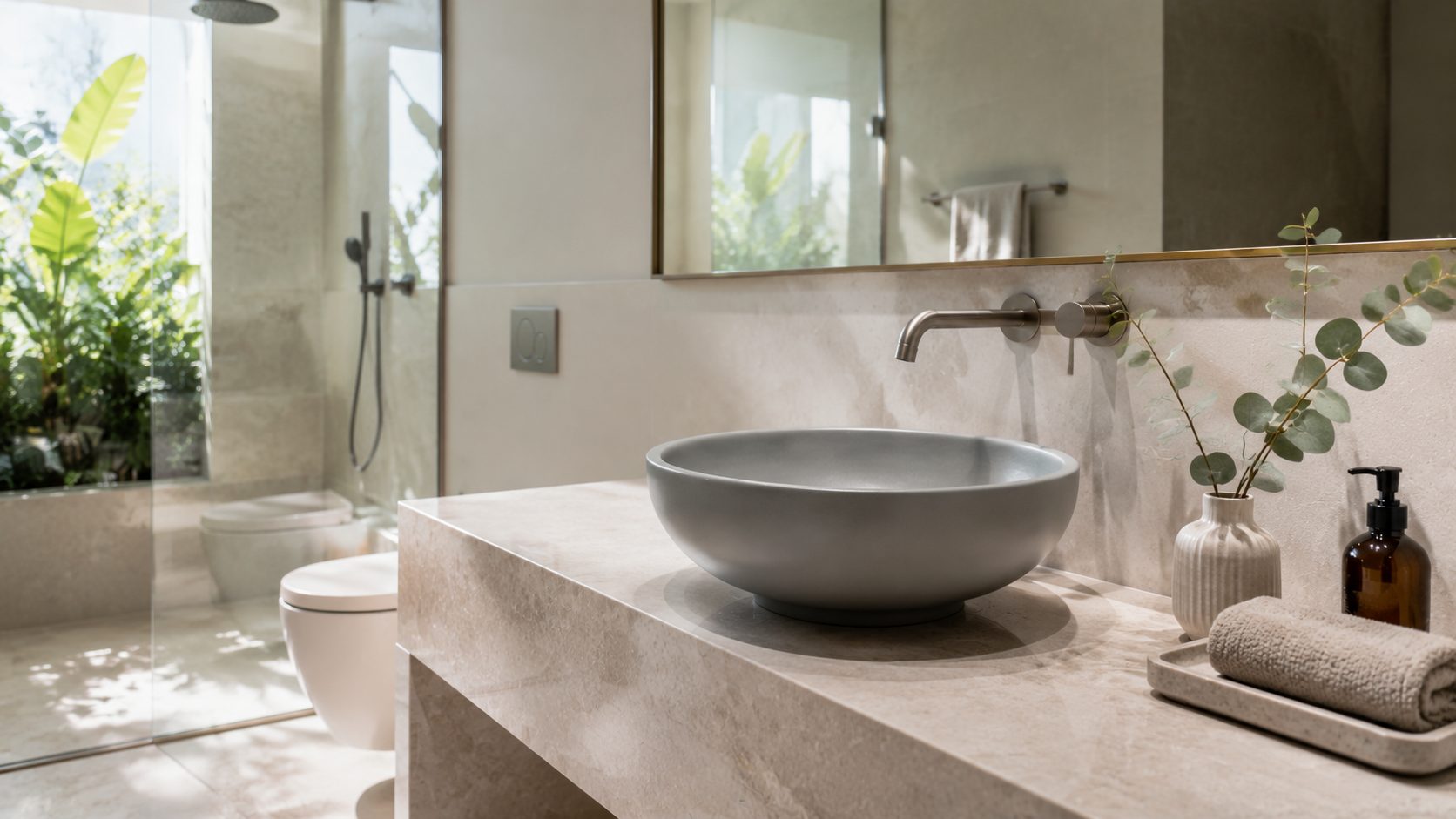
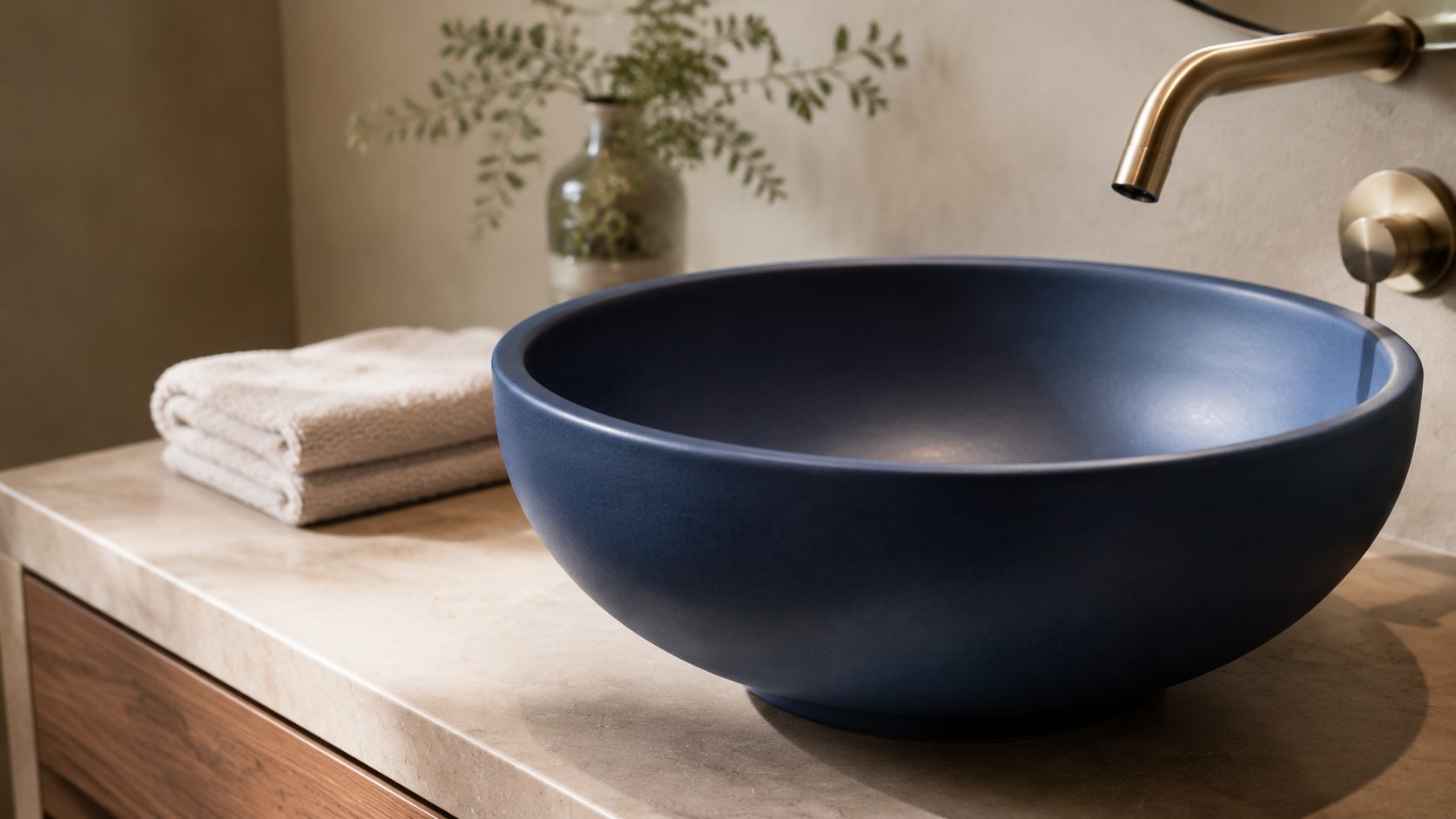
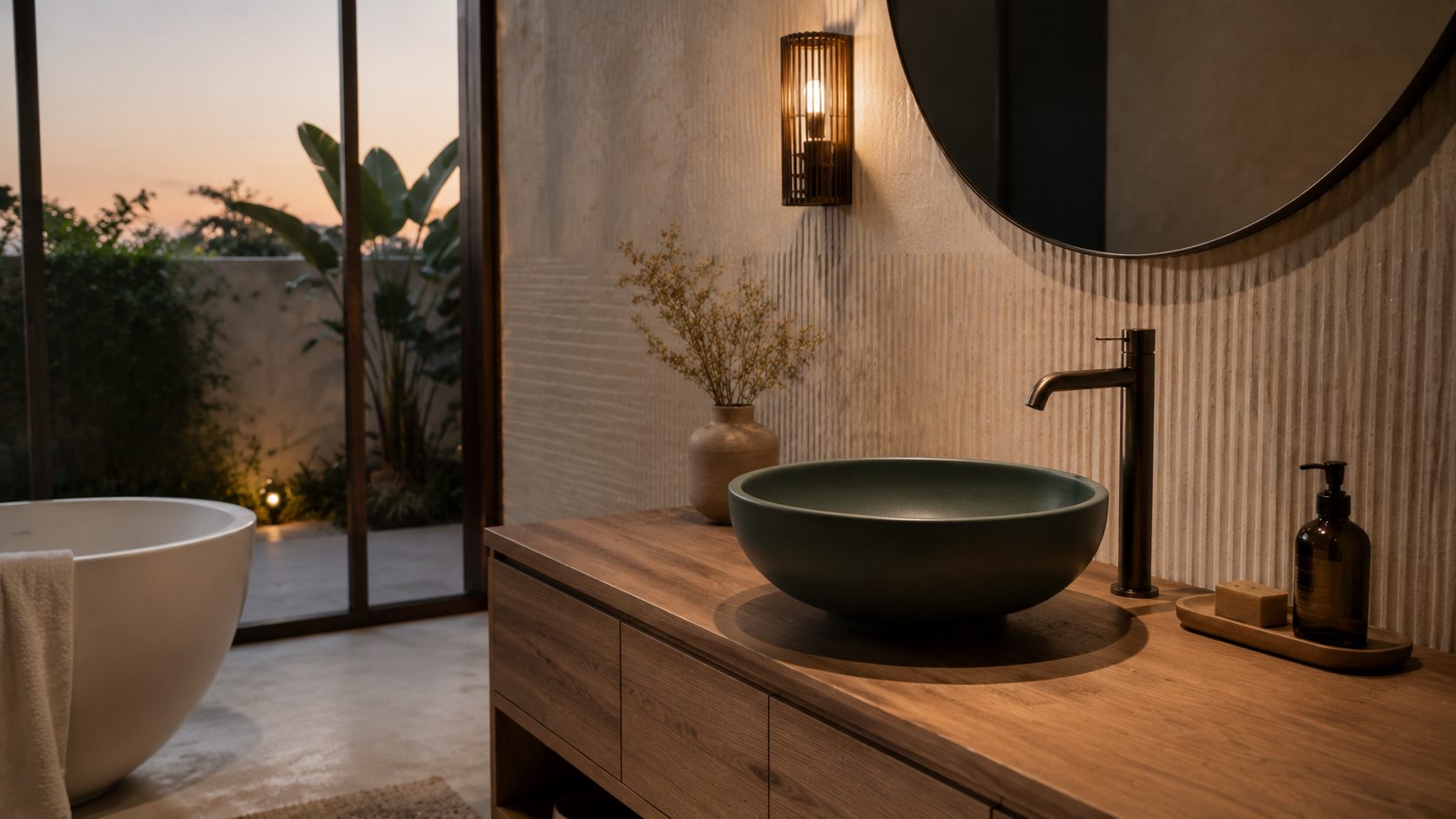
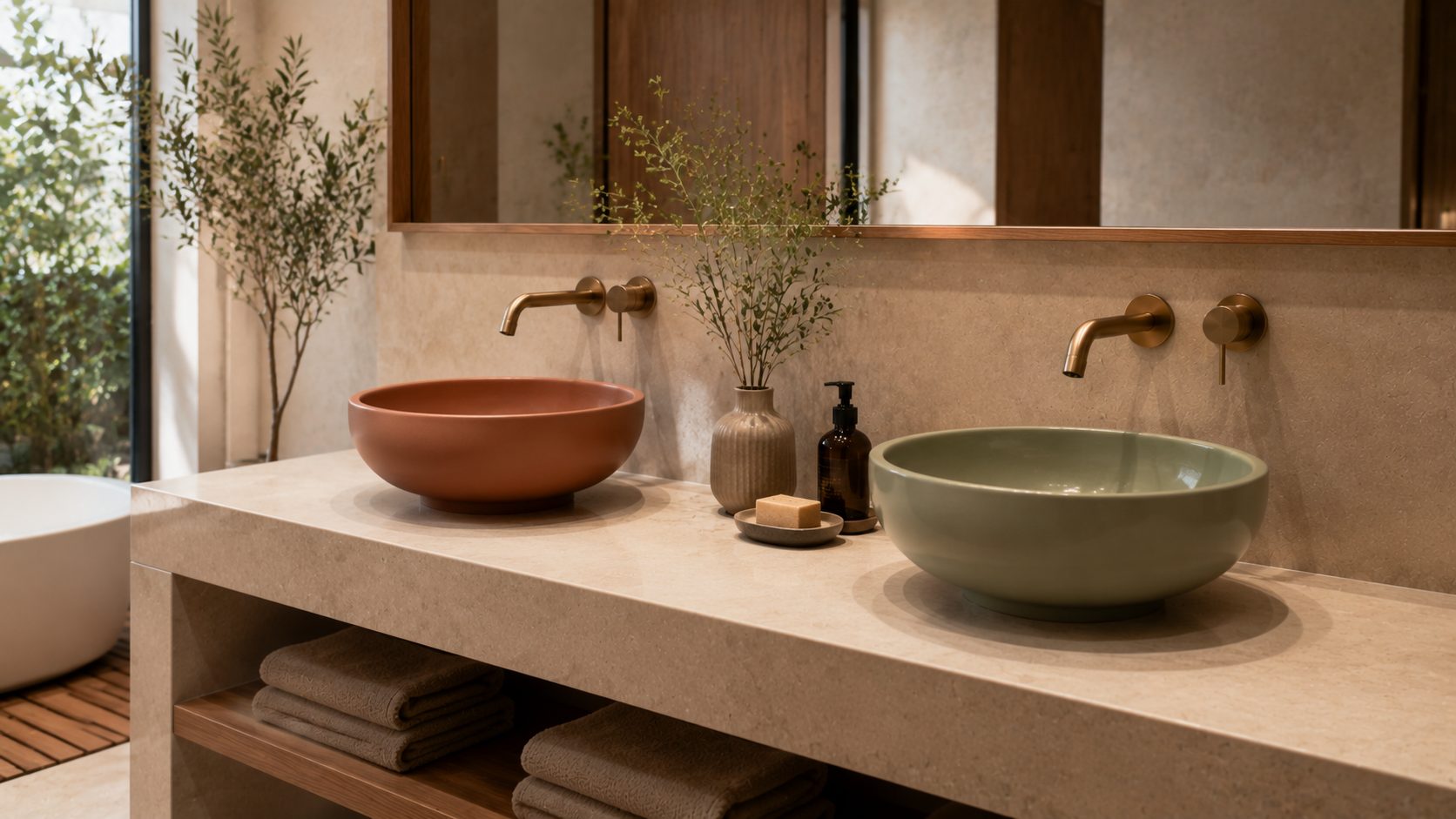
Solid colours — deep green, navy, terracotta, matte black — are made by adding stable ceramic stains to the glaze (or body). A glossy coloured glaze keeps most of white gloss's toughness and easy cleaning; a matte colour inherits the matte trade-offs above. The one thing every solid colour adds is colour risk: the fired shade depends on glaze thickness, kiln position and firing curve, so the same code can drift between runs.
Marble-look basins imitate stone veining, produced by applied decals, hand-brushed pattern or controlled reactive effects. The pattern conveniently disguises minor marks, but consistency and cleaning behaviour depend heavily on the method — worth confirming per model.
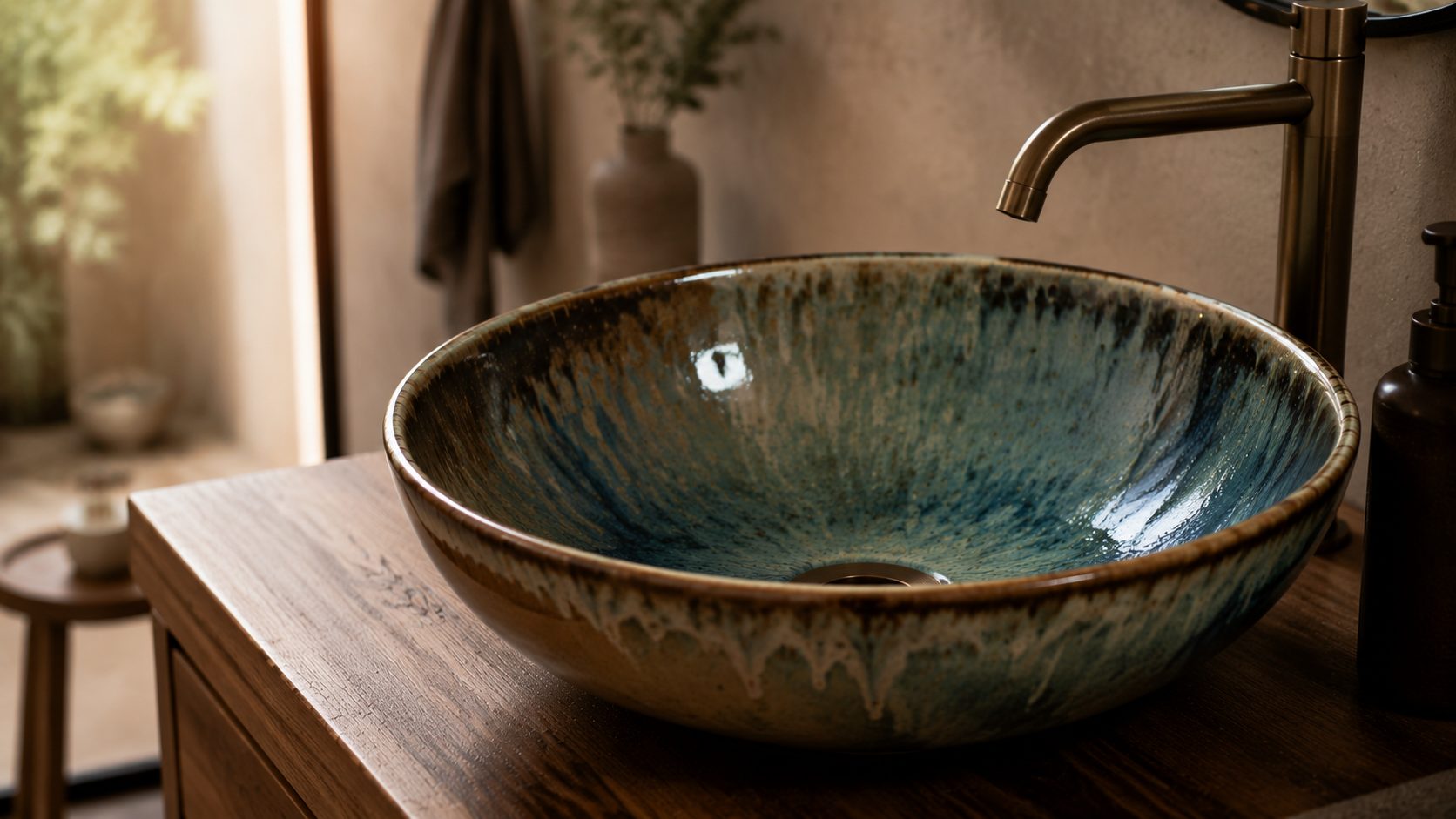
Reactive and art glazes (窯變釉 in Chinese) are the showpieces. Multiple glazes are layered so that firing itself creates flow, crystallisation and colour transitions — which means every single piece is genuinely unique, no two identical by design. That beauty comes at a cost: these are the hardest finishes to reproduce, the lowest-yielding in the kiln, often semi-matte and porous enough to need gentle cleaning, and the most expensive to make. They belong on boutique retail shelves and feature basins, not in a 500-room hotel order. If art glazes are your direction, read our dedicated art basin buying guide before you commit to quantities.
05 YIELD & PRICE
How glaze quietly drives yield and price
The reason finishes are priced the way they are is not margin games — it is kiln yield. Every basin is fired once at high temperature, and the glaze decides how many come out of that firing sellable. Glossy white hides the most and rejects the fewest, so its cost per good piece is lowest. As you move toward matte, then solid colour, then marble-look, then reactive glaze, two things happen at once: the surface reveals more defects, and the glaze itself is harder to apply evenly — so the reject rate climbs and the good-piece cost climbs with it.
For an importer, the practical consequence is simple. A coloured or matte range will always carry a premium over the same shape in glossy white, and a reactive-glaze piece is a different cost class entirely. Budget for it at the range-planning stage, not at the negotiation table. Our ceramic wash basin price guide puts numbers around these gaps; the point here is that glaze, more than shape, is what moves them.
06 IN USE
Durability, stains and cleaning — the honest version
In everyday service, the glossy glaze is the most durable and the easiest to keep. Its sealed surface resists limescale, soap scum and staining, and it forgives strong cleaners. Matte and coloured surfaces need a gentler regime: non-abrasive cleaners, a soft cloth, and — importantly — no harsh acids. White vinegar or proprietary descalers clear limescale beautifully on white gloss, but on matte and especially on coloured or reactive glazes they can dull or fade the finish over time. The rule to pass to your customers is to test any acidic or strong cleaner on a hidden area first, and to wipe the basin dry after use to stop limescale forming in the first place.
One care card, fewer complaints
Ship coloured and matte basins with a short care note: soft cloth and mild detergent for daily cleaning; no abrasive pads or scouring powder; no neat acid descalers on colour or matte finishes; dry after use. A ten-cent insert prevents the "the colour faded" and "it scratched" claims that eat your margin later.
07 BATCH MATCHING
Colour consistency across a production batch
This is where importers get hurt, so it deserves its own section. Ceramic colour is not printed on — it develops in the fire, and it depends on glaze thickness, kiln position and the firing curve. That means the same glaze code can land slightly different from one production batch to the next, and even within a large batch the tone can drift. On white this is invisible; on solid colours and reactive glazes it is the number-one source of "this doesn't match the sample" disputes.
The defences are all things to agree before production. Approve a physical master sample and keep a sealed retained sample at both ends. Fix the glaze code and target gloss level in writing. And where the colour matters, insist that the whole quantity is fired from a single glaze batch in one production run rather than topped up later — the single most effective guard against visible colour difference on the shelf. For reactive glazes, accept up front that variation is the product, and agree an acceptable range rather than an impossible match.
08 WHAT TO SPECIFY
What to specify when ordering
Put the finish on the order as clearly as the dimensions. Six lines cover it: glaze type (glossy / matte / satin); exact colour and glaze code against an approved master sample; target gloss level; single-batch production for any colour; a defined colour-tolerance range; and the pre-shipment check that the finish will be inspected against the retained sample. That last point is a normal part of a proper inspection — our guide to inspecting sanitaryware before shipment shows where glaze and colour checks fit alongside crazing, pinhole and dimension checks.
Before you confirm a coloured or matte order
Glaze type and gloss level fixed; colour code tied to an approved, retained master sample; single glaze batch / single run agreed; colour-tolerance range written down; care card included for colour and matte; glaze and colour inspection built into the pre-shipment check; and a clear rule on how out-of-tolerance pieces are handled.
As a Guangdong-based ceramic sanitary ware manufacturer, we produce basins across all of these finishes — glossy white as standard, plus matte, solid colours, marble-look and reactive art glazes — with OEM/ODM colour matching to an approved sample. If you are still deciding shape as well as finish, our guide to choosing a ceramic basin pairs naturally with this one. Tell us the finish, the market and the volume, and we will recommend the right glaze and quote it.
Glaze is where a basin's cost, character and cleaning story are all decided at once. Start from glossy white as your baseline, add finish and colour where the market pays for it, and pin down colour consistency in writing — and the glaze stops being a risk and becomes a range you can sell with confidence.
FAQ COMMON QUESTIONS
Frequently asked questions
Is a glossy or matte ceramic basin better?
Neither is universally better — they suit different buyers. Glossy white is harder, more stain- and scratch-resistant, easiest to clean and the cheapest to make, which makes it the safe choice for hotels, projects and high-volume programmes. Matte reads softer and more contemporary and hides water spots, but it marks more easily, needs gentler cleaning and costs more because it fires with a lower yield. Choose gloss for durability and value, matte for design-led retail where the look justifies the premium.
Why do coloured and reactive-glaze basins cost more than white?
Because of kiln yield. A basin is fired once, and the glaze decides how many come out sellable. Glossy white hides minor surface variation, so most pieces pass and the cost per good piece is lowest. Matte, solid colours, marble-look and reactive glazes each reveal more defects and are harder to apply evenly, so more pieces are rejected and the price climbs. A reactive art glaze, where firing itself creates the pattern, is the lowest-yielding and most expensive finish of all.
How do I keep basin colour consistent across a batch?
Ceramic colour develops in the kiln and depends on glaze thickness, kiln position and firing curve, so it can drift between runs. Control it before production: approve a physical master sample, keep a sealed retained sample at both ends, fix the glaze code and gloss level in writing, and insist the whole quantity is fired from a single glaze batch in one run rather than topped up later. Also agree a colour-tolerance range so acceptance is objective at inspection.
Do coloured or matte basins stain or fade more easily?
They can, so care matters. Matte and coloured surfaces are slightly more open than high gloss and more prone to metal marks and staining, especially in pale mattes. Acidic cleaners such as neat white vinegar or strong descalers clear limescale on white gloss but can dull or fade matte and coloured finishes over time. Advise customers to use a soft cloth and mild detergent, avoid abrasives and neat acids, test any strong cleaner on a hidden spot first, and dry the basin after use.
What is a reactive or art glaze basin?
A reactive or art glaze (窯變釉) is made by layering multiple glazes so that the firing itself creates flowing colour transitions, crystallisation and pattern. Because the kiln, not a printer, decides the result, every piece is genuinely unique and no two are identical. These finishes are beautiful but the hardest to reproduce, the lowest-yielding and most expensive, and often semi-matte and porous enough to need gentle cleaning — ideal for boutique retail and feature basins rather than large uniform project orders.
Which basin finish is best for a hotel or project order?
Glossy white in most cases. It is the most durable and stain-resistant, the easiest and fastest to clean for housekeeping, the cheapest per unit and the easiest to replace or re-order to a consistent shade — all decisive for hotels, apartments and developer projects. Matte or a single accent colour can work for a design-led boutique property, but for large uniform installations glossy white keeps cost, maintenance and batch consistency all on your side.