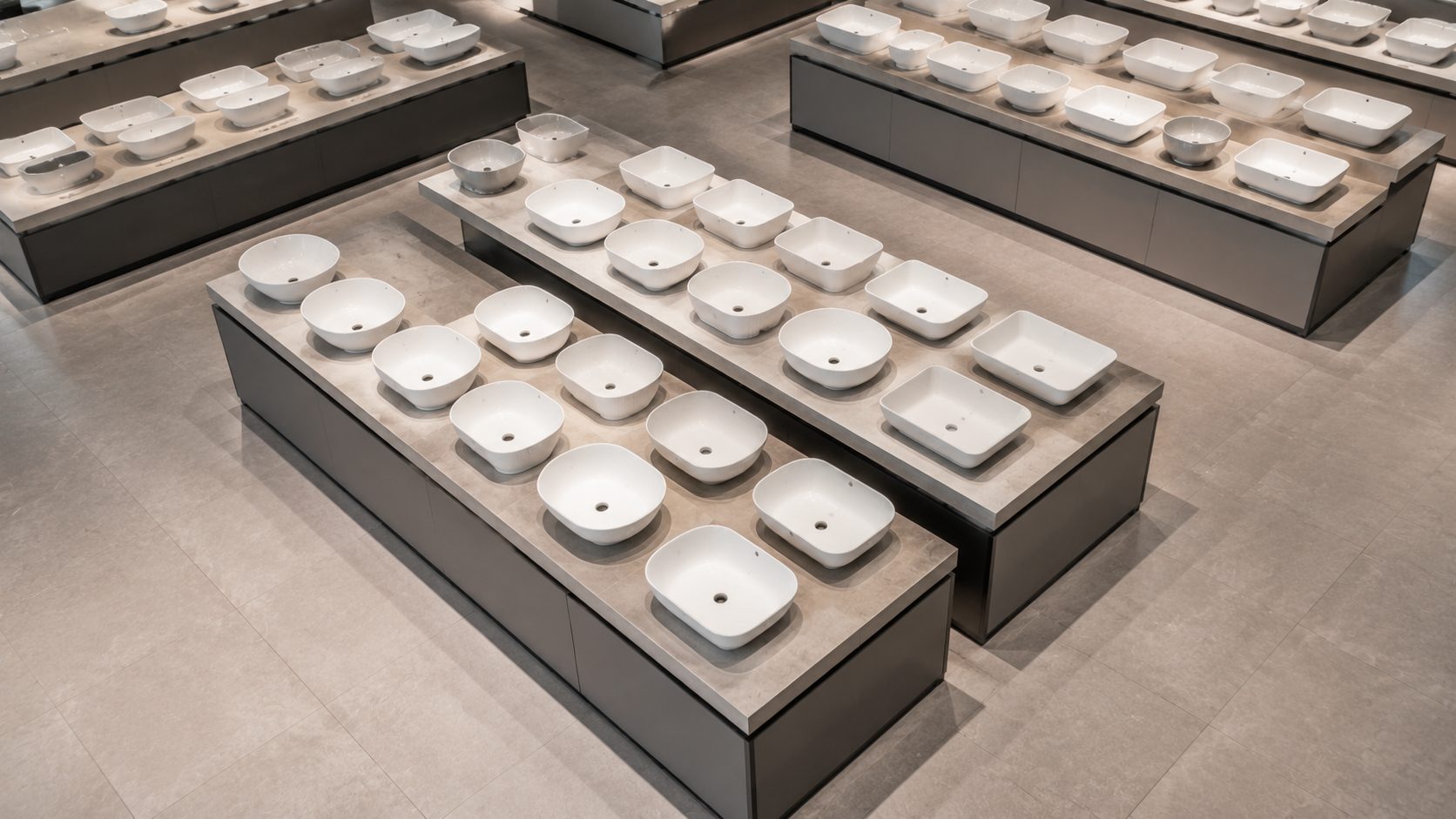
There is no single ceramic wash basin price — and any supplier who quotes one before asking for your specs is guessing. What does exist is a set of fairly predictable ex-factory ranges, and a short list of drivers that move a basin from eight dollars to eighty. This guide gives importers, distributors and project buyers a factory-side view of what ceramic basins really cost from China: indicative ranges by basin type, the six inputs that set the number, tooling cost for custom designs, how packaging and container fill change unit economics, and why the cheapest quote on the table is often the most expensive one to accept.
Key takeaways
- Think in ranges, not stickers — as a rough ex-factory reference, commodity basins often sit around USD 8–35 and art or designer pieces around USD 30–120+, all depending on size, glaze, grade and volume.
- Six drivers set the number — size and weight, body type, glaze, design complexity, QC grade and order volume explain almost every gap between two quotes.
- Compare landed cost, not FOB lines — freight, duty and breakage can add 20–50% or more, so a slightly higher ex-factory price with proper glaze, grade and packing usually wins.
01 THE SHORT ANSWER
How much does a ceramic wash basin cost ex-factory?
Asked cold, the honest factory answer to how much does a ceramic basin cost is: it depends — but it depends on knowable things. As a rough ex-factory reference for standard white glaze, qualified mid grade and meaningful bulk volume, a simple wall-hung basin often falls around USD 8–25 per piece, with a pedestal adding roughly USD 5–15 for the column; a standard countertop or vessel basin around USD 10–30; an undermount basin around USD 12–35; and art or designer basins commonly USD 30–120+, with genuinely hand-glazed statement pieces going higher. These are indicative planning bands, not quotes — the same model moves within its band on size, glaze and quantity.
China anchors global pricing because it dominates supply: in 2023 it shipped roughly USD 3.13 billion of the world's USD 5.76 billion in ceramic sanitary ware exports — about 54%. The Chaozhou–Foshan cluster in Guangdong concentrates kilns, glaze houses and mould makers, which lowers the cost base — but it also spans an enormous quality spread. That spread, not the average, is what a buyer has to navigate, and it is set by six drivers.
02 WHAT SETS THE NUMBER
The six drivers behind every ceramic basin price
1. Size and weight. Kiln space is the true constraint: a tunnel-kiln car carries a fixed volume, and a 100cm basin can occupy the space of two 45cm pieces, so per-piece firing cost roughly scales with footprint. A countertop basin runs about 6–12 kg, a large one-piece pedestal 20–30+ kg — and weight follows the piece into packaging and freight.
2. Body type. Vitreous china — low water absorption, typically ≤0.5% — is the baseline for serious basins. Fireclay bodies for farmhouse-style sinks are thicker, heavier and harder to fire flat, often 2–4x a comparable vitreous china piece. Cheap earthenware-type "ceramic", fired lower, is cheaper again — and a classic trap, with higher absorption and crazing risk.
3. Glaze. Glossy white fires with the highest yield and sets the baseline. Matte whites and matte colours typically add roughly 15–40%; solid glossy colours 20–50%, since dark glazes show every pinhole; and hand-applied reactive or art glazes can add 50–150%, because each piece varies and rejects run high — the reason art basins cost far more than their size suggests.
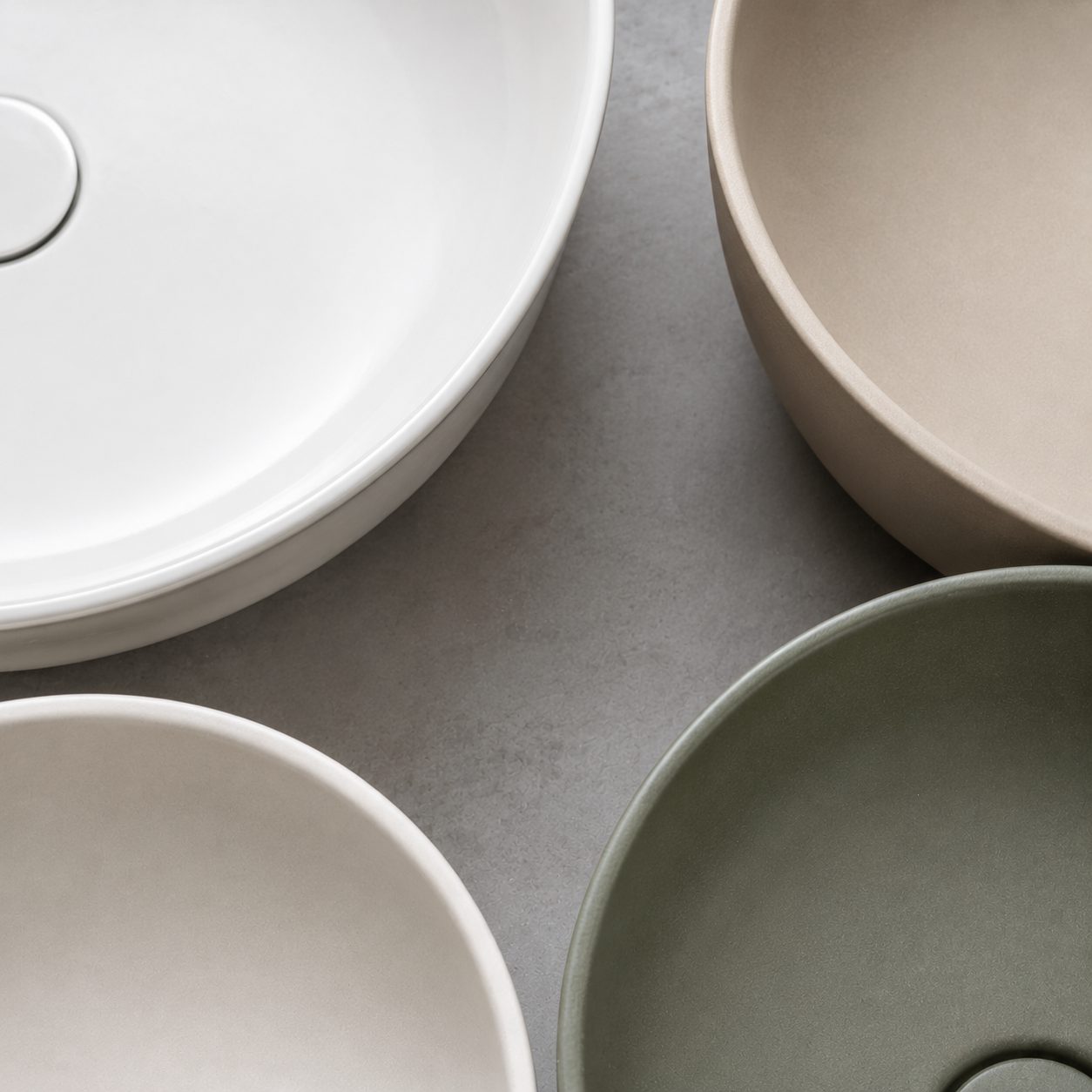
4. Design complexity. Thin rims, sharp corners, very flat bottoms and complex one-piece castings all cut kiln yield — and every reject is priced into the survivors. 5. QC grade. Factories sort the same mould's output after firing into premium grade and qualified grade by pinholes, glaze waviness, warpage and colour consistency; premium typically carries a 10–25% premium, and two quotes on "the same basin" often differ simply because they price different grades. 6. Volume. Setup, kiln scheduling, glaze batching and inspection are semi-fixed costs; volume amortises them — more on that below.
03 INDICATIVE RANGES
Ceramic basin price by type: an indicative reference table
The table below is an indicative ex-factory reference only — it assumes standard white glaze, mid grade and meaningful bulk volume, and every figure should be read with a "depending on specs" attached. Use it to sanity-check quotes, not to replace one.
Indicative ex-factory price ranges by basin category
| Basin type | Indicative ex-factory range (USD) | What moves it up |
|---|---|---|
| Pedestal basin | ~8–25 (column adds ~5–15) | One-piece integrated pedestals, larger sizes |
| Wall-hung basin | ~8–25 | Slim-rim designs, concealed traps, tighter flatness tolerance |
| Countertop / vessel basin | ~10–30 | Large or irregular shapes, matte and coloured glazes |
| Undermount basin | ~12–35 | Ground rims, tighter dimensional tolerance for stone cutouts |
| Art / designer basin | ~30–120+ | Hand-applied reactive glazes, sculptural one-piece forms, low yields |
If a quote lands far below its band, something in the spec — body, glaze thickness, grade or packing — is usually carrying the difference. If it lands above, ask what you are paying for; sometimes the answer is a legitimate one, like tighter tolerance or premium-grade-only sorting.
04 CUSTOM DESIGNS
Tooling and mould cost for custom basins
A custom shape means a new master model plus working plaster moulds — and resin case moulds if volumes justify high-pressure casting. As a rough reference, one-time tooling for a basin typically runs USD 500–3,000 depending on complexity; high-pressure resin tooling costs considerably more but suits large committed volumes. Working plaster moulds wear out after roughly 80–150 casts, so ongoing mould replacement is already baked into the unit price — the buyer pays master tooling once, not per mould.
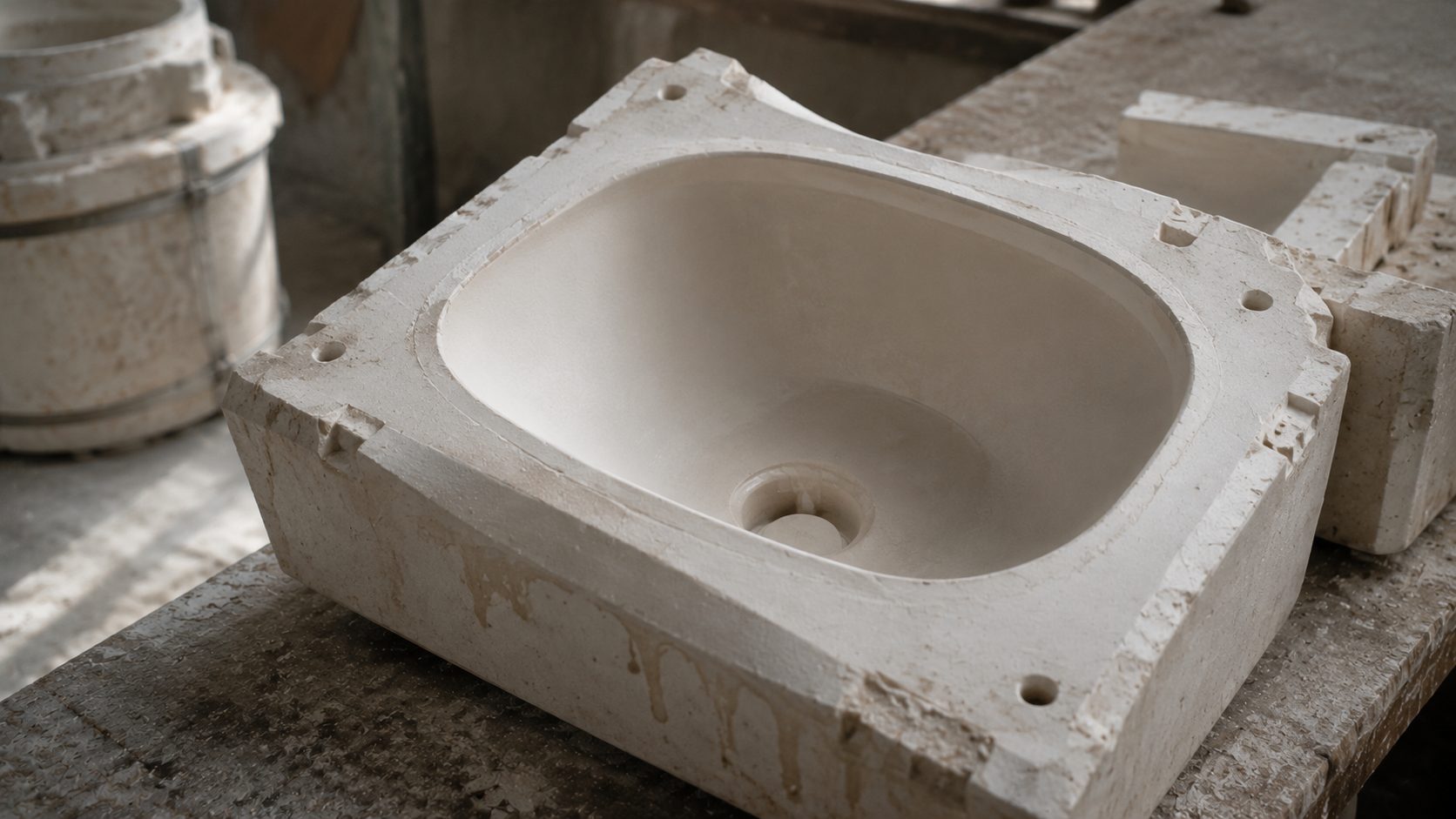
Commercially, tooling is structured one of three ways: the buyer pays it upfront and owns design exclusivity; the factory amortises it into the unit price against a committed quantity; or it is refunded or credited once orders pass a volume threshold. All three are normal and negotiable — the mistake is leaving it implicit. Expect roughly 30–60 days from tooling start to approved first samples before mass production. For the full workflow — briefing, mould ownership, sample approval — see our guide to OEM and ODM bathroom products.
05 PACKAGING AND FILL
Packaging and container math: the quiet unit-price lever
Packaging is priced per basin and quietly decides whether the goods arrive sellable. As an indicative reference: a standard export carton with foam or EPE corners runs about USD 1–3 per basin — fine for professionally loaded full containers, riskier for LCL and multi-handling routes. Palletising with stretch wrap and corner boards adds roughly USD 2–5 per basin equivalent, and a fumigated plywood crate for art basins or fragile one-piece designs can add USD 5–15+. This is exactly where the cheapest quotes cut first, and ceramic breakage is unforgiving.
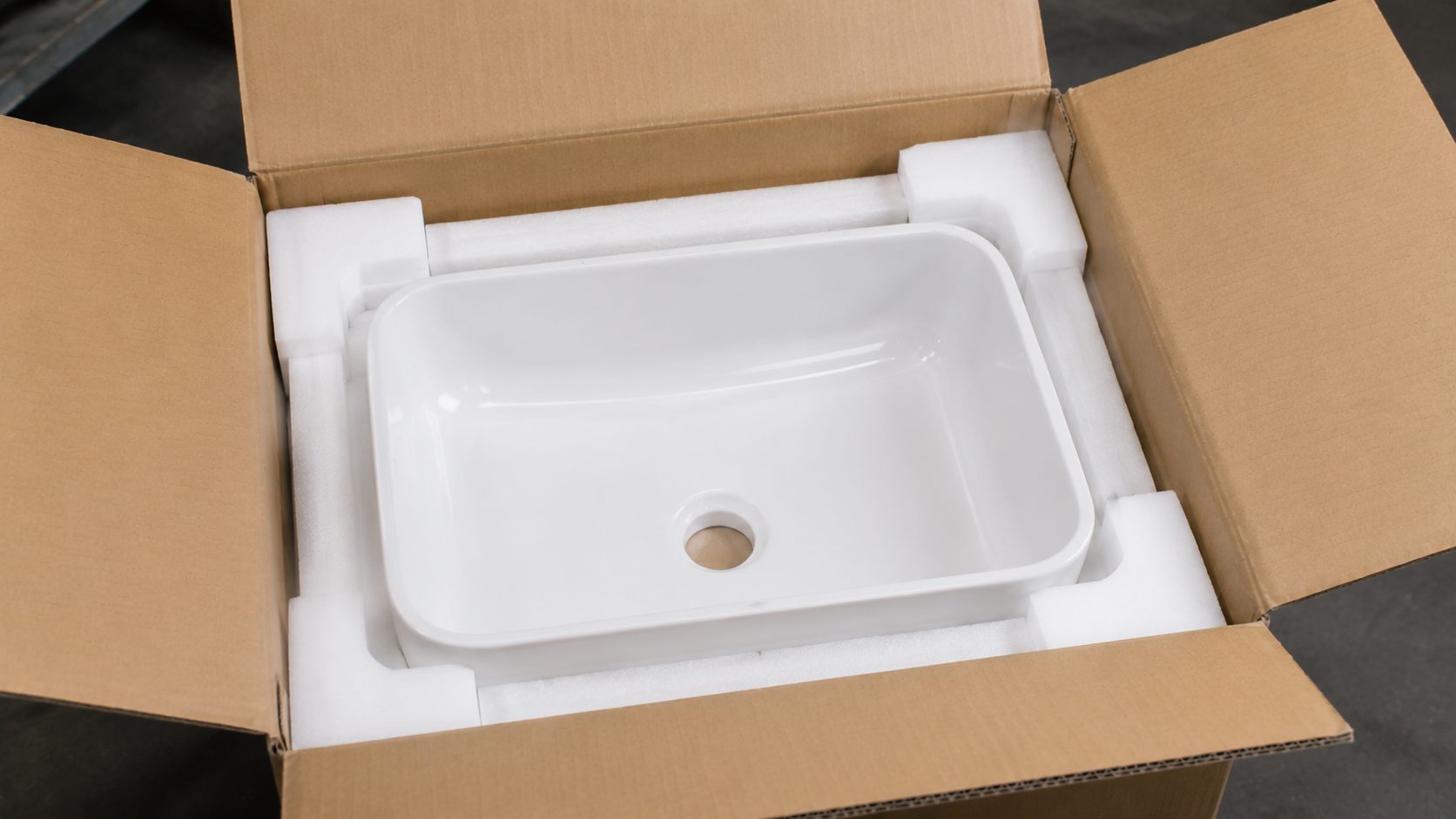
Volume then reshapes the unit price. Samples usually run 2–3x the bulk unit price plus courier, often refunded against the order. A 100–300 piece trial sits near list price, and MOQ commonly runs 100–300 pieces per model per colour — higher for custom colours, because a glaze batch has a minimum size. A full 20GP holds roughly 500–1,000+ basins depending on size and packing, a 40HQ about double, and full-container orders typically price 10–20% below small-order levels while per-piece freight collapses with fill. Mixed containers of basins, cabinets and toilets are normal for one-stop suppliers; our wholesale ceramic wash basins guide covers the loading-plan side in detail.
Compare landed cost per sellable unit
When two quotes differ by a dollar, run both through the same landed math: ex-factory price + freight + duty + a breakage allowance, divided by the units that arrive sellable. The ranking often flips.
06 THE REAL NUMBER
From ex-factory price to landed cost
Landed cost is the number that actually competes on your shelf: ex-factory price + inland haulage + export charges + ocean freight + insurance + import duty and taxes (ceramic sanitary ware commonly falls under HS 6910, with rates varying by country) + destination handling + a breakage allowance. With proper packing, planning for roughly 1–3% breakage is sensible — budget it rather than fight claims later.
The planning message: for commodity basins, freight and duty can add 20–50% or more to the ex-factory price depending on destination and container utilisation. At that ratio, a dollar shaved off the ex-factory line matters less than filling the container properly and keeping defect and breakage rates low. Buyers who negotiate hardest on the FOB line while ignoring fill and packing routinely pay more per sellable unit.
07 THE CHEAP-QUOTE TRAP
Why the cheapest quote is often the most expensive
The lowest number usually got low somewhere specific. Thin or uneven glaze looks fine in photos and stains within months. An under-fired, high-absorption body — earthenware sold as "ceramic" — crazes and discolours; ask for absorption data, and expect ≤0.5% for vitreous china. Grade switching is common: quoted on premium-grade photos, shipped qualified-or-below stock. Packing cut to the bone turns into 5–10% arrival breakage, enough to erase the entire discount. And a trader reselling aged warehouse stock offers no batch consistency, no reorder continuity and no factory accountability when a claim lands.
A 3% breakage rate can erase the saving from a 5% cheaper quote — before you count a single unhappy customer.
The defences are procedural, not heroic: request available test reports before ordering (certification support may vary by product and market); agree the QC grade in writing; agree the packing spec, not a photo of a box; book a pre-shipment inspection with your own staff or a third party — our guide to inspecting sanitary ware before shipment covers exactly what to check; and start with a trial order before committing a container.
08 GET A REAL QUOTE
Send these specs for an accurate quote
A quotation is only as accurate as the brief behind it. To turn indicative ranges into a real number, send as much of this as you can: a model reference — photo, drawing or catalogue number; dimensions (L×W×H) and installation type (countertop or vessel, undermount, wall-hung, pedestal, semi-recessed); body and glaze spec — white gloss, matte, colour code or art glaze — and the grade you are buying; tap-hole configuration (0/1/3 holes) and overflow yes or no; quantity per model and total order size; target market, since it drives standards and tolerance expectations; packaging requirement — carton, pallet or crate, neutral or branded; trade terms (EXW/FOB/CIF) and destination port; and any customisation — logo, colour or size — which opens the tooling and MOQ discussion.
As a manufacturer in Guangdong's ceramic heartland, Chengda would rather explain the price structure than win on the thinnest number. Send your basin specs on WhatsApp and we will return a detailed quotation against your actual volumes within the week, with samples available before bulk production.
A basin price you can trust is never a single number — it is a range you understand, quoted against specs you wrote down.
FAQ COMMON QUESTIONS
Frequently asked questions
How much does a ceramic wash basin cost from a China factory?
As a rough ex-factory reference for standard white glaze, qualified grade and bulk volume: simple wall-hung and pedestal basins often fall around USD 8–25 per piece (a pedestal column adds roughly USD 5–15), countertop and vessel basins around USD 10–30, undermount basins around USD 12–35, and art or designer basins commonly USD 30–120+. These are indicative planning ranges only — the real number depends on size, glaze, grade and quantity, so send your specs for an actual quotation.
Why do ceramic basin prices vary so much between suppliers?
Six drivers explain most of the gap: size and weight (kiln space), body type (vitreous china vs fireclay vs cheap earthenware), glaze (glossy white baseline vs matte, coloured or hand-applied art glazes), design complexity (thin rims and one-piece castings cut kiln yield), QC grade (premium grade typically carries a 10–25% premium over qualified grade) and order volume. Two quotes on the "same basin" often price different grades, glaze thicknesses or packing specs — plus a trader margin if you are not buying from the factory.
Does a custom basin design cost more?
Yes, through one-time tooling. A custom shape needs a new master model and working plaster moulds — as a rough reference, typically USD 500–3,000 depending on complexity, with high-pressure resin tooling costing more but suiting big volumes. Plaster working moulds wear out after roughly 80–150 casts, and that replacement is already baked into the unit price. Tooling is commonly paid upfront, amortised into the unit price against a committed quantity, or credited past a volume threshold, and new tooling adds roughly 30–60 days before first samples.
Is the cheapest ceramic basin quote a good deal?
Usually not, because the saving hides somewhere specific: thin or uneven glaze, an under-fired high-absorption body (ask for absorption data — vitreous china should be ≤0.5%), downgraded QC stock quoted on premium-grade photos, or packing cut so hard that 5–10% arrives broken. A 3% breakage rate can erase the saving from a 5% cheaper quote. Compare landed cost per sellable unit, agree grade and packing in writing, request available test reports and inspect before shipment.
How does order volume change the ceramic basin price?
Samples usually run 2–3x the bulk unit price plus courier, often refunded against the order. A 100–300 piece trial sits near list price, and MOQ commonly runs 100–300 pieces per model per colour — higher for custom colours because a glaze batch has a minimum size. A full 20ft container (roughly 500–1,000+ basins depending on size and packing; a 40HQ about double) typically prices 10–20% below small-order levels, and per-piece freight drops sharply as the container fills. These are indicative ranges to confirm per order.
What should I send to get an accurate wash basin quote?
Send a model reference (photo, drawing or catalogue number); dimensions and installation type; body and glaze spec plus the QC grade you are buying; tap-hole and overflow configuration; quantity per model and total order size; target market; packaging requirement (carton, pallet or crate, neutral or branded); trade terms (EXW/FOB/CIF) and destination port; and any customisation such as logo, colour or size, which opens the tooling and MOQ discussion. The more complete the brief, the less a factory has to pad the price for unknowns.