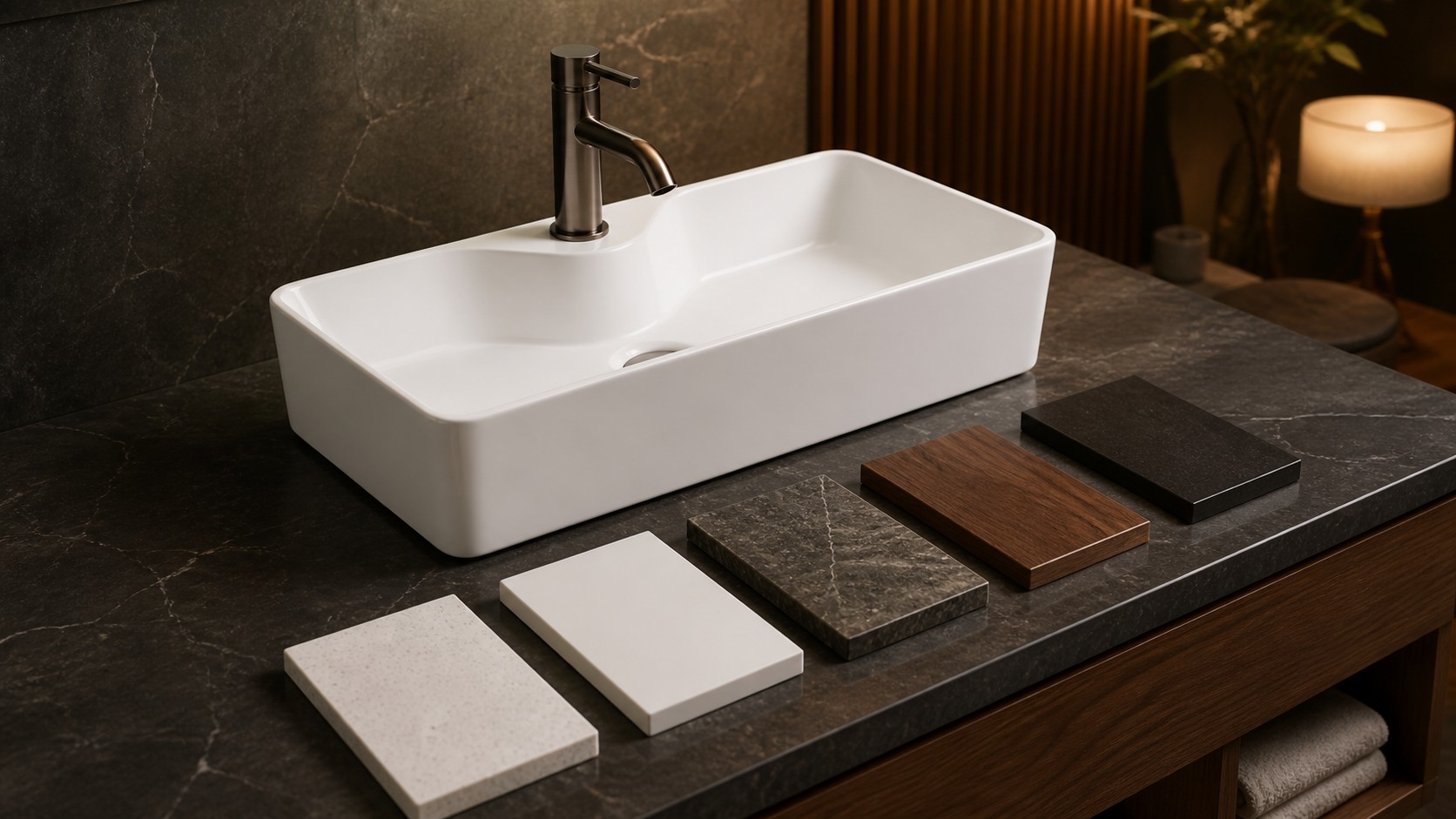
The best countertop material for a vessel sink is not chosen by colour alone. An above-counter basin makes the top a visible working surface: water collects around the base, the faucet may pass through the slab, and the drain assembly crosses both ceramic and counter. The material must tolerate the room's moisture and cleaners while giving the basin stable support, accurate openings and enough thickness compatibility for its fittings.
Engineered quartz and solid surface are practical defaults for many busy bathrooms; porcelain or other approved compact slabs can offer low absorption and a slim architectural look; granite and marble bring natural variation; laminate and wood can work only when their construction, cut edges and care are suitable for a wet vanity. This guide compares the choices without turning any brand claim into a universal rule. Always follow the selected surface, basin, faucet and drain documentation.
Key takeaways
- Low absorption and simple care matter: standing droplets, soap and cosmetics make bathroom performance more important than showroom colour.
- The cutout is part of the system: material, thickness, edge distance, support and the model-specific template must be approved together.
- Natural or wood surfaces need honest maintenance: sealing and daily drying cannot be replaced by vague claims of waterproofing.
01 DEFINE THE JOB
What does a vessel-sink countertop need to do?
The top carries the basin, receives the drain and often the faucet, resists daily wetting and stays clean around an exposed base. It also bridges the vanity below, so slab strength alone is not enough: substrate, cabinet rails, spans, seams and fixing details matter. The opening must leave the edge distances and support required by the surface supplier. A beautiful slab with a badly planned hole is not a successful countertop.
Judge materials against the actual room. A family vanity needs forgiving care; a powder room may prioritise appearance; a hotel needs repeatable colour, replaceable parts and a routine housekeeping can follow. Record basin footprint and weight, counter depth and thickness, faucet location, backsplash, overflow, drain parts, cleaners and water conditions. The vessel sink dimension guide helps establish these inputs before comparing surfaces.
02 ENGINEERED QUARTZ
Is engineered quartz a good countertop for a vessel sink?
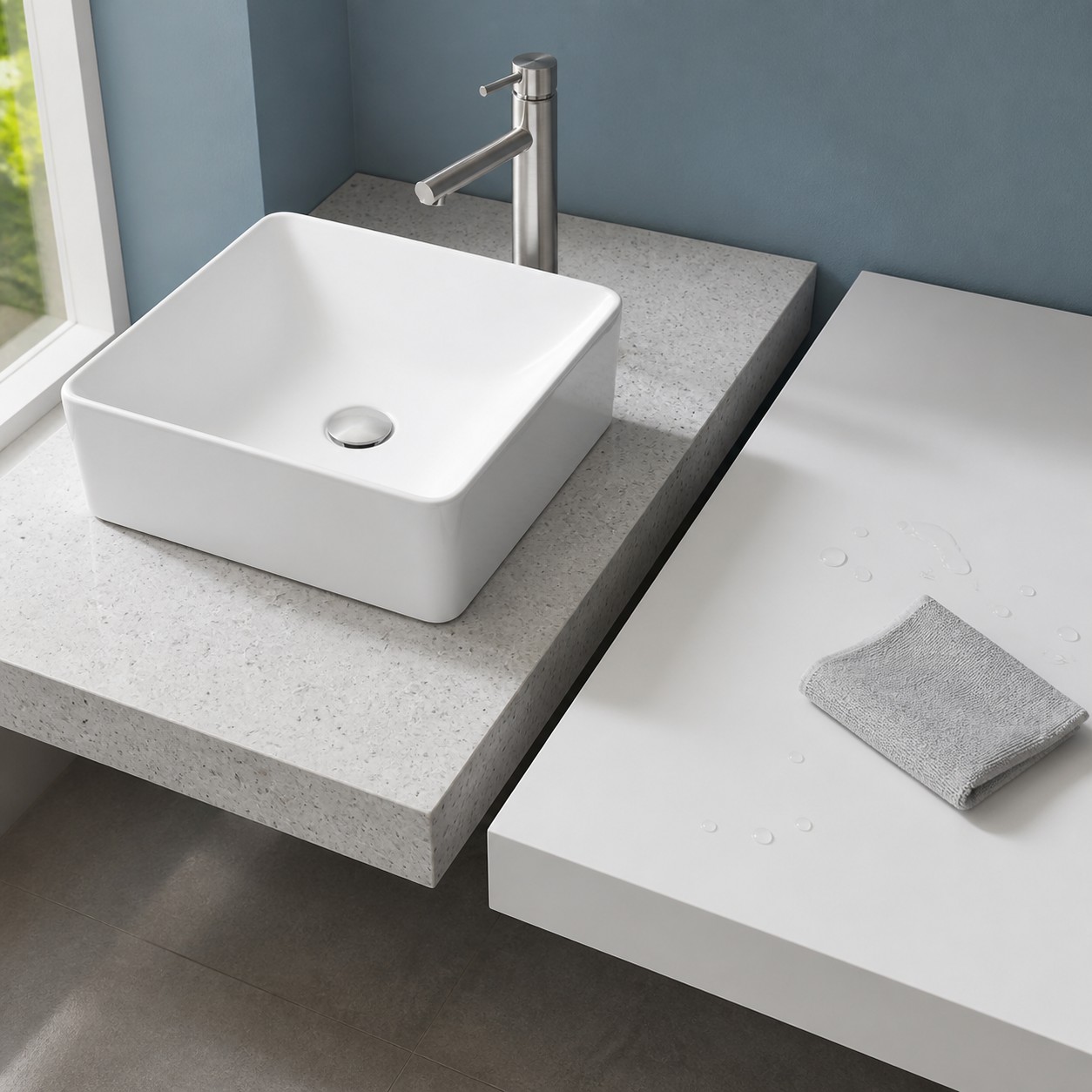
Engineered quartz is a strong practical option for many bathrooms because reputable products offer a non-porous, consistent surface and do not normally require a penetrating sealer. MSI specifically presents its Q quartz as non-porous and suitable for vanity tops. It is available in controlled stone-like patterns, making it easier than natural stone to repeat an apartment or hotel palette. Routine spills and cosmetics are generally straightforward to wipe when the brand's care instructions are followed.
Quartz is not maintenance-free or invulnerable. Resin-bound surfaces have product-specific limits for heat, chemicals and abrasive cleaners, and an exposed edge can still chip under impact. Fabrication quality around holes and corners is critical. Use an approved fabricator, follow the slab maker's clearance, support and silicone requirements, and check colour by lot where the supplier advises it. Never use a generic quartz claim to approve an unidentified slab.
03 LOW-POROSITY OPTIONS
What about porcelain slabs and solid surface?
Countertop-rated porcelain or sintered compact surfaces can provide very low water absorption, resistance to common bathroom staining and a thin architectural appearance. Cosentino describes its bathroom worktop ranges around moisture, stain and impact performance, while still publishing product-specific maintenance. Thin or large-format material requires the right fabrication, transport, edge design and substrate; do not substitute ordinary wall or floor tile for a countertop system unless its manufacturer approves the application.
Solid surface is another useful bathroom option. Branded products such as Corian are described as solid and non-porous, with care and repair methods defined by the manufacturer. Seams can be visually restrained and some damage may be refinished by trained personnel, depending on colour and finish. The trade-offs include scratch visibility, heat or chemical limits and the need for approved fabrication. Compare the exact warranties and care sheets rather than treating all acrylic or composite tops as identical.
04 NATURAL STONE
Are granite and marble suitable for a vessel sink?
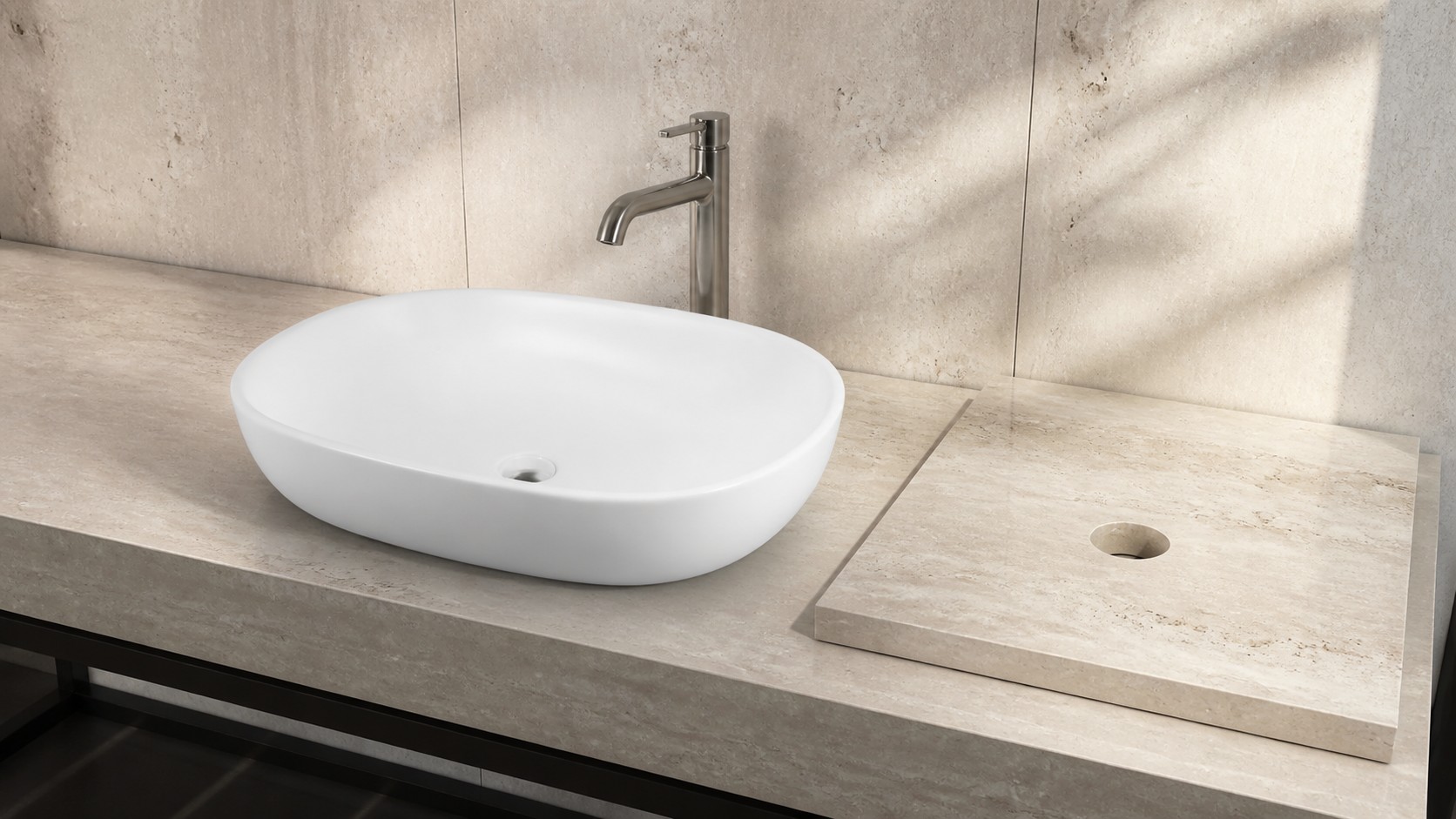
Yes, when the selected stone and finish suit bathroom use. Granite often offers strong wear resistance and a substantial base for a vessel basin, but absorption and sealing needs vary by stone. Marble provides distinctive veining and a premium visual relationship with ceramic, yet calcite-rich marble can etch from acidic cosmetics or cleaners. Sealer may reduce absorption; it does not make every stone immune to staining, etching or careless maintenance.
Natural variation is both value and constraint. Approve actual slabs or a defined selection range, decide how seams and veins will run, and retain enough information for later replacements. The fabricator should inspect fissures, edge positions, openings and support before cutting. Dry-fit the basin and protect the stone throughout installation. Where a supplier specifies periodic sealing, record who will assess and perform it instead of promising a universal calendar.
05 BUDGET & CRAFT SURFACES
Can a vessel sink sit on laminate or wood?
A vessel sink can sometimes work on a manufacturer-approved laminate vanity top because its opening may be smaller than that of a recessed basin. The weak point is not the decorative face but water reaching the cut edge, joint or wood-based core. Every penetration and exposed edge must be detailed according to the countertop and basin instructions, with continuous support and serviceable sealing. Swollen or damaged laminate cannot be made sound by hiding it below a bowl.
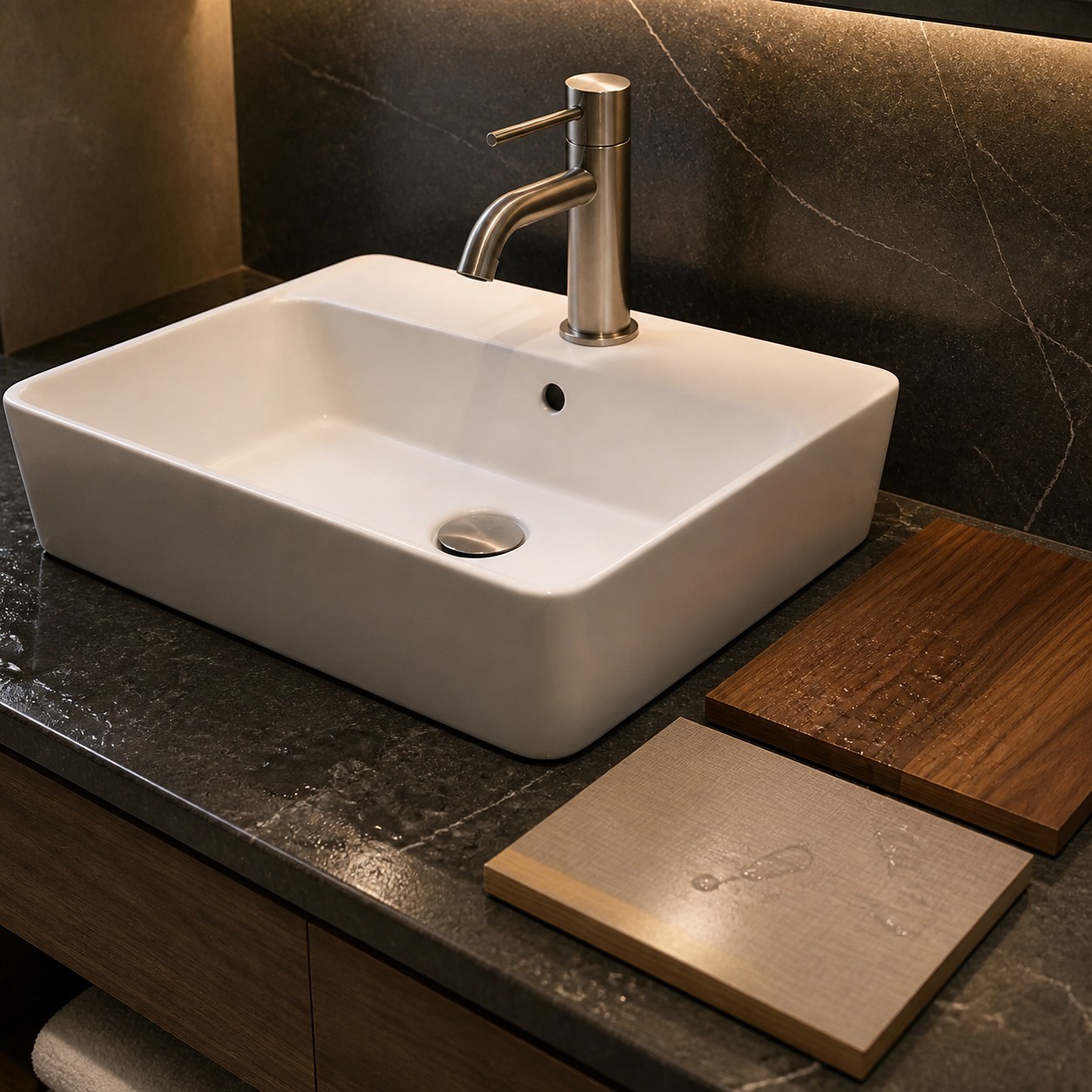
A properly designed timber or wood-veneered top can create a warm contrast with white ceramic, but wood moves with moisture and depends heavily on species, construction, finish and upkeep. Use a system explicitly suitable for bathroom wetting, seal all faces and penetrations as specified, wipe standing water promptly and plan refinishing where required. A casual coat described as waterproof is not enough evidence. Tile and concrete tops likewise need their own substrate, joint and sealing specifications.
06 OPENINGS & LOAD
How should the cutout and support be planned?
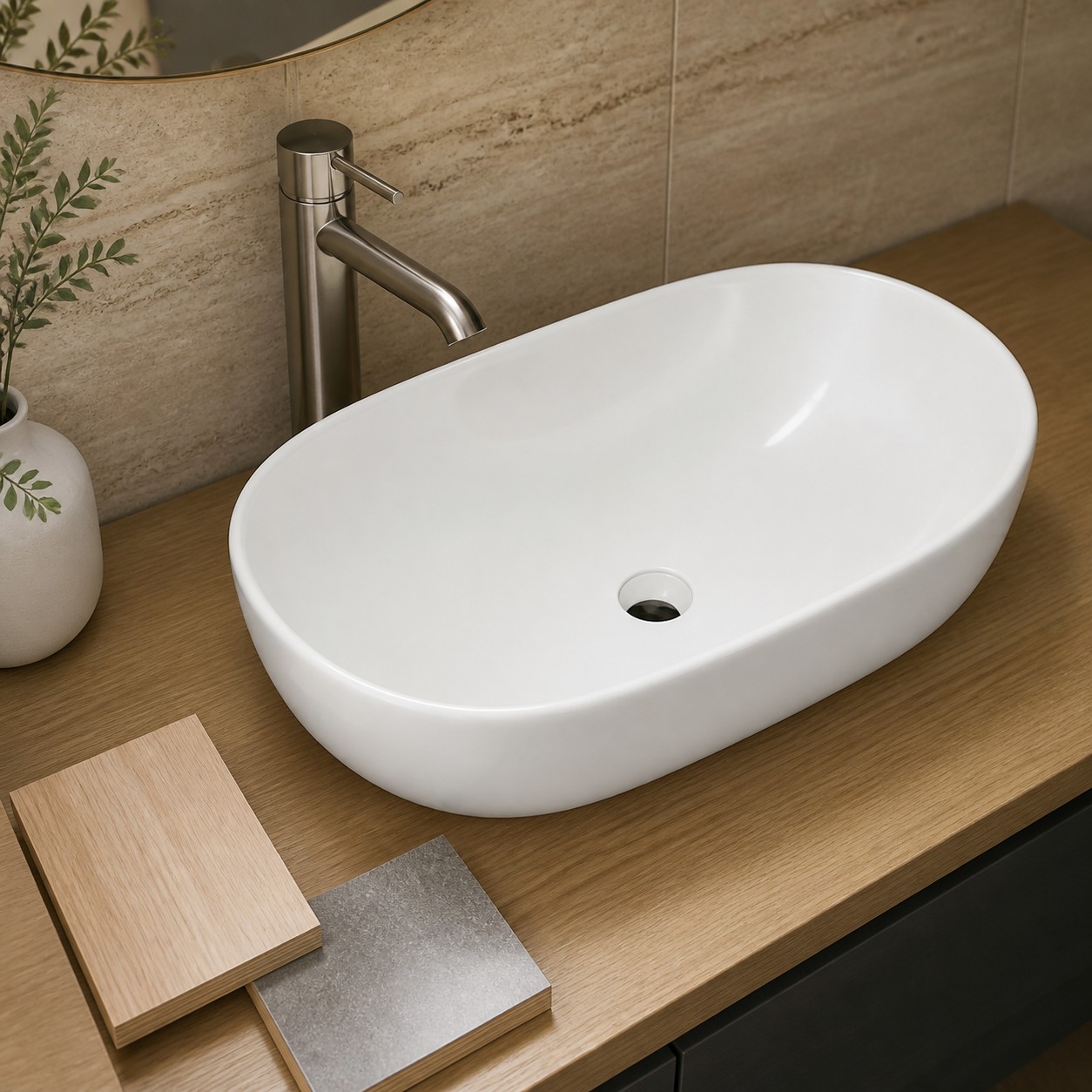
Start with the current basin installation template, not the visible drain-hole diameter. The counter passage may need to clear a waste body, gasket, mounting detail or recessed base, and the faucet needs a separate approved hole and clearance. Counter thickness must still leave enough thread engagement and tool access for the drain and faucet. Our vessel sink drain guide explains why ceramic opening, countertop passage and pipe connection are different interfaces.
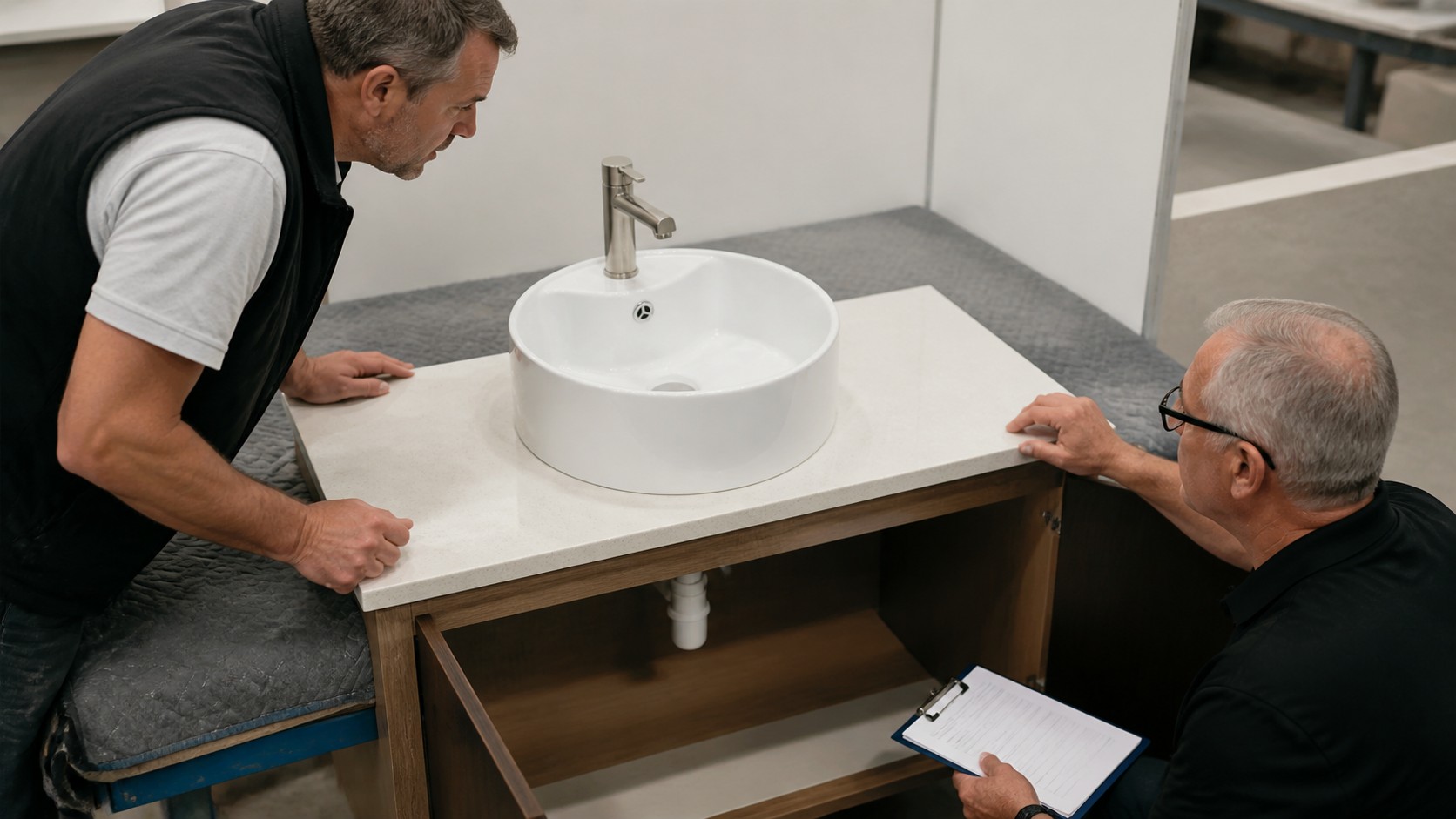
Give the fabricator the actual basin, waste and faucet whenever possible. Confirm centre lines, backsplash and edge clearances, underside access, cabinet rails, seams and support before cutting. Use the surface maker's corner radii, expansion allowance, adhesive or silicone and handling rules. Never let pipework support the basin or pull a fitting into alignment. The ceramic vessel sink installation guide then controls the product-specific setting and test sequence.
07 DAILY CARE
How do cleaning and sealing differ by material?
Engineered quartz, solid surface and compact porcelain products are commonly selected for low absorption, but each maker still limits certain solvents, acids, alkalis, heat or abrasive pads. Natural stone may need an appropriate sealer and pH-compatible cleaner; marble can etch even when sealed. Laminate and wood depend on intact edges and joints. Across all surfaces, wipe water around the basin base and faucet rather than allowing a hidden wet ring to remain.
Use the exact care sheet supplied with the approved top and basin. Test unfamiliar products in an inconspicuous area if the manufacturer recommends it, rinse residue and dry with a soft cloth. Do not combine internet remedies into a universal cleaning recipe. Keep sealant joints under observation and repair them by the approved method if they separate. A practical countertop is one the actual user or housekeeping team can maintain consistently.
08 CONTROL THE PACKAGE
How should a project specify a vessel-sink countertop?
Name the surface manufacturer, product, colour, finish, thickness and approved slab or sample. Add substrate and support, edge profile, seam locations, basin and faucet centres, model-specific cutout template, exposed-edge treatment, sealant, fabrication rules and care documents. Record the basin weight and underside contact, waste and faucet thread requirements, cabinet clearances and the responsible trades. A phrase such as white stone top cannot control any of these interfaces.
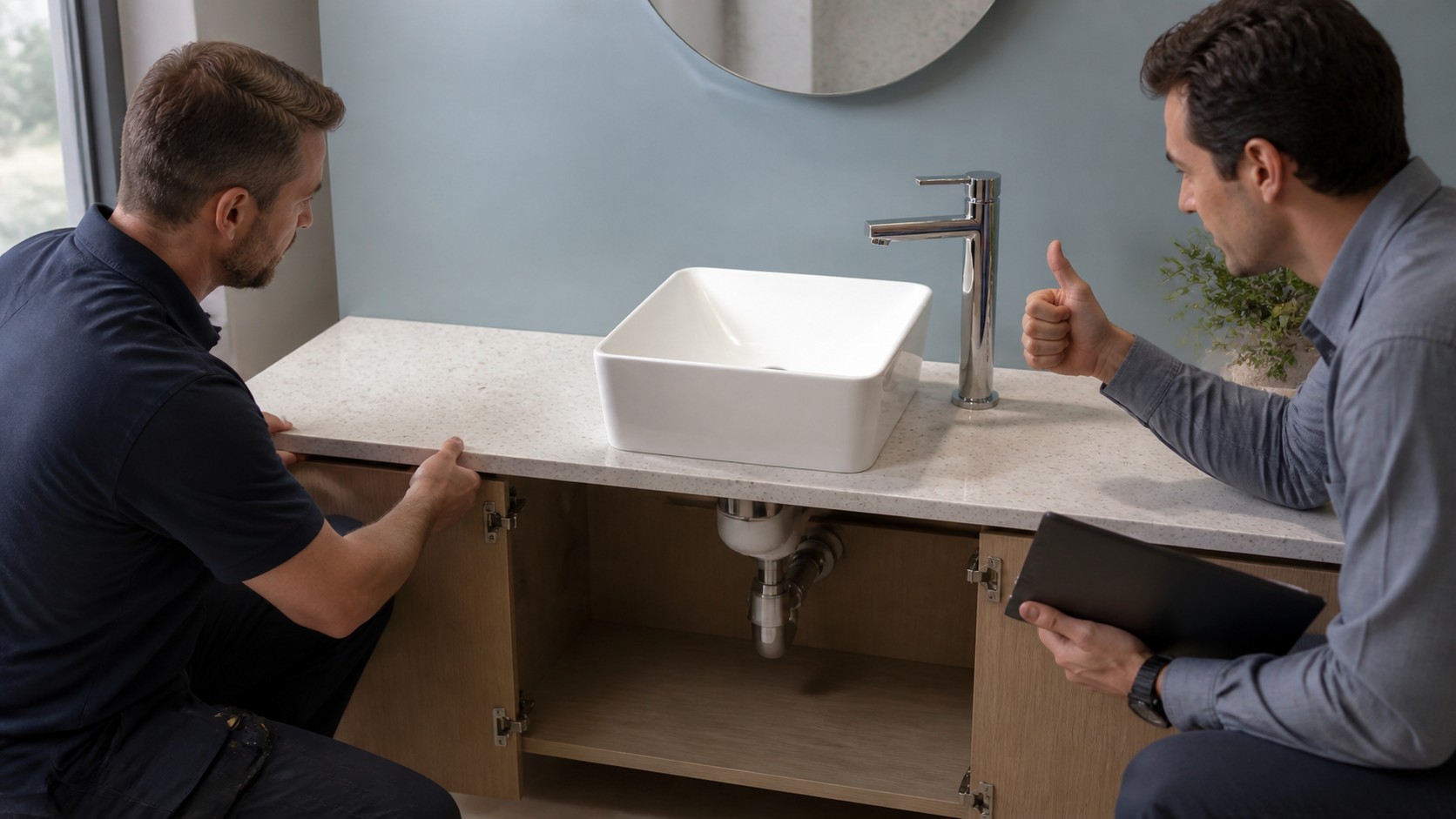
Build one production-intent mock-up for repeated rooms. Inspect appearance in project lighting, then test stability, faucet reach, splash, drainage, cleaning around the basin base, drawer operation and access for future replacement. Photograph and sign the approved arrangement. Engineered quartz or solid surface is often the lowest-maintenance default, but the best countertop material for a vessel sink is ultimately the documented system that the project can fabricate, clean, repair and replace reliably.
FAQ COMMON QUESTIONS
Frequently asked questions
What is the best countertop for a vessel sink?
Engineered quartz and solid surface are practical low-maintenance choices for many bathrooms. Porcelain, natural stone, laminate or wood may also work when the exact system is approved and maintained.
Can you put a vessel sink on quartz?
Yes. Use the current basin template and a qualified fabricator, and follow the quartz maker's rules for openings, support, clearance, sealing and care.
Does a vessel sink require a stone countertop?
No. It requires a stable, moisture-suitable countertop whose material and installation are approved for the basin and fittings.
Can a vessel sink be installed on laminate?
Sometimes. The product must be approved for the application, and all cut edges, penetrations, joints and support must be protected from water as specified.
Is marble a practical bathroom vanity top?
It can be, but marble may etch from acidic products and can require sealing and careful maintenance. Buyers should accept its natural variation and patina.
Is the countertop hole the same size as the vessel sink drain hole?
Not automatically. The counter opening follows the model-specific mounting system and must also account for the waste, gaskets, support and access.