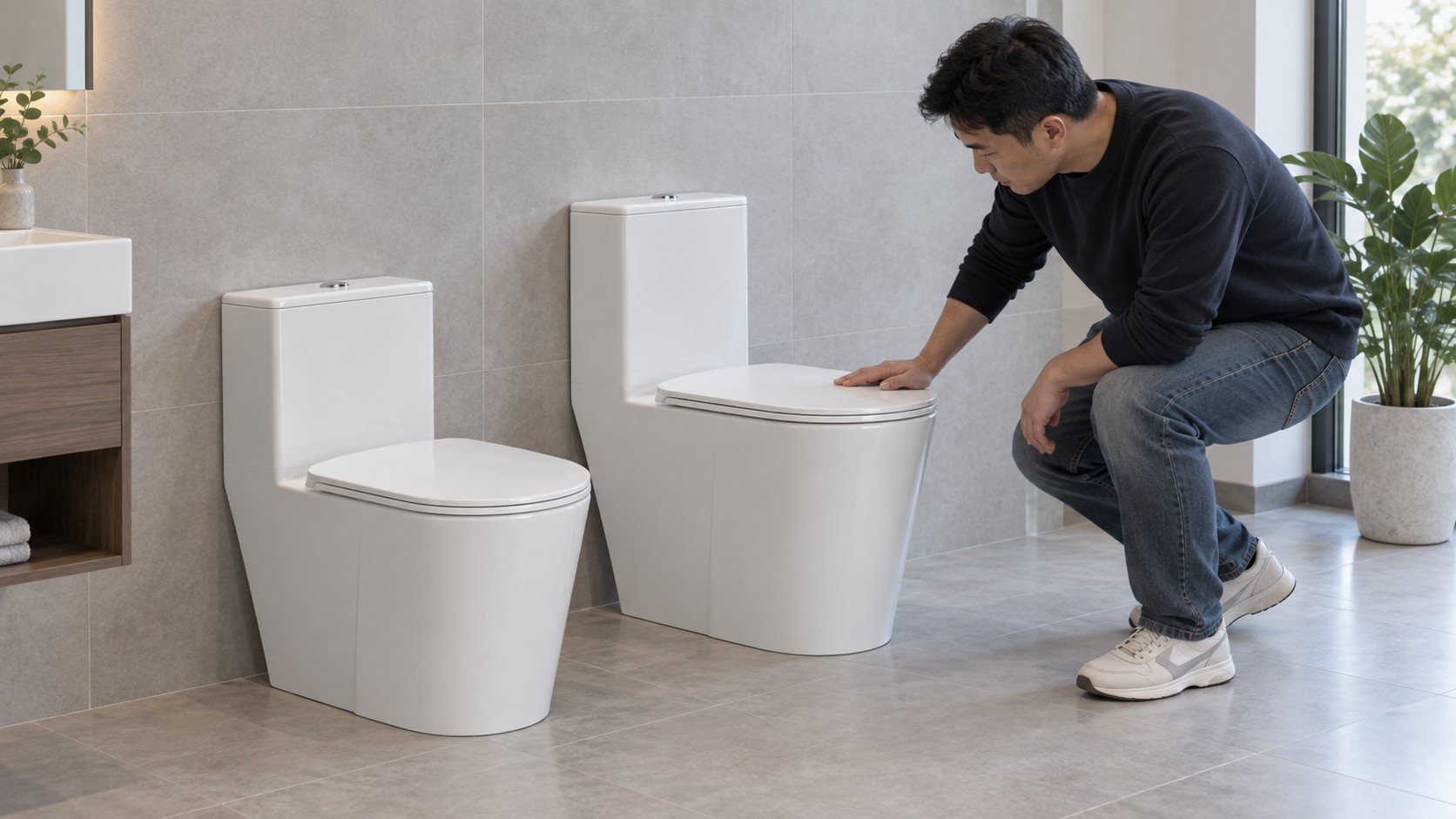
A comfort height vs standard height toilet comparison should begin with people, not with a marketing label. A higher seat can reduce the distance many adults travel when sitting or standing, while a lower seat may give shorter users and children better foot support. Neither category guarantees comfort for everyone, and the same label can cover different finished seat heights across manufacturers and seat combinations.
Measure from the finished floor to the top of the installed seat, then compare that real dimension with the users, room purpose and applicable accessibility rules. Bowl-rim height alone is incomplete because the seat adds thickness. For projects, the correct choice also depends on transfer space, grab bars, flush controls, cleaning, product availability and whether a wall-hung carrier must be set before the wall closes.
Key takeaways
- Use finished seat height: Compare floor-to-seat dimensions, not a vague comfort, chair or universal-height name.
- Fit the main users: Taller adults and many users with limited mobility may prefer higher seating; shorter users and children may prefer lower seating.
- Separate comfort from compliance: Accessibility depends on the complete room and locally applicable requirements, not seat height alone.
01 HEIGHT LABELS
What is the difference between comfort height and standard height toilets?
Standard-height toilets generally place the bowl and seat lower than products marketed as comfort, chair, right or universal height. These terms are not perfectly interchangeable specifications. One brand may publish rim height, another may publish height with a particular seat, and a third may exclude the seat entirely. Two products carrying similar marketing language can therefore feel different after installation.
Use the side-view dimensional drawing and identify the reference point. Record finished-floor-to-rim height and the compatible seat thickness, then calculate or confirm finished seat height. When comparing samples, check whether soft-close hinges or quick-release hardware lift the seat differently. A user experiences the top of the seat, so this is the decision dimension.
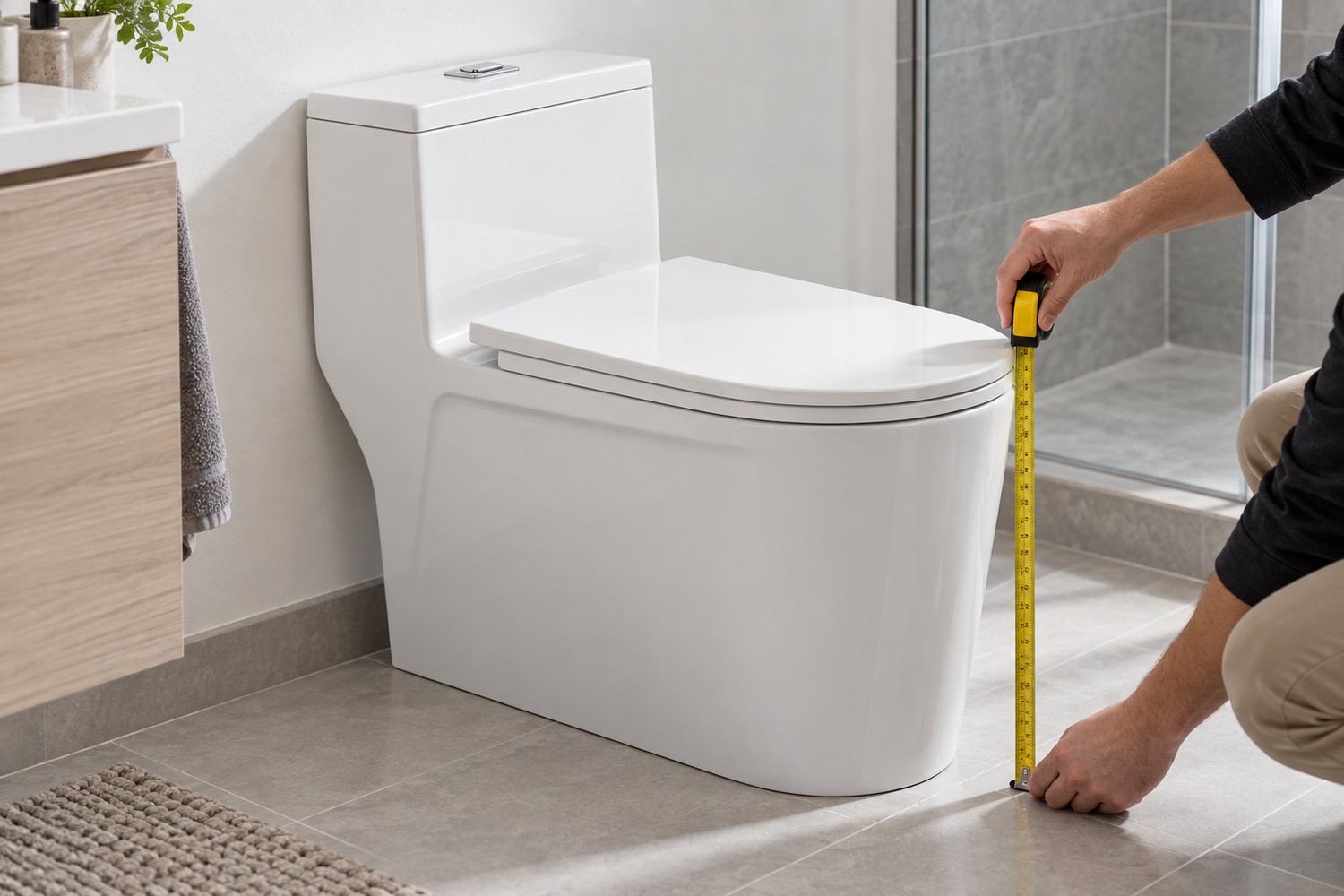
Compare the same finished-seat measurement
| Label | Reference used here | Who may prefer it | Verify before buying |
|---|---|---|---|
| Standard height | Below 17 in in KOHLER's U.S. buying-guide classification | Some shorter adults and children | Exact installed seat-ring height |
| Chair / comfort height | 17 in or above in the same brand guide | Some taller adults and users who prefer less vertical travel | Bowl, seat and finished-floor combination |
| ADA reference | 17–19 in to the top of the seat for applicable U.S. adult installations | Accessible rooms governed by that standard | Complete room compliance, not the label alone |
These are KOHLER buying-guide categories and a U.S. accessibility reference, not universal product standards.
02 BODY FIT
Who may prefer a comfort-height toilet?
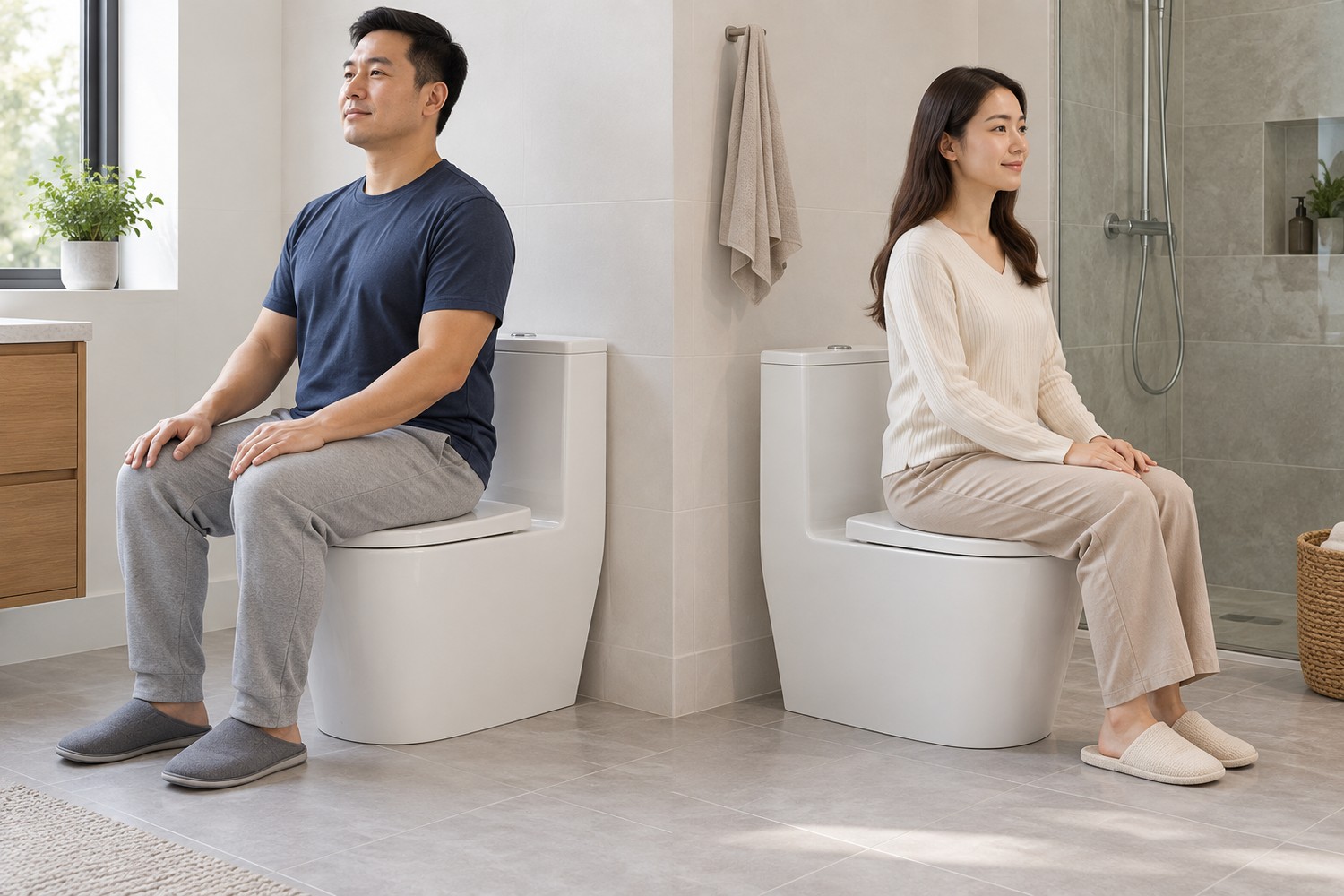
A higher seat often suits taller adults, older users and people who find deep knee or hip flexion difficult. The smaller vertical movement can make standing easier for some users. This is a practical preference, not a medical prescription. Individual mobility, transfer method, foot support and advice from a qualified professional may change the right answer.
A tall seat can feel less natural to shorter adults when their feet do not rest securely on the floor. Children may also need a step or a different fixture. A shared household should test representative heights rather than choosing solely from the tallest user. In a hotel or apartment project, the room type and intended guest group should guide the mix.
03 ACCESSIBILITY
Does comfort height mean an ADA-compliant toilet?
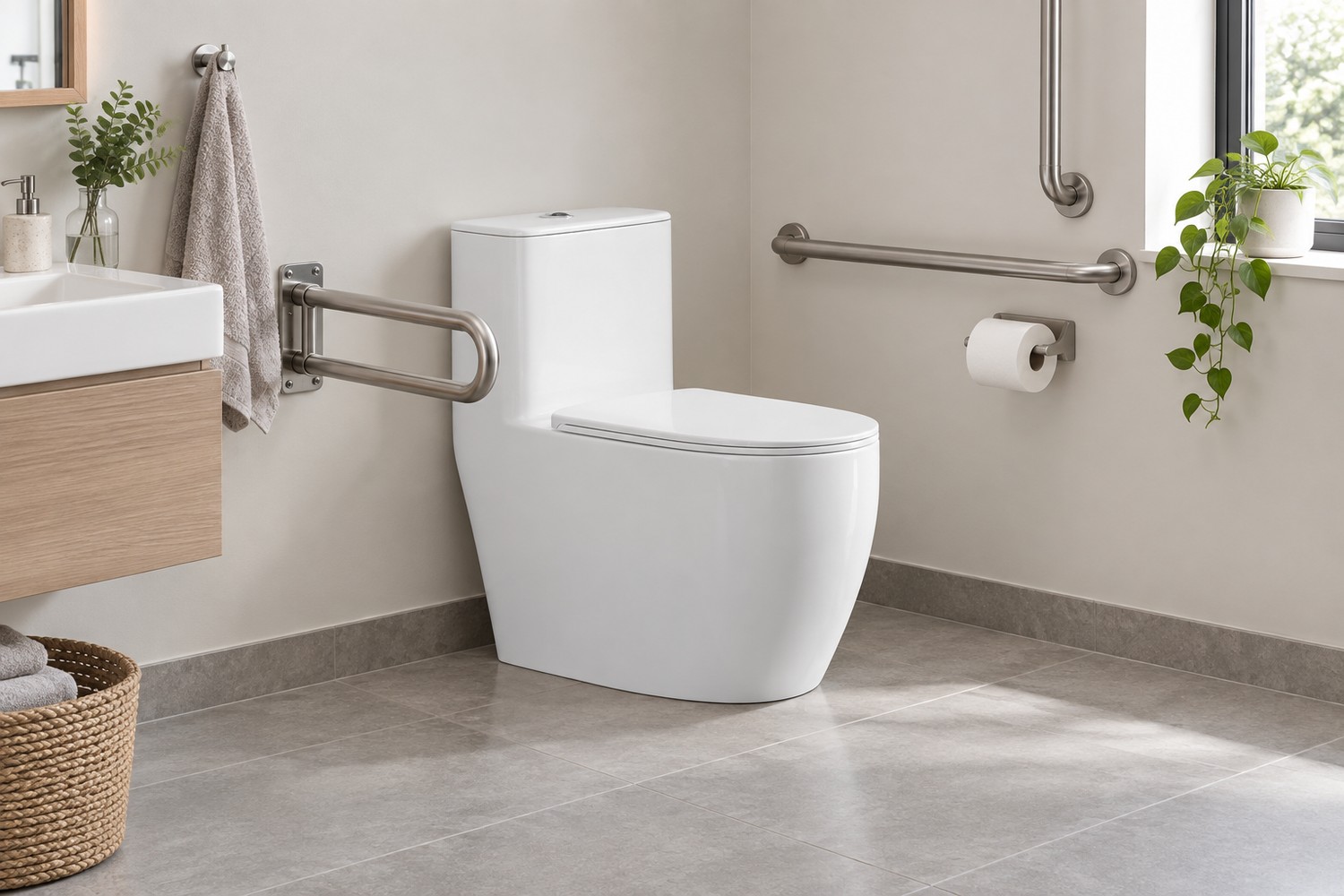
For applicable U.S. adult accessible installations, 2010 ADA Standards section 604.4 generally places the top of the water-closet seat 17 to 19 inches above the finish floor. The section also contains exceptions and separate provisions for children. This U.S. rule cannot be extended automatically to Hong Kong, other markets or every home, and a 17-inch ceramic rim is not the same as a 17-inch finished seat.
Accessible design also coordinates the toilet centreline, clear floor space, grab bars, flush controls, dispensers, doors and approach. Other countries and local authorities use different rules. Project teams should identify the governing standard, approve the exact seat and bowl combination, and check the complete room layout. Do not place an accessibility claim on a carton or specification sheet without evidence for the exact product and market.
04 HOME CHECK
How do you measure your current toilet height?
Lift the lid, leave the seat ring down, and measure vertically from the finished floor to the top sitting surface of the installed seat ring, not the lid. Keep the tape plumb and avoid measuring from a bath mat or raised tile trim. Photograph the reading and note whether the seat is unusually thick, padded or loose.
Seat height is different from plan-view seat fit. If a replacement is also required, measure the replacement seat length and hinge spacing separately. To test another height, use a stable showroom sample or a properly designed assessment setup; never improvise an unsafe platform under a toilet.
05 PRODUCT TYPES
Do one-piece, two-piece and wall-hung toilets offer the same heights?
One-piece and two-piece floor toilets are manufactured at fixed ceramic rim heights, then completed with a compatible seat. Product families may offer separate standard and taller versions. A wall-hung bowl can often be mounted across a range allowed by its carrier, but the final height must be decided during rough-in. Once the wall is finished, changing it may require substantial work.
Height should never be isolated from rough-in, outlet type, overall projection and seat compatibility. A taller floor toilet with the wrong outlet will not fit, while a wall-hung bowl set at a preferred height may still fail if the carrier, flush inlet or waste connection is incompatible. Review the complete fixture package. For wall-hung systems, use the separate bowl and carrier compatibility checks before closure.
06 DAILY USE
Is a lower or higher toilet always healthier?
No single seat height is universally healthiest. A lower position may provide better foot contact for some users, while a higher position can reduce joint movement for others. Health conditions, balance and transfer technique vary. General bathroom guidance cannot replace advice from a clinician or occupational therapist when mobility or medical needs drive the decision.
07 PROJECT BUYING
How should hotels and apartment projects specify toilet height?
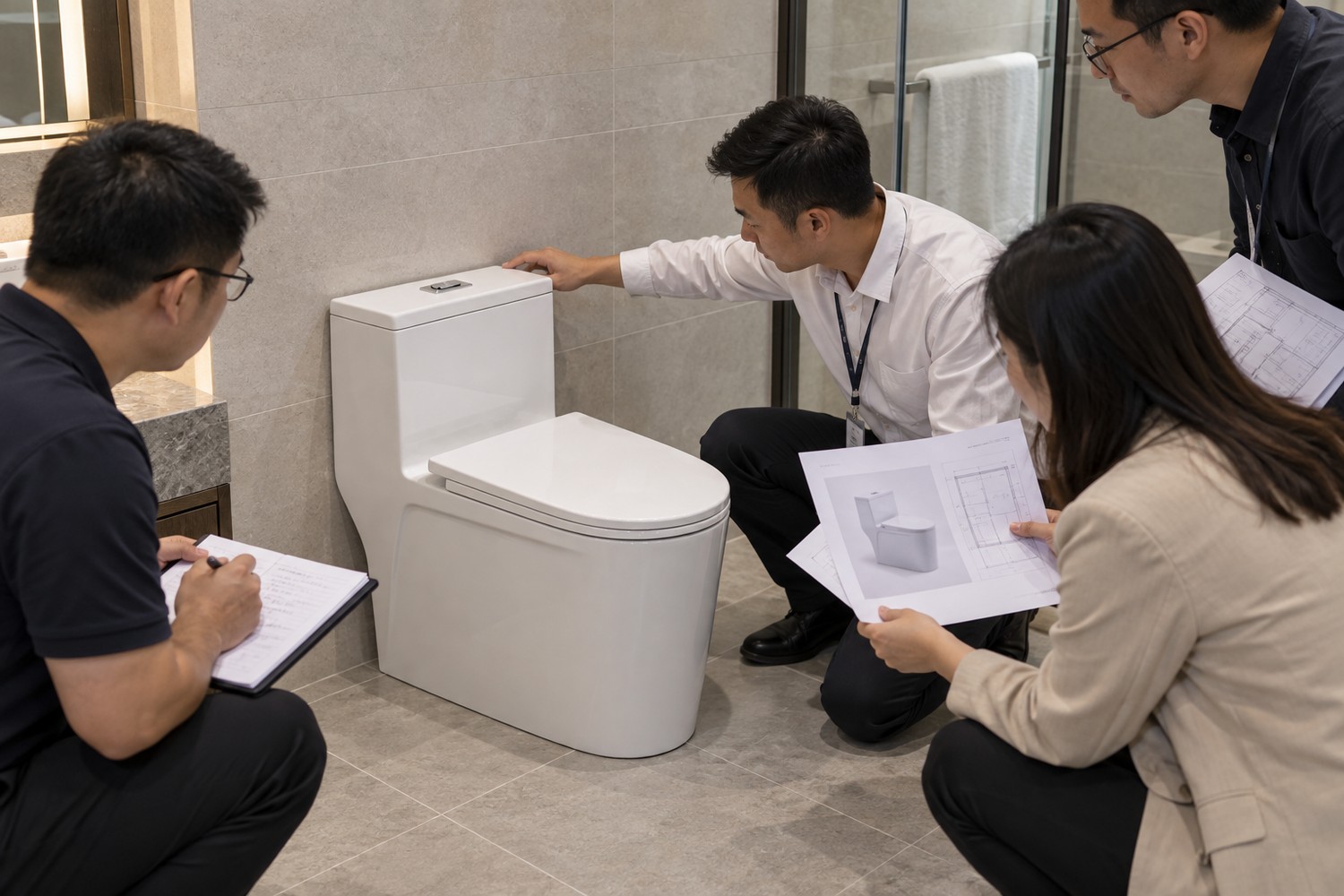
Start with the room schedule: standard guest rooms, accessible rooms, family areas and staff or public facilities may require different solutions. For each type, record finished seat height, seat model, outlet and rough-in, overall dimensions, flush controls and local accessibility criteria. Build a completed mock-up that includes floor finish, wall finish, grab bars and door movement.
Importers should keep the approved bowl and seat paired through ordering, packing and site distribution. Substituting a thicker seat or a similarly named bowl can change finished height. Ask the supplier for current drawings and sample availability, and request applicable test or certification documents before ordering where the market requires them. The toilet model specifications for importers cover the wider ordering file.
08 CHOICE GUIDE
How do you choose the right toilet height?
Choose standard height when the principal users are shorter, children need dependable foot support, or a tested lower position feels more natural. Choose a taller option when adult users prefer less knee and hip flexion, the room serves older users, or an applicable accessibility design calls for it. If the room serves many different people, prioritize the governing access requirements and an approved universal-use strategy.
Quick seat-height decision
| Choose a lower option when | Representative users obtain stable foot support and prefer the tested lower position. |
|---|---|
| Choose a taller option when | Representative adults prefer less vertical travel or the governing access design requires it. |
| Pause and verify when | The room serves mixed users, the seat is unspecified or the drawing gives rim height only. |
The practical answer to comfort height vs standard height toilet is the model-specific finished seat dimension matched to real users and the full room. Chengda can help wholesale and project buyers compare ceramic toilet models, seats and dimensional information. Send the destination market, room type, required height range, outlet and quantity to discuss catalogue and OEM/ODM options.
09 SAMPLE TEST
How should a household or project test toilet height?
Use a stable, fully supported sample fitted with the intended seat and placed on a level surface representing the final floor. Let representative users approach, turn, lower themselves, sit with supported feet and stand without pulling on unstable fixtures. Observe control reach and nearby obstacles. The exercise should be supervised where mobility is limited, and it should never substitute for an accessibility review or clinical assessment when those are required.
Record the finished seat height and the user's comments instead of recording only standard or comfort. For projects, obtain written sign-off for each room type and lock the bowl-seat combination in the fixture schedule. If the floor build-up, seat or carrier setting changes later, repeat the check. This simple discipline turns subjective preference into a traceable design decision and prevents a showroom sample from being replaced by a nominally similar but materially different installation.
FAQ COMMON QUESTIONS
Frequently asked questions
What height is a standard-height toilet?
KOHLER's U.S. buying guide classifies standard-height toilets as below 17 inches to the seat and chair-height toilets as 17 inches or above. This is a brand guide, not a universal standard; verify the exact installed seat-ring height.
What height is an ADA toilet seat?
For applicable U.S. installations, the 2010 ADA Standards generally specify 17 to 19 inches to the top of the seat, with stated exceptions and separate children's provisions.
Is comfort height good for short people?
It may leave some shorter users without firm foot support. Test the actual finished seat height rather than relying on the label.
Is a taller toilet better for seniors?
Many older adults prefer less vertical movement, but individual mobility and balance vary. Test the height and seek qualified advice when health needs are involved.
Can a wall-hung toilet height be adjusted later?
The carrier often allows adjustment during rough-in, but changing the height after the wall is finished can require opening and rebuilding the wall.
Does toilet seat thickness change the height?
Yes. The user sits on the seat, so its thickness and hinge arrangement must be included in the finished dimension.