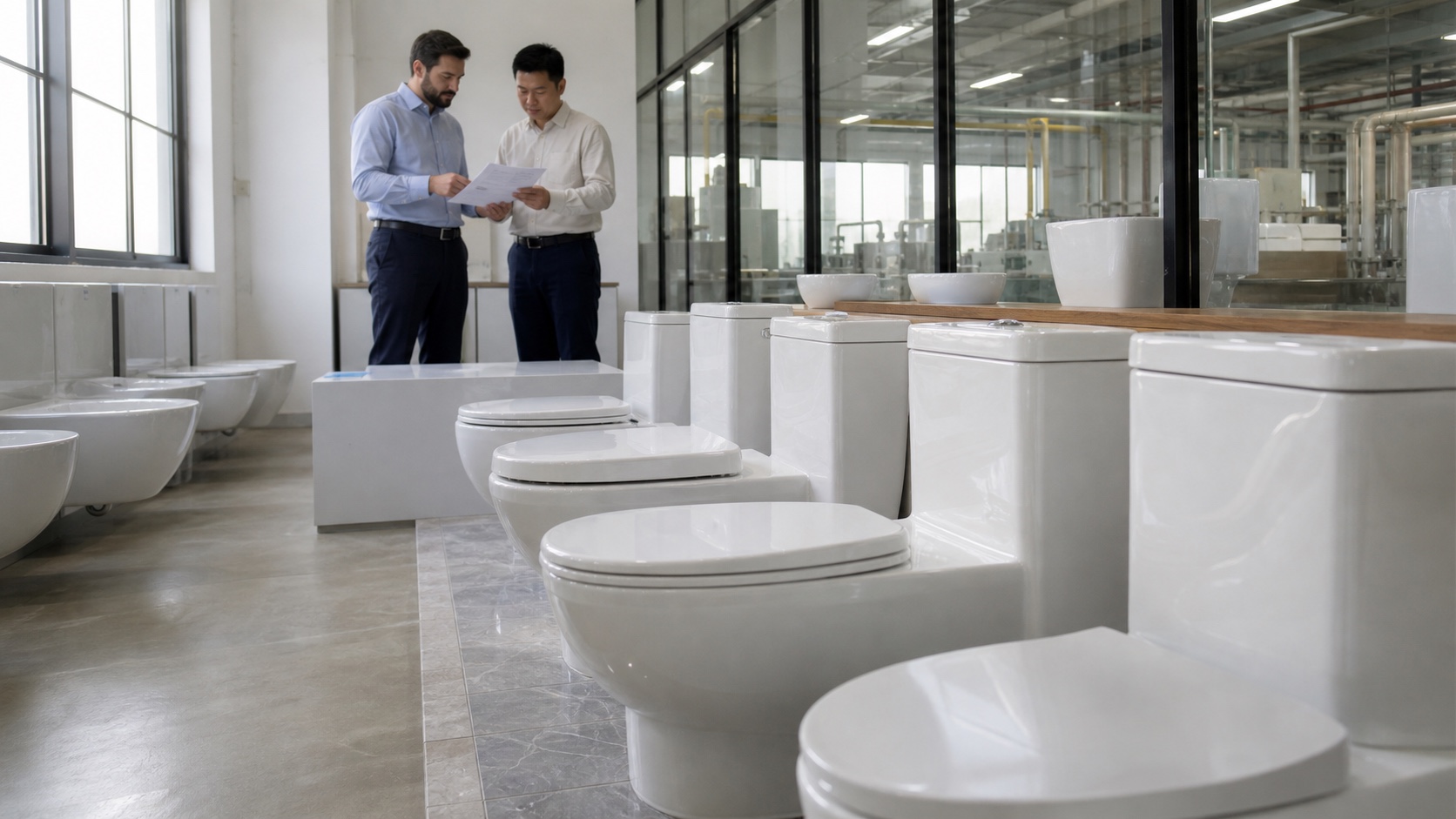
A catalogue can make every toilet look export-ready. The real differences appear after installation: whether the outlet matches the building, whether the bowl clears waste at the local flush volume, whether the seat height fits the project, and whether every carton arrives with the same fittings. This ceramic toilet buying guide is written for importers, distributors and project buyers who need to turn a market requirement into a repeatable wholesale specification — before price negotiation and mass production begin.
Key takeaways
- Fit comes first: lock the floor or wall outlet, rough-in, overall projection and seat height before choosing a style.
- Flush systems are market-specific: siphonic and washdown bowls behave differently and cannot be selected from appearance alone.
- Buy a tested package: specify ceramic body, glaze, flush valve, seat, packing, spare parts and destination certification as one controlled SKU.
01 THE MARKET
How should an importer start choosing ceramic toilets?
Start with where the toilet will be sold or installed. North American homes commonly use a floor-outlet siphonic toilet with a 12-inch rough-in and an elongated bowl. Many European, Middle Eastern, African and Asian markets use washdown toilets with S-trap floor outlets or P-trap wall outlets, often in metric rough-ins. Hotels may prioritise quiet flushing, concealed trapways and easy cleaning; public projects may prioritise durable fittings, accessible seat height and replacement parts; retail distributors need a price ladder and carton sizes that work across mixed containers.
Write a one-page market brief before asking for models. It should state destination country, residential or commercial use, floor or wall outlet, rough-in, preferred flush volume, bowl shape, seat height, certification, target price band, expected annual volume and whether branding is required. That brief prevents the most expensive sourcing mistake: approving a beautiful toilet that cannot connect to the local drainage system.
02 CONFIGURATION
One-piece, two-piece or wall-hung toilet: which should you import?
A one-piece toilet joins the tank and bowl into one ceramic body. It has a clean silhouette, fewer joints to wipe and strong retail appeal, but each unit is heavier and occupies more carton volume. A two-piece toilet ships with separate tank and bowl. It is usually easier to handle, gives buyers more price flexibility and can make service replacement simpler, although the tank-to-bowl joint adds installation parts and a cleaning seam. Our detailed one-piece vs two-piece toilet guide compares factory cost, breakage risk and container loading.
A wall-hung toilet leaves the floor clear and suits modern apartments, hotels and compact bathrooms. The bowl is only one part of the system: the concealed cistern, carrier frame, flush plate, wall build-up and service access must be specified together. It is a project product, not a bowl-only substitution. For installation planning, see our wall-hung toilet installation guide.
Quick comparison for wholesale buyers
| Type | Best fit | Main buying watch-out |
|---|---|---|
| One-piece | Modern retail, hotels, mid-to-high-end residential | Higher unit weight and carton volume |
| Two-piece | Value ranges, distributors, easy handling | Tank-bowl hardware and batch matching |
| Wall-hung | Apartments, hotels, design-led projects | Carrier, cistern and wall coordination |
03 FLUSHING
Siphonic vs washdown toilets: how do you match the flush system?
Siphonic toilets use a long curved trapway and a siphon action. They generally hold a larger water surface and flush more quietly, which suits North American residential expectations, but the internal path is more complex and the outlet specification must match the market. Washdown toilets use a shorter, more direct trapway and a strong water push. They are common across Europe and many export markets, tolerate different S-trap and P-trap layouts, and can offer a powerful, simple flush with a smaller water spot.
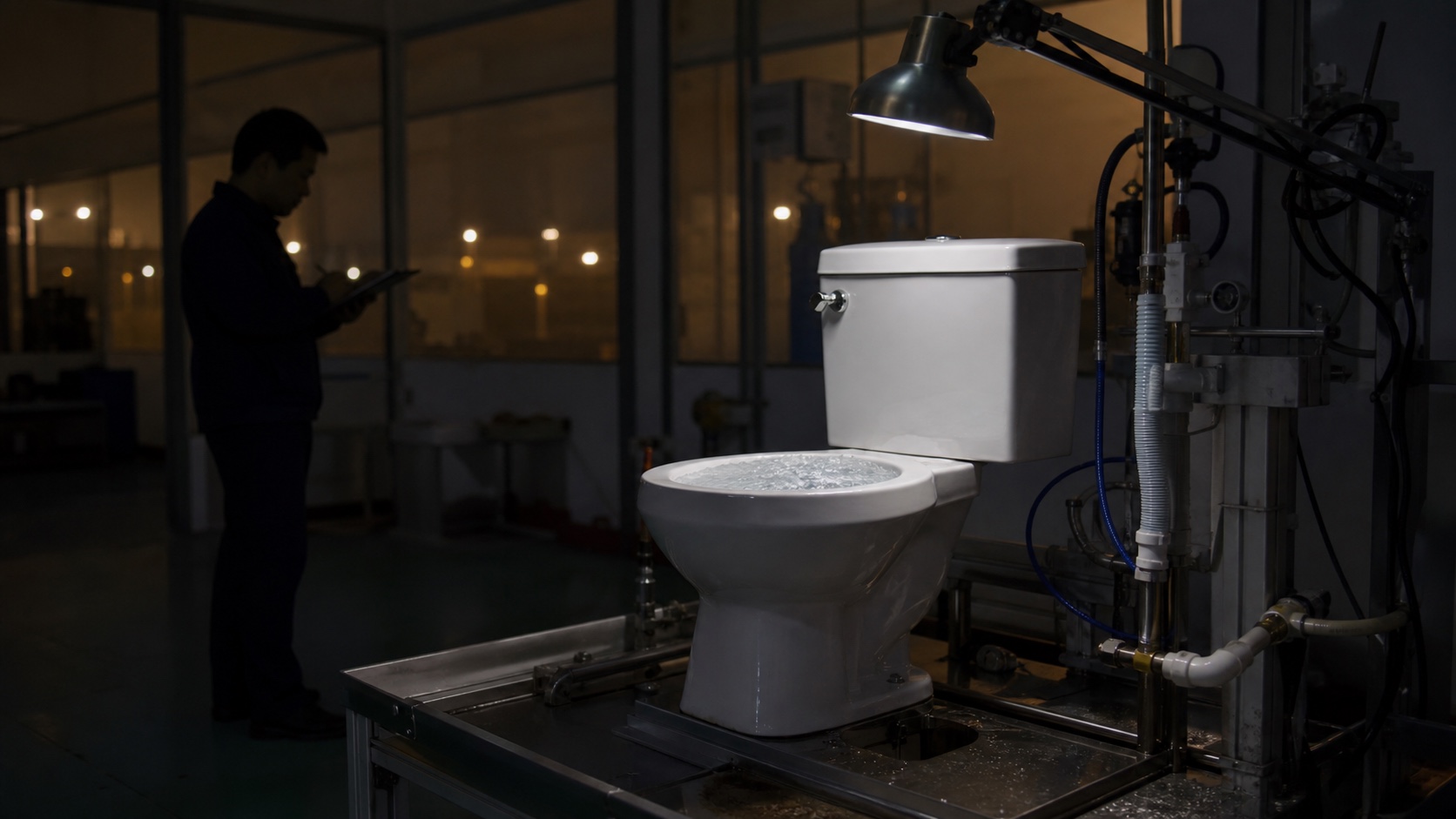
Do not judge performance by the words “tornado,” “jet” or “power flush” in a brochure. Ask for the rated full and reduced flush volumes, waste-removal test, bowl-wash coverage, trap-seal restoration, leakage test and the exact inlet-valve and outlet-valve brand or specification. Rimless bowls can make cleaning easier, but the water channel must distribute flow without splashing. Our siphonic vs washdown comparison and rimless vs rimmed toilet guide go deeper into both decisions.
04 FIT & OUTLET
Which toilet rough-in and outlet dimensions must be confirmed?
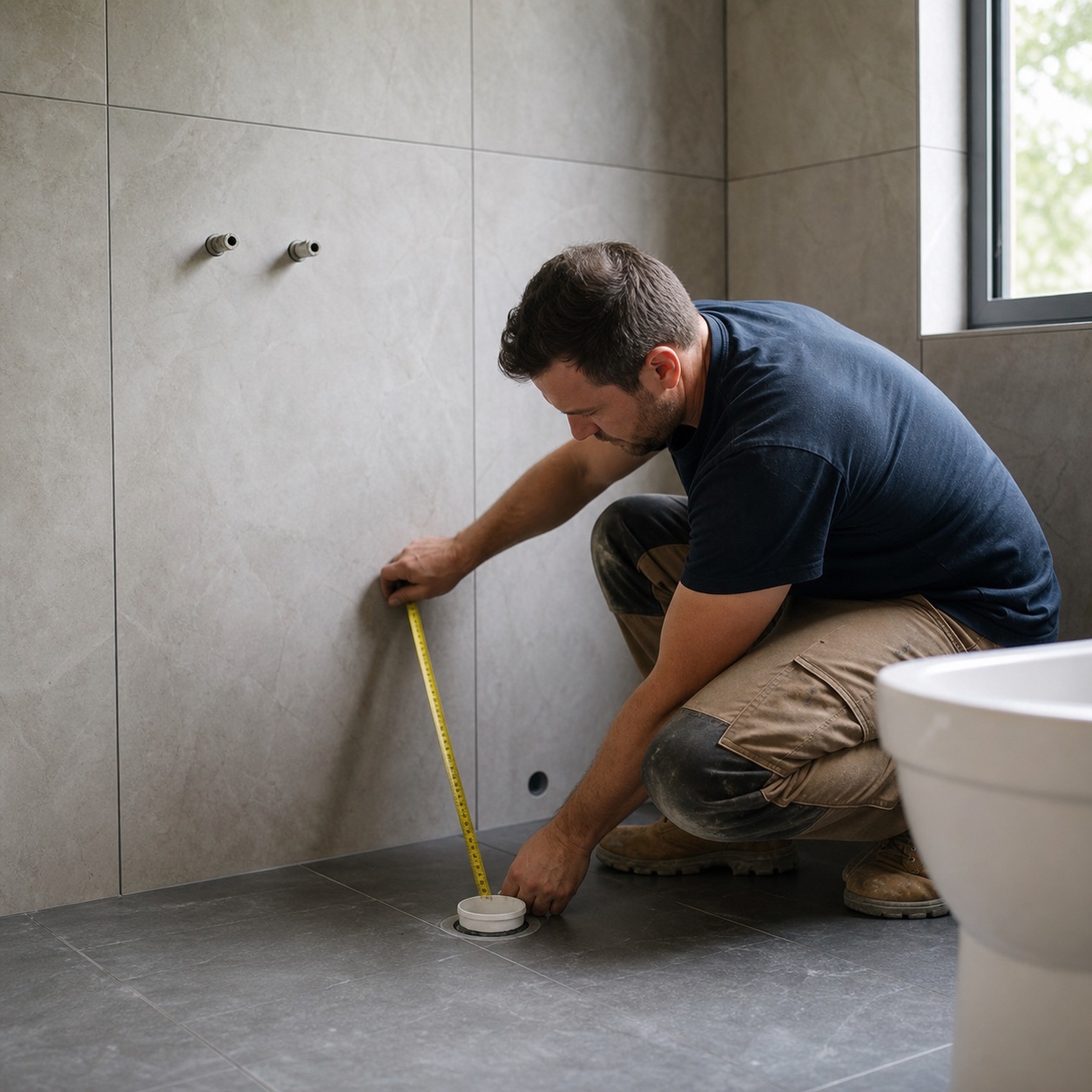
The rough-in is the installation dimension that decides whether the toilet fits. For a floor outlet, measure from the finished wall to the centre of the waste outlet. A nominal 12-inch rough-in is common in North America, while export markets frequently specify metric S-trap distances such as 250, 300 or 400 mm. A P-trap toilet exits through the wall, so the outlet-centre height above the finished floor becomes the critical dimension. Never convert casually between an inch market and a metric mould: verify the actual dimensional drawing and allowed installation tolerance.
Also confirm overall projection, width, tank height, distance from outlet centre to the back of the ceramic, water-inlet side, shut-off clearance and seat-fixing centres. For replacements, measure from the finished wall — not the skirting board — and account for tile or wall-panel build-up. The companion S-trap vs P-trap rough-in guide includes a practical ordering checklist.
Seat height is a project specification
Standard residential bowls vary by market. For US accessible projects, the 2010 ADA Standards specify a finished seat height of 17–19 inches (430–485 mm). Confirm whether the quoted number is ceramic rim height or finished seat height, because the seat adds height.
05 CERAMIC BODY
How can buyers check ceramic toilet quality before mass production?
Quality starts below the glaze. Ask whether the body is vitreous china, what firing range is used, and for the applicable water-absorption result. A dense body and controlled firing reduce hidden porosity and improve resistance to staining, odour and long-term moisture. Then inspect the visible surfaces under neutral light: glaze should be even, smooth and fully cover the bowl, rim, outlet and water-contact areas. Look for pinholes, crawling, colour variation, cracks, deformation and unglazed patches inside the trapway.
Flatness and dimensions matter just as much as shine. The base should sit without rocking; tank and bowl should align; lid gaps should be even; seat holes and inlet holes should match the approved drawing. Use a signed golden sample for colour, dimensions, fittings and flush performance, then inspect mass production to an agreed AQL. A sample that passes only appearance checks is not enough — connect it to water and run repeated full and reduced flushes.
06 TESTING & MARKS
Which toilet performance tests and certifications should importers request?
For the United States and Canada, ceramic fixtures are commonly evaluated to ASME A112.19.2/CSA B45.1 and may require a UPC or cUPC listing. EPA WaterSense-labelled tank toilets are independently certified for efficiency and performance; the current EPA page states that labelled models use 1.28 gallons per flush or less and must meet flush-performance requirements. Other destinations may require CE-related documentation, WaterMark and WELS, SASO/SABER or local water-efficiency registration. Requirements vary by product and market, so confirm them before model selection rather than after production.
For every target model, request the certificate and report with the model number, factory name, issue date and scope visible. Then match that paperwork to the actual configuration: bowl, tank, valve, flush volume and outlet. A certificate for a similar-looking model is not evidence for the model in your container. Our sanitary ware certification guide maps the main marks by market.
07 BULK ORDER
What should be included in a wholesale ceramic toilet specification?
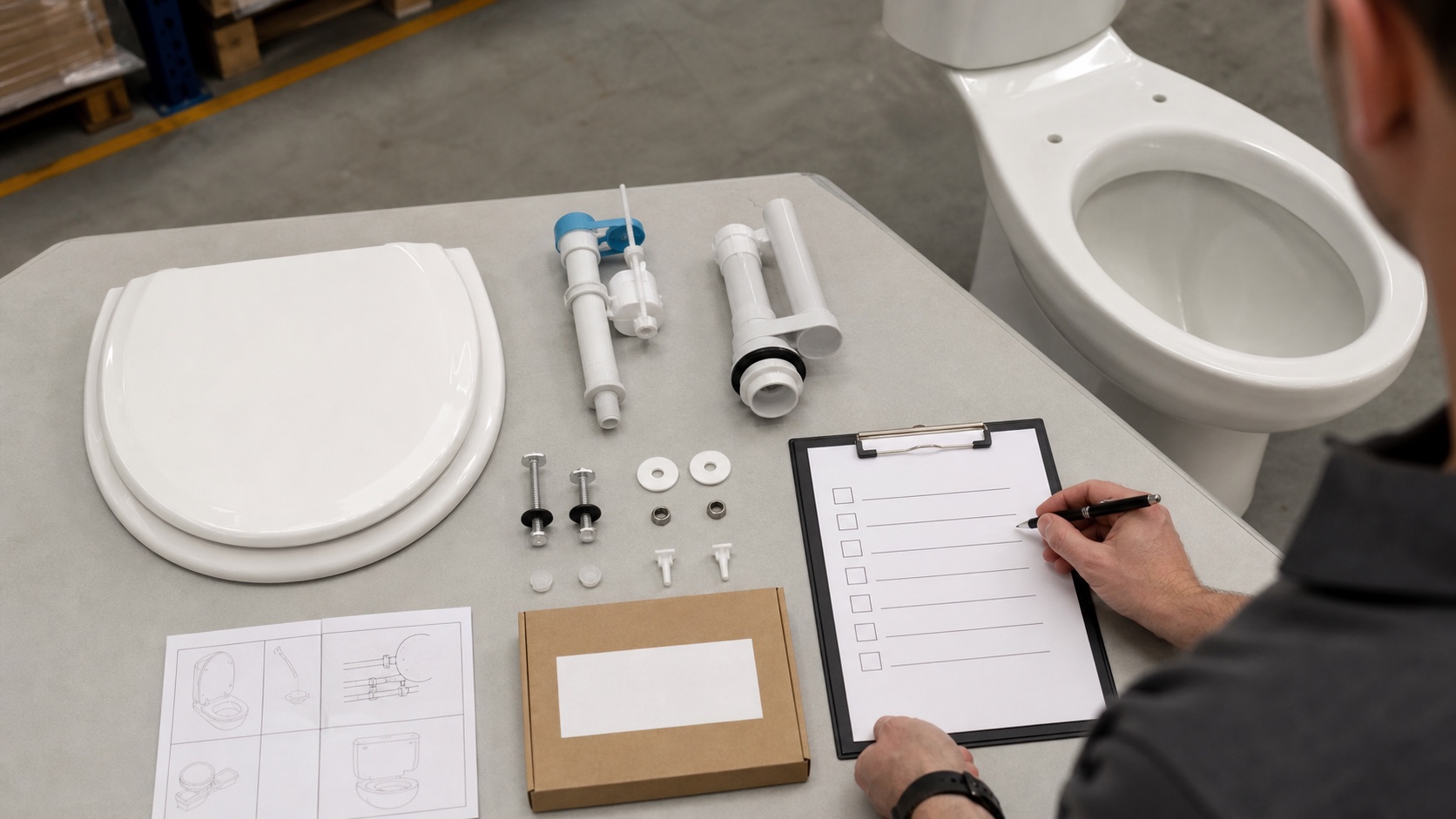
Treat the toilet as a kit. The purchase specification should name the ceramic model and colour; one-piece, two-piece or wall-hung configuration; S-trap or P-trap and rough-in; flush volume; inlet and outlet valves; flush button finish; seat material and soft-close hinges; wax ring or connector if supplied; fixing kit; instructions; barcode and carton marks; spare-parts ratio; and destination certification. For two-piece toilets, state that tank and bowl must be packed and labelled as a matching set.
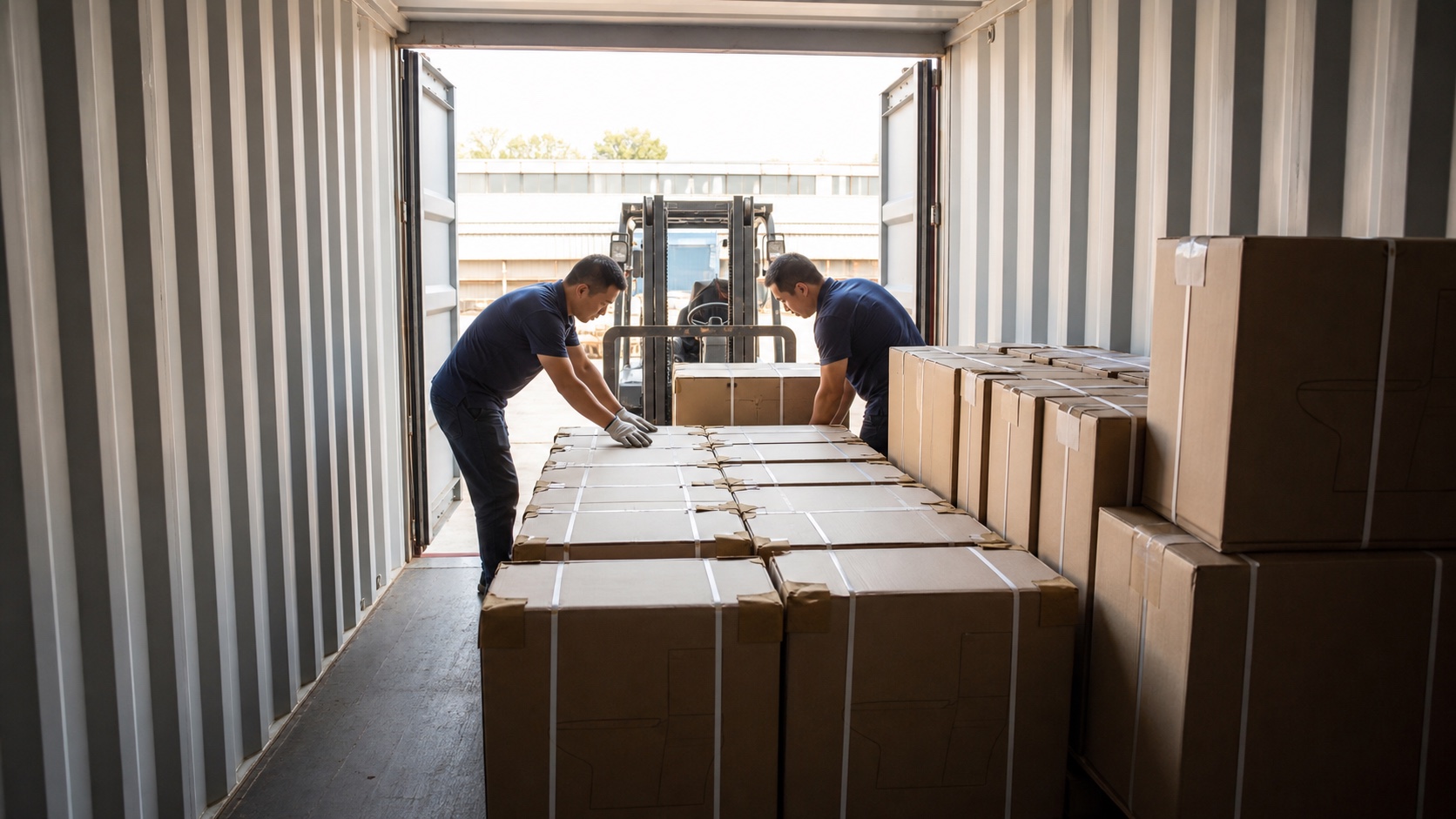
Approve the carton as seriously as the toilet. Ceramic fails through impact, edge loading and movement, so check foam or honeycomb protection around the rim, tank corners, outlet and base. Run a trial pack and drop or transport test appropriate to the shipment. Before loading, inspect quantity, model mix, fittings, carton marks and container stowage. Our guides to pre-shipment sanitary ware inspection and 40HQ sanitary ware loading cover those stages.
08 FINAL CHECK
Ceramic toilet importer checklist before paying a deposit
Put these ten lines on the order
1. Destination market and project type. 2. One-piece, two-piece or wall-hung. 3. S-trap or P-trap with exact rough-in. 4. Overall size, bowl shape and finished seat height. 5. Siphonic or washdown flush system. 6. Full/reduced flush volume and test standard. 7. Ceramic, glaze and approved colour sample. 8. Valve, seat, fixing and spare-parts specification. 9. Required certificates and matching model reports. 10. Export packing, carton marks, inspection level and container mix.
Chengda manufactures ceramic toilets, basins, smart toilets and bathroom cabinets in Guangdong for distributors, importers and hotel or apartment projects. We can review your market brief, match existing moulds to the required outlet and flush system, prepare samples, support OEM or ODM branding, and quote a complete packing and container plan. Certification support varies by model and destination; send us the target market first so the correct documents can be checked.
The best wholesale toilet is not the model with the longest feature list. It is the model whose outlet, flush, ceramic body, fittings, documents and carton all match the same market requirement — repeatedly, across the whole batch.
FAQ COMMON QUESTIONS
Frequently asked questions
What should importers check before buying ceramic toilets in bulk?
Confirm the destination market, toilet configuration, S-trap or P-trap outlet, exact rough-in, flush system and volume, overall dimensions, seat height, ceramic and glaze standard, valve and seat specification, certification, export packing and spare-parts ratio. Approve a connected, functioning golden sample before mass production.
Is a one-piece or two-piece toilet better for wholesale orders?
One-piece toilets offer a seamless look and easier cleaning but are heavier and take more carton volume. Two-piece toilets are often more economical, easier to handle and simpler to service, but require controlled tank-to-bowl fittings and matching. The better option depends on market position, freight cost and installer preference.
What is the difference between a siphonic and washdown toilet?
A siphonic toilet uses a longer curved trapway and siphon action, usually with a larger water surface and quieter flush. A washdown toilet uses a shorter direct trapway and a strong push of water, and is common with multiple S-trap and P-trap layouts. Choose according to the destination market, outlet and tested performance.
Which toilet rough-in size should an importer order?
Order the rough-in required by the destination building system. A nominal 12-inch floor rough-in is common in North America, while many export markets use metric S-trap distances such as 250, 300 or 400 mm. P-trap toilets require the wall-outlet centre height. Always approve a dimensional drawing.
Which certifications do ceramic toilets need for export?
Requirements vary by country and model. North American products commonly reference ASME A112.19.2/CSA B45.1 and may require UPC or cUPC plus WaterSense for relevant high-efficiency models. Other markets may require CE-related documentation, WaterMark/WELS, SASO/SABER or local registrations. Match the certificate scope to the exact model and factory.
How should ceramic toilets be inspected before shipment?
Check appearance and glaze, cracks, deformation, dimensions, base flatness, outlet and hole positions, tank-bowl fit, valve and seat assembly, leakage, repeated flush performance, carton protection, labels, quantity and model mix. Use an agreed AQL and compare production to the signed golden sample.