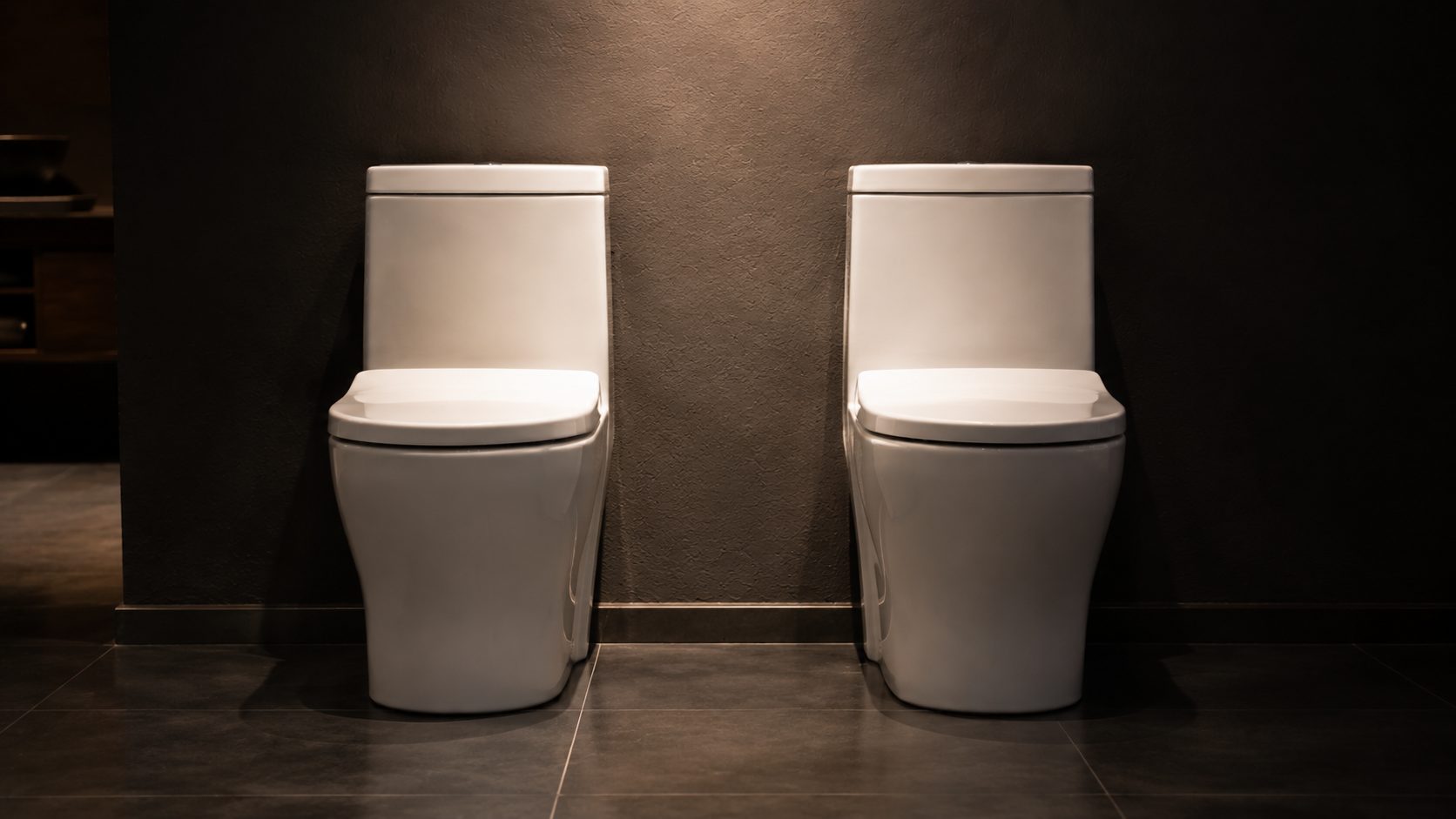
Flush a toilet in Chicago and one in Berlin and you will hear — and see — two different machines. One quietly pulls the bowl's contents down with suction and refills to a deep pool; the other pushes everything out in a short, brisk rush over a small pool of water. That is the siphonic vs washdown toilet difference, and for importers it is not a matter of taste: each of these toilet flushing systems is built for a different plumbing culture, and shipping the wrong one to the wrong market creates installation and warranty problems no discount can fix. Here is the comparison — from the bathroom, and from the casting shop.
Key takeaways
- A siphonic toilet pulls — a long, narrow S-shaped trapway forms a siphon that draws waste out by suction, giving a large water spot and a cleaner-looking bowl; dominant in North America and China, but more clog-sensitive and harder to cast.
- A washdown toilet pushes — a short, wide trapway lets gravity and water momentum do the work, giving strong clog resistance and easy 6/3 L dual-flush operation; dominant in Europe, the UK, Australia and the Middle East, at the cost of a smaller water spot and more brushing.
- The market decides, not preference — importers should match flush type, outlet direction (S-trap or P-trap) and rough-in to destination-market norms before any other spec is discussed.
01 SIDE BY SIDE
Siphonic vs washdown toilet: quick comparison
Both systems live inside the same vitreous-china bodies — one-piece or two-piece, floor-mounted or wall-hung. What separates them is the geometry of the trapway and the physics that geometry allows. Here is the whole argument in one table, before the detail.
Siphonic vs washdown at a glance
| Factor | Siphonic toilet | Washdown toilet |
|---|---|---|
| Flush mechanism | Siphon forms in the trapway and pulls waste out by suction | Water pushes waste out by gravity and momentum |
| Water spot | Large water surface — waste lands in water | Small water spot — more dry ceramic exposed |
| Cleaning & odor | Fewer streaks; deep water seal holds odor down | More frequent brushing; slightly more odor before flushing |
| Clogging | Longer, narrower trapway; sensitive to excess paper | Short, wide passage (~100 mm class); very clog-resistant |
| Noise | Longer, lower-pitched whoosh ending in a gulp | Shorter, sharper rush — brief but more energetic |
| Water use | Modern designs reach ≤4.8 L / 1.28 gpf full flush | Built around 6/3 or 4.5/3 L dual flush |
| Dominant markets | North America, China, much of Southeast Asia | Europe, UK, Australia/NZ, Middle East, most of Africa |
| Casting complexity | Complex glazed S-trap body; lower kiln yield | Simpler short trapway; easier casting, consistent yield |
| Best fit | Homes and hotels where guests expect a quiet, full bowl | Wall-hung projects, high-traffic sites, water-strict markets |
02 THE PHYSICS
How each flush actually works
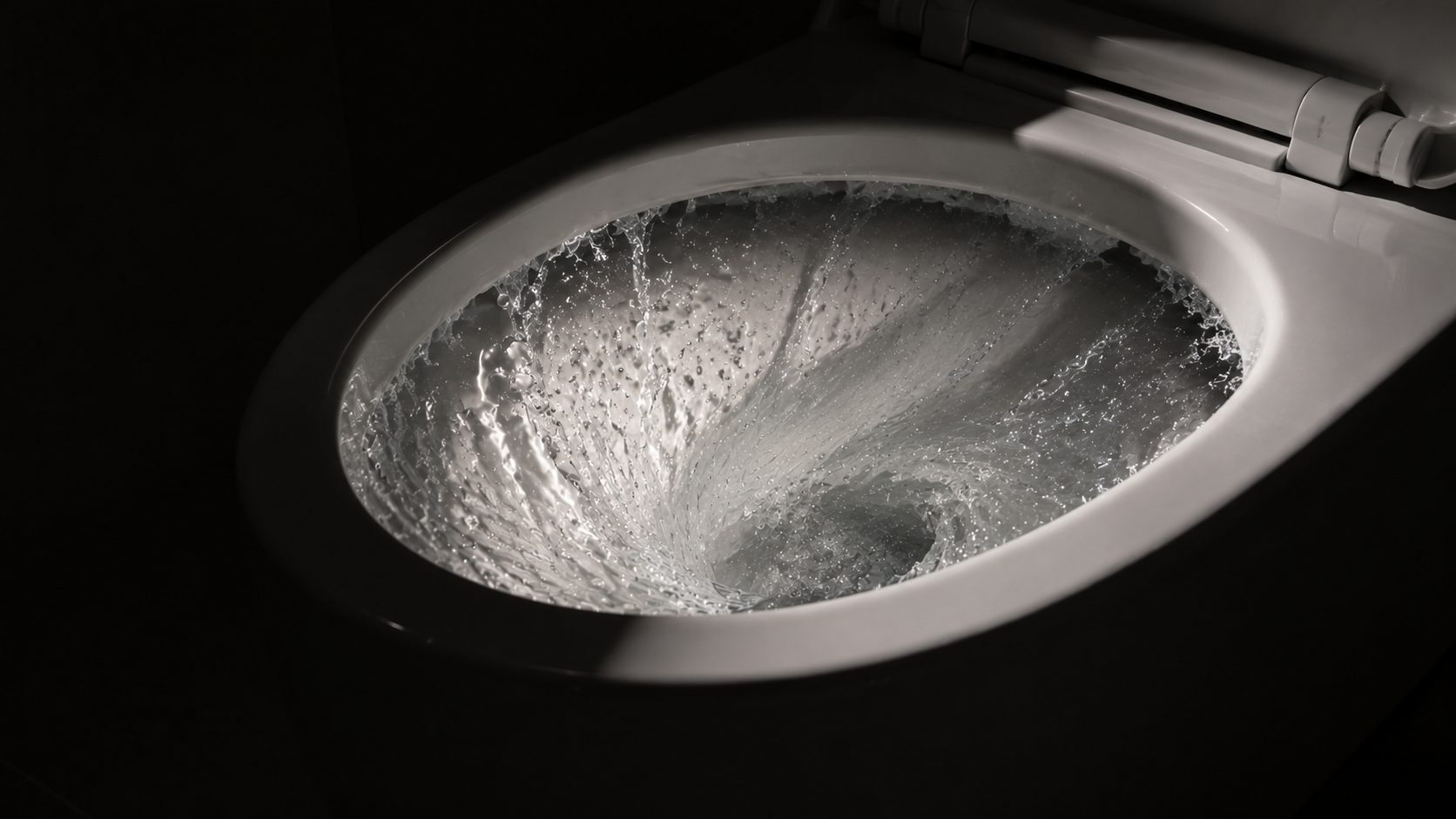
A siphonic toilet carries a long, S-shaped, fully glazed trapway inside its body. When you flush, water enters fast enough to fill that trapway completely, and a siphon forms: for a second or two, atmospheric pressure drives the bowl's contents into the partial vacuum, effectively pulling waste out. The flush ends with the characteristic deep gulp as the siphon breaks and the bowl refills to its large standing water level. Siphon-jet versions — the standard format in US retail — add a directed jet at the base of the bowl to prime the siphon faster and harder.
A washdown toilet skips the siphon entirely. Its trapway is short, wide and relatively straight, and the flush simply releases water from the rim — increasingly an open, rimless rim — to push waste through by gravity and momentum. Nothing needs to be primed, so the passage can be generous and the bowl steep; the whole event is shorter and more direct.
A siphonic bowl pulls; a washdown bowl pushes. Water spot, noise, clogging behaviour — even the factory's reject rate — all follow from that single design choice.
03 THE WATER SPOT
Water spot, cleaning and odor
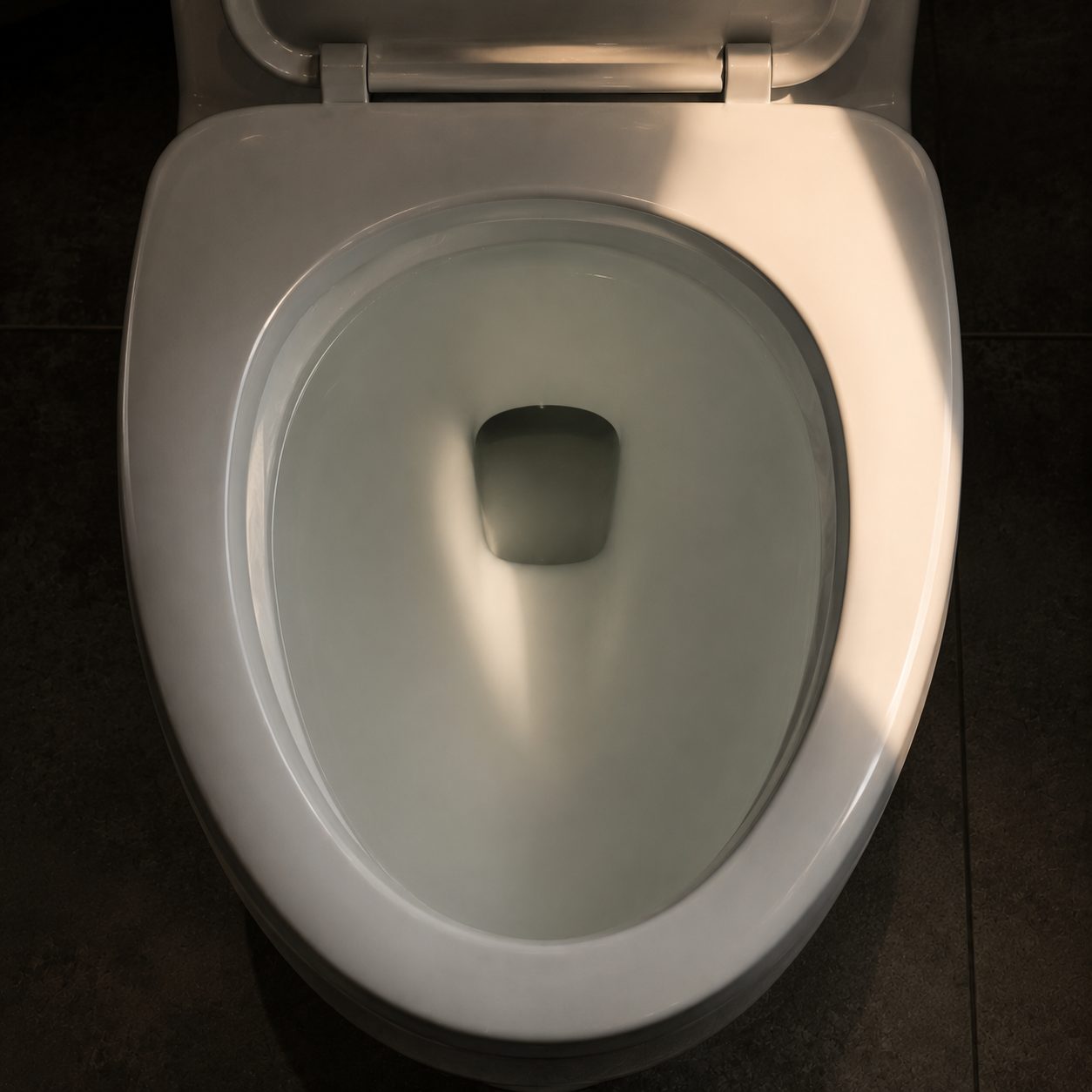
The most visible everyday difference is the water spot — the pool of standing water in the bowl. A siphonic bowl holds a large one, roughly the 200 × 180 mm class under Chinese standards and larger still in many US designs, because the sealed trapway supports a deep column of water. Waste lands in water rather than on ceramic, so there are fewer skid marks, less brushing, and a generous water seal keeping drain odors where they belong.
A washdown bowl holds a much smaller spot — sometimes only around 10 × 10 cm. More dry ceramic is exposed, waste is more likely to touch the bowl wall, and housekeeping reaches for the brush more often. European markets accept this trade-off knowingly: steep bowl geometry and smooth, well-fired glazes reduce marking, but they do not erase the difference. Neither type smells in normal use — both keep a water seal in the trap — the washdown simply gives odors a moment longer before the flush arrives.
04 PERFORMANCE
Clogging, noise and water use — the honest version
On clogging, the washdown wins, and buyers deserve to hear it plainly. Its trapway is short, straight and wide — around the 100 mm class at the drain passage, against a siphonic passage closer to 50–60 mm that must stay narrow for the siphon to form. Less path, less to catch: in high-traffic or misuse-prone settings, a washdown simply blocks less. A well-made siphonic with a fully glazed, ball-pass-tested trapway performs reliably in normal domestic use, but it trades some robustness for its cleaner, fuller bowl.
Noise is more nuanced than the usual claim that siphonic is quieter. The siphonic flush is a longer, lower-pitched whoosh ending in a gulp; the washdown is a shorter, sharper rush of water. Total sound energy is comparable — what differs is pitch, duration and how the installation carries it, so treat quietness as a tendency by design, not an absolute.
On water, history flatters the washdown: it grew up under European water-saving rules, while older American siphonic models needed 13 litres to prime the siphon. Modern reality is closer. Washdown pans pair naturally with 6/3 or 4.5/3 L dual flush under EN 997 in Europe or WELS ratings in Australia, and current siphonic one-piece designs routinely achieve a ≤4.8 L (1.28 gallon) full flush at US WaterSense levels. Whichever you buy, confirm the target norm and any testing requirements with the factory early.
05 MARKET MAP
Which markets expect which — and why you can't swap them
Siphonic is the expectation in North America — a US or Canadian buyer assumes the large water spot and the quiet gulp, and anything else reads as wrong. The plumbing follows suit: floor outlet (S-trap) with a 12-inch (305 mm) rough-in as standard, plus 10-inch and 14-inch retrofit variants. China builds to 300 mm or 400 mm floor outlets with the same siphonic preference, and much of Southeast Asia follows the Chinese and American pattern.
Washdown is the expectation across Europe, the UK, Australia and New Zealand, the Middle East, most of Africa and much of South America. Wall outlets (P-trap, typically around 180 mm outlet height) are common, and the washdown pan pairs naturally with wall-hung bowls, in-wall frames and concealed cisterns — the default in European hotels and apartments. The two cannot simply be swapped: a siphonic bowl does not fit a European wall-outlet bathroom, nor a washdown pan a 12-inch US floor rough-in. Outlet geometry, not flush preference, is the hard constraint.
Match the market first, then fix the outlet
Before production, confirm four lines in writing: flush type matched to the destination market; outlet direction (S-trap floor or P-trap wall); rough-in distance (300/400 mm or 12 inch) or outlet height; and the connection standard on site. A container of toilets with the wrong rough-in is not a discount opportunity — it is unsellable inventory.
06 FACTORY VIEW
The factory view: why trapway geometry changes casting and QC
Consumer guides compare the two systems in the bathroom; the factory compares them in the mold shop. A siphonic body's long, curved internal trapway makes the slip-cast mold markedly more complex, and keeping the full length of an internal channel glazed and smooth is genuinely difficult — the risks are internal glaze misses you cannot see, deformation in firing, and siphons that pull inconsistently from unit to unit. That is why serious factories run trapway ball-pass tests and per-batch flush performance testing on siphonic lines, and why siphonic quality varies so widely between suppliers.
A washdown body is the easier casting: a short, open trapway, more even drying, easier full glazing and a more consistent kiln yield — one reason washdown models often quote lower at a comparable quality grade. The buyer's takeaway is simple: when sourcing siphonic, ask specifically about internal trapway glazing and the flush-test sampling plan. These are meaningful QC line items, not marketing — our guide to inspecting sanitaryware before shipment shows where they fit in a pre-shipment check.
07 WHICH TO CHOOSE
Which should you choose?
Choose siphonic when you sell into North America, China or markets shaped by them: floor-mounted one-piece or two-piece bowls for homes and hotels where guests expect the full, quiet-perceived bowl and a 12-inch or 300/400 mm rough-in. Choose washdown for Europe, the UK, Australia and the Middle East — especially wall-hung pans with concealed cisterns for hotel and apartment work, the format we quote most for European-style projects; see our guide to supplying hotels and apartments. Washdown is also the pragmatic pick for high-traffic public and commercial sites, where its clog resistance earns its keep.
Sellers straddling both regions should stock both types rather than compromise on one SKU — a flush system is not a feature you can average. Within either system, quality still varies by factory, which is why the casting and QC questions above matter more than the label on the box.
Before you specify, confirm
Flush type matched to the destination market; outlet direction (S-trap or P-trap); rough-in (300/400 mm or 10/12/14 inch) or wall-outlet height; flush volume and target norm (6/3, 4.5/3 or ≤4.8 L single); trapway glazing requirement and flush-test sampling (especially siphonic); seat and fittings; packing spec and container loading quantity.
08 WHAT TO SPECIFY
What to specify when ordering in bulk
The flush system is one line of the order, not the whole order. Body construction is a separate decision — our one-piece vs two-piece toilet comparison covers that choice — and both bodies can carry either flush system. Around those two decisions sit the details that quietly decide whether a container sells through: seat type and spare-seat supply, cistern fittings, dual-flush mechanism, carton construction and units per 40'HQ. The two most expensive errors we see are an unstated outlet direction and an assumed water norm — both are free to fix at specification and costly to fix at the port.
As a Guangdong-based manufacturer, we produce both siphonic and washdown ceramic toilets — one-piece and two-piece — alongside smart toilets, ceramic basins and bathroom cabinets, with OEM/ODM adaptation of trapway and outlet configuration to destination-market standards. Certification support varies by product and market, and buyers can request available test reports before ordering. Tell us the target market and outlet situation, and we will recommend the flush system and quote the right models.
Neither system is better — each is the correct answer to a different plumbing tradition. Decide the destination market first, fix the outlet and rough-in, and the siphonic vs washdown question largely answers itself.
FAQ COMMON QUESTIONS
Frequently asked questions
Which is better, a siphonic or a washdown toilet?
Neither is universally better — they solve the same problem with different physics. A siphonic toilet pulls waste out by suction through a long S-shaped trapway, giving a large water spot, fewer streaks and a quieter-perceived flush; a washdown toilet pushes waste out by gravity through a short, wide trapway, giving stronger clog resistance and easy dual-flush water saving. The deciding factor is the destination market: North America and China expect siphonic, while Europe, the UK, Australia and the Middle East expect washdown.
Do washdown toilets clog less than siphonic toilets?
Yes, as a design tendency. A washdown trapway is short, straight and wide — around the 100 mm class at the passage — so there is simply less path for paper or foreign objects to catch on. A siphonic trapway must stay narrower, roughly 50–60 mm, and more convoluted for the siphon to form, which makes it more sensitive to excess paper. A well-made siphonic with a fully glazed, ball-pass-tested trapway is reliable in normal domestic use, but for high-traffic or misuse-prone installations the washdown is the robust choice.
Why do American toilets hold more water than European toilets?
Because they flush differently. American toilets are siphonic: the sealed S-trap supports a deep column of water, so the bowl holds a large water spot that waste lands in — part of the design, not a fault. European toilets are washdown: no siphon needs to form, the trapway is short and open, and the bowl holds only a small pool. The visual difference travelers notice between the two continents is really the difference between a pulling flush and a pushing flush.
Are washdown toilets noisy?
They are shorter and sharper rather than strictly louder. A washdown flush is a brief, energetic rush of water; a siphonic flush is a longer, lower-pitched whoosh that ends in a gulp. Total sound energy is comparable — what differs is pitch and duration, plus how the installation carries sound. Some users find the washdown's short burst less intrusive at night; others prefer the siphonic's lower tone. Treat quietness claims as tendencies by design, not absolutes.
Do washdown toilets smell more?
Not if the water seal is intact — both systems keep a trap full of water that blocks drain odors. The honest difference is at the bowl: a washdown's small water spot leaves more dry ceramic exposed, so waste may sit against the bowl wall for a moment longer before flushing, and marks need brushing more often. Steep bowl geometry and a smooth, well-fired glaze reduce this, which is why glaze quality is worth specifying when sourcing washdown models.
Can I install a washdown toilet in the US, or a siphonic toilet in Europe?
Usually not without trouble, and the obstacle is geometry more than regulation. A siphonic bowl is built for a floor outlet with a 12-inch (or 300/400 mm) rough-in; most European bathrooms use wall outlets around 180 mm height that suit P-trap washdown pans, often wall-hung with concealed cisterns. Swapping types means mismatched outlets, adapters and warranty risk — and consumers notice a bowl that behaves differently from what they grew up with. Importers should match the flush system to the destination market's plumbing norms.