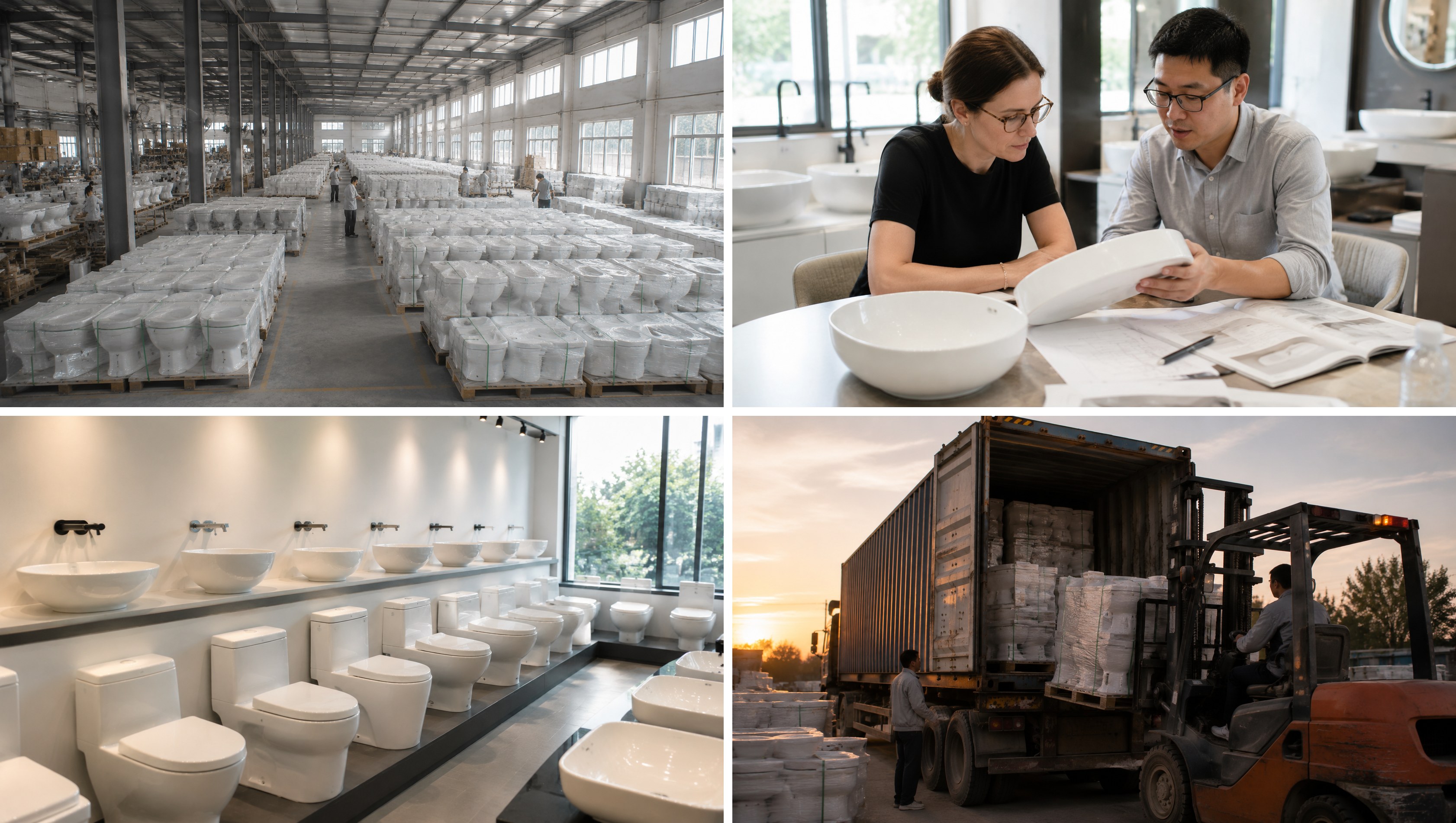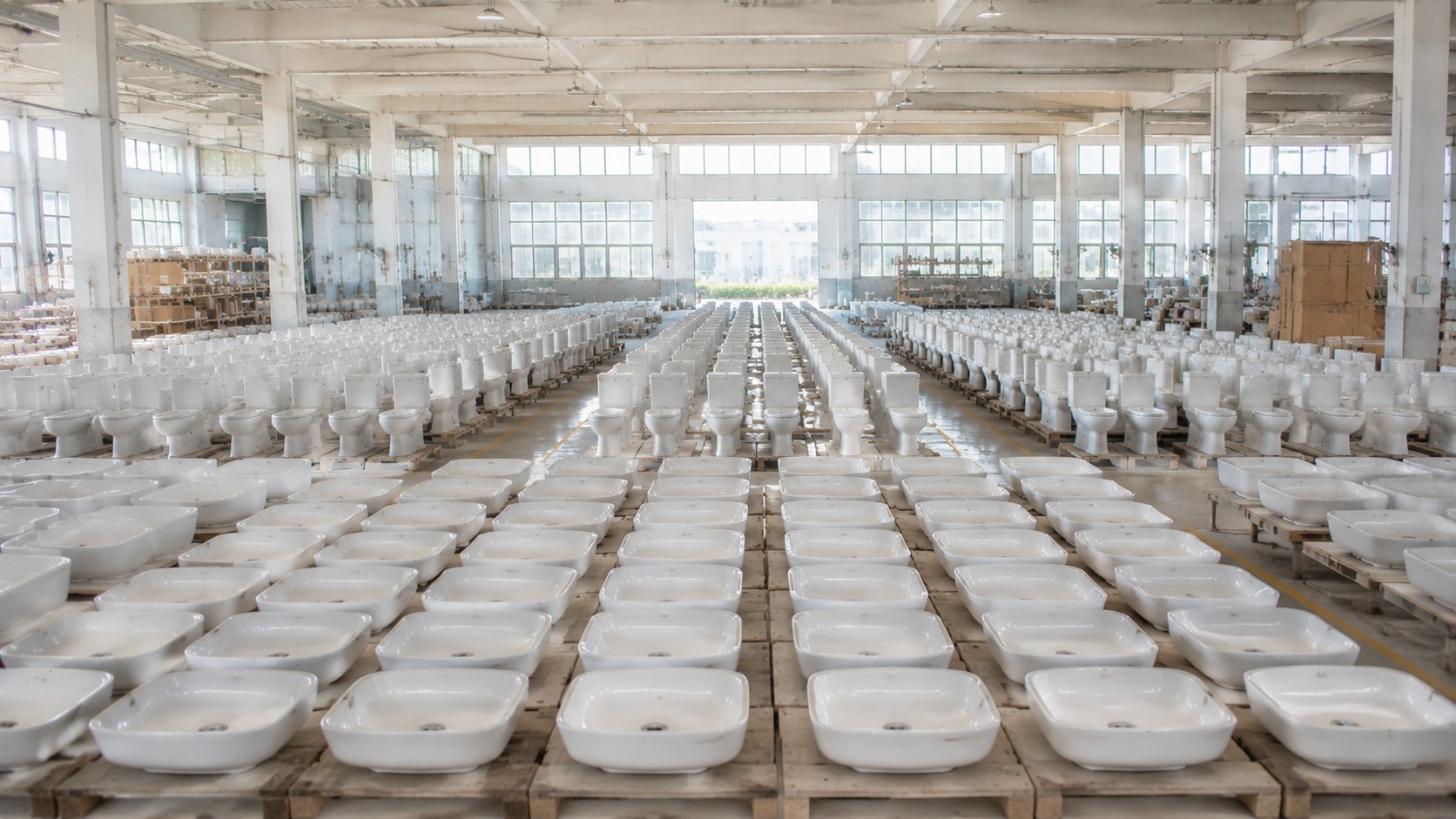
Choosing a sanitary ware supplier for hotels and apartments is a different job from buying fixtures for a single home. You are specifying dozens or hundreds of identical bathrooms, tying them to a budget and an opening date, and living with the result through years of heavy use.
This guide is written for FF&E procurement, contractors, developers and hospitality buyers who source basins, toilets and cabinets in volume. It covers why a factory-direct hotel bathroom sanitaryware supplier often makes sense, how to match products to a hotel versus an apartment project, what durability really means under high traffic, and how MOQ, lead time, packaging and OEM/ODM come together on a project order.
Key takeaways
- Buy from the source — a factory-direct sanitary ware supplier gives you one point of control over specification, price and repeat supply.
- Match the project, not the catalogue — hotel bathrooms and apartment bathrooms have different priorities for durability, style and cost per unit.
- High traffic is the real test — low water absorption, a hard glaze and easy-clean shapes matter more than looks alone.
- Plan MOQ, lead time and packaging early — these decide whether the fixtures land on site on schedule and arrive intact.
- OEM/ODM keeps a brand consistent — from logo placement to colour and dimensions, a manufacturer can build to your standard.
01 Why factory-direct
Why choose a factory-direct sanitary ware supplier for projects?
On a project, the sanitary ware line item is rarely one product — it is a coordinated set repeated across every bathroom. When you buy through a trading layer, you inherit their margin, their lead-time estimates and, often, their quality assumptions. Buying from the factory that actually casts, glazes and fires the pieces removes several of those unknowns.
Guangdong Chengda Intelligent Technology Co., Ltd. is a ceramic sanitary ware factory in Chaozhou, Guangdong — one of the largest ceramics clusters in China — and over 25 years we have supplied buyers in more than 50 countries. A project sanitaryware supplier in China working factory-direct can typically offer three things a middleman cannot:
One point of control. Specification, sample approval, production and packing sit under one roof, so a change to a rim height or a tap-hole configuration doesn't have to travel through three companies before it reaches the kiln.
Honest lead times. The factory knows its own kiln schedule. That makes delivery dates you can actually build a site programme around, instead of an optimistic promise passed down a chain.
Repeatable supply. When a hotel group rolls out a second property, or an apartment developer starts the next block, the same moulds and the same body recipe produce matching pieces. Consistency across phases is far easier when the source hasn't changed.
On a project, you are not buying a basin. You are buying the certainty that two hundred of them will match, arrive on time, and still look right after five years of guests.
02 Matching the project
How to match sanitaryware to hotel vs apartment projects
Hotels and apartments both need reliable ceramic sanitary ware, but the brief behind them is not the same. A hotel bathroom is a guest-facing brand statement used intensely but briefly by strangers; an apartment or serviced-apartment bathroom is a home that has to feel comfortable and stay serviceable for a resident over years. Getting the match right controls both cost and complaints.
Hotel vs apartment sanitary ware — what changes in the spec
| Consideration | Hotel / hospitality | Apartment / serviced apartment |
|---|---|---|
| Primary driver | Brand image, guest impression, fast turnaround between stays | Livability, long-term durability, cost per unit at scale |
| Usage pattern | Very high traffic, short intense use, frequent cleaning | Steady daily use by the same household over years |
| Style priority | Design-led — art basins, matching suites, a signature look | Clean, neutral, timeless; easy to re-let or resell |
| Toilet choice | Quiet flush, easy-clean rimless pans, sometimes smart toilets in premium rooms | Water-efficient, dependable, simple maintenance |
| Basin & cabinet | Statement basin plus vanity that fits the room concept | Practical basin-and-cabinet sets with storage |
| Budget logic | Higher spend per key in feature rooms, controlled in standard rooms | Tight cost per unit, multiplied across many identical bathrooms |
In practice most projects mix both logics. A hotel will specify a design-led suite for its rooms while keeping back-of-house and staff bathrooms simple. A developer building serviced apartments may want a slightly more premium look in show units than in the rest of the block. A good hotel basin and toilet supplier should be comfortable quoting tiers within the same order rather than forcing one product across every space.
The practical starting point is your room matrix: how many keys or units, how many bathroom types, and which fixtures repeat in each. From there, matching basins, toilets and cabinets into coordinated sets is straightforward — and it is worth reading our guides on how to choose a ceramic basin and matching bathroom cabinets to basins before you lock the specification.
03 High-traffic durability
Durability and maintenance for high-traffic bathrooms
The fastest way a project sanitary ware decision goes wrong is choosing on looks and discovering the maintenance cost later. In a hotel, housekeeping cleans some bathrooms several times a day; in an apartment block, a facilities team wants fixtures that don't generate call-outs. Durability here is specific and measurable, not a marketing word.
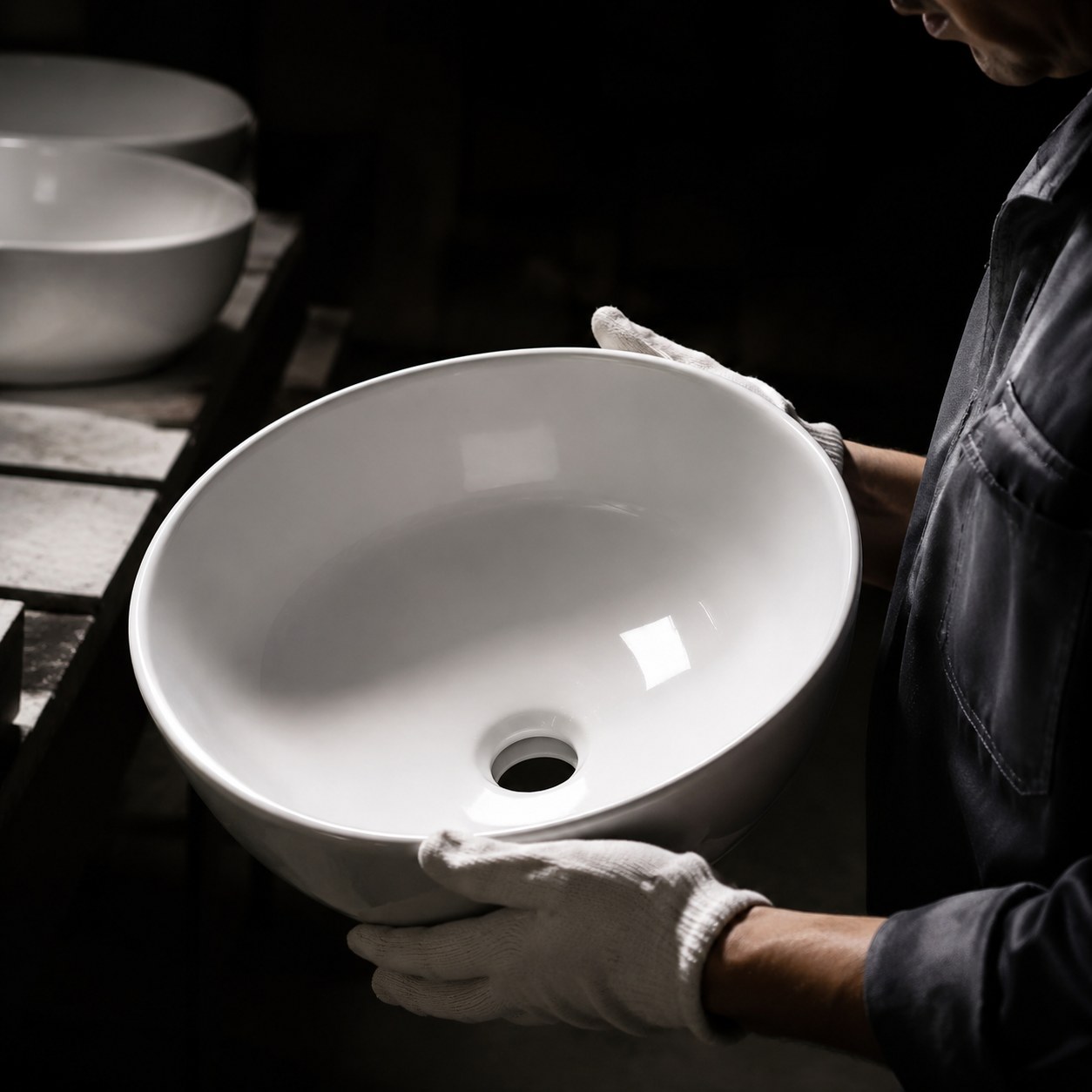
Low water absorption. A well-vitrified vitreous-china body resists staining, odour retention and cracking. It is a reasonable specification to ask any supplier about, because a porous body is where long-term problems begin.
A hard, even glaze. The glazed surface is what guests touch and what housekeeping scrubs thousands of times. A dense, smooth glaze cleans faster and resists the dull, scratched look that ages a bathroom prematurely.
Easy-clean shapes. Rimless toilet pans, generous basin radii and simple joints between basin and cabinet save real labour. Every hard-to-reach corner is a cost repeated across every bathroom, every day.
Serviceable fittings. Wastes, traps, flush mechanisms and tap connections should use standard, replaceable parts. When something eventually wears, a maintenance team wants an off-the-shelf fix, not a bespoke hunt.
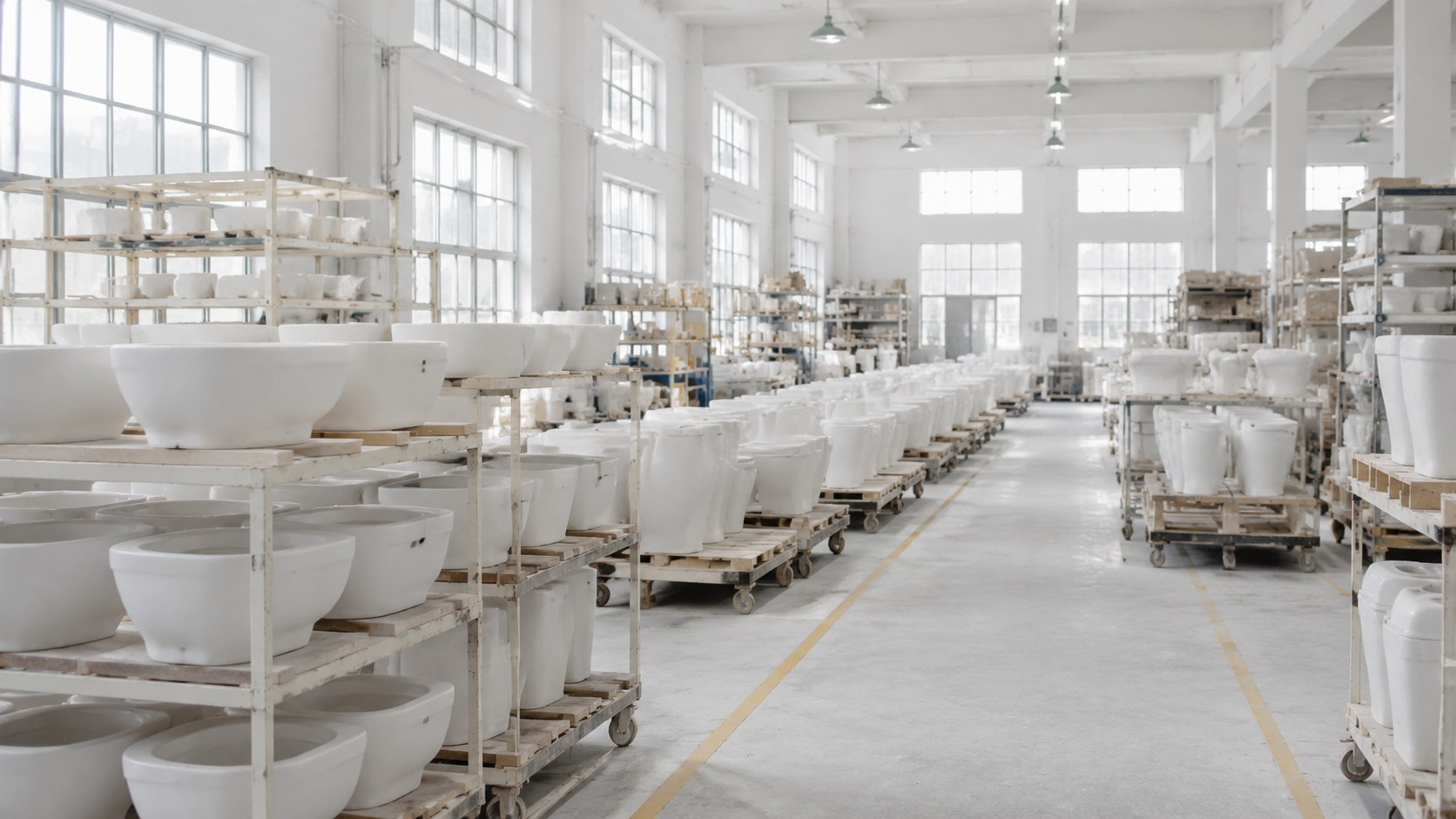
If you want to see how these qualities are built in rather than bolted on, our look inside the factory walks through the forming, glazing and firing stages that decide them.
04 MOQ, lead time & packaging
MOQ, lead time and packaging for project orders
These three details decide whether the right product actually reaches site on schedule and undamaged. Discuss them early, before a specification is frozen, because they can shape which models are practical for your volume.
MOQ (minimum order quantity). Ceramic sanitary ware is cast in moulds, so cost per piece improves with volume. Standard models usually carry a lower, flexible MOQ; a fully custom OEM/ODM shape needs enough volume to justify new moulds. For a hotel or apartment project the total quantity is often well above MOQ anyway, but it matters when you want a rarer finish or a small run of feature-room pieces.
Lead time. Plan around the kiln, not the calendar you'd like. A realistic production window for a project order depends on quantity, how many models are involved, and whether tooling is new. Sample approval and any customization sit before that window, so the earliest thing to lock is your specification. Building in a buffer before the on-site installation date protects the whole programme.
Packaging for projects. Ceramics are fragile and a project ships a lot of them, often to a live site. Sturdy export cartons, moulded protection at rims and corners, palletisation for handling, and clear model and quantity labelling all reduce breakage and speed up sorting when the container is opened. For long ocean routes, packaging is not a detail — it is the difference between an intact delivery and a claim.
Ask your FF&E bathroom supplier to confirm all three in writing against your quantities and destination. A supplier who answers precisely is one who has shipped projects before.
05 OEM/ODM for brands
OEM/ODM customization for brand standards
Hospitality groups and developers often work to a brand standard: a defined look, sometimes a logo, specific dimensions to suit a repeated bathroom layout. This is where a manufacturer offering OEM and ODM earns its place over a stockist.
OEM — you bring the design or the exact specification, and the factory produces to it. ODM — you start from the factory's existing models and adjust size, colour, glaze finish, tap-hole layout or branding to fit your project. Most projects land somewhere between the two.
Typical project customization includes discreet logo placement, matched colour and finish across a suite, dimensions tuned to a standard bathroom pod or vanity, and coordinated packaging. The key is to share requirements early: it is far easier to plan a custom rim or a specific glaze at the tooling stage than to correct it after firing. Our overview of OEM and ODM bathroom products explains how a manufacturer takes a project from a brief to production.
On certification and compliance: requirements differ by product and by destination market, so support varies. Rather than claim a blanket approval, we recommend telling us your target market early and requesting the documents available for the specific products you are considering.
06 Getting a quote
How to request project quotations and samples
A precise brief gets a precise quote. To price and plan a project accurately, a sanitaryware supplier for apartments or hotels needs a clear picture of scope. Include as much of the following as you can:
1. Project type and size — hotel, serviced apartment or residential; number of keys or units and how many bathroom types repeat.
2. Product list per bathroom type — basins, toilets, cabinets, faucets and accessories, with quantities. A simple room-by-room matrix is ideal.
3. Specifications — installation type (above-counter, undermount, wall-hung), dimensions or space constraints, colour and finish, and any branding.
4. Destination and timeline — port or delivery city, and your on-site installation date so lead time and shipping can be planned backwards from it.
5. Samples — request samples of shortlisted models before committing to volume, so you can check the glaze, the finish and the fit against your design intent.
With that in hand, we can return matched product recommendations, a quotation against your quantities, realistic lead times, and sample arrangements. Whether you are sourcing one boutique property or a multi-block development, a factory-direct sanitary ware supplier for hotels and apartments gives you the specification control and repeat supply that projects depend on.
07 FAQ
Sanitary ware for hotels and apartments: common questions
What should I look for in a sanitary ware supplier for hotels?
Look for a factory-direct manufacturer that can hold one specification across many bathrooms, quote honest lead times from its own production schedule, and supply matching pieces on repeat orders. For hospitality specifically, ask about low water absorption, a hard easy-clean glaze, rimless toilet options and standard replaceable fittings, because these drive maintenance cost over the life of the property.
Is sanitary ware for hotels different from sanitary ware for apartments?
The products overlap, but the priorities differ. Hotel bathrooms favour a design-led, brand-consistent look built for very high traffic and fast cleaning, while apartment bathrooms prioritise long-term livability and tight cost per unit across many identical units. A good supplier can quote tiers within one order rather than forcing a single product across every space.
What is the minimum order quantity for a project?
MOQ depends on the model. Standard products usually carry a lower, flexible MOQ, while a fully custom OEM shape needs enough volume to justify new moulds. Most hotel and apartment projects are well above MOQ on their core models; it matters most for rarer finishes or small feature-room runs. Share your quantities and we can confirm what is practical.
How long does a project sanitary ware order take?
Lead time depends on quantity, the number of models and whether tooling is new. Sample approval and any customization come before the production window, so the earliest thing to lock is the specification. We plan lead time backwards from your on-site installation date and build in a buffer to protect the programme.
Can you customise sanitary ware to our brand standard (OEM/ODM)?
Yes. Through OEM we build to your design or specification; through ODM we adapt existing models by size, colour, glaze finish, tap-hole layout or branding. Typical project customization includes discreet logo placement, matched finishes across a suite and dimensions tuned to a standard bathroom layout. Share requirements early, as it is easier to plan at the tooling stage than to correct after firing.
Do you supply certificates for hotel and apartment projects?
Requirements vary by product and by destination market, so available documentation differs. Rather than assume a blanket approval, tell us your target market early and we will share the documents available for the specific products you are considering.