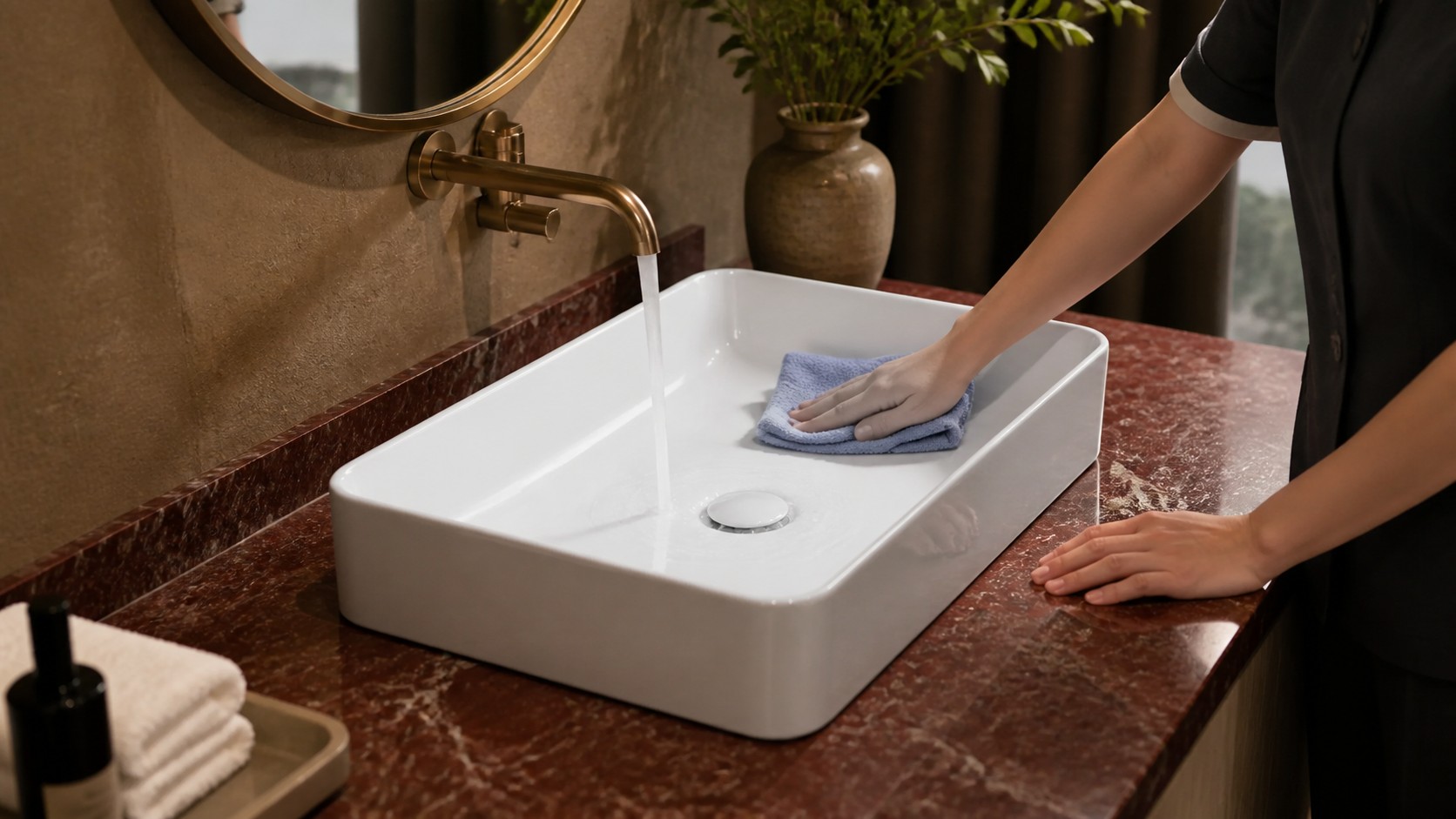
Learning how to clean a ceramic bathroom sink is less about finding the strongest chemical and more about matching the method to the soil. A glazed vitreous-china basin normally needs warm water, a mild approved cleaner, soft tools, complete rinsing and drying. Mineral deposits, soap residue and metal transfer may need targeted treatment, but aggressive abrasion or mixed chemicals can permanently dull the glaze and damage taps, wastes or sealant.
Key takeaways
- Begin gently: remove loose soil with water and a soft cloth before escalating.
- Identify the mark: limescale, soap film, metal transfer and glaze damage are different conditions.
- Follow written care instructions: the basin, coloured finish, tap, waste and sealant may not tolerate the same product.
01 SURFACE BASICS
What is the glaze on a ceramic bathroom sink?
A ceramic bathroom basin is shaped and fired, then its visible surfaces carry a glass-like glaze. A good glaze provides colour, gloss and a smooth, relatively easy-to-clean surface. It is durable in normal bathroom use, but it is not immune to scratching, impact, chemical attack or staining around neglected joints.
The white surface and the ceramic body are not the same layer. Scrubbing until a mark disappears can create a dull patch that catches soil more easily. Coloured, matte, metallic or decorated ceramics may have care limits that differ from standard gloss white vitreous china. Always retain the supplier's instructions for the exact finish.
The installed assembly also includes non-ceramic parts: chrome or coloured taps, waste covers, overflow trims, flexible sealant and a vanity top. A product tolerated by the glaze can still damage those parts. Apply cleaners to the cloth when practical and keep splashes controlled.
02 DAILY ROUTINE
What is the safest way to clean a ceramic sink?
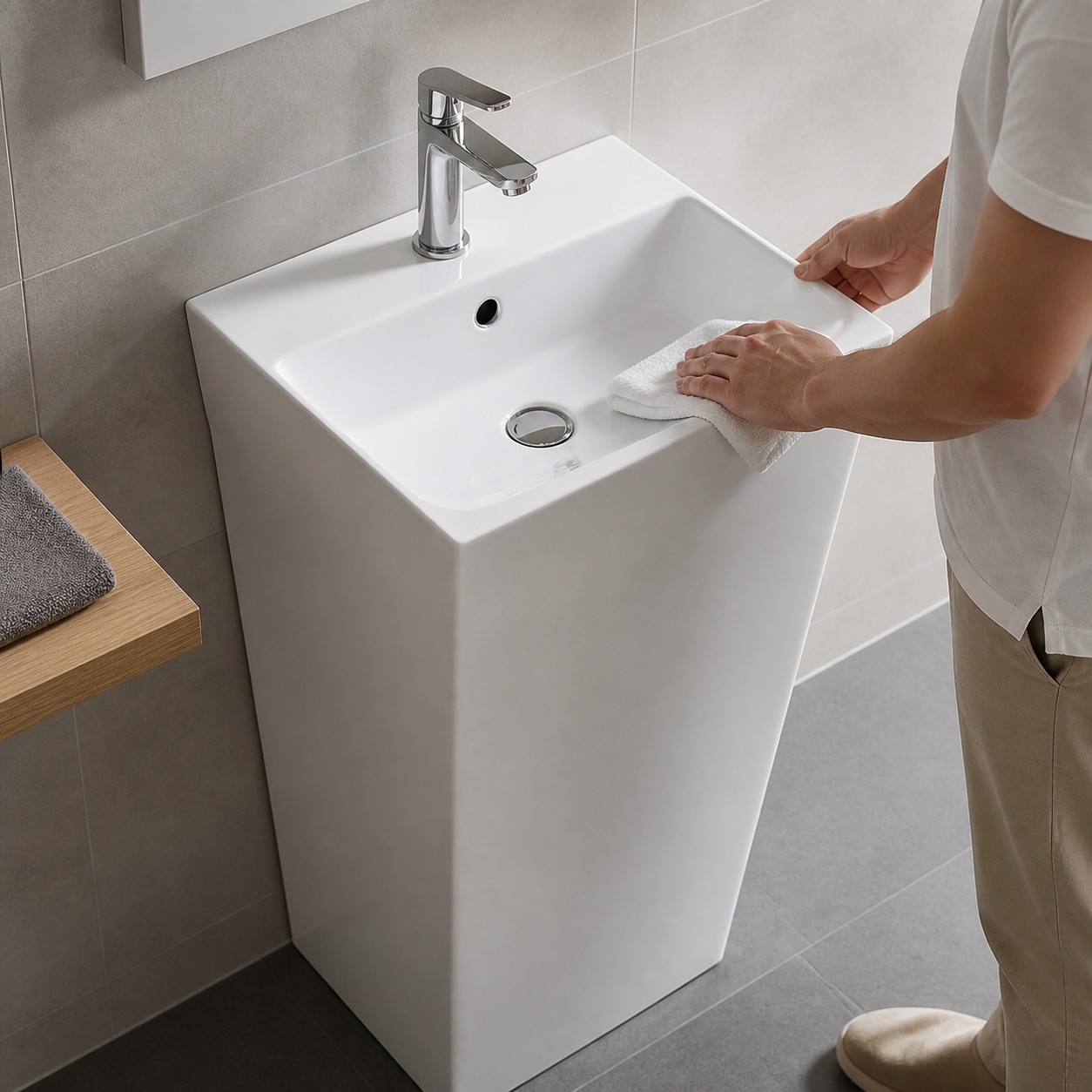
Remove toiletries and rinse away loose residue with warm water. Apply a small amount of mild soap or a cleaner approved for the fixture to a soft damp cloth or non-scratch sponge. Wipe the bowl, rim, tap deck and accessible overflow area without pressing abrasive particles across the glaze.
Rinse thoroughly with clean water so cleaner does not dry into a film. Wipe the basin dry with a clean lint-free cloth, especially in hard-water areas. Drying reduces droplets that later become mineral spots and also reveals whether soil remains.
Clean the tap and waste according to their own finish instructions. Do not leave wet cloths, metal tins, hair-dye tools or staining products in the bowl. Deal with a spill while it is fresh instead of allowing colour or chemicals to remain against the glaze for hours.
03 IDENTIFY THE MARK
Is the mark limescale, soap residue or metal transfer?
Mineral scale usually appears as a chalky ring around the drain, overflow or repeated waterline. Soap and cosmetic residue often feels waxy or forms a dull film near the bowl sides and counter joint. Metal transfer can look like a grey pencil line after jewellery, a tool or a metal container rubs the surface. Dye and rust have their own colours and may originate from water, fittings or objects left in the basin.
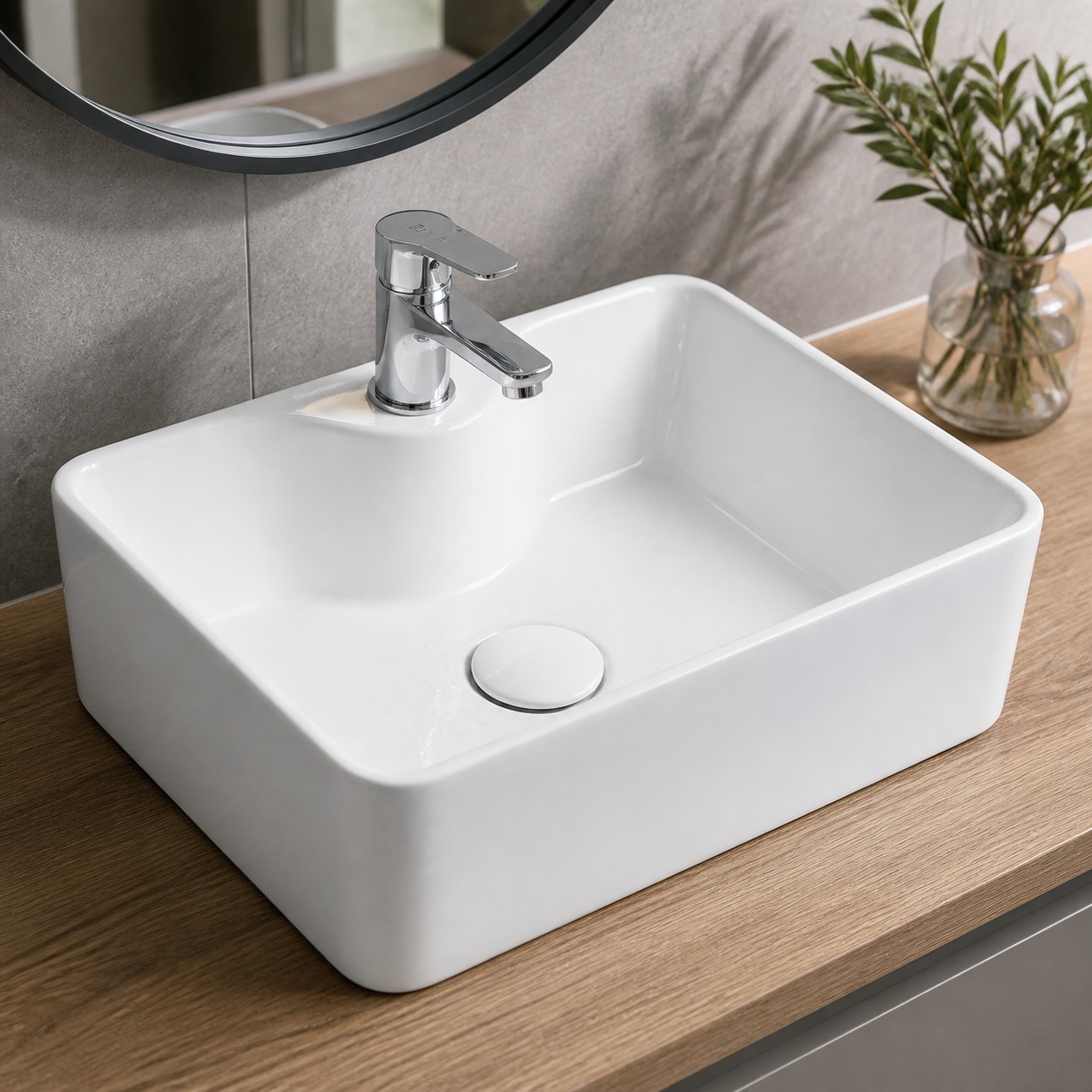
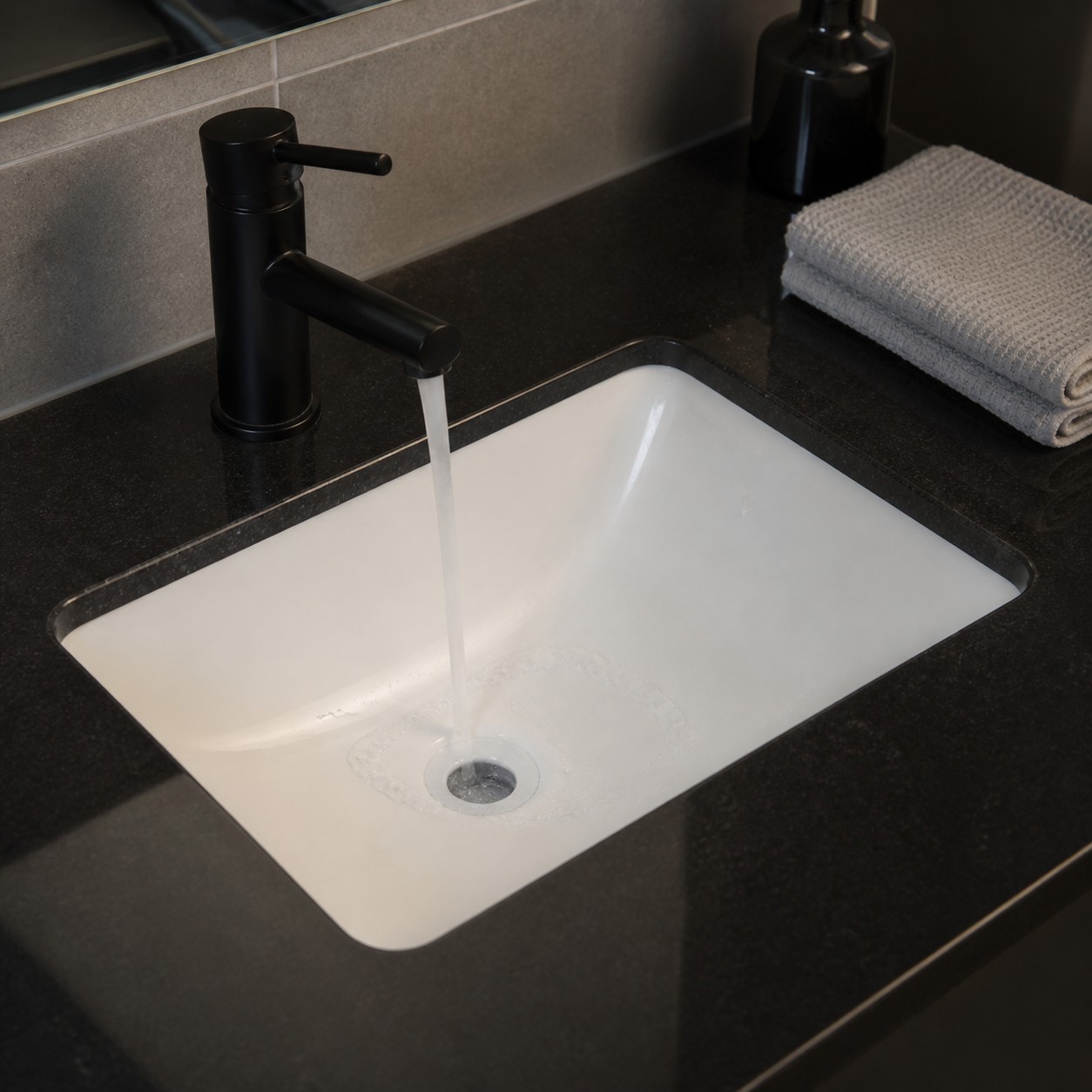
Inspect under clean side light after the basin is dry. A surface deposit often changes when wetted or responds gradually to an approved cleaner. A chip exposes the ceramic body, a crack follows a line through the glaze, and a dull scratched area reflects light differently. Do not reject a shipment for removable transfer marks, and do not polish genuine damage to hide it.
04 TARGETED CLEANING
How do you remove stubborn deposits safely?
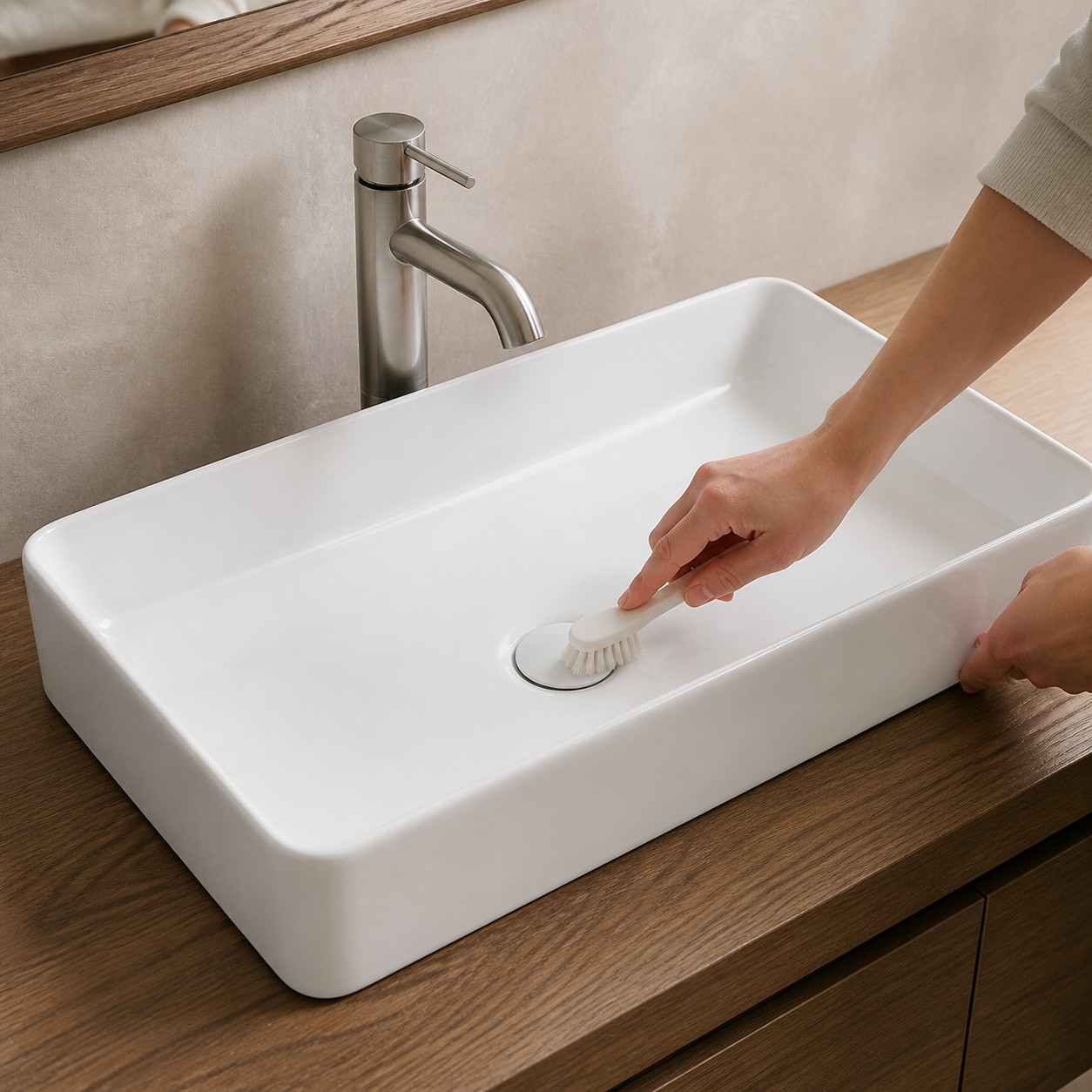
First repeat the mild routine and allow the labelled cleaner its stated contact time. Keep the surface wet only as instructed, use gentle motion, then rinse and inspect. Repeated mild cycles are safer than one uncontrolled aggressive scrub.
For mineral scale, use only a descaling method approved by the basin manufacturer and compatible with the tap, waste and surrounding stone. Some household advice recommends vinegar or other acids, but concentration, contact time and nearby materials change the risk. Test an inconspicuous spot, prevent pooling around metal and sealant, and rinse fully. Never combine an acid with chlorine bleach.
For metal transfer or rust-coloured marks, identify the source first. A manufacturer-approved stain remover may be appropriate, but a metal brush is not. Hair dye, strong cosmetics and construction residue should be treated according to the fixture and chemical maker's written advice. If the product identity is unknown, stop and contact the supplier.
05 WHAT TO AVOID
Which tools and chemicals can damage a ceramic basin?
Avoid steel wool, wire brushes, hard scouring pads, dry abrasive powder and blades. Even when the ceramic body remains sound, these tools can leave scratches or a permanently dull patch. Never strike deposits with a tool; impact can chip an edge or create hidden cracking.
Do not assume that stronger means cleaner. Unlabelled acids, caustic products, solvents and concentrated disinfectants can affect glaze, coloured decoration, taps, wastes and sealants. Never mix cleaning products. Chlorine bleach combined with acids or ammonia can release dangerous gas.
Follow ventilation, gloves, eye protection, dilution and contact-time directions on the product label. Keep chemicals in their original containers and out of guest reach. Drain unblockers belong in the drain according to their instructions; they should not be spread over the basin, tap or countertop.
06 HOTEL HOUSEKEEPING
How should hotels standardise ceramic basin cleaning?
Create one approved procedure for each installed finish. List the product, dilution, application tool, contact time, rinse, drying cloth and steps for tap, waste and counter. Colour-code cloths to avoid cross-contamination and replace damaged pads before they become abrasive.

Train staff to report slow drainage, leaking taps, failed sealant, chips and recurring rust rather than cleaning harder. A constant drip creates scale quickly; a loose waste can stain a cabinet; failed sealant traps soil. Maintenance fixes the source while housekeeping controls the surface.
Before opening a hotel, test the proposed routine on the actual basin, coloured finish, tap and vanity material. Record the approved appearance under room lighting. Procurement should keep spare parts and care instructions with the model schedule.
07 DAMAGE CHECK
How can you distinguish dirt from glaze damage?
Clean and dry the basin, then inspect it under consistent side light. Rotate a loose sample or move the light rather than relying on a phone flash. Transfer marks sit on the surface; scratches interrupt the reflection; pinholes are small glaze openings; a chip exposes material below the glaze; a crack follows a structural line and may catch a fingernail.
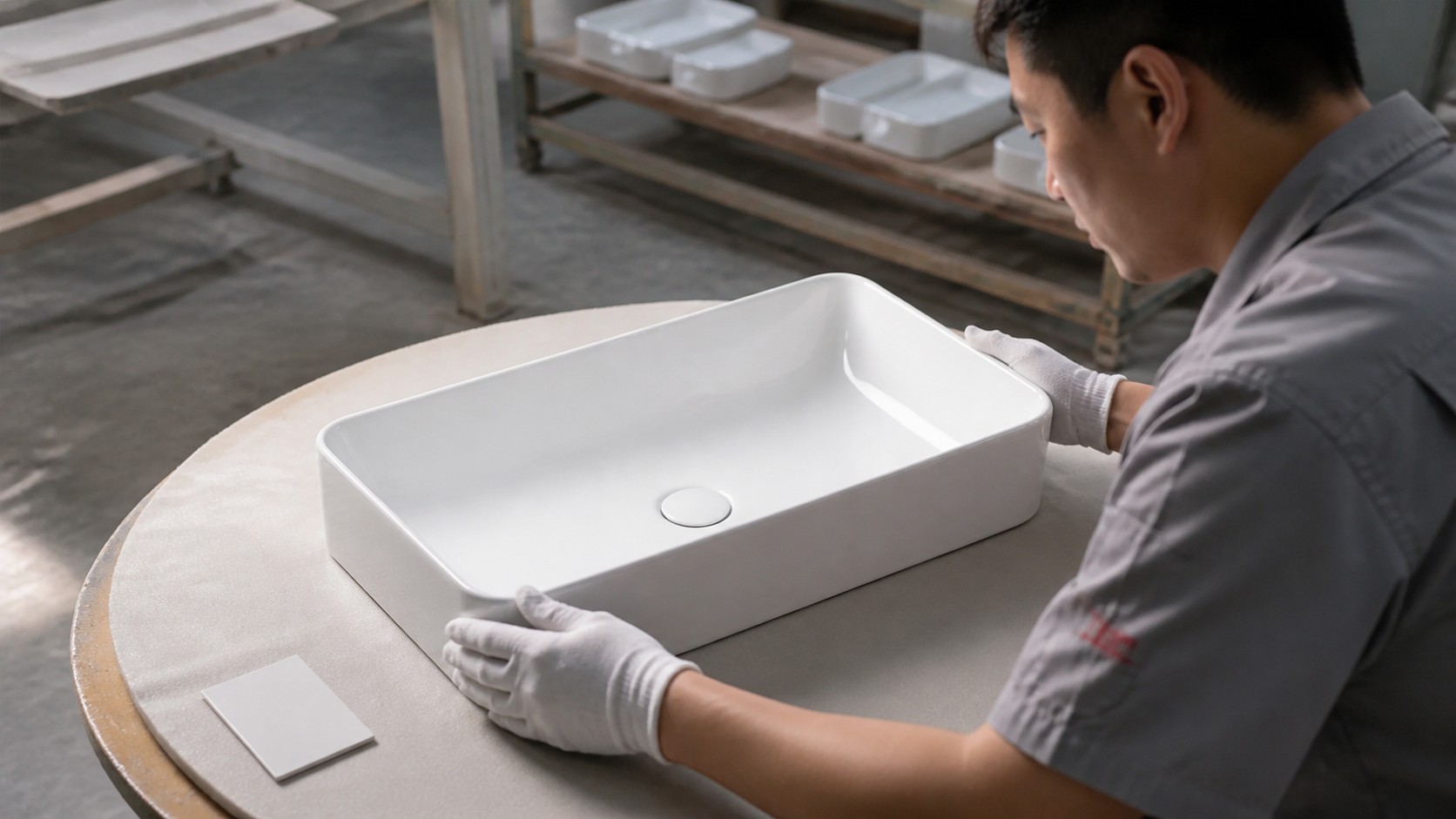
Do not use cleaning to conceal a defect during inspection. Photograph the condition before and after the approved mild cleaning attempt, with the model and carton traceable. Agree viewing distance, light, defect zones and acceptance limits before production.
08 BUYER CONTROL
What should importers and project buyers approve?
Approve the complete installed surface
Basin model; glaze or colour; tap finish; waste finish; sealant; vanity material; daily cleaner; stain treatment; tools; rinse method; inspection light and damage-reporting process.
Ask the supplier for model-specific care instructions and pass them to distributors, installers and operators. Review samples after realistic cleaning cycles, especially for matte, coloured or decorated surfaces. Confirm that product claims match the actual glaze and market documentation.
Chengda supplies countertop, undermount, drop-in, wall-hung, vanity and pedestal ceramic basins. Send the application, target finish, faucet configuration, market and quantity. We can coordinate samples, water tests, glaze inspection, packing and care information for a repeatable project standard.
The best ceramic sink cleaning routine is controlled and uneventful: identify the soil, use the gentlest approved method, rinse fully and fix the source of recurring marks.
FAQ COMMON QUESTIONS
Frequently asked questions
What is the safest cleaner for a ceramic bathroom sink?
Start with warm water, mild soap or a cleaner specifically approved for the fixture by its manufacturer. Use a soft cloth or non-scratch sponge, rinse completely and dry.
Can vinegar be used on a ceramic sink?
Some care guides allow diluted acidic treatment for mineral deposits, while others restrict it because nearby taps, wastes, sealants or special finishes can be damaged. Follow the exact product instructions and test a hidden area first.
Can bleach and another cleaner be mixed?
No. Never mix cleaning products. In particular, mixing chlorine bleach with acids or ammonia can release dangerous gas. Use one labelled product at a time with ventilation and full rinsing.
Why are there grey lines on a white ceramic basin?
They may be metal transfer from jewellery, tools or containers rather than cracks in the glaze. Try the manufacturer-approved gentle cleaning method before classifying the basin as damaged.
Will a scouring pad damage vitreous china?
Abrasive pads, steel wool and wire brushes can dull or scratch the glazed surface. Use soft cloths and non-scratch pads unless the fixture manufacturer gives different written instructions.
How often should a hotel ceramic basin be cleaned?
Clean after each occupied-room service and address standing water or deposits before they build up. The exact disinfecting frequency and contact time should follow the property's hygiene policy and the labelled product instructions.