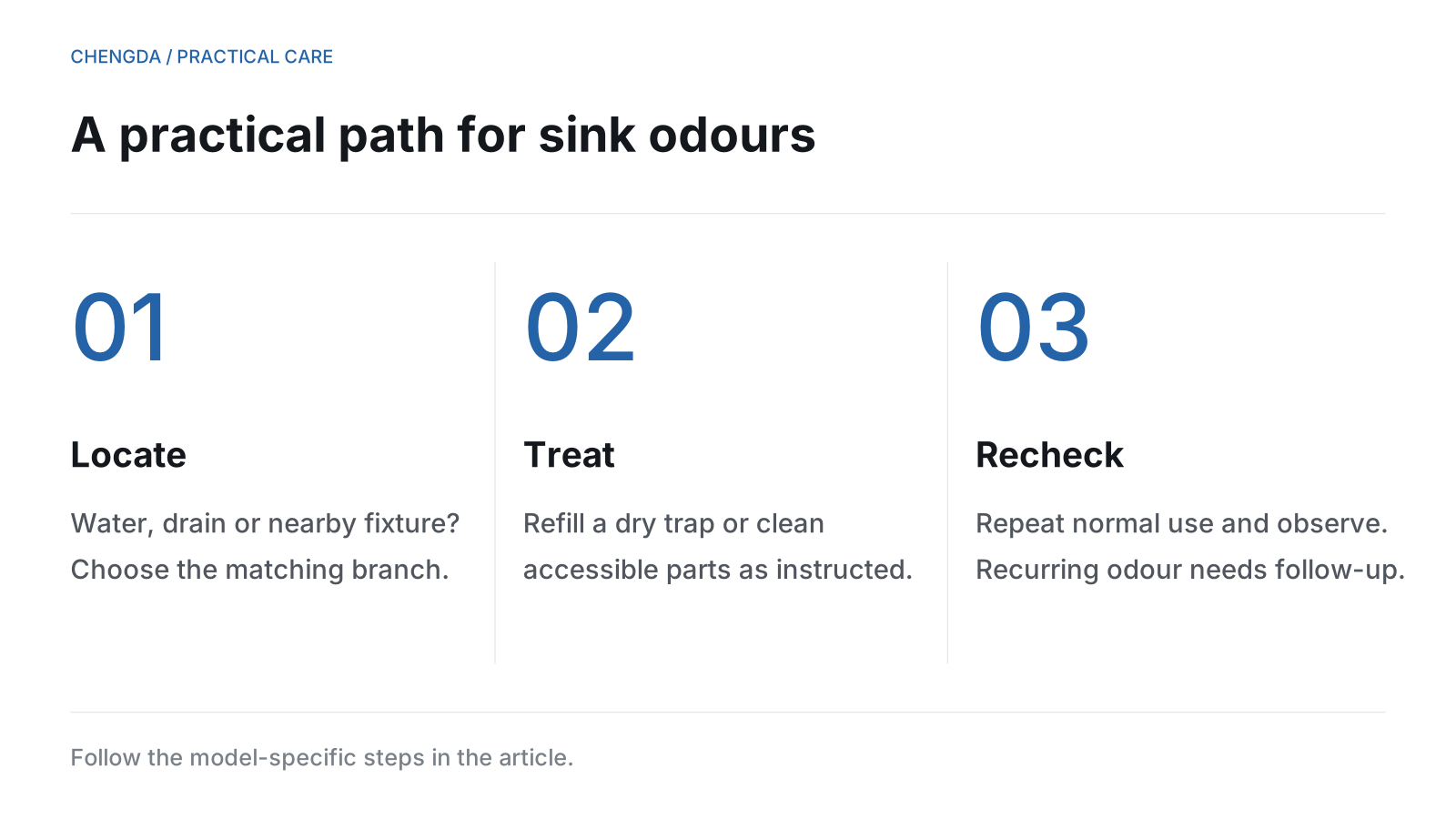
To remove a bathroom sink smell, match the treatment to its source: replenish a dry trap, remove accessible residue, or have a drainage defect repaired. Air freshener and repeated doses of cleaner cannot replace those jobs.
Use the steps that fit your symptoms. For the underlying mechanisms, see why a bathroom sink can smell. This companion focuses on what to do and how to judge the result.
01 WHAT TO DO
Start here: choose the first action
If there is a strong rotten-egg smell, or you feel dizzy, nauseated or otherwise unwell, leave the building before calling the appropriate local emergency or utility service. Do not continue cleaning or close-range smell checks. Kishwaukee Water Reclamation District.
For an ordinary mild odour with no such warning signs, choose the matching row. These patterns guide action; they do not establish a diagnosis.
| Situation | First action | If it continues |
|---|---|---|
| Unused basin; water drains freely | Open the stopper and run tap water through the drain. | Investigate water-seal loss if the smell returns during regular use. |
| Visible hair or slime on accessible drain parts | Remove a user-serviceable stopper or strainer as instructed; clear and wipe it. | Have hidden trap deposits or an obstruction removed. |
| Smell seems concentrated at the overflow | Clean its accessible opening; use only the model's approved internal cleaning method. | Have the passage and waste connection assessed and cleaned. |
| Water pools, backs up or leaks below | Stop adding water if it will not drain or is leaking. | Arrange blockage clearance or repair of the leaking assembly. |
02 WHAT TO DO
1. Refill a trap after a period without use
First check that the drain is open and there is no visible leak. Run ordinary tap water into the bowl and through the waste, rather than leaving water held above a closed stopper. Stop if water accumulates or appears below the basin.
Turn the tap off after water has flowed freely, then return to normal use. This replenishes the retained water beneath the basin; no cleaner is needed for that job. hansgrohe's trap guidance supports running water after a long period without use.
Check again later and after the next ordinary use. If the smell keeps returning despite use, follow the repair section below. Repeated top-ups should not conceal a leaking trap or a problem maintaining its seal.
03 WHAT TO DO
2. Remove residue from the stopper and drain opening
Find the waste-fitting instructions before removing anything. Some parts lift out for cleaning; others are retained by a mechanism. Do not assume every pop-up unscrews. Geberit's removable hair-catcher designs illustrate this model-specific approach. Geberit: drain screens.
With the tap off and using suitable gloves, work through these steps. If an unknown cleaner is already present, stop and identify it before adding water or another product.
- Remove only the stopper or strainer identified as user-serviceable, using its documented release method.
- Lift collected hair and loose residue into the rubbish; do not push the clump farther into the pipe.
- Wipe the removed part and reachable drain surround with a soft damp cloth. For remaining film, use a cleaner approved for those exact surfaces, then rinse as instructed.
- Refit the part as shown in the manual. Check that the stopper opens and closes, then run water to confirm drainage.
04 WHAT TO DO
3. Clean the overflow using a compatible method
Wipe the visible overflow opening with a soft damp cloth. For the hidden passage, locate the basin's care instructions or ask the manufacturer for the approved cleaner, application method and rinse procedure. Follow that complete method; do not choose a chemical simply because it is suitable for the visible ceramic.
Geberit includes overflow cleaning in its bathroom maintenance guidance. Its product advice is not permission to use the same treatment on every basin, metal fitting or seal. Kohler's care guidance also stresses surface compatibility and gentle tools.
If no approved internal method is available, limit home cleaning to the accessible opening. Ask the installer to clear retained material from the passage and check its connection to the waste. Do not plug the hole, force a rigid tool inside or inject water under pressure.
05 WHAT TO DO
4. Deal with slow drainage before further washing
If water drains slowly, clean the accessible stopper and strainer first. If the bowl still retains water with the stopper fully open, stop repeated flushing. Ask for the obstruction to be located and removed from the trap or downstream pipe, followed by a drainage test.
Leave trap dismantling and pipe clearing to an appropriate professional. Geberit warns that harsh chemicals and high-pressure tools can damage components. Tell the repairer which products have already been added.
If wastewater backs up, stop using the affected fixture and request prompt help; in a shared building, notify management. Thames Water explains that obstructed wastewater can return through fixtures. Report whether other drains are affected so the investigation covers the connected system.
06 WHAT TO DO
5. Specify the repair if the smell returns
For a visibly leaking trap, the repair target is the leaking joint or damaged component. The installer should reseat incorrectly fitted connections or replace failed seals with compatible parts, then test the assembly for leaks. Simply tightening every connection or coating its outside does not establish a sound repair. hansgrohe: trap seals and leak checks.
If there is no visible leak but the water seal seems to be lost repeatedly, request inspection of the trap arrangement and relevant vent or anti-syphonage provision. The task is to correct a confirmed defect, not automatically add a valve. The Hong Kong Buildings Department explains why pressure balance matters. Do not remove, cap or alter these parts yourself.
07 WHAT TO DO
6. Check that the improvement lasts
After cleaning and reassembly, check under ordinary tap flow: does the bowl drain, does the stopper operate, and do accessible connections stay dry? If it leaks or backs up, stop the test. Following plumbing work, have the installer demonstrate the appropriate drainage and leak checks.
Compare the smell after cleaning products have been rinsed away as instructed, then again at the next normal use. Avoid masking it with fragrance during this comparison. Record what changed and when it returned; temporary relief is useful information, not proof of a permanent fix.
Technical references
- Kishwaukee Water Reclamation District — Sewer Problems
- hansgrohe — Traps for wash basins
- Geberit — CleanDrain: innovative drain with hair trap
- Kohler — How to Use Kohler Cleaning Products
- Geberit — Maintaining your bathroom
- Geberit — Clean the trap
- Thames Water — Blockages
- Hong Kong Buildings Department — Healthy Drains
- CDC — Cleaning and Disinfecting with Bleach
- United Utilities — Eggy or drains
FAQ COMMON QUESTIONS
Frequently asked questions
Can I pour bleach, vinegar or another cleaner down together?
No. Do not mix cleaners or add a new product to an unknown one. The CDC warns against mixing bleach or disinfectants with other cleaners. Follow the product label and material restrictions.
What if the water itself still smells away from the sink?
Ask the water supplier for advice and report the affected taps and hot/cold pattern. A clean-glass odour check concerns only the sampled tap and does not prove drinking-water safety. Drain cleaning may not address that problem.
Should I remove the trap myself?
This guide limits home work to replenishing water and cleaning user-serviceable parts. Have a professional handle trap removal, unknown pipework or recurrent leaks, using the correct seals and a leak test afterward.
Do I need a new basin if cleaning does not work?
Not automatically. First identify whether the remaining fault is in the waste fitting, trap, overflow passage or connected drainage. Replace the component that is actually defective; changing the bowl alone may leave the smell unchanged.
RELATED · UNDERSTAND THE CAUSE
Why Does My Bathroom Sink Smell? →
Want to understand why it happens? Read the companion explanation.