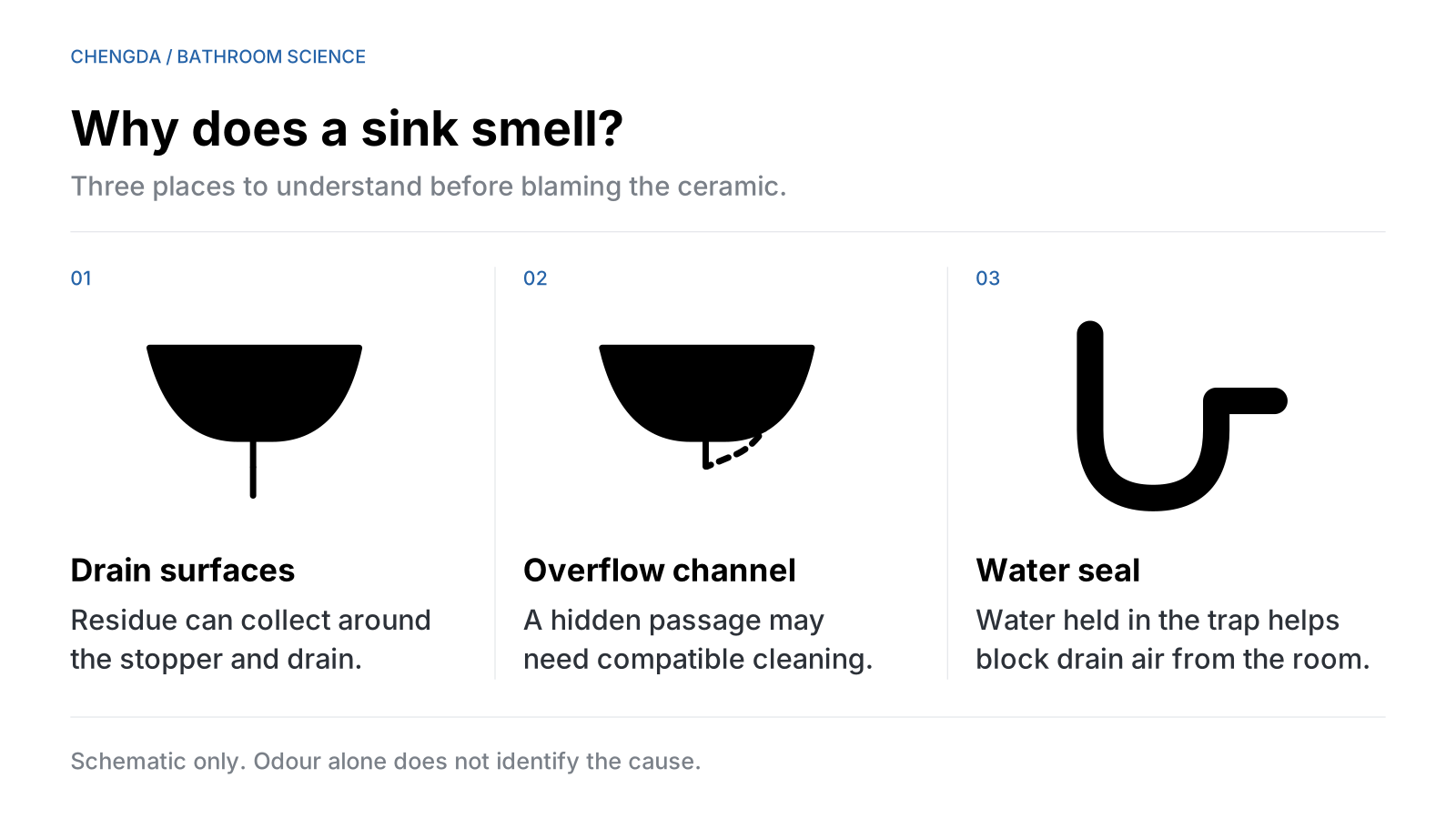
A bathroom sink can smell because residue is collecting near the drain, its overflow needs attention, or the water seal beneath it is no longer doing its job. The tap water or another nearby fixture can also be the source. An unpleasant smell alone cannot identify which of these is responsible.
Start with where and when the smell appears. A basin that smells after a holiday presents a different clue from one that smells during every use. Following the water path helps you describe the problem before choosing a cleaner, replacing a part or calling a plumber.
01 HOW IT WORKS
Is the smell in the water or around the sink?
If there is a strong rotten-egg smell, or you feel dizzy, nauseated or otherwise unwell, leave the building before calling the appropriate local emergency or utility service. Do not continue close-range smell checks. Kishwaukee Water Reclamation District: sewer gas odours.
Do not assume that an eggy smell noticed while turning on the tap comes from the water. United Utilities suggests checking a clean glass for any existing smell, filling it from the cold kitchen tap, and moving it to a room without drains before smelling it again. If the smell disappears away from the sink, a nearby drain is a more likely source. United Utilities: eggy or drain smells. This samples that cold tap only; it does not rule out a problem at the bathroom tap, its hot-water supply or a local branch pipe.
That check helps locate an odour; it does not prove that water is safe to drink. If the collected water still smells unusual, ask your water supplier for advice. Record whether the problem affects one tap, several taps, cold water, hot water or both. Also check ordinary nearby sources such as a damp cloth, waste bin or unused floor drain. Avoid changing several things at once: it becomes difficult to know which action helped.
02 HOW IT WORKS
How does the water under a sink stop drain smells?
The trap beneath a washbasin retains water after the bowl empties. That water forms a barrier between the room and air in the drainage pipe. Bottle traps and bent tubular traps achieve this with different shapes. Water remaining inside a working trap is therefore intentional; an empty-looking bowl does not mean the pipe below it should be empty.
In a rarely used guest bathroom, trap water can evaporate. Running the basin normally replenishes it; observe whether the smell settles afterward. Geberit identifies long periods without use as a reason traps may dry out. Geberit: how a trap works.
A smell that quickly returns during regular use needs a different investigation. Drainage pressure changes can disturb a water seal, which is why pressure-balancing arrangements matter. Repeatedly adding water is not a repair for that fault. Hong Kong Buildings Department: water seals and anti-syphonage.
03 HOW IT WORKS
Why can a clean-looking basin still smell?
The visible bowl is only one part of the washbasin. Soap and other organic residue can accumulate inside the drain, where bacterial activity can produce unpleasant odours. Wessex Water explains this mechanism in its guidance on eggy smells. A polished ceramic surface does not tell you whether these less visible areas are clean. Wessex Water: tastes and smells.
Look at accessible areas around the drain cover and at any removable strainer identified in the product instructions. A smell that becomes noticeable during use is a useful observation, but it does not prove that one particular component is faulty. Note whether the bowl also empties slowly. Keep the questions separate: where might the smell originate, and is wastewater leaving normally?
04 HOW IT WORKS
Can the overflow hole be the source?
Yes. Geberit includes an overflow that is not cleaned regularly among possible bathroom odour sources. Its opening is easy to overlook when wiping the bowl. On a basin with an internal overflow, the opening leads through a separate passage towards the waste connection; the exact route depends on the model. Duravit: sink overflow function. Geberit: bathroom odour sources.
This does not make the overflow a direct, unprotected opening into the sewer: the installed waste and trap arrangement must be considered together. Nor does a basin without an overflow automatically avoid odours. Its main drain and trap still need to work correctly.
Check the basin care instructions before attempting to clean an internal passage. Do not permanently plug the opening to hide a smell or force a hard tool into a route you cannot see. If the problem began after a waste fitting was changed, give the installer the basin and drain model details. Our overflow and waste compatibility guide explains that separate fitting question.
05 HOW IT WORKS
Which observations help narrow the problem?
Use the following patterns to decide what to report or check next. They are clues, not diagnoses. Note the timing before applying a scented product, which can make comparison harder.
| What you notice | What it may suggest | Useful next step |
|---|---|---|
| Smell after a long period without use | A water seal may have dried out | Use the fixture normally and note whether improvement lasts. |
| Smell near the basin during use | Residue or the overflow may need attention | Check accessible areas using the product care instructions. |
| Smell plus slow drainage or gurgling | The drainage system needs assessment | Record other affected fixtures and ask a plumber to investigate. |
| Smell remains in collected water away from drains | The water itself needs checking | Contact the water supplier; note hot/cold and one/several taps. |
| Smell strongest inside a damp vanity cabinet | A leak or another local moisture source needs checking | Look for visible water without disturbing the pipework. |
06 HOW IT WORKS
What can you clean without turning this into a repair?
Begin with the bowl, accessible drain surround and any part the manufacturer specifically describes as removable for cleaning. Follow the care guidance for each material. Kohler recommends gentle tools and checking a cleaner on an inconspicuous area; overspray should also be rinsed from nearby surfaces. Kohler: care and cleaning.
The basin, metal waste cover, faucet and seals may have different restrictions. For example, Delta advises against bleach-based cleaners on its faucet finishes. A product suitable for one surface should not automatically be poured over all the others. Delta: faucet finish care.
Do not mix cleaning chemicals or add another product to an unknown cleaner already in the drain. The CDC specifically warns against mixing bleach or disinfectants with other cleaners. Follow labels and ventilate during use. This guide does not prescribe a universal chemical treatment for hidden overflow channels. CDC: using bleach safely.
07 HOW IT WORKS
When should a plumber investigate?
Arrange an inspection when odour keeps returning after appropriate routine care, a regularly used fixture seems to lose its water seal, or there is visible leakage. Include gurgling, unusually slow drainage and changes elsewhere in the bathroom in your description. These observations help the plumber decide which parts of the installation to examine; they do not identify a venting fault by themselves.
Wastewater backing up is a reason to stop using the affected fixture and get prompt help. Thames Water lists slow drainage, difficult toilet flushing and drain smells as possible blockage signs, and explains that wastewater can return through fixtures when it cannot flow away. In shared buildings, notify building management as well. Thames Water: blockage signs.
Give the plumber a short history: when it started, whether anything was recently replaced, which fixtures are affected and what products were used. A photo of the complete under-basin arrangement is more useful than a close-up of the ceramic alone. Leave trap removal and pipe alterations to an appropriate professional.
Technical references
- United Utilities — Eggy or drains
- Wessex Water — Tastes and smells
- Geberit — Blocked drain: what now?
- Geberit UK — Neutralising toilet odours
- Hong Kong Buildings Department — Healthy Drains
- Thames Water — Blockages
- Kohler — How to Use Kohler Cleaning Products
- Delta Faucet — How should I clean or maintain the finish on my faucet?
- CDC — Cleaning and Disinfecting with Bleach
- Duravit — Sinks: overflow and vanity unit
- Kishwaukee Water Reclamation District — Sewer Problems
FAQ COMMON QUESTIONS
Frequently asked questions
Does a bad smell mean the ceramic basin needs replacing?
No. Smell alone does not establish a ceramic defect. Locate the source first; deposits, a water-seal problem or another nearby component may be involved. Visible damage needs assessment, but buying a new basin before checking the installation may leave the original problem unresolved.
Why does the smell disappear after I run the tap?
One possibility is that water has replenished a dry trap. That is more plausible after a period without use, but temporary improvement is not a diagnosis. Note how long it lasts and whether the smell returns despite regular use.
Will a basin without an overflow solve the smell?
Not necessarily. It removes that particular passage, but the main waste fitting, trap and connected drainage remain. Choose an overflow configuration for the intended use and compatible fittings, rather than as a guaranteed odour remedy.
Should I keep adding drain cleaner until the smell stops?
No. Use only a treatment approved for the actual materials and follow its instructions. Repeated or mixed chemicals do not establish the cause. Persistent odour, leakage or drainage trouble is a reason to arrange an inspection.