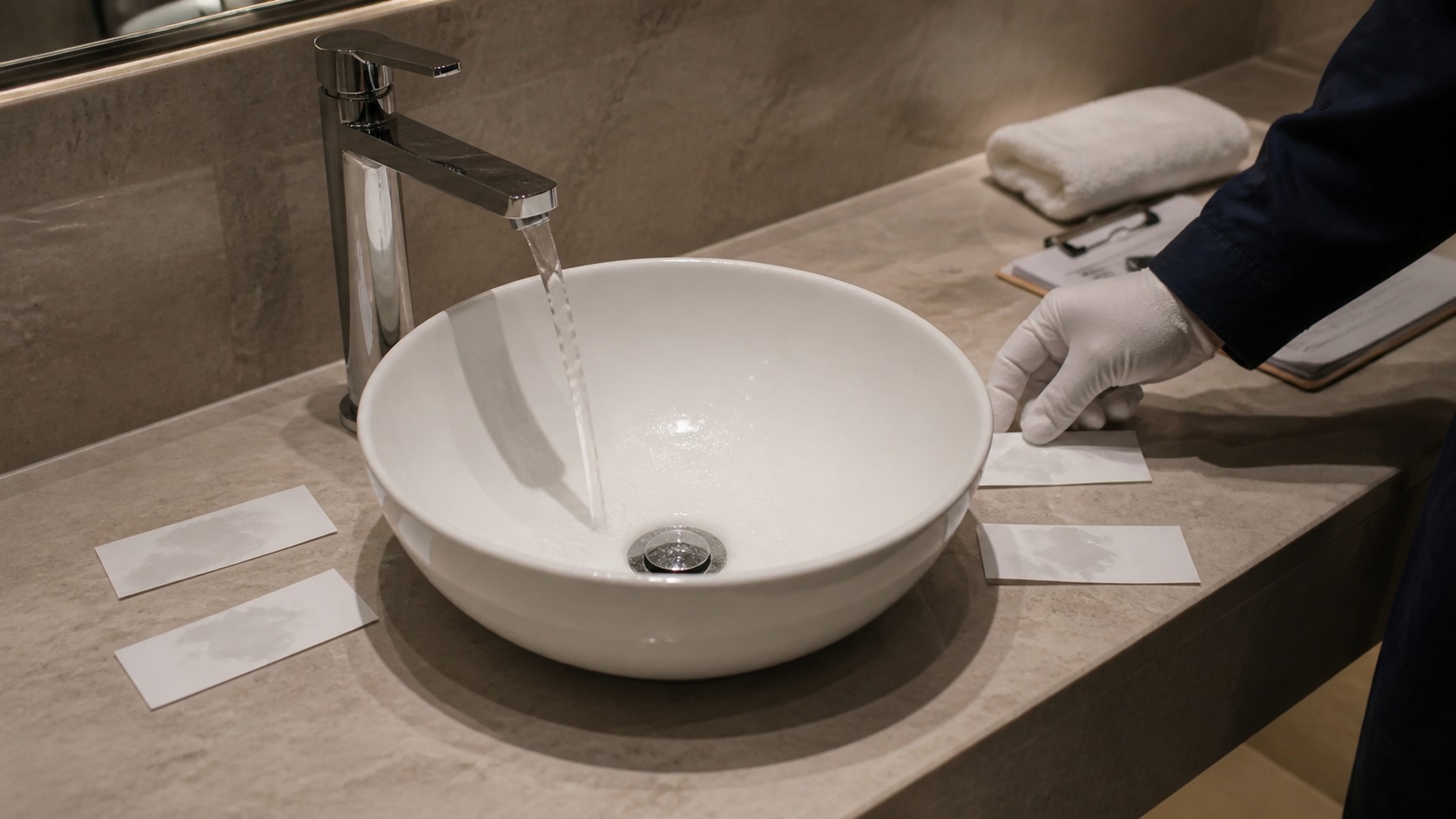
If you are asking how to stop vessel sink splashing, resist the urge to replace the bowl or faucet immediately. Splash is an interaction between flow, outlet height, stream shape, landing point, bowl geometry, drain condition and user movement. A small change can help, but changing several parts at once hides the cause. Use this staged method to diagnose the installed assembly and to prevent the same problem in a project mock-up.
Key takeaways
- Start with flow: reproduce the problem at low, normal and maximum practical settings.
- Watch the landing zone: the stream should meet a controlled bowl area without rebounding toward the user.
- Test the exact assembly: generic faucet-height rules cannot replace a real basin-and-faucet water test.
01 DIAGNOSIS
What kind of vessel sink splash are you seeing?
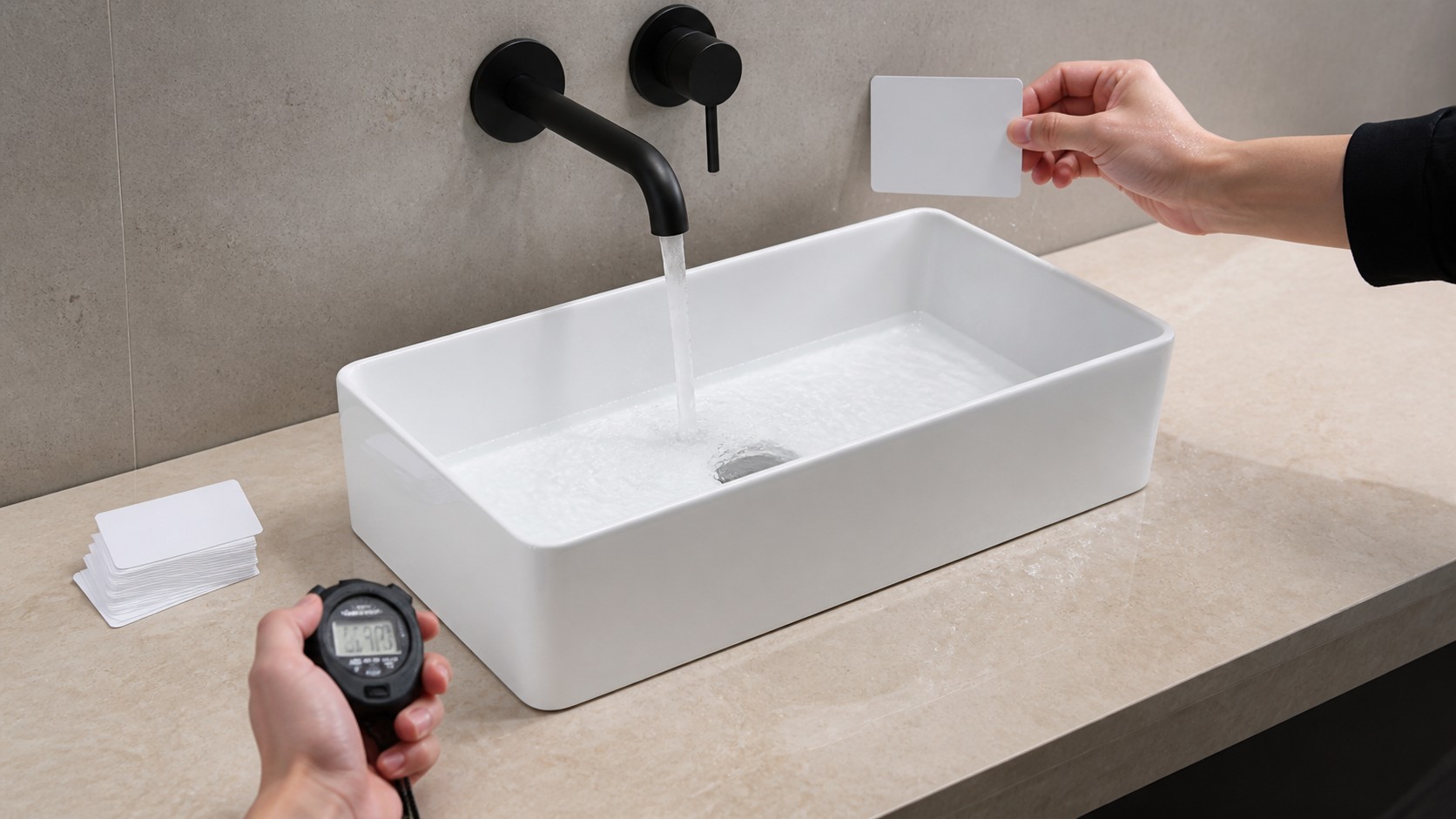
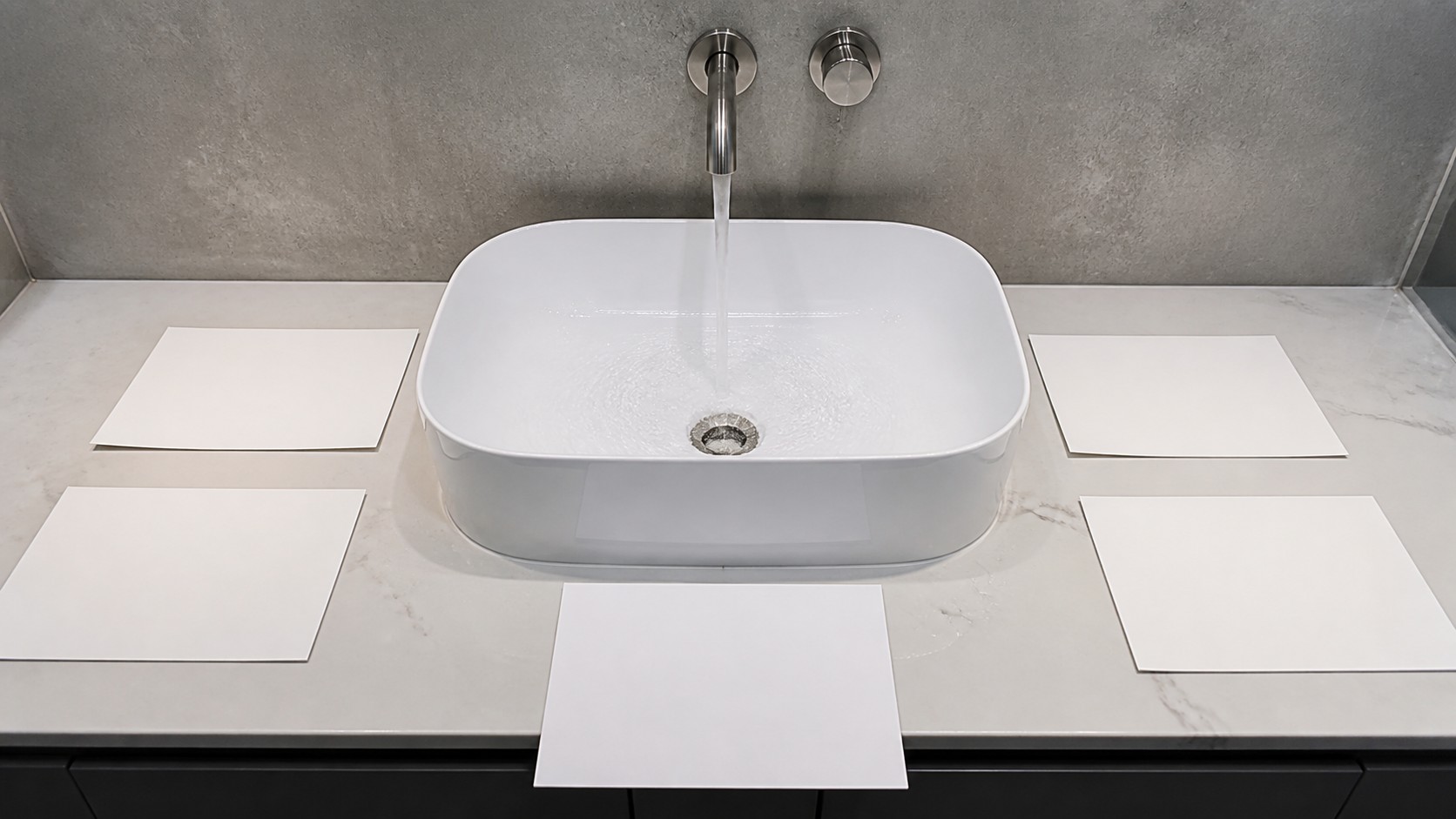
First distinguish the event. Fine mist near the outlet, a concentrated rebound from the drain cover, water riding up the opposite wall, and droplets thrown by fast hand movement have different causes. Dry the counter, place absorbent cards at the front and sides, then run the faucet without hands. Repeat with normal washing motions. Record where the first droplets appear rather than judging only the final wet counter.
Note the faucet setting, water temperature, aerator condition, outlet-to-bowl relationship, landing point and drain speed. Compare hot, cold and mixed flow only where the faucet and supplies can be operated safely. If splash began suddenly, look for a blocked aerator, altered spray, partly closed drain or changed supply pressure before questioning the ceramic. A stable diagnosis needs repeatable conditions.
02 CHECK 1
Can lower flow stop a vessel sink from splashing?
Reduce flow gradually and observe whether droplet distance falls. High velocity gives water more energy to rebound from ceramic, metal or standing water. Many users open a tall faucet fully even when hand washing needs less flow. If a normal setting solves the problem, explain the usable control range and investigate an approved flow-control or faucet solution rather than restricting supply randomly.
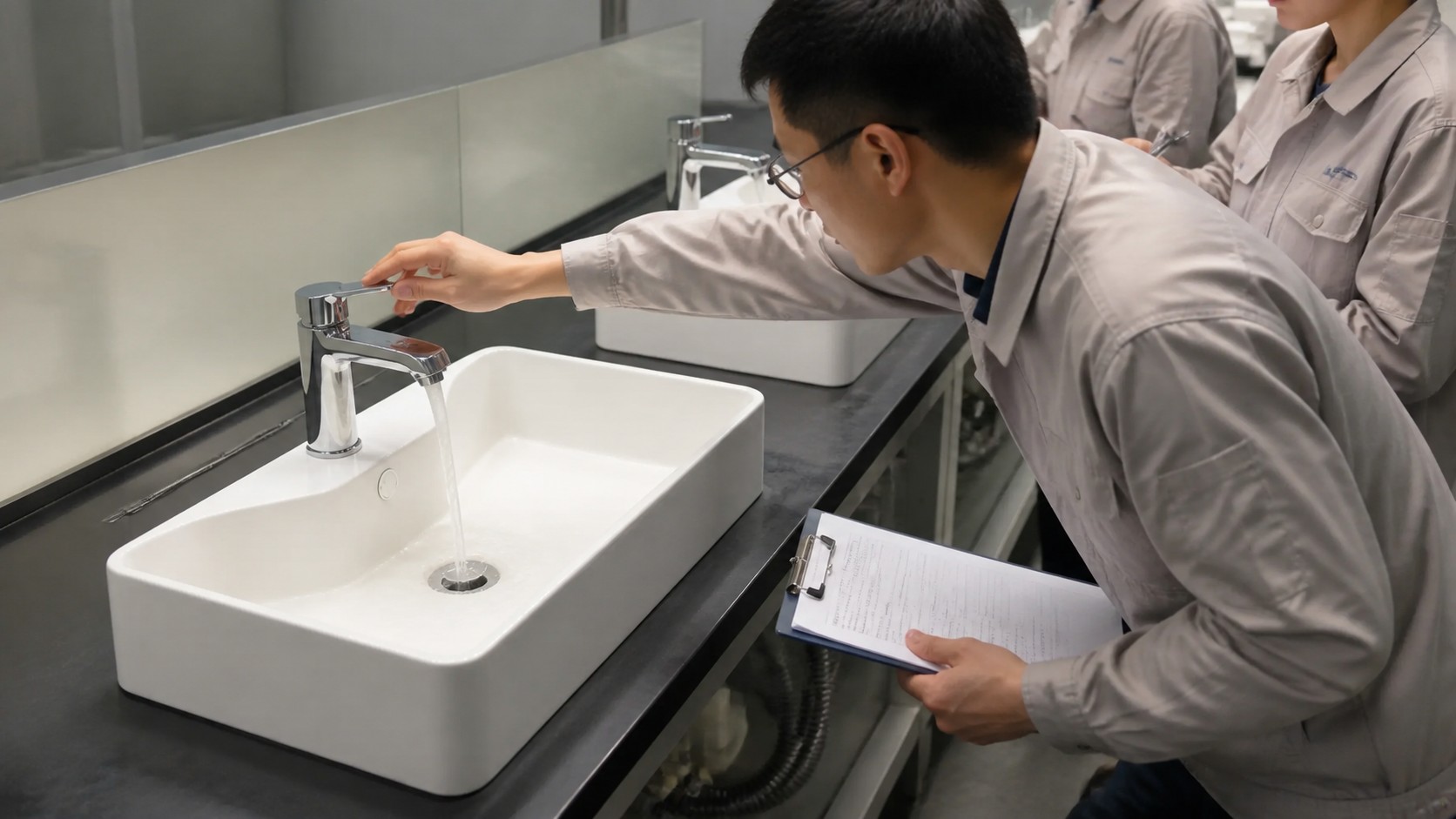
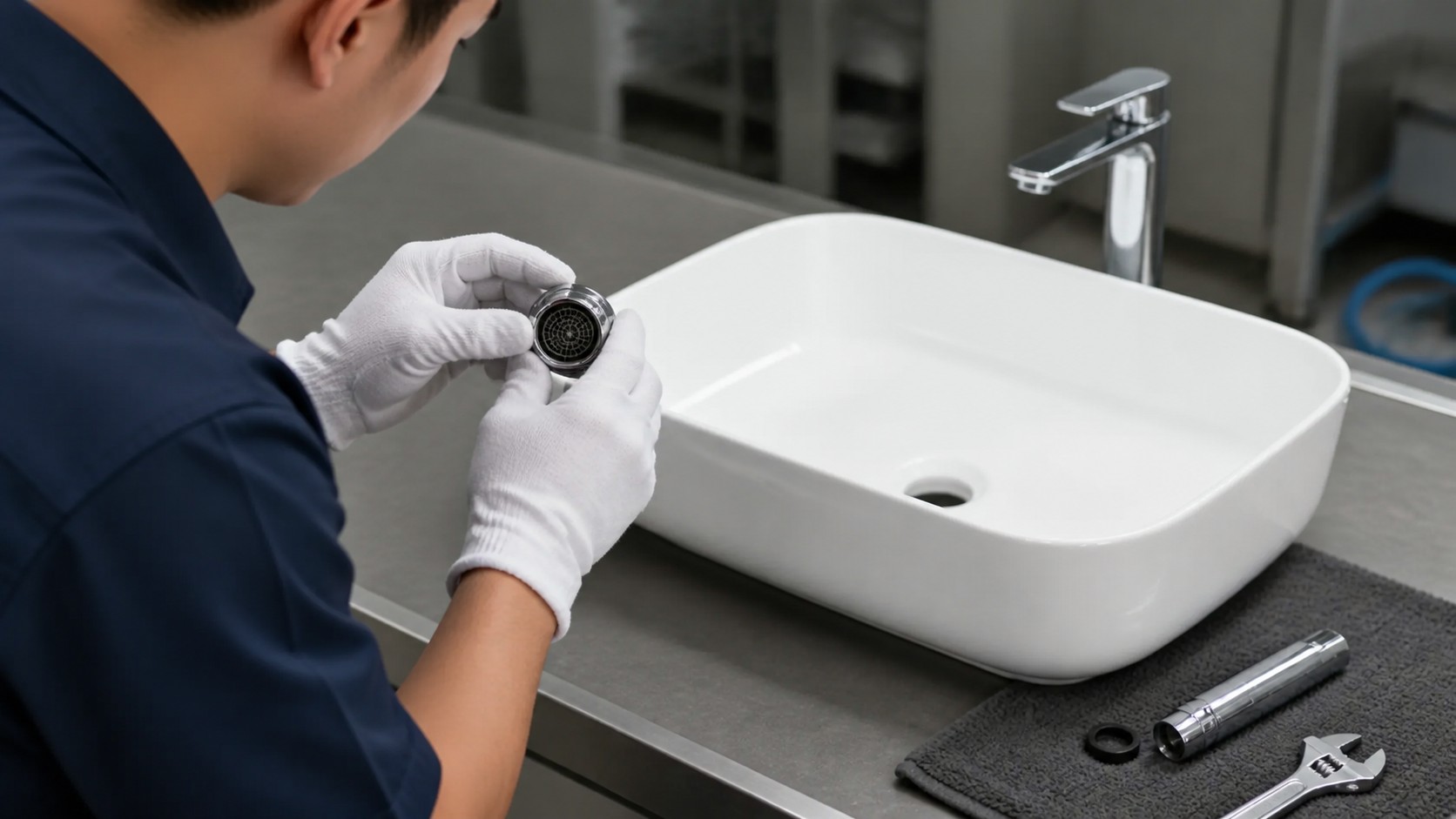
Clean or replace the aerator only with the faucet maker's specified part. A damaged, missing or incompatible aerator can create an irregular jet that splashes even at moderate volume. Do not improvise with debris, partly closed isolation valves or unapproved inserts; these can affect performance, noise and warranty. For a project, test the production-intent faucet and expected site pressure, not a showroom substitute.
03 CHECK 2
Where should the faucet stream land in a vessel sink?
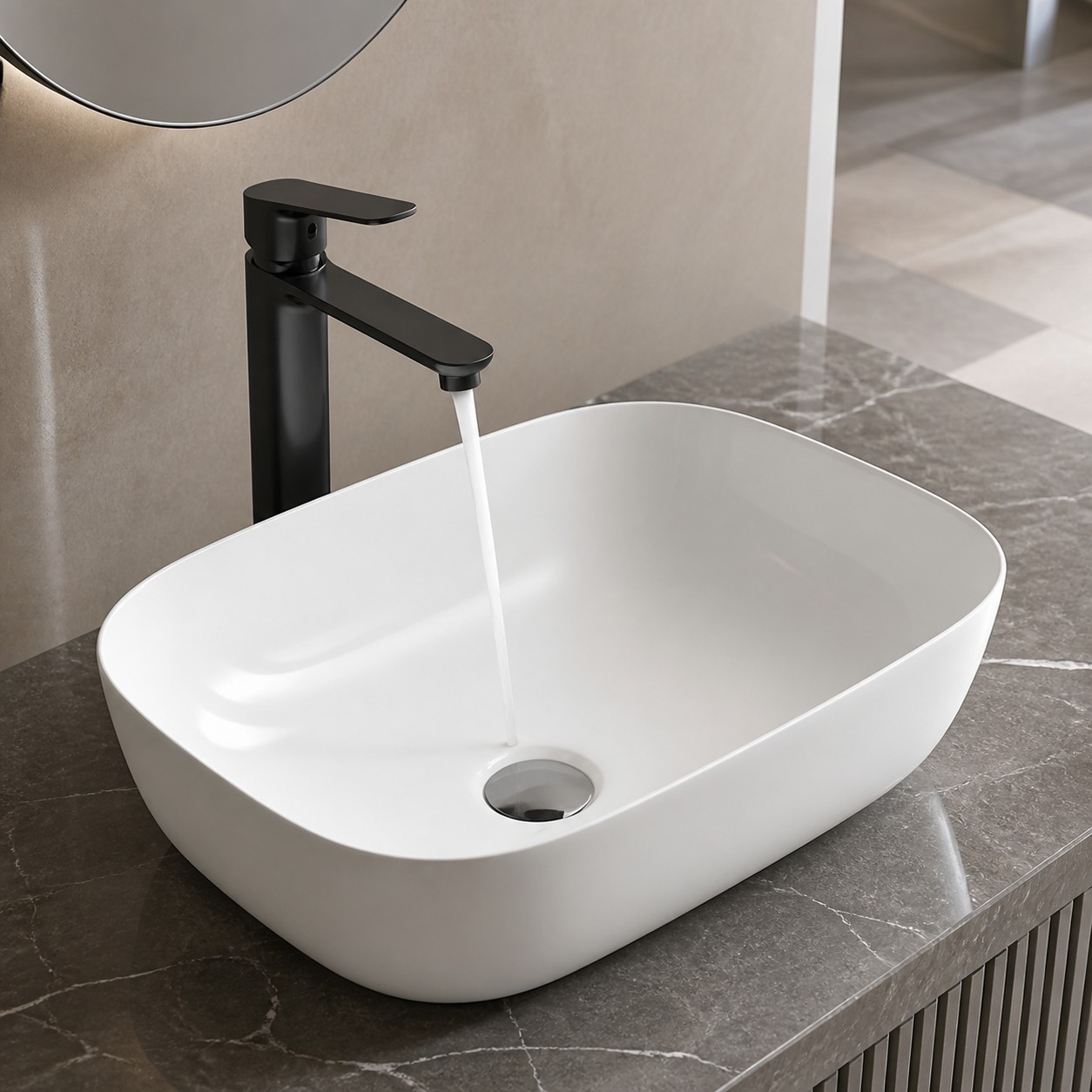
The landing zone matters more than an isolated faucet-reach number. Delta's official answers for a named vessel faucet recommend directing its stream at the drain, but that advice still has to be proven with the selected drain cover and bowl. A vertical jet hitting a raised metal cap can rebound differently from a stream meeting sloped ceramic beside it. Mark the observed landing zone and change reach or angle only through an approved faucet position or model.
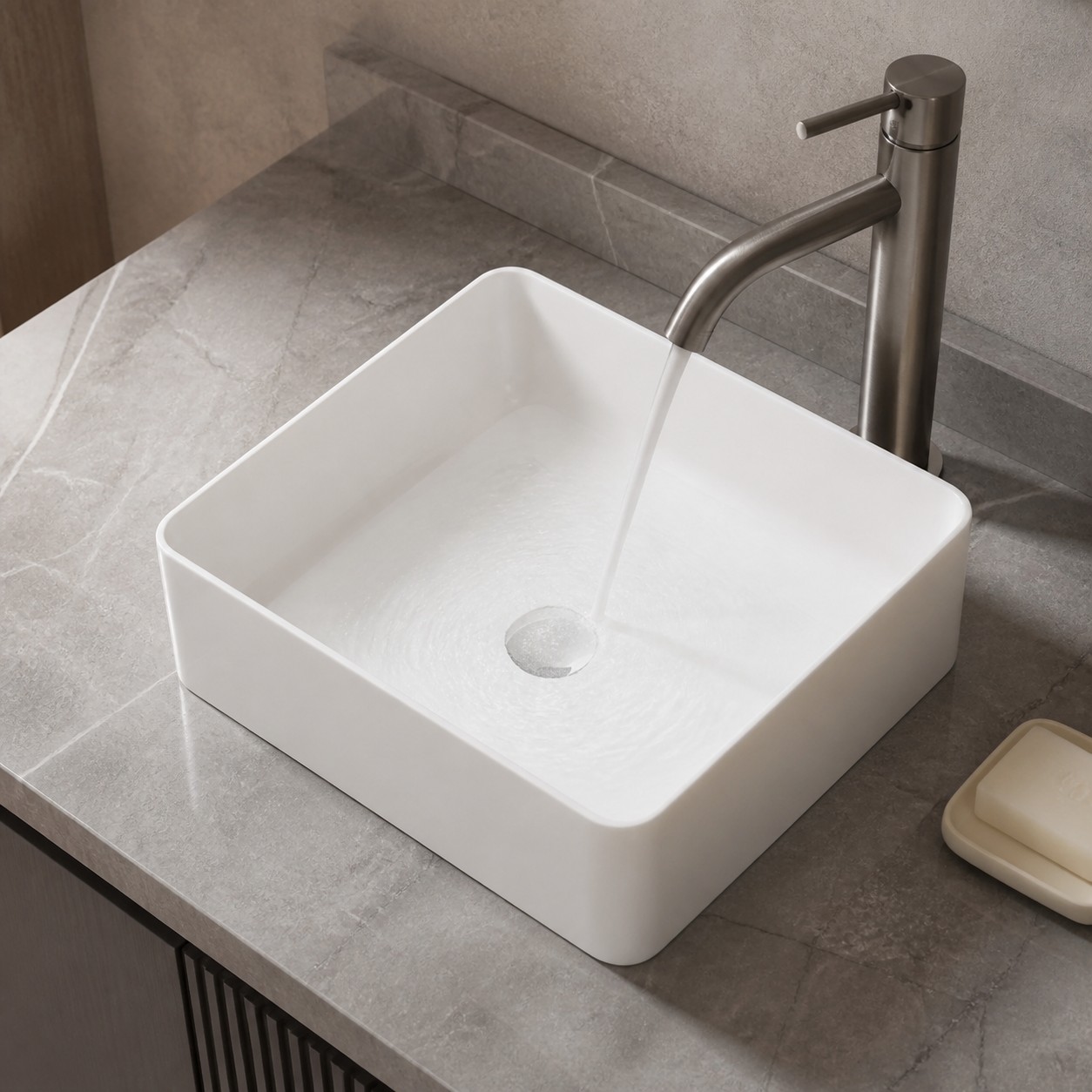
Avoid directing the stream high onto a steep opposite wall, where it can climb and escape. Kohler warns for one decorated vessel model that the stream should not hit the decorated surface directly; that is a model-specific caution, not a universal target. The practical goal is a smooth transition into the drain region with minimal upward rebound during real hand positions.
04 CHECK 3
Is the vessel faucet too high above the bowl?
A greater vertical drop can increase impact velocity and give cross-drafts or hand movement more time to disturb the stream, but there is no single correct outlet height for every vessel sink. Tall faucets also vary in reach, outlet angle and stream form. Measure the completed outlet relative to the intended bowl landing zone and compare it with the faucet instructions and a real water test.
Do not lower the faucet so far that hands cannot fit or the outlet becomes vulnerable to contamination. For wall-mounted faucets, any repositioning affects the wall, waterproofing and service route. For deck faucets, the base and fixing zone must remain clear of the basin. Before renovation, model the alternative with a temporary production-intent fixture or test rig rather than drilling a second hole based on an online rule.
05 CHECK 4
How do bowl shape and drain cover affect splash?
The local surface where water lands controls rebound. A flat shelf, tight radius, steep wall and broad pop-up cap each respond differently. Overall basin depth alone cannot predict splash because it does not describe the landing slope or usable water depth. Two 140 mm-high ceramic products may have different internal sections, rim widths and drain regions. Request the section drawing or test the actual sample.
Rotate no component that is not designed to rotate, and do not grind ceramic to change the surface. If the existing faucet cannot land in a calm zone, compare a compatible faucet with different reach or stream characteristics, or select a basin whose tested geometry fits the project. For new ranges, film identical test cycles across candidate bowls so decisions are based on repeatable behaviour rather than visual preference.
06 CHECK 5
Can slow drainage make a vessel sink splash more?
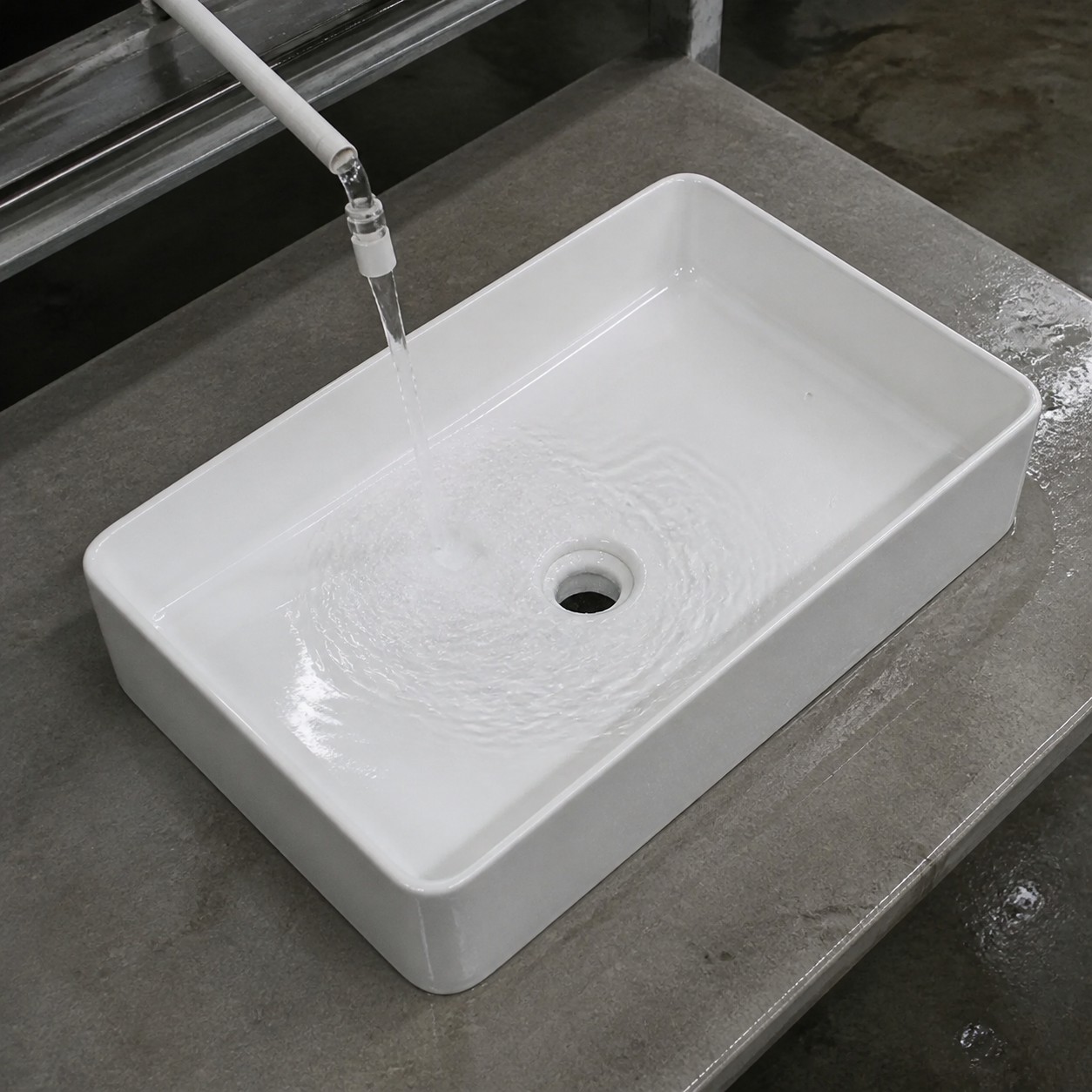
Yes. Water accumulating around the drain changes a jet's target from a solid surface to a moving pool, which can create a crown, bubbles or outward waves. Watch the water level during continuous normal flow. Remove accessible debris and service the pop-up, trap or pipe according to the relevant instructions. A partially closed stopper is an operating fault, not a bowl-design test.
Do not use caustic chemicals casually, mix drain products or dismantle plumbing beyond your competence. If several fixtures drain slowly, a wider plumbing problem may exist. The drain must also match the basin's overflow configuration and opening; an incorrect assembly can impair sealing or flow. Resolve drainage before judging faucet placement, because one changing variable can mask the next.
07 CHECK 6
Why does a vessel sink splash only when hands are inside?
Hands can form a temporary ramp that redirects a well-placed stream over the rim. Reproduce common motions: entering directly beneath the outlet, rubbing near the drain, rinsing toward the front and withdrawing quickly. Check whether the user is forced into the wrong zone because the bowl is too small, the faucet reach is short, the soap blocks access or the finished rim is too high.
Instruction can reduce unusual behaviour, but normal hand washing should not require choreography. Adjust the physical assembly when representative users repeatedly create the same splash. In hospitality, involve housekeeping and operations because wet-counter patterns reveal how guests actually use the fixture. In a home, test adults and children without asking them to adopt an unnatural posture.
08 PROJECT APPROVAL
How should a no-splash vessel sink mock-up be approved?
Freeze the basin, faucet, aerator, supply condition, drain, counter height and faucet position, then run a written sequence. Test no-hands flow, representative hand washing, repeated drain cycles and practical maximum flow. Place fresh absorbent cards at consistent counter positions and photograph them after each run. Change only one variable, repeat the same sequence and record whether droplet count and travel visibly improve.
Approve a usable range, not only one delicately adjusted setting. Confirm that the stream remains controlled as supply conditions vary within the project's expected limits and as the aerator is maintained. Retain the signed sample, faucet reference and setup measurements. If no reasonable adjustment works, changing the faucet or basin is justified—but now the replacement brief contains evidence instead of guesswork.
FAQ COMMON QUESTIONS
Frequently asked questions
Why does my vessel sink splash everywhere?
Common causes include excessive or irregular flow, poor landing point, excessive outlet drop, rebound from the drain or bowl, slow drainage and hand position.
Should a vessel faucet point at the drain?
That is recommended for some named faucets, but test the exact drain cover and bowl; direct impact on a raised cap may still rebound.
How high should a faucet be above a vessel sink?
There is no universal gap. Maintain hand clearance while testing outlet drop, reach, angle and stream landing with the exact assembly.
Will a flow restrictor stop splashing?
Lower approved flow may help, but use only a faucet-compatible solution and first check the aerator, pressure and landing zone.
Does a deeper vessel sink splash less?
Not automatically. Local wall slope, drain region, stream and usable depth matter more than outside height alone.
Can a clogged drain cause splash?
Yes. Standing or rising water changes the impact surface and may increase waves and droplets; restore normal drainage before further tests.