
A search for vessel sink pros and cons often produces two extreme answers: vessel sinks are either a striking upgrade or an impractical trend. Neither is useful. An above-counter ceramic basin changes the visual mass, finished rim height, faucet relationship, counter junction and service layout. Those changes can benefit one project and inconvenience another. This evidence-led guide separates genuine characteristics from problems created by poor coordination.
Key takeaways
- Strong visual choice: more of the ceramic form remains visible above the counter.
- Needs full-system planning: cabinet height, faucet, drain, cleaning access and user reach must agree.
- Approve by use case: test the exact sample in a full-size vanity mock-up before a repeated order.
01 BASIC DIFFERENCE
What changes when you choose a vessel sink?
A vessel sink places most or all of the bowl above the finished countertop. That makes the ceramic shape a prominent design object and changes the interface compared with an undermount or drop-in basin. The counter usually remains visually continuous around the bowl, but the finished rim sits higher and the exterior wall and base junction remain exposed. These are not automatically advantages or disadvantages; they are design conditions to resolve.
The label also covers many products. A compact 280 mm round bowl, a 480 × 240 mm narrow rectangle and a 700 mm basin with a factory faucet hole do not offer the same experience. Overflow, faucet-hole, bowl height, base footprint and internal geometry vary by model. Evaluate the specified product rather than a generic photograph or a claim about all vessel sinks.
02 ADVANTAGES
What are the main advantages of a vessel sink?
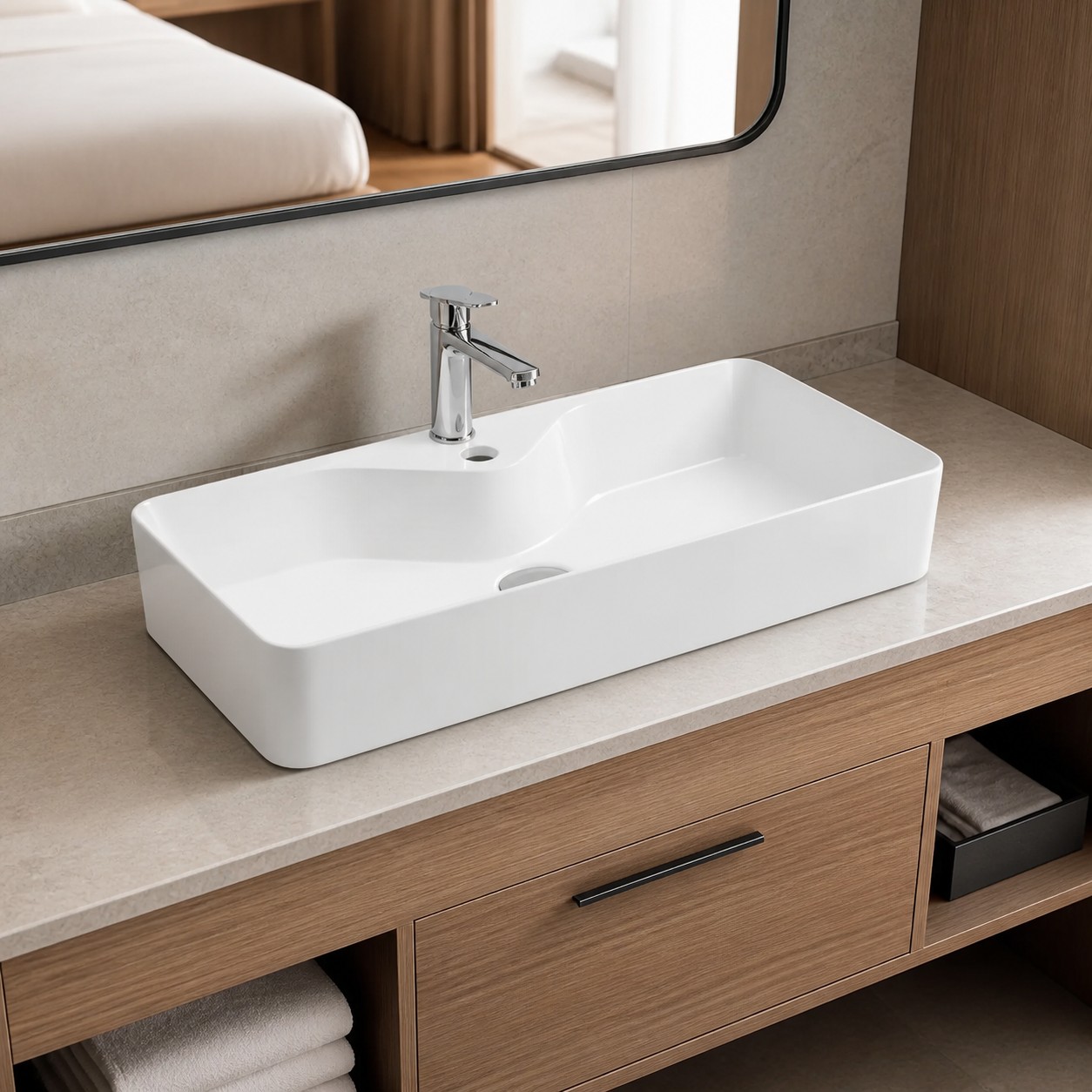
The largest advantage is design range. Because the exterior stays visible, a buyer can use round, oval, square, rectangular or sculpted ceramic as part of the room composition. A no-hole basin can coordinate with a wall-mounted or counter-mounted faucet; a one-hole model can package the faucet on the basin deck. This flexibility can help a powder room, boutique hotel or branded development create a recognisable look.
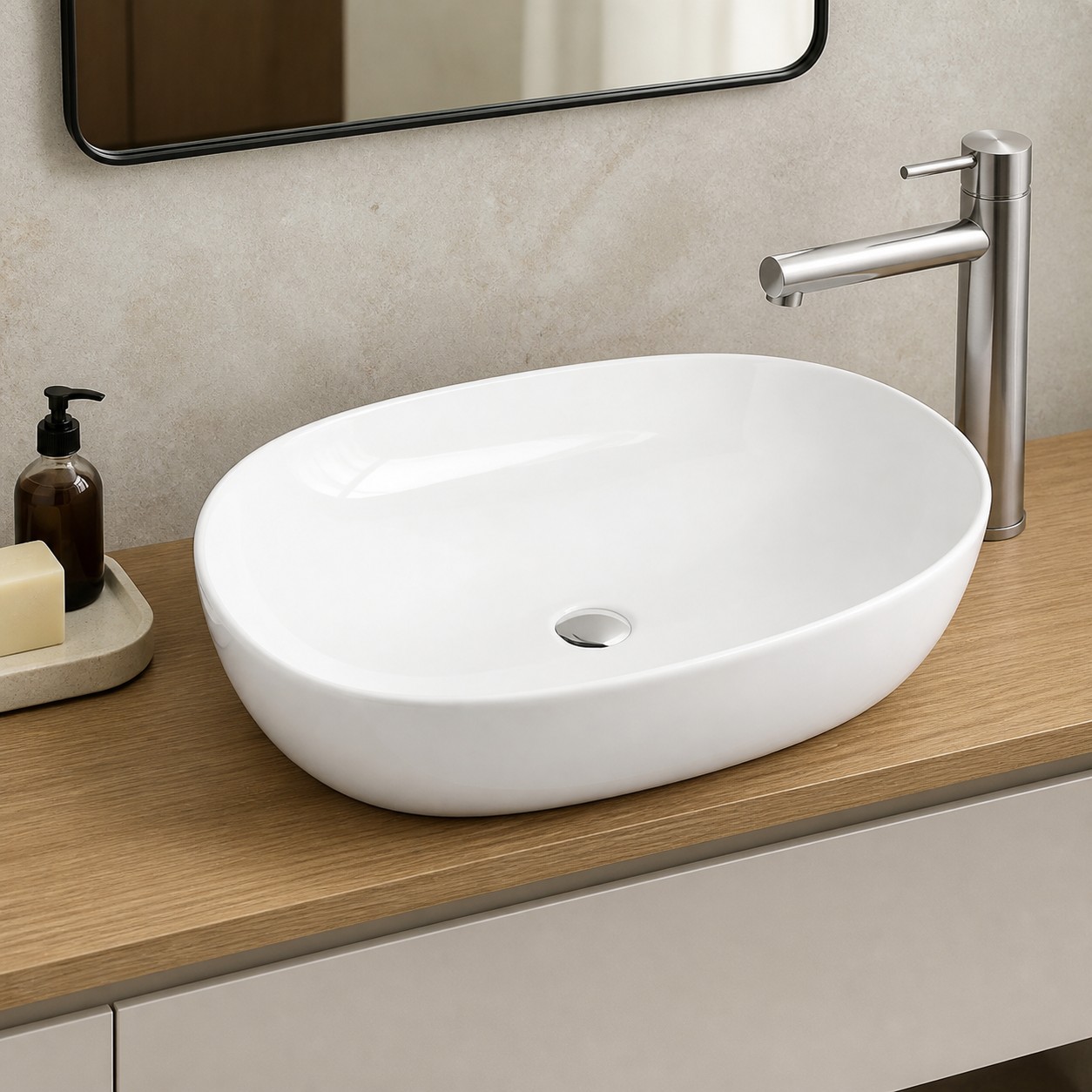
Above-counter formats may also preserve more visual countertop and can simplify some model-specific openings, but neither result is guaranteed. A compact basin can suit a shallow vanity, while a long basin can provide generous hand space. The right model may let joinery remain legible instead of being dominated by a deep inset bowl. Any claim about easier cutting, more storage or lower cost must still be checked against the current template, drain route and cabinet.
03 TRADE-OFFS
What are the common disadvantages of vessel sinks?
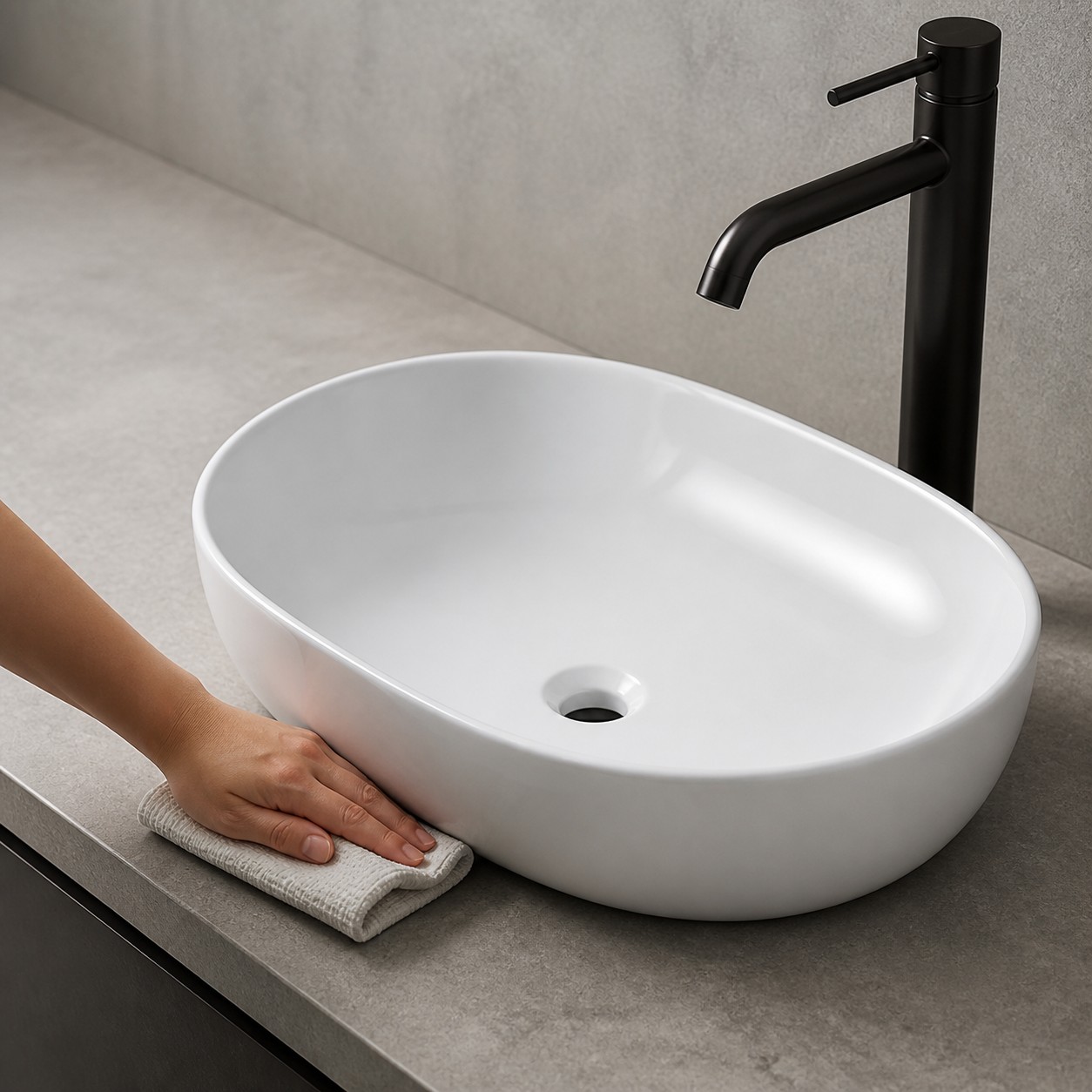
Finished height is the first risk. Adding a tall bowl to a conventional vanity can put the rim and faucet controls beyond comfortable reach, especially for children or shorter users. The exposed outside also creates a counter-to-basin junction that needs wiping. If the base sits too close to a wall or faucet, residue can accumulate where a hand or cloth cannot reach.
Splash is another frequent complaint, but it is usually a system interaction rather than proof that every vessel sink splashes. Excessive flow, a high outlet, poor stream landing and an unsuitable bowl zone can combine to throw water out. The drain, faucet and external ceramic are also more visible, so misalignment or untidy sealant is harder to hide. These trade-offs reward careful detailing and punish shortcut installation.
04 USER FIT
Are vessel sinks comfortable and practical to use?
They can be, when the counter is set low enough for the selected bowl and the faucet reaches the intended landing zone. Mock up the complete finished height and ask representative users to approach, wash hands, operate controls and reach soap without leaning or lifting shoulders. Consider children, older guests, seated users and the accessibility requirements that apply to the project; one attractive sample cannot stand in for a compliant design review.

Internal hand space matters separately from outside size. A shallow-looking exterior does not prove usable depth, and a large outer envelope may include a broad rim or rear deck. Request internal sections or test the real sample. For homes, confirm daily tooth-brushing and face-washing behaviour. For hospitality and public settings, test the repeated quick hand-washing pattern that creates most splash and cleaning demand.

05 CARE
Are vessel sinks harder to clean or easier to damage?
The glazed interior cleans like other vitreous-china surfaces when cared for correctly, but a vessel basin adds an exposed exterior and base junction. A well-spaced installation makes both accessible; a bowl squeezed against a backsplash or faucet creates a dirt trap. Specify a neat, compatible seal, enough wiping room and care products that do not abrade glaze or attack nearby stone and metal finishes.
Ceramic is hard and durable in normal bathroom use, yet exposed rims can receive impact from dropped objects. Stability depends on the designed support and correct installation, not the drain being overtightened to clamp a rocking bowl. Check for movement during handover and investigate it rather than adding surface sealant. For commercial projects, retain replacement models, colour approval and interface records so damage can be repaired consistently.
06 PROJECT COST
Do vessel sinks cost more to install?
The basin price alone cannot answer this. A project may need a lower custom vanity, tall or wall-mounted faucet, model-specific countertop work, compatible non-overflow or overflow drain, and more mock-up coordination. Conversely, the selected model and counter construction may make fabrication straightforward. Obtain a complete installed-cost comparison that includes joinery, stone, plumbing, fittings, labour, samples, packaging and future replacement.
Installation quality has a large effect on value. A precise centreline, stable support, correct waste and clean seal can make the assembly look intentional. An unverified cutout or stretched trap can turn a low-cost bowl into an expensive callback. Review the steps in the ceramic vessel sink installation guide before accepting claims that the format is universally easier or harder.
07 WHERE IT WORKS
Where does a vessel sink work best?
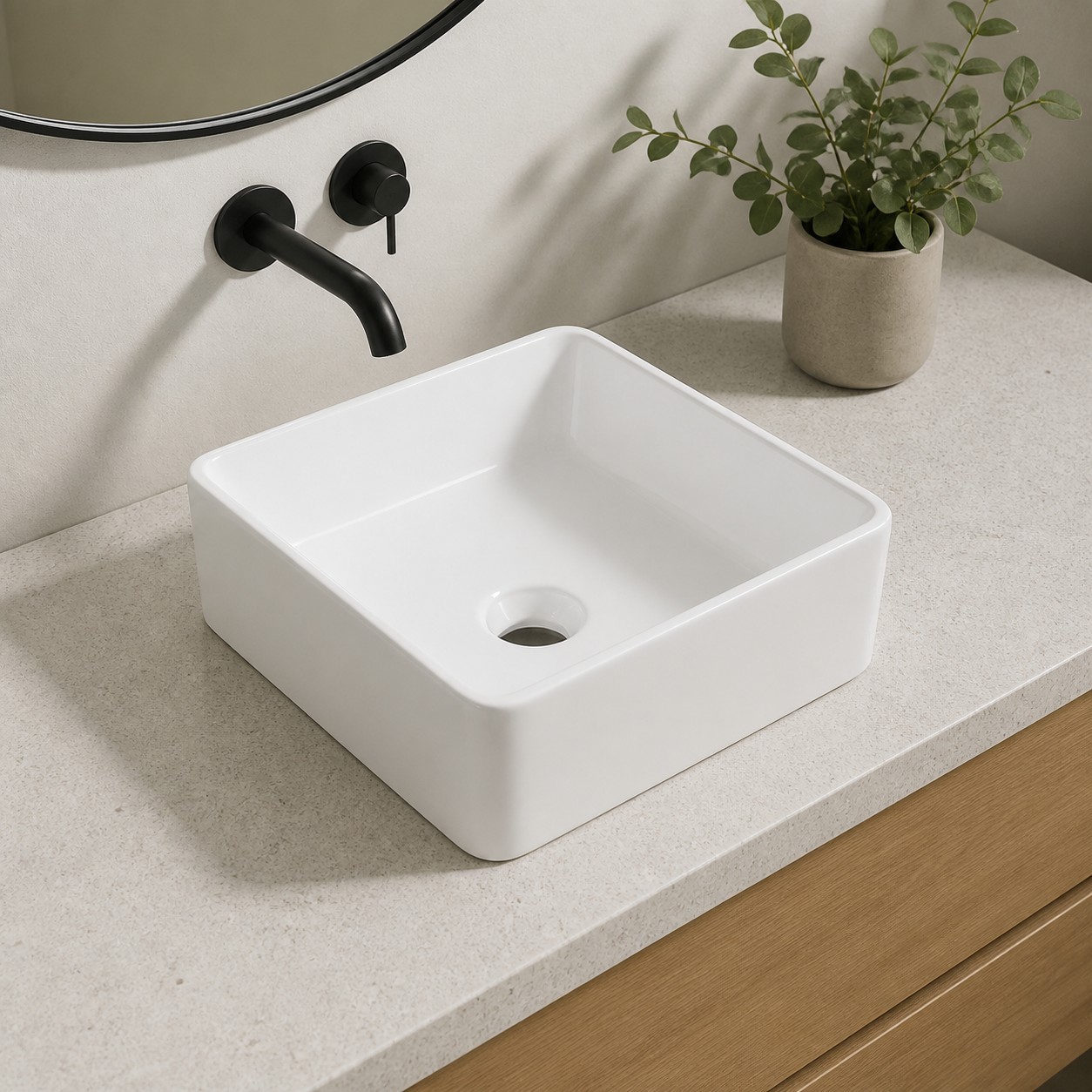
Vessel sinks are strong candidates where visual identity matters and the vanity can be designed around them: powder rooms, boutique hospitality, premium residential ensuites, showrooms and controlled development packages. Compact and narrow models can solve real footprint limits, while special forms can carry a design theme. A repeated project benefits when the selected basin, faucet, counter and drain are frozen as one approved kit.
They are weaker candidates where the existing counter height cannot change, the faucet position is fixed and incompatible, cleaning access is extremely tight, or rough public use creates avoidable exposed-rim risk. An undermount or inset basin may better suit those priorities. The useful question is not whether vessel sinks are fashionable, but whether this assembly improves the room's function, maintenance and project story.
08 DECISION METHOD
How should a project approve or reject a vessel sink?
Build a short scorecard covering appearance, user height, hand space, splash, counter use, cleaning access, drainage, installation risk, serviceability, carton and replacement. Weight the criteria for the actual property: a private powder room and a high-turnover airport washroom should not receive the same answer. Compare at least one alternative basin type using the same vanity envelope and installed-cost assumptions.
Then make one full-size working sample with production-intent basin, faucet, counter, waste and cabinet. Run repeated hand-washing and drainage tests, inspect the base junction and obtain feedback from housekeeping or facilities staff. Record the decision and retain the signed sample. A vessel sink is right when the complete evidence is right—not because a mood board looked good or a generic list contained more pros than cons.

FAQ COMMON QUESTIONS
Frequently asked questions
Are vessel sinks practical for everyday use?
Yes, when the finished height, internal hand space, faucet stream, drain and cleaning clearance are proven with the exact model.
What is the biggest problem with vessel sinks?
Poor coordination. An unchanged tall vanity, mismatched faucet or inaccessible base can create discomfort, splash and maintenance problems.
Do vessel sinks splash more?
Not inevitably. Splash depends on flow, outlet height, stream landing and bowl geometry; test the full assembly.
Are vessel sinks hard to clean?
They add an exposed exterior and base junction. Adequate spacing and a neat compatible seal make routine wiping much easier.
Do vessel sinks add value?
They can strengthen design appeal, but value is project-specific and depends on installation quality, buyer preference and maintenance.
Should hotels use vessel sinks?
They can suit controlled guest-room packages, but the operator should approve height, splash, cleaning time, durability and replacements through a working mock-up.