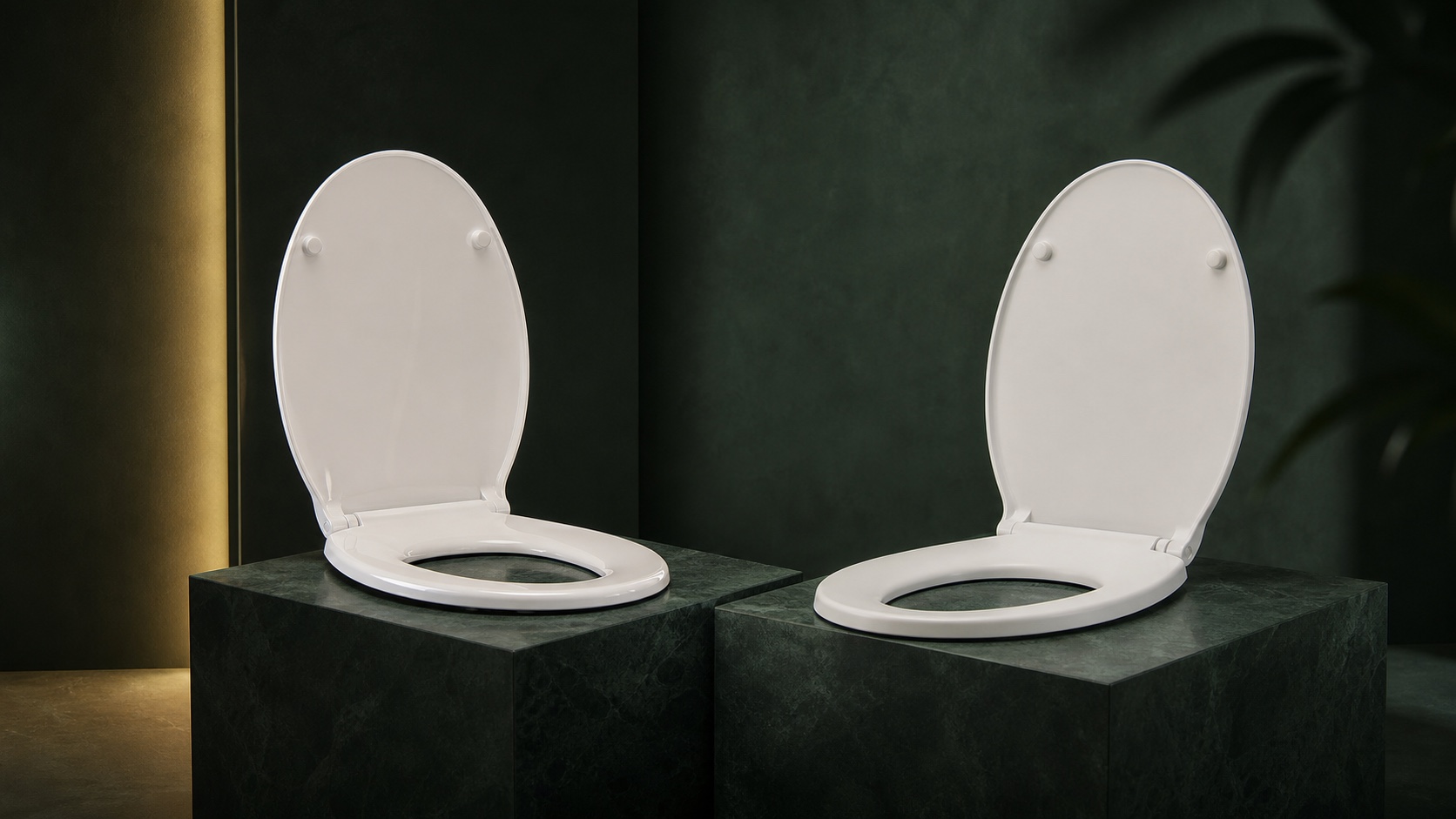
A toilet seat can change how a ceramic toilet looks, feels and performs after installation. For importers, the common PP vs UF toilet seat decision is not simply cheap plastic versus premium plastic. Polypropylene and urea-formaldehyde resin behave differently under scratches, impact, cleaning, ageing and hinge loads. The correct choice must also fit the ceramic bowl, destination market, replacement plan and current compliance requirements.
Key takeaways
- UF is hard and rigid: it is often selected for a ceramic-like feel and scratch-resistant surface, but severe impact can chip or crack a brittle part.
- PP is light and tough: it can flex and tolerate knocks, although its softer surface may show wear sooner.
- The complete assembly decides quality: bowl fit, bumpers, hinges, dampers and fixings can matter more than the material name alone.
01 MATERIAL BASICS
What are PP and UF toilet seats?
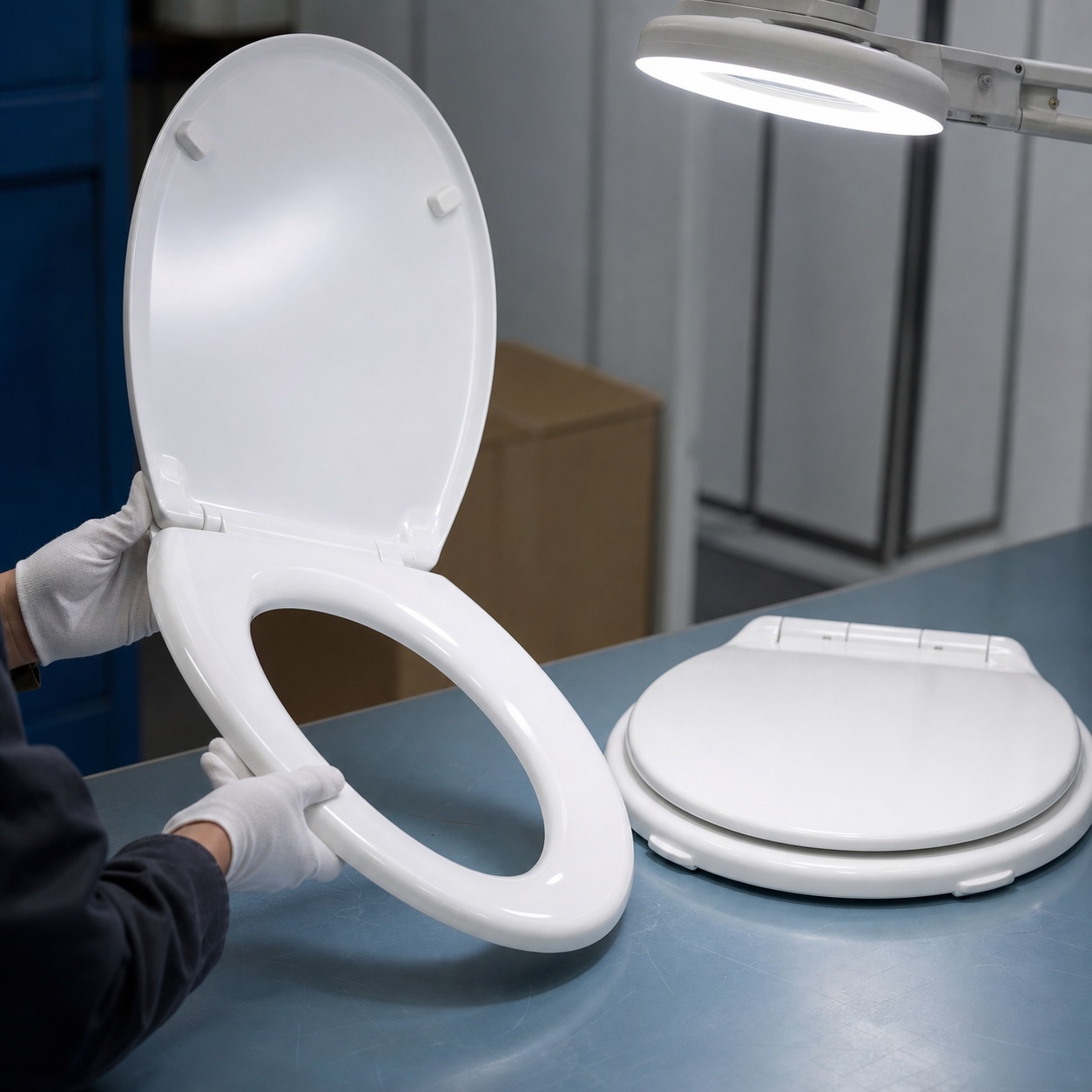
PP toilet seats are moulded from polypropylene, a thermoplastic. The material becomes formable when heated, which suits injection moulding and efficient volume production. A finished PP seat is generally light and has some flexibility. That flexibility can help it absorb everyday knocks, but the exact result depends on the resin grade, wall thickness, internal rib design, pigments and moulding control.
UF toilet seats use urea-formaldehyde resin, a thermosetting material also described as duroplast. Heat and pressure cure the compound into a hard, dense part. Once cured, it does not behave like a thermoplastic that can simply be melted and reshaped. UF is valued for a rigid, smooth surface that can visually match glazed ceramic, but hardness and brittleness must be considered together.
These are material families, not one guaranteed quality level. A well-engineered PP seat can outperform a poorly moulded UF seat in a real project. Start by defining the user, price band and failure risks, then approve the exact sample rather than buying a three-letter material code.
02 BUYER COMPARISON
PP vs UF toilet seat: what are the key differences?
Practical material comparison
| Buying factor | PP seat | UF seat |
|---|---|---|
| Material type | Thermoplastic | Thermoset / duroplast |
| Typical feel | Light, slightly flexible | Dense, hard, rigid |
| Surface | Satin to gloss; softer | Smooth, ceramic-like; harder |
| Common strength | Impact tolerance and value | Scratch resistance and premium feel |
| Common risk | Scuffing, flex or ageing if underspecified | Chipping or cracking under severe impact |
| Typical positioning | Value retail, rentals, volume projects | Premium retail, hotels, design-led ranges |
The table describes common behaviour, not a purchase guarantee. Add measurable acceptance criteria to the specification: colour range, surface defects, dimensional tolerance, static load, lateral movement, hinge-cycle method, slow-close time, chemical exposure and packaging protection. If a supplier claims “antibacterial,” “non-yellowing,” “unbreakable” or a fixed service life, ask which test method and exact sample support the claim.
03 SURFACE & APPEARANCE
Which toilet seat looks more premium and stays presentable?
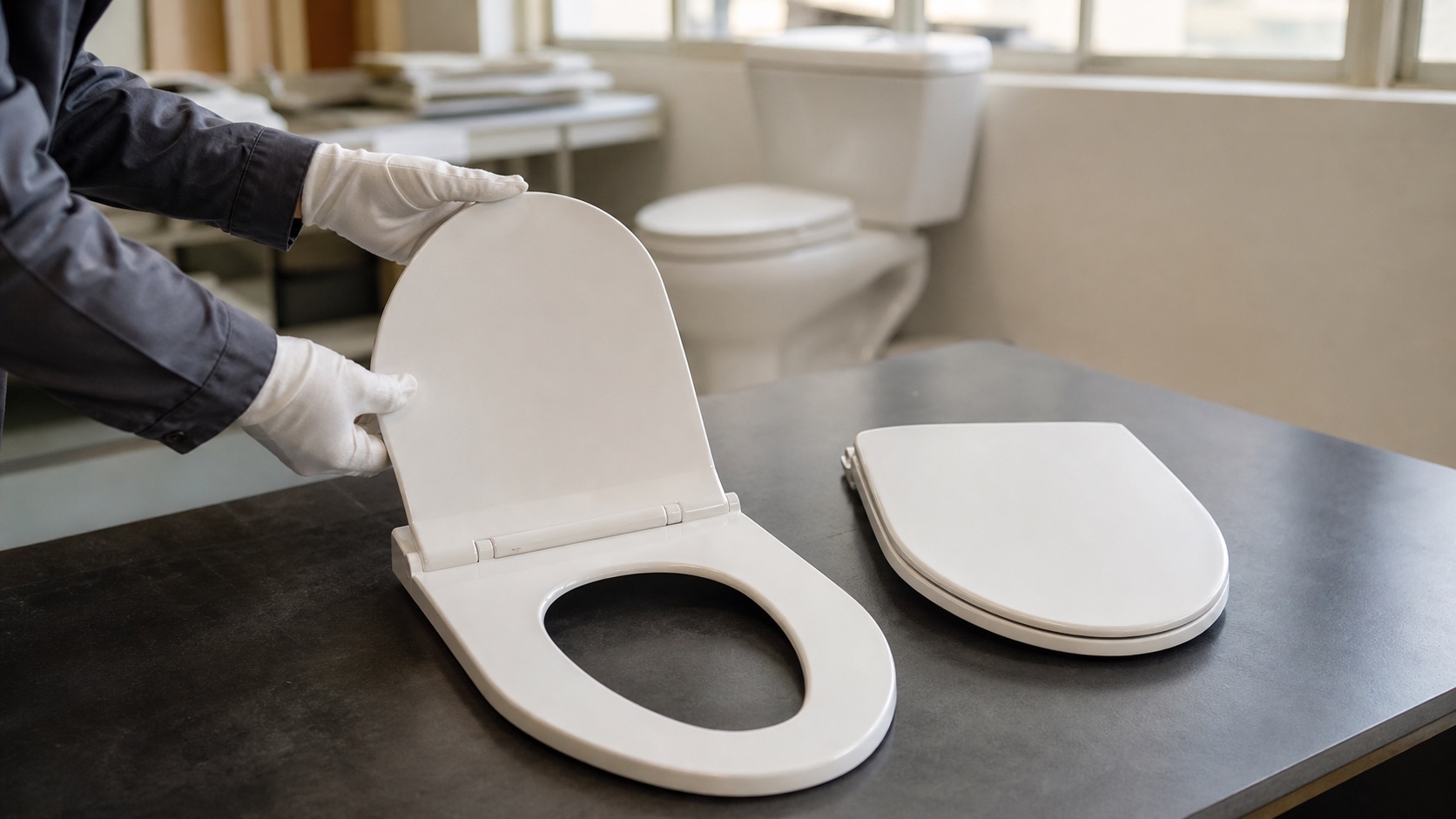
UF often wins the first showroom impression. Its dense, hard surface can sit visually close to vitreous china, especially when the white tone, gloss and edge profile are coordinated with the toilet. It also tends to resist ordinary surface scratching better than a softer PP part. This is useful for design-led retail ranges and guestrooms where the buyer wants a substantial feel.
PP can look clean and professional without pretending to be ceramic. It supports satin or gloss finishes and may suit a lighter, approachable product position. Surface appearance still depends on mould polish, flow marks, sink marks, parting lines, colour consistency and handling. Ask the factory to place the seat on the actual toilet under daylight and warm indoor light. A white that matches in a sample room can look blue, grey or yellow beside the glazed ceramic in another environment.
Cleaning claims need the same discipline. Approve a list of permitted and prohibited chemicals for the destination market, then test the exact production surface. Do not convert a general material advantage into an unlimited chemical-resistance promise.
04 REAL-WORLD DURABILITY
How do PP and UF seats fail in real use?
Durability is not one number. PP's flexibility can help when cartons are handled roughly or a seat receives a sudden knock. However, excessive flex can feel unstable, and a thin or poorly reinforced part may deform around bumpers and hinges. Its softer surface can also collect visible scuffs. Check the underside rib pattern, wall thickness consistency and bumper contact rather than judging only the top.
UF is much more rigid. That rigidity can make the seat feel solid and help the surface remain crisp, but a hard thermoset part may chip or crack if dropped onto a corner or hit severely. Inspection should include edges, hinge bosses and the area around fixing inserts. Buyers should define a reasonable drop or impact method with the supplier instead of marketing UF as impossible to break.
Packaging changes the result. Keep lids and rings separated with non-abrasive protection, immobilise metal hinges, and prevent the seat from striking ceramic inside a toilet carton. The stronger material on paper can still arrive damaged when the packing design allows movement.
05 HINGES & CERAMIC FIT
Why hinges and bowl fit matter more than the material label
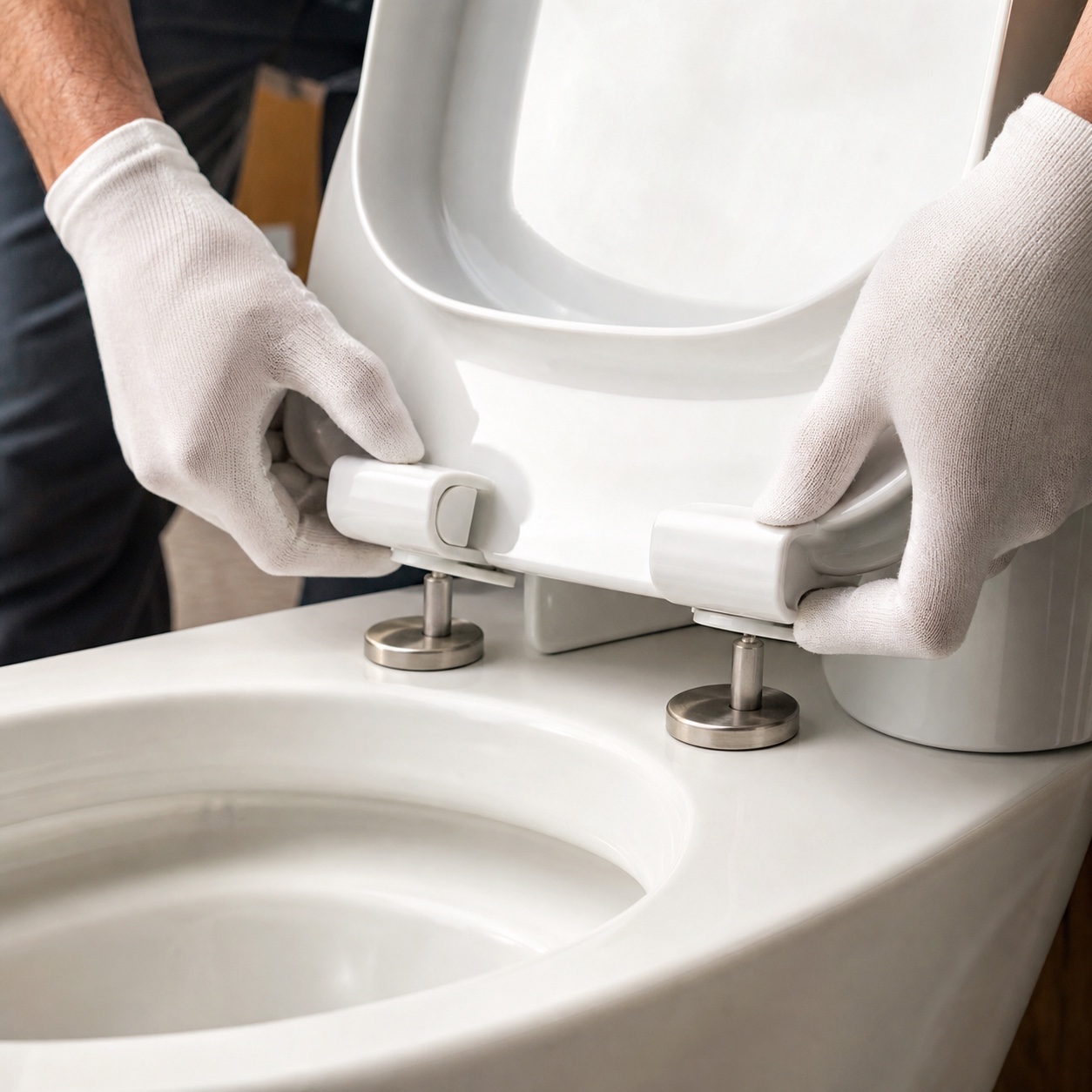
A premium UF ring with a weak damper still closes badly. A tough PP seat with the wrong fixing centres still moves. Specify soft-close or standard close, quick release, top fixing or bottom fixing, hinge material, adjustment range, fixing-centre range and the spare hinge code. Ask how the supplier controls closing time at different temperatures and after repeated cycles. Agree on the cycle count and pass criteria in writing; there is no responsible universal number for every unverified hinge design.
Fit the exact seat to a signed ceramic sample. Check round-front or elongated profile, hole-centre distance, hole-to-front length, ring opening, lid coverage, bumper contact and side overhang. Open the seat fully and confirm it remains stable without rubbing the tank. Apply controlled lateral force and recheck the fixings. Our round vs elongated toilet guide explains why shape labels cannot replace actual dimensions.
For project maintenance, give every complete seat and hinge set a spare-parts code. A hotel should not have to identify an old seat by photographs years later. Keep an approved sample and specification revision with the purchase record.
06 MARKET POSITIONING
Which toilet seat material fits retail, hotels and apartments?
PP is often suitable for entry and mid-volume ranges where impact tolerance, lower weight and controlled cost matter. Rental apartments, social housing, value retail and back-of-house rooms may prefer a dependable PP seat with straightforward replacement. This does not justify using the thinnest available design; stable bumpers and reliable hinges still protect the brand.
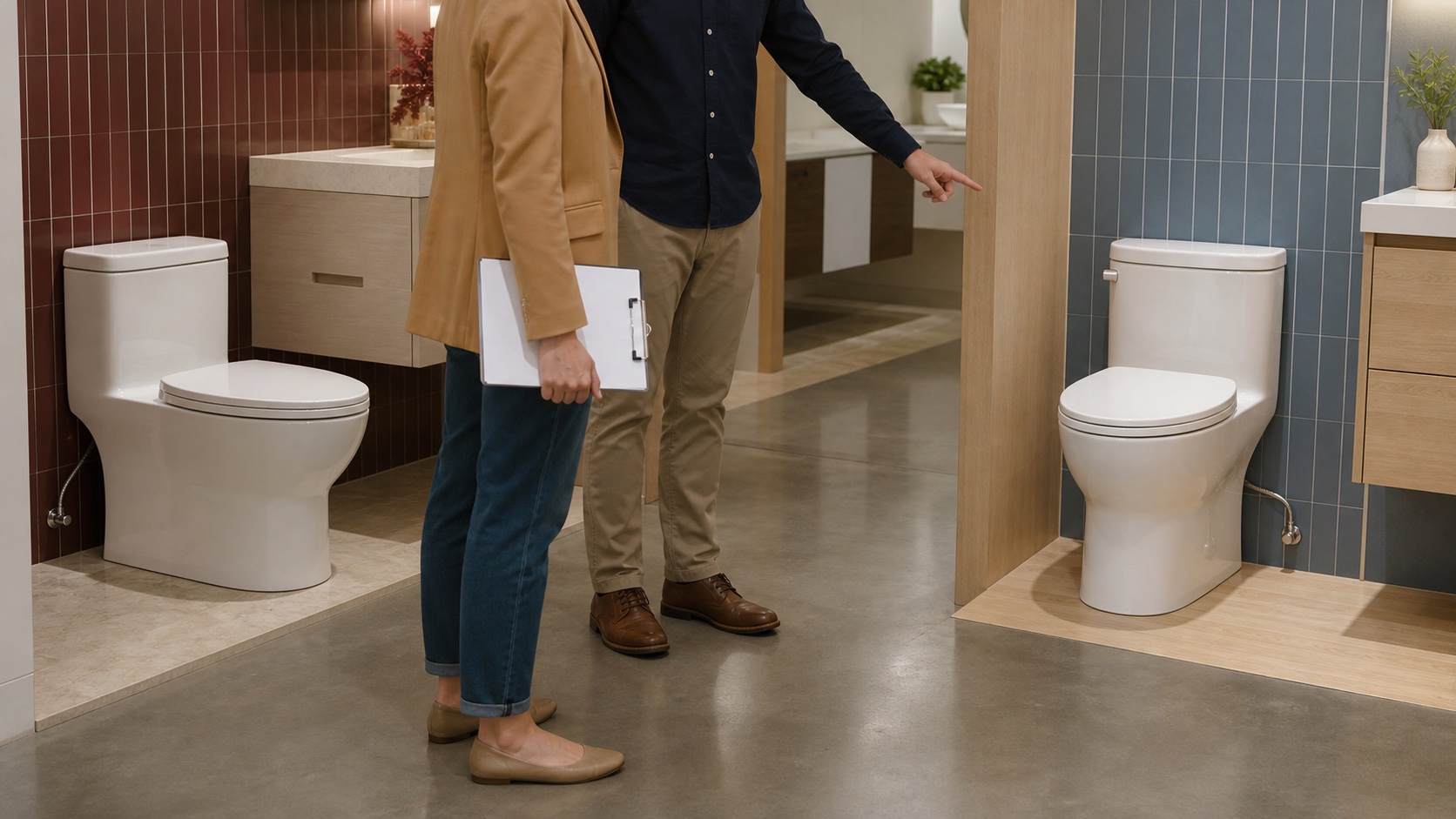
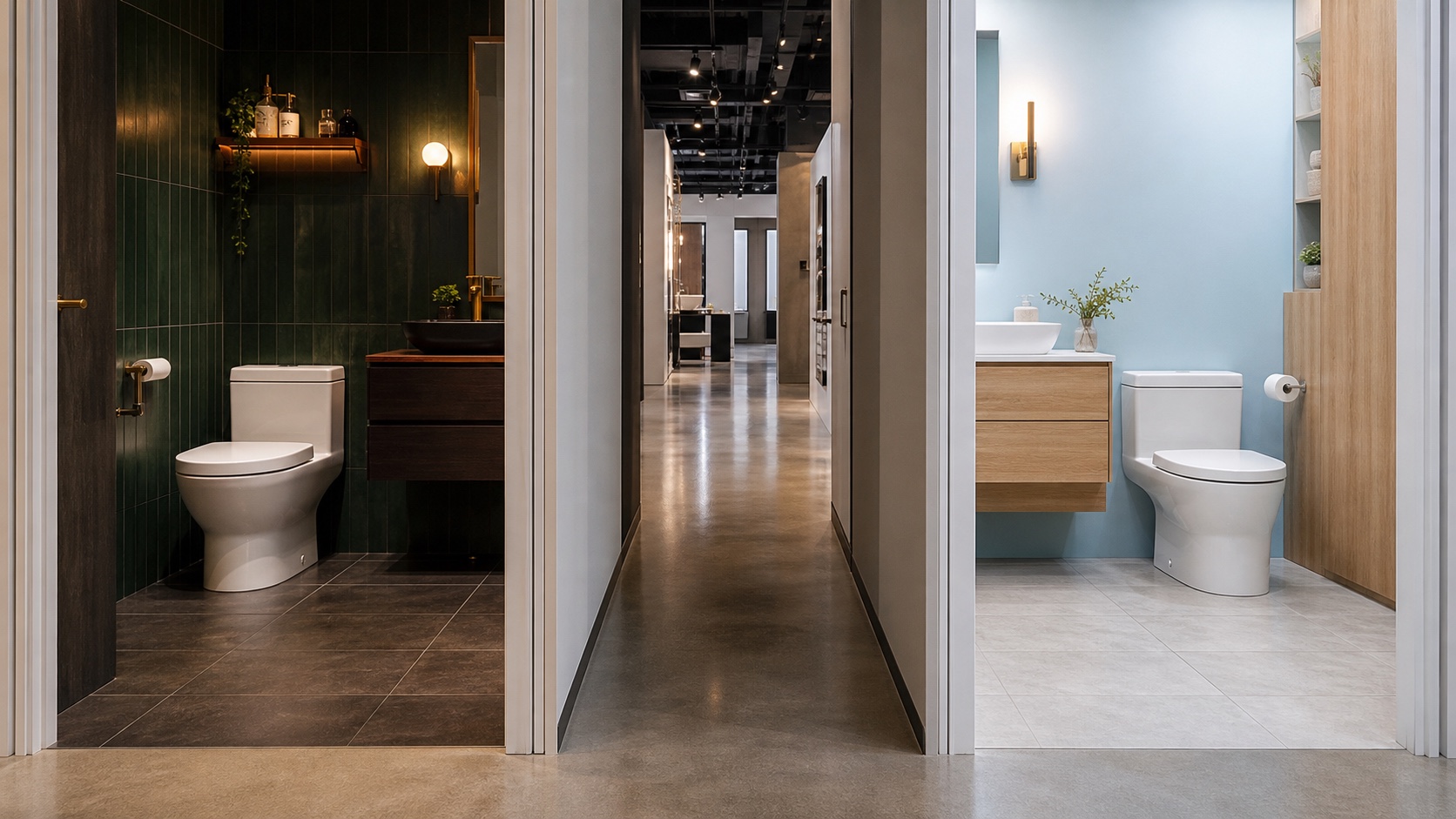
UF is often chosen for higher-positioned retail, hotel guestrooms and design-focused developments because its hard surface and ceramic-like feel support a premium presentation. The project team should still consider impact risk, housekeeping chemicals, replacement availability and total delivered cost. A mixed product range may use UF for the visual flagship and PP for the volume model while keeping the same ceramic bowl and fixing geometry.
Compare the total package, not only the seat price. Include hinge grade, fixings, colour matching, testing, spare parts, individual protection, carton volume and replacement claims. For the toilet itself, use the wider ceramic toilet buying guide.
07 COMPLIANCE IN 2026
What compliance documents should UF toilet-seat importers request?
Material declarations matter because UF is a formaldehyde-based resin. That does not mean a finished cured seat should be treated like uncured resin, and it does not support a blanket safety claim either. Ask for traceability to the actual compound, current chemical declarations and test reports relevant to the destination market and final article.
For the European Union, Commission Regulation (EU) 2023/1464 adds formaldehyde and formaldehyde-releasing substances to REACH Annex XVII. From 6 August 2026, covered articles other than furniture and wood-based articles must not be placed on the market when formaldehyde released under the regulation's specified test conditions exceeds 0.080 mg/m³. Scope, exemptions, sampling and test conditions matter, so importers should confirm how the rule applies to the exact toilet seat with an accredited laboratory or qualified compliance adviser. Do not reuse a report for a different resin, colour or construction without checking its validity.
Build a document pack that links the finished SKU to its bill of materials: supplier and compound reference, declaration date, applicable restricted-substance statements, laboratory report number, sample description and production batch traceability. For a wider market-by-market process, see our sanitary ware certifications guide.
08 SAMPLE & ORDER CONTROL
PP vs UF toilet seat checklist before mass production
Lock these details for every seat SKU
1. PP or UF material and compound reference. 2. Round or elongated profile. 3. Colour and gloss against the ceramic. 4. Fixing centres and adjustment range. 5. Hole-to-front length and ring opening. 6. Static-load and lateral-stability method. 7. Surface and impact acceptance. 8. Soft-close time and cycle method. 9. Quick-release and fixing hardware. 10. Cleaning-chemical guidance. 11. Compliance documents and traceability. 12. Individual protection, carton marks and spare-parts code.
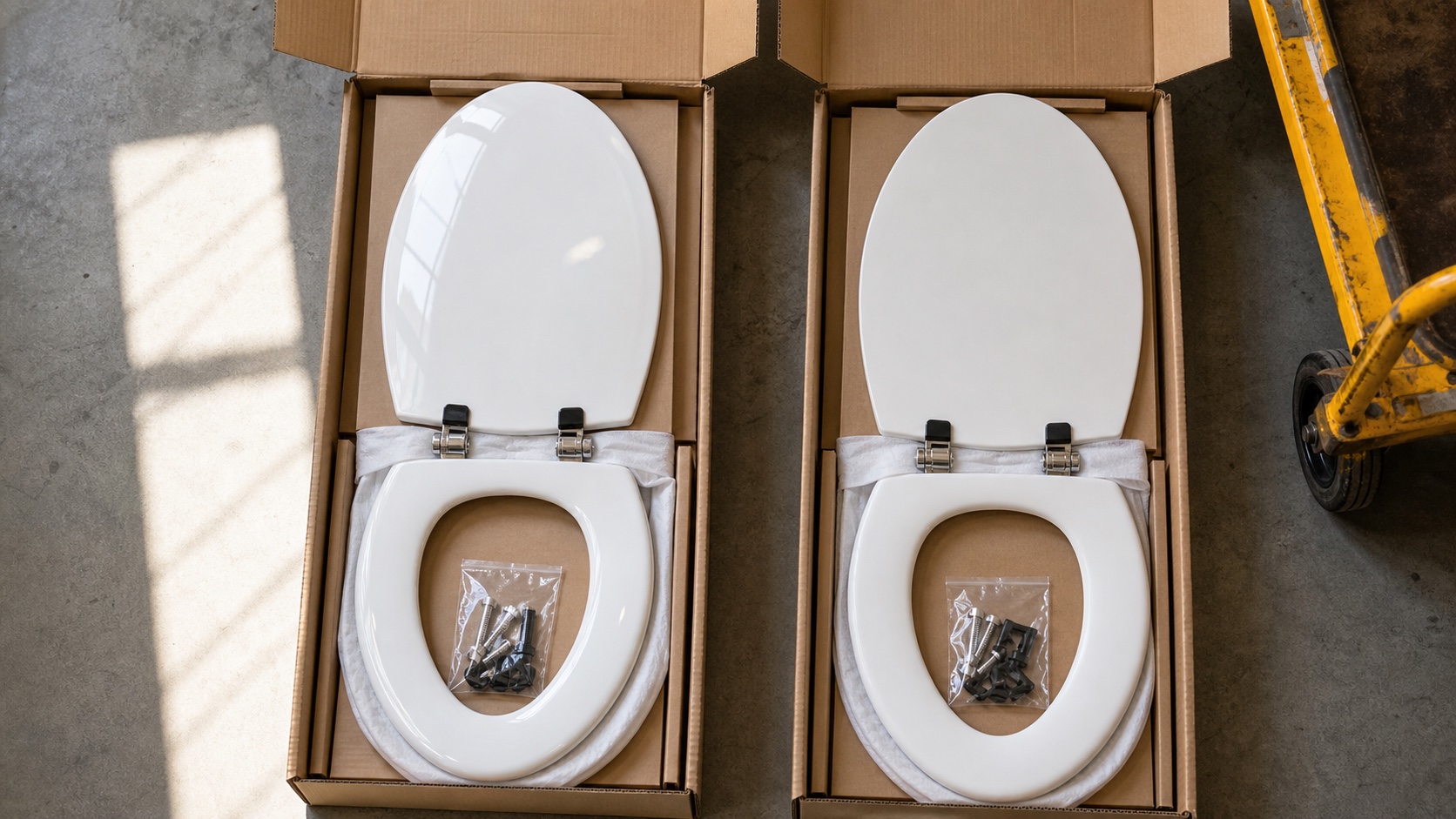
Approve at least one complete golden sample installed on the final ceramic toilet. Photograph the top, underside, hinges, fixing kit and colour match. Measure it, operate it repeatedly and record the agreed acceptance methods. During pre-shipment inspection, pull seats from different cartons and batches rather than testing one prepared sample. Check fit, slow close, movement, surface, hardware count and packing. Our pre-shipment inspection guide covers the wider order.
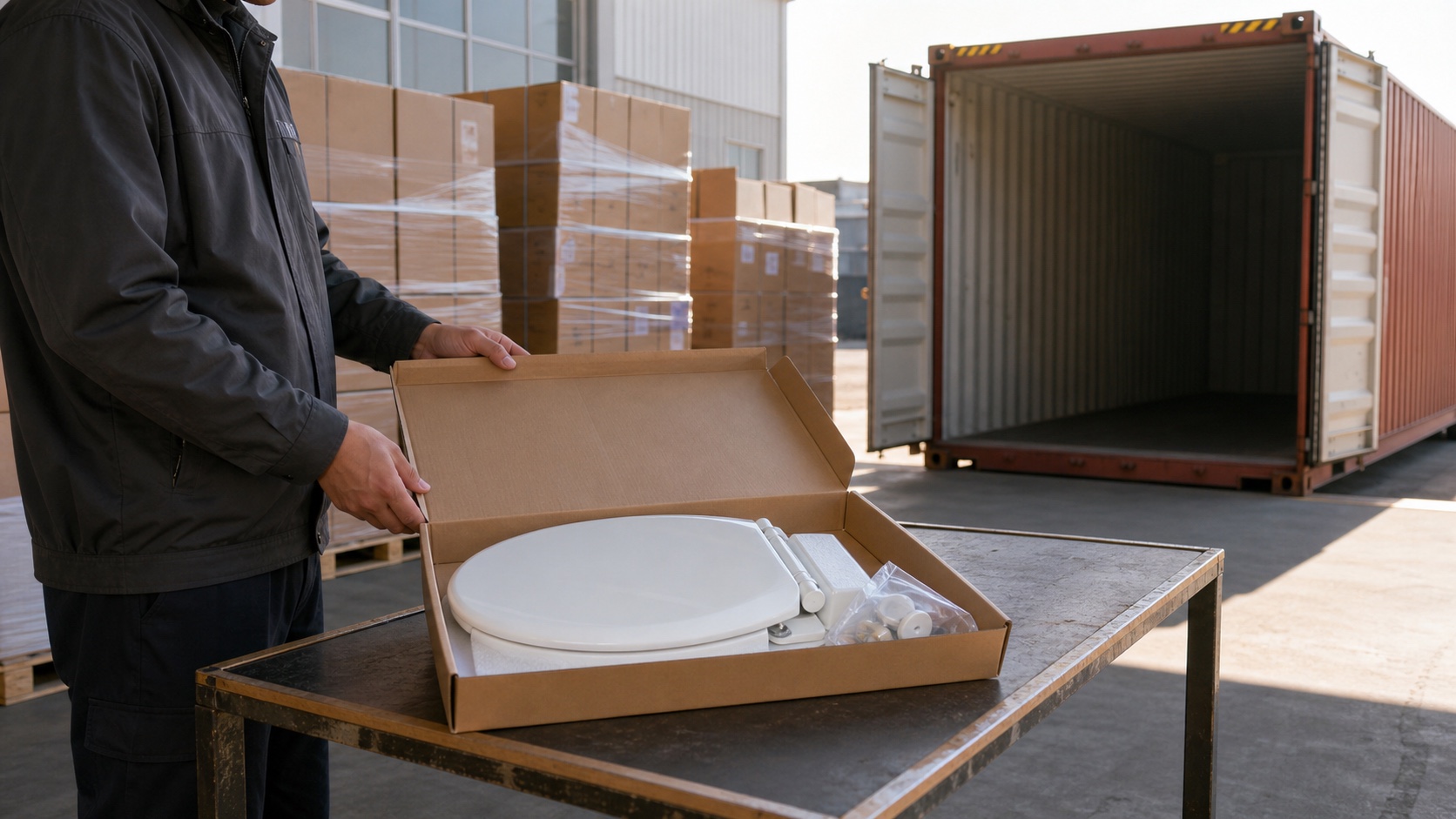
Chengda supplies ceramic toilets for importers, distributors, hotels and apartment projects. Send us the bowl drawing or sample, target market, preferred material, hinge functions, price band and quantity. We can coordinate the ceramic, seat, valves, fixings and export packing as one controlled toilet SKU.
Choose PP or UF by the failure you need to prevent and the market position you need to deliver — then verify the complete seat on the actual ceramic.
FAQ COMMON QUESTIONS
Frequently asked questions
Is a UF toilet seat better than a PP toilet seat?
UF is usually chosen when buyers want a rigid, ceramic-like surface and stronger scratch resistance. PP is lighter, more flexible and often more tolerant of impact. The better material depends on the retail position, user environment, target cost and verified performance of the complete seat.
What is a UF or duroplast toilet seat?
UF means urea-formaldehyde resin, a thermosetting material commonly called duroplast in the toilet-seat market. After curing it forms a hard, dense part that cannot simply be remelted like a thermoplastic.
Do PP toilet seats turn yellow?
Colour change depends on resin grade, pigments, additives, UV exposure, cleaning chemicals and ageing conditions. Do not accept a universal claim. Request colour and ageing test criteria for the exact production material and compare retained samples.
Which toilet seat material is better for hotels?
Many higher-positioned hotel projects prefer the hard, ceramic-like feel of UF, but hinge life, replacement supply, chemical resistance and impact risk also matter. A well-specified PP seat can suit budget hotels, rental apartments and other cost-sensitive projects.
Does a soft-close hinge depend on PP or UF material?
No. Soft-close performance comes mainly from the hinge and damper system, installation and seat weight. Both PP and UF seats can use soft-close hinges. Buyers should approve the complete assembly and define a test method and acceptance level.
What documents should EU importers request for UF toilet seats?
Request the exact material declaration, supplier traceability, current REACH documentation and any test report relevant to the destination market. Because EU formaldehyde-emission rules change on 6 August 2026, confirm scope, method and applicability with an accredited laboratory or compliance adviser for the exact article.