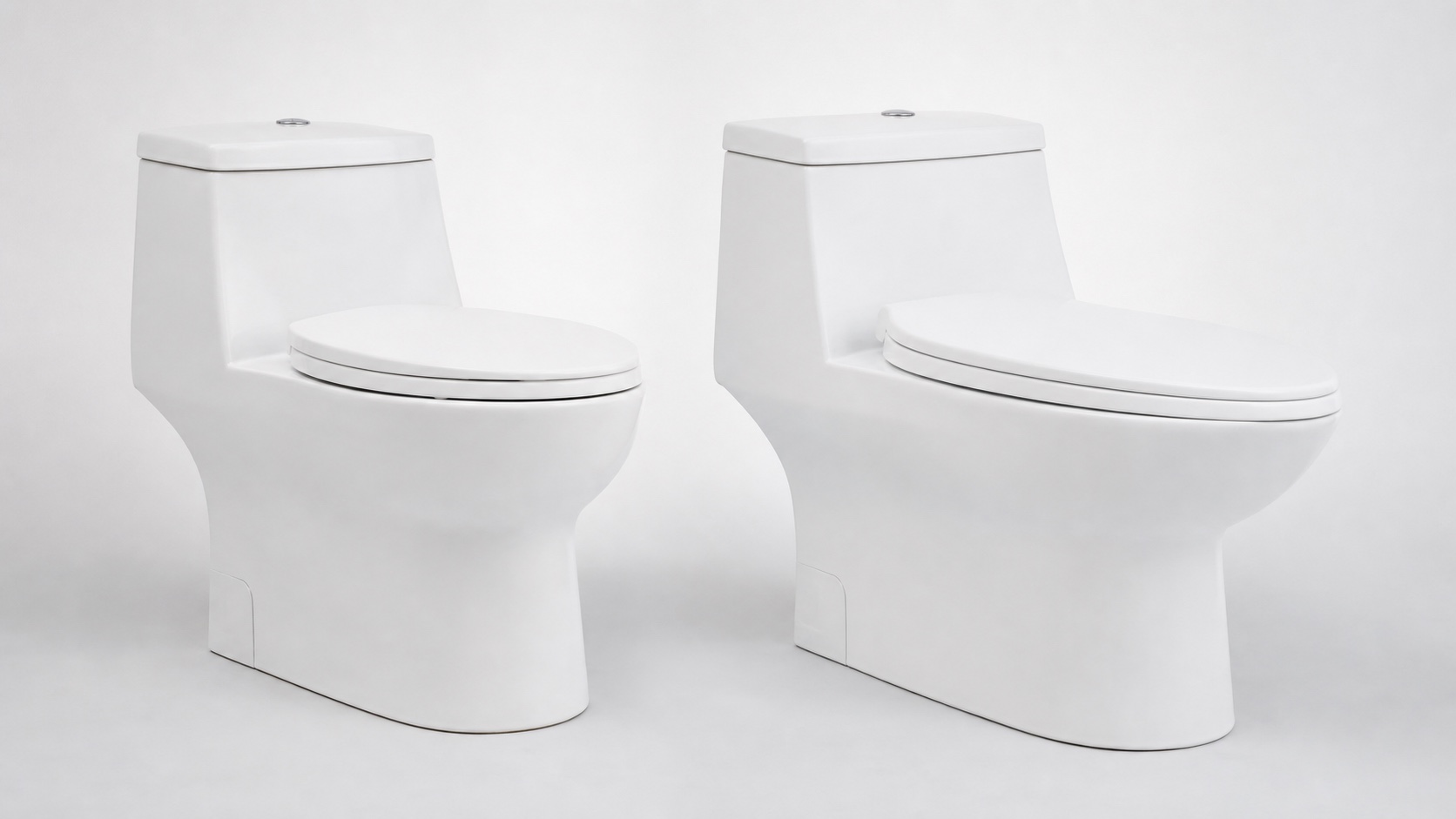
The difference between a round and an elongated toilet looks simple in a catalogue, but it affects more than appearance. Bowl projection changes bathroom clearance, seat shape controls spare-parts compatibility, and the selected format can influence comfort, carton volume and the way a distributor builds its product range. This round vs elongated toilet guide is written for importers, project buyers and sanitary ware distributors who need a repeatable specification rather than a one-off retail choice.
Key takeaways
- Shape is measured at the front: round-front bowls are shorter and more circular; elongated bowls extend farther and form an oval.
- Do not buy by the label alone: approve the complete dimensional drawing, finished seat height and actual seat model for every SKU.
- Market fit decides the range: compact residential rooms may favour round-front models, while elongated models are common in many North American and project specifications.
01 BOWL SHAPE
What is the difference between a round and elongated toilet?
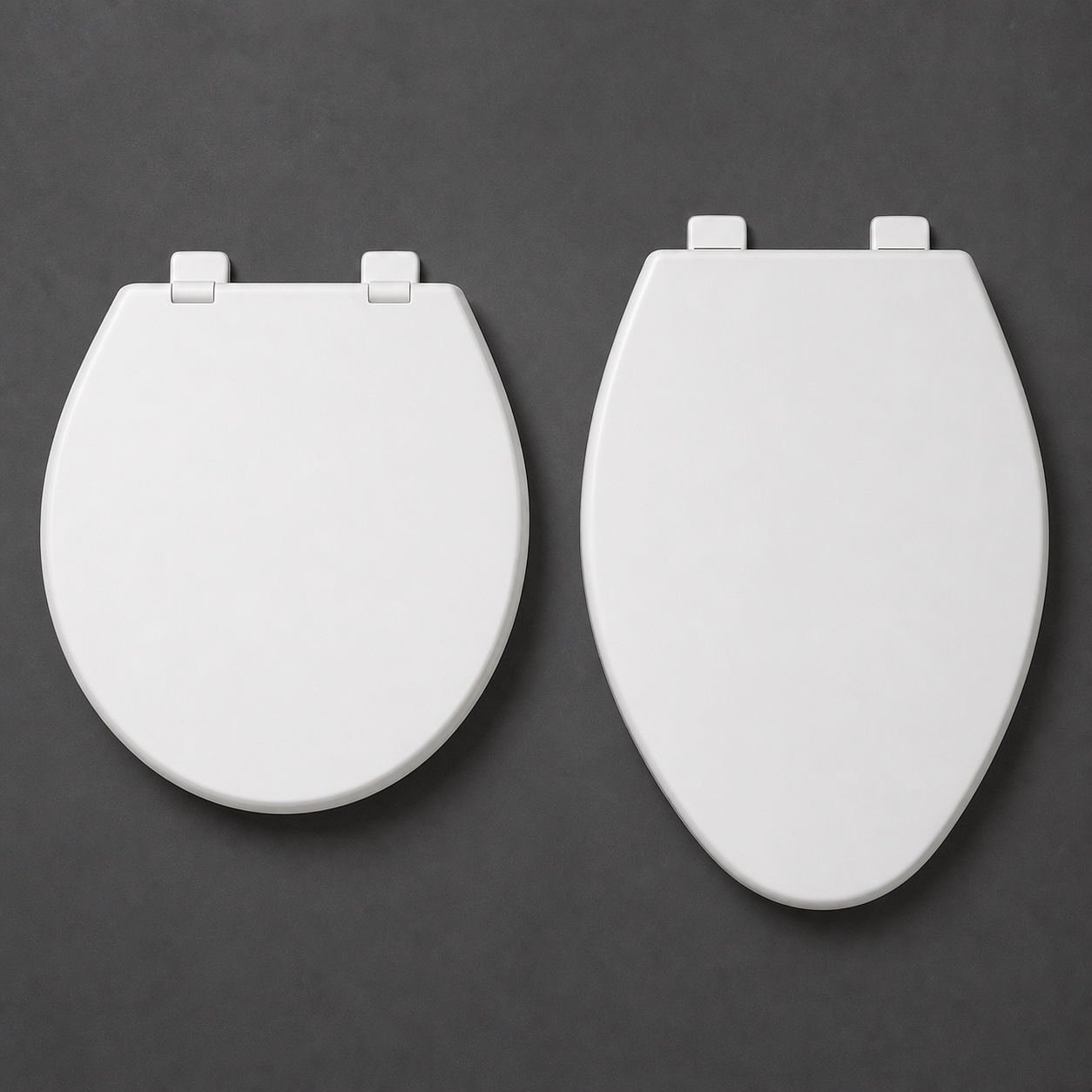
A round-front toilet has a bowl and seat whose front edge follows a shorter, more circular curve. An elongated toilet extends the bowl forward into a longer oval. The distinction is easiest to see from directly above, but buyers should treat it as a dimensional difference, not only a styling word. Two factories may both describe a model as elongated while quoting different overall projections, widths and seat lengths.
The shape does not automatically tell you whether the toilet is one-piece or two-piece, siphonic or washdown, rimless or rimmed. Either bowl format can appear across several constructions. Start with the complete product architecture in our ceramic toilet buying guide, then lock bowl shape as one line of the model specification.
02 MARKET FIT
Which toilet shape fits each destination market?
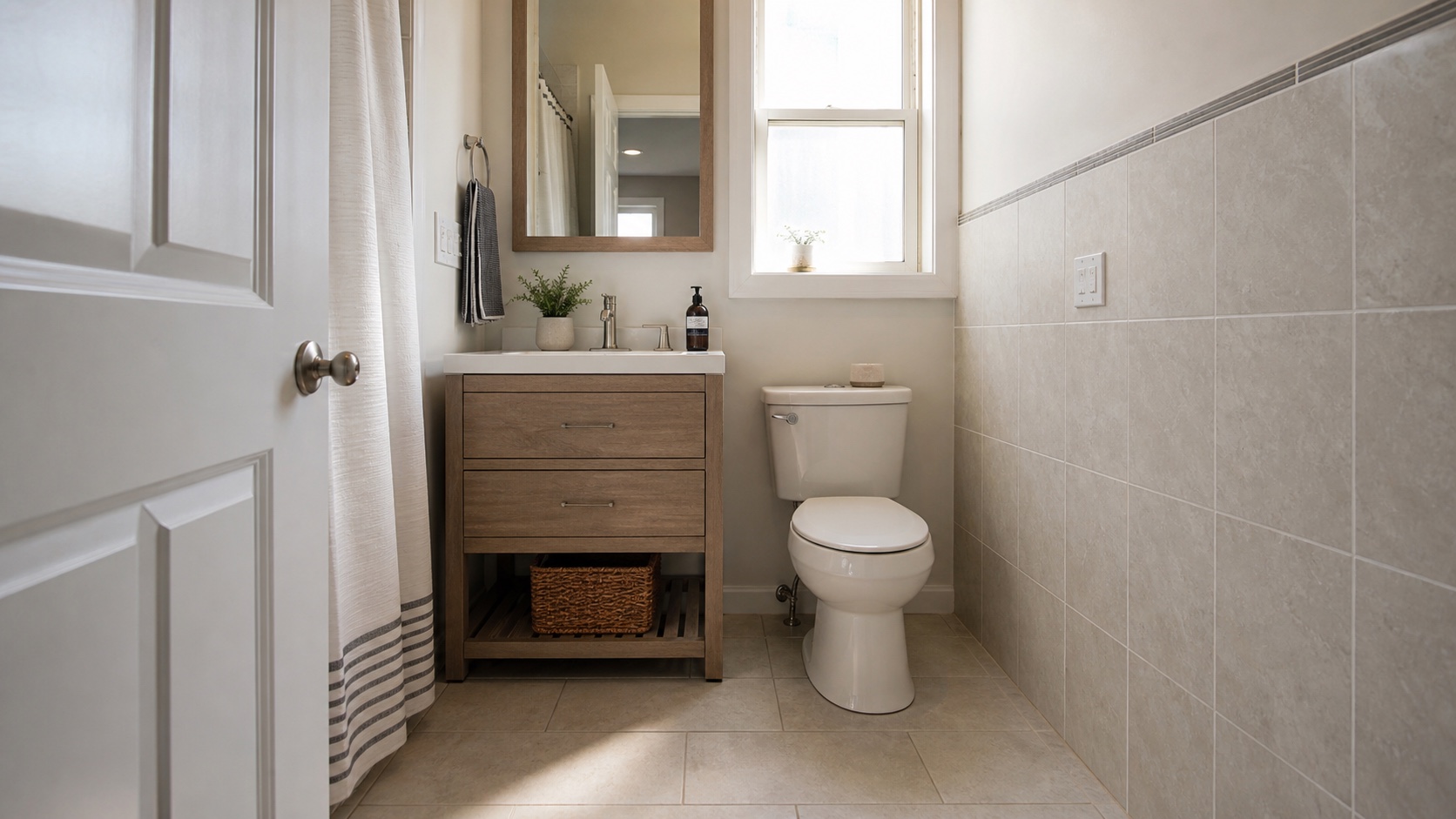
Do not assume that one shape is universal. In North American retail, elongated bowls have a strong presence in family bathrooms, premium ranges and many commercial projects, while round-front toilets remain useful for powder rooms, older homes and tight replacement spaces. In other regions, buyers may describe products by overall length, projection or local seat families rather than using the same round-versus-elongated language.
Build the range from actual demand. A distributor serving renovation stores may need both shapes in the same rough-in and price band. A hotel project may standardise one elongated model for guestrooms and another compact model for small back-of-house rooms. A developer with repeated bathroom pods should approve the exact projection against the layout before choosing. The decision also sits beside one-piece versus two-piece construction; our one-piece vs two-piece comparison explains the handling and cost differences.
03 DIMENSIONS
How should buyers compare round and elongated toilet dimensions?
Measure from fixed references. For the bowl and seat, check the distance from the seat-fixing-hole centreline to the front edge, the maximum width, the fixing-centre spacing and the hinge adjustment range. For the complete toilet, confirm total projection from the finished wall, ceramic width, tank height, finished seat height, rough-in, rear clearance and the distance from the outlet centre to the back of the body. Common replacement seats are often described around 16.5 inches for round-front and 18.5 inches for elongated when measured from the fixing holes to the front, but those are market references, not universal factory tolerances.
Never approve a mould from a nominal seat length. Ask for a dimensioned drawing and check a physical sample with the exact approved seat installed. Compact skirted toilets can sometimes achieve a shorter overall projection even with an elongated-looking bowl, while older two-piece models may project farther because of the tank and rough-in relationship. For drainage dimensions, use the separate S-trap and P-trap rough-in guide.
Practical comparison for a buying sheet
| Factor | Round-front | Elongated |
|---|---|---|
| Front shape | Shorter, more circular curve | Longer oval projection |
| Typical advantage | Saves floor space | More thigh support for many users |
| Seat requirement | Matching round-front seat | Matching elongated seat |
| Buyer check | Approve actual drawing, sample and carton dimensions | |
04 COMFORT & SPACE
Is an elongated toilet more comfortable than a round toilet?
Many adult users find an elongated seat more supportive because the front area is longer, but comfort is not determined by shape alone. Seat contour, opening size, hinge position, finished height, ceramic rim width and the user's body all matter. A poorly matched elongated seat can move or overhang, while a well-designed round-front seat can be comfortable in a small residential room.
Space is easier to evaluate objectively. Compare complete wall-to-front projection with the door swing, vanity, shower screen and required circulation route. A few centimetres saved at the front can decide whether a powder-room door clears the bowl. Do not shrink the room drawing around a catalogue image; insert the manufacturer's confirmed dimensions. For very tight projects, also compare a compact wall-hung option using our wall-hung toilet installation guide.
05 PROJECT USE
Do hotels, apartments and accessible bathrooms need elongated toilets?
Hotels and apartments usually benefit from standardising one seat shape across repeated rooms because housekeeping and maintenance can hold fewer spare parts. Elongated bowls are often selected for guestrooms and higher-positioned residential ranges, while round-front models can solve small-room layouts. The correct answer comes from the room schedule, user profile, local market and replacement strategy, not from a blanket rule.
For accessible projects, do not advertise a toilet as compliant simply because it is elongated or called comfort height. In the United States, the 2010 ADA Standards specify adult water-closet requirements including a finished seat height of 17–19 inches (430–485 mm), fixture position and clear space around the toilet. Bowl shape by itself does not prove compliance. Other countries use different accessibility rules, so the project consultant should confirm the applicable standard and the installed condition.
Also verify flush controls, grab-bar coordination, centreline position and whether the seat height is quoted to the ceramic rim or to the top of the installed seat. Certification and project requirements should be tied to the exact model; see our sanitary ware certifications guide.
06 SEATS & FITTINGS
Can a round toilet seat fit an elongated bowl?
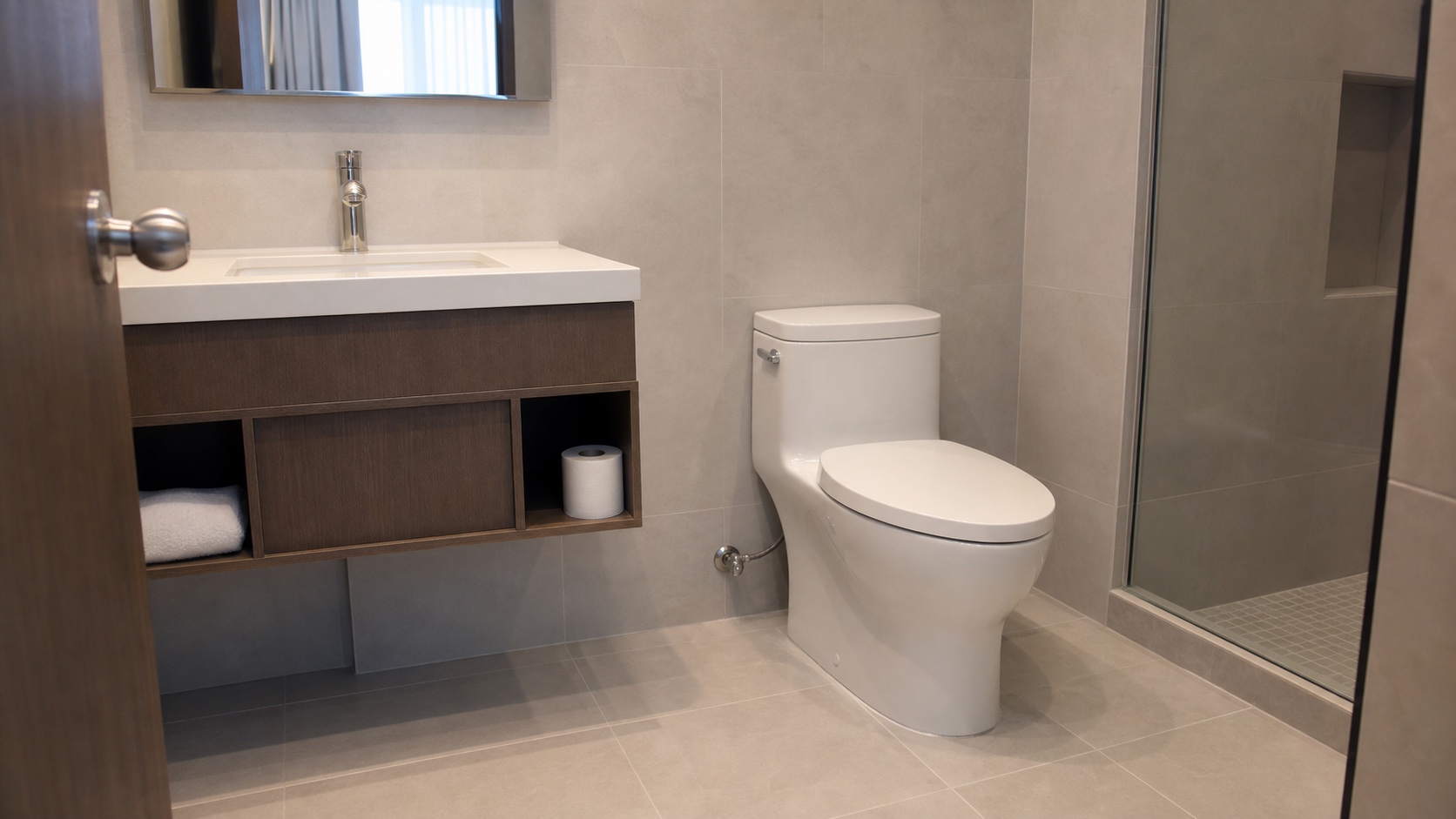
No reliable wholesale specification should mix them. A round-front seat on an elongated bowl leaves ceramic exposed at the front; an elongated seat on a round bowl can overhang. Even when the fixing holes can be adjusted, the front profile, hinge position and bumpers may not contact the ceramic correctly. That creates movement, uneven loading and complaints after installation.
Specify the seat as part of the toilet SKU: round or elongated profile, PP or UF material, standard or soft-close hinge, quick-release function, fixing centres, top-fix or bottom-fix hardware, colour match and spare-seat code. Approve the ceramic and seat together after repeated opening, closing and lateral-load checks. The carton label and parts list should make the matching seat obvious without relying on a worker recognising the bowl shape.
07 WHOLESALE ORDER
How does bowl shape affect wholesale price, packing and range planning?
Shape alone does not set the price. Ceramic weight, body construction, trapway, flush system, glaze, seat material, valves, mould ownership, certification and order volume usually matter more. However, an elongated body and seat can increase carton length or cubic volume, so buyers should compare packed dimensions and loading quantity rather than assuming both shapes ship identically.
For a mixed range, control model codes carefully. Keep round and elongated versions visually distinct in the purchase order, carton marks, barcode data and spare-parts list. Request a packing photo and trial carton for each SKU; never assume one foam set fits both. Confirm loading quantities using final cartons, as explained in our 40HQ sanitary ware loading guide. MOQ and lead time may also differ when the two shapes use separate ceramic moulds and seat tooling; see the MOQ and lead-time guide.
08 FINAL CHECK
Round vs elongated toilet checklist before placing an order
Put these details on every toilet SKU
1. Destination market and project type. 2. Round-front or elongated bowl. 3. Complete wall-to-front projection and ceramic width. 4. Seat-hole-to-front length and fixing centres. 5. Finished seat height with the approved seat. 6. One-piece, two-piece or wall-hung construction. 7. Outlet type and exact rough-in. 8. Flush system, volume and applicable test standard. 9. Matching seat, hinges, fixing kit and spare code. 10. Final carton dimensions, protection method and container quantity.
Before mass production, connect and inspect one signed sample with its final seat, valves, carton and labels. Check that the dimensional drawing matches the sample and that replacement seats from the approved batch fit without overhang or movement. Add bowl shape to the pre-shipment inspection sheet; our sanitary ware inspection guide covers the wider quality-control process.
Chengda manufactures ceramic toilets in Guangdong for distributors, importers, hotels and apartment projects. Send us the target market, room dimensions, outlet, rough-in, preferred bowl shape and order volume. We can match suitable existing models, prepare samples and quote a controlled OEM or ODM package with seats, fittings and export packing.
The better shape is the one that fits the room, the user and the market — and arrives with a seat and specification that match every unit in the order.
FAQ COMMON QUESTIONS
Frequently asked questions
Which is better, a round or elongated toilet?
Neither is universally better. Round-front toilets save projection in compact rooms, while elongated toilets provide more front support for many adult users and are common in many North American and project ranges. Compare the actual room, market, user group and approved dimensions.
How much longer is an elongated toilet than a round toilet?
Replacement seats are often referenced around 18.5 inches for elongated and 16.5 inches for round-front from the fixing holes to the front, but complete toilet projection varies by model. Use the factory drawing and physical sample rather than assuming a fixed two-inch difference.
Can an elongated toilet seat fit a round bowl?
It should not be specified that way. An elongated seat can overhang a round bowl, while a round seat leaves the front of an elongated bowl exposed. Match shape, fixing centres, hinge range and bumper contact to the approved ceramic.
Does an elongated bowl make a toilet ADA compliant?
No. Bowl shape alone does not establish ADA compliance. The installed toilet must meet applicable requirements for finished seat height, location, clearance, controls and other elements. Confirm the complete project condition and exact model documentation.
Which toilet shape is best for hotels and apartments?
Elongated models are often chosen for guestrooms and mainstream adult use, while round-front models can help in compact rooms. Projects should standardise as few seat shapes as practical and keep matching replacement seats for maintenance.
What dimensions should importers request from a toilet factory?
Request overall projection, width, height, finished seat height, rough-in, outlet position, seat-fixing centres, fixing-hole-to-front length, hinge adjustment, rear clearance and packed carton dimensions. Verify them against a physical signed sample.