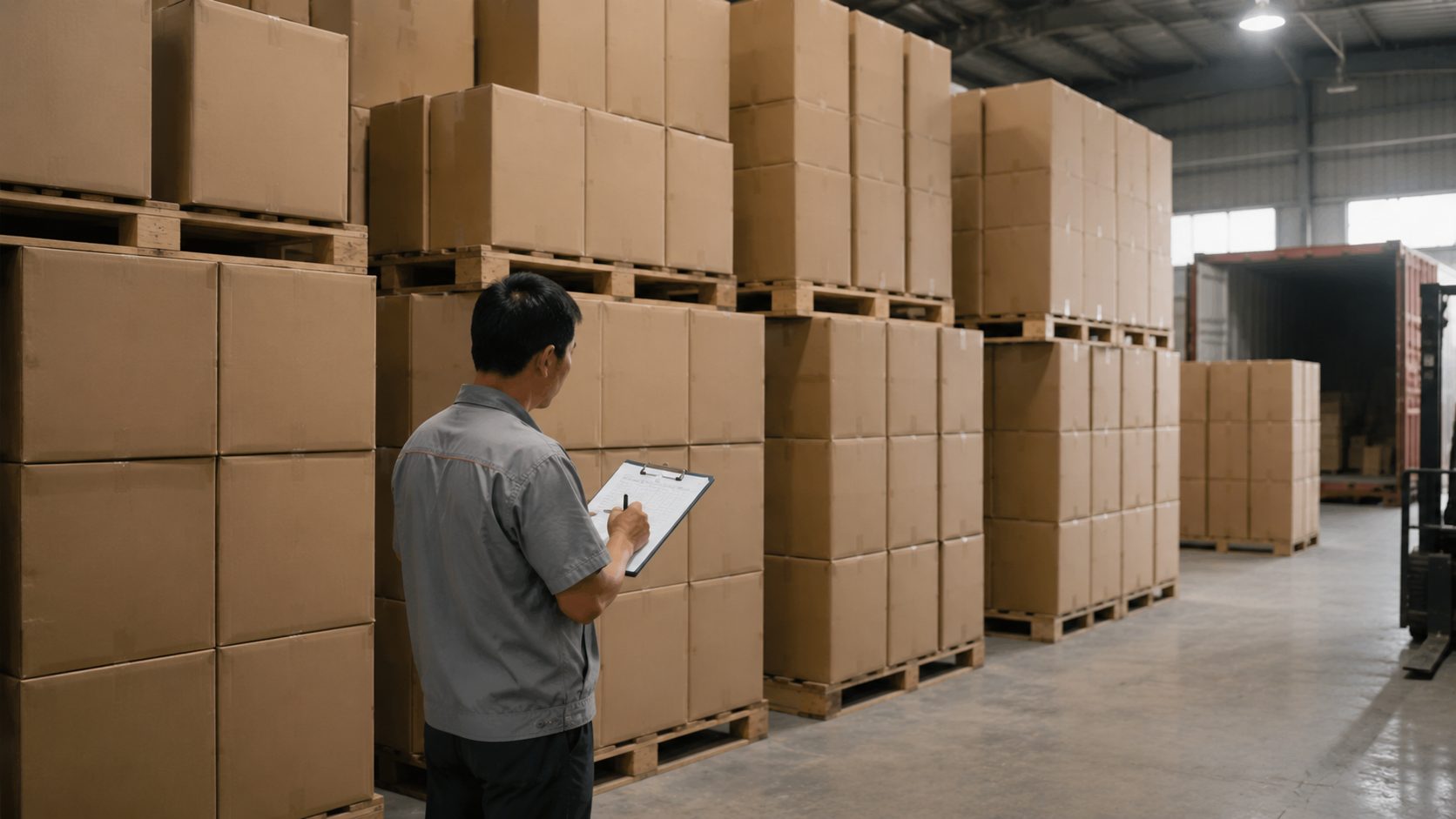
Ask a Chinese ceramic factory for “just fifty pieces” of a custom basin and you will usually get a polite no. It is not that we don’t want the order — it is a fact most buyers never see on the showroom side of the wall: one plaster mould casts roughly one body a day. That single, stubborn number sits underneath almost every question about sanitary ware MOQ and sanitary ware lead time. Understand it, and minimum order quantities stop looking like a sales tactic and start looking like what they are — physics and cost, priced honestly. This guide opens up the mechanism, gives you real number ranges instead of slogans, and shows you where the weeks in a delivery schedule actually go.
Key takeaways
- MOQ is not a sales tactic. It rests on three costs you can see — a kiln fired by the full car, a glaze batch mixed per colour, and a plaster mould that must be paid off over a run.
- Lead time is a chain, not a number. Scheduling, casting, drying, firing, QC, packing and shipping run in series, and the casting stage is throttled by one cast per mould per day.
- The season moves everything. Order across Chinese New Year or the Q4 peak and a routine 30-day job can stretch by weeks — so lock capacity early or order in the quiet months.
01 THE ENGINE
One cast, one mould, one day
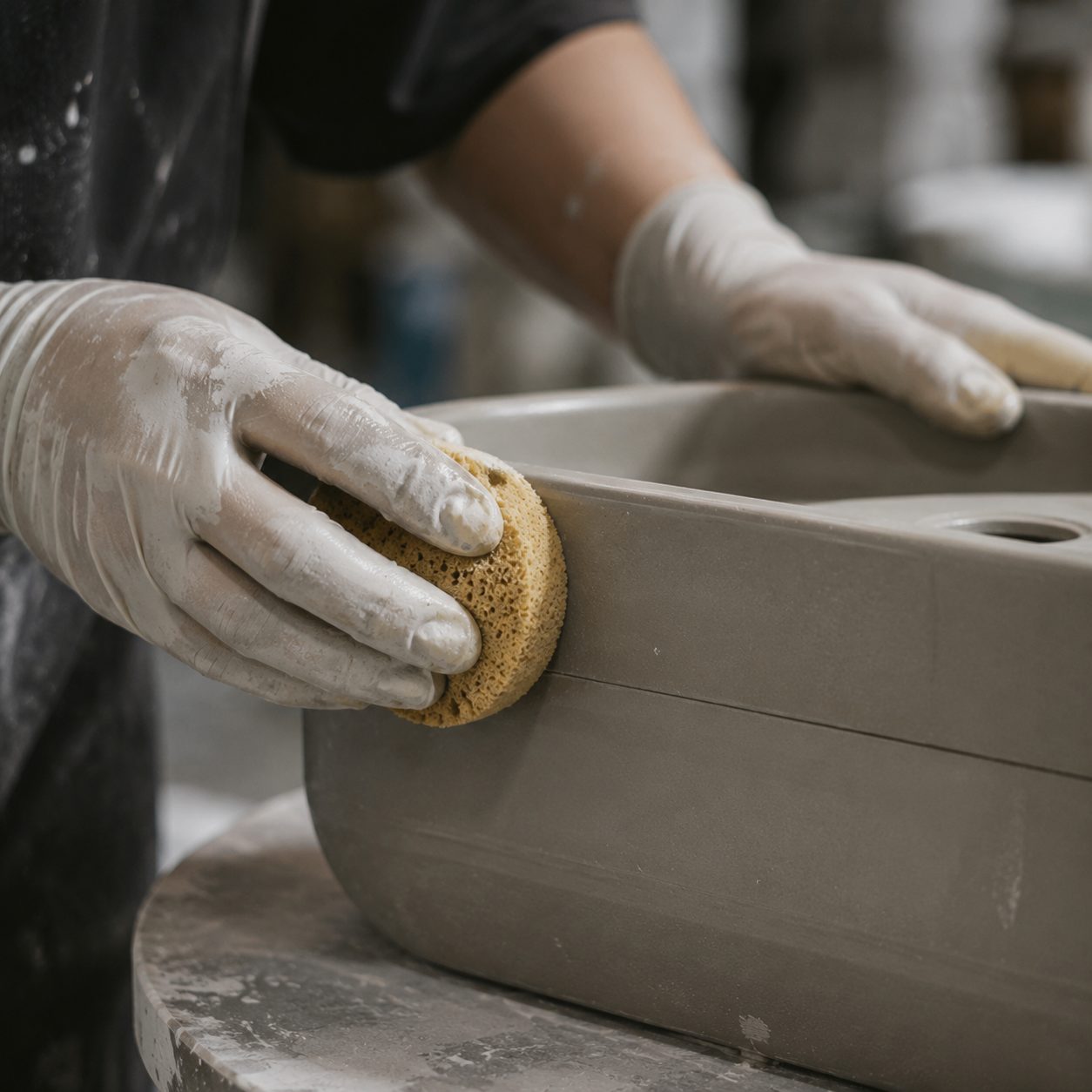
Most ceramic sanitary ware is made by slip casting: a liquid clay “slip” is poured into a plaster mould, and the porous plaster draws water out of the slip so a solid wall of clay builds up against the mould face. For a basin or a toilet that wall reaches a working thickness of roughly 9mm in about 45 to 90 minutes, at which point the excess slip is poured back out and a hollow green body is left behind. So far, so fast. The bottleneck comes next: that fragile body has to firm up and start drying inside or beside the mould before the plaster can be reused, and the plaster itself needs to give back the water it just absorbed. In practice this means most factories get one cast per mould per day — even a highly automated line with forced drying rarely manages more than two.
Sit with that number, because everything else follows from it. If a model needs to be produced at 200 pieces a day, the floor needs on the order of 200 plaster moulds of that model running at once. Mould count is the true ceiling on capacity — not the size of the building or the number of workers. That is why a factory cannot simply “rush fifty” of a custom item overnight, and why the same physical fact drives both halves of this article: it sets a floor under MOQ and it sets the pace of the lead-time clock. Everything downstream — glaze, firing, packing — is scheduled around how fast bodies come off the moulds.
02 THE THREE PILLARS
Why the minimum order quantity exists
Once you see the mould, the rest of the MOQ makes sense. It rests on three costs that do not shrink just because your order is small.
1. The kiln is fired by the car, not by the piece. A tunnel or shuttle kiln fires a whole kiln car of ware in one continuous cycle — a first firing commonly runs 16 to 22 hours, and some bodies need a second firing of a further 16 to 24 hours. That cycle costs the same gas and the same hours whether the car is full or carrying a handful of pieces. Fire a near-empty car and the per-unit cost is brutal, which is why we need enough of one model to fill kiln space economically. Firing at the right temperature is not optional either — it is what makes the body vitreous and durable, as we explain in why we fire at 1250°C.
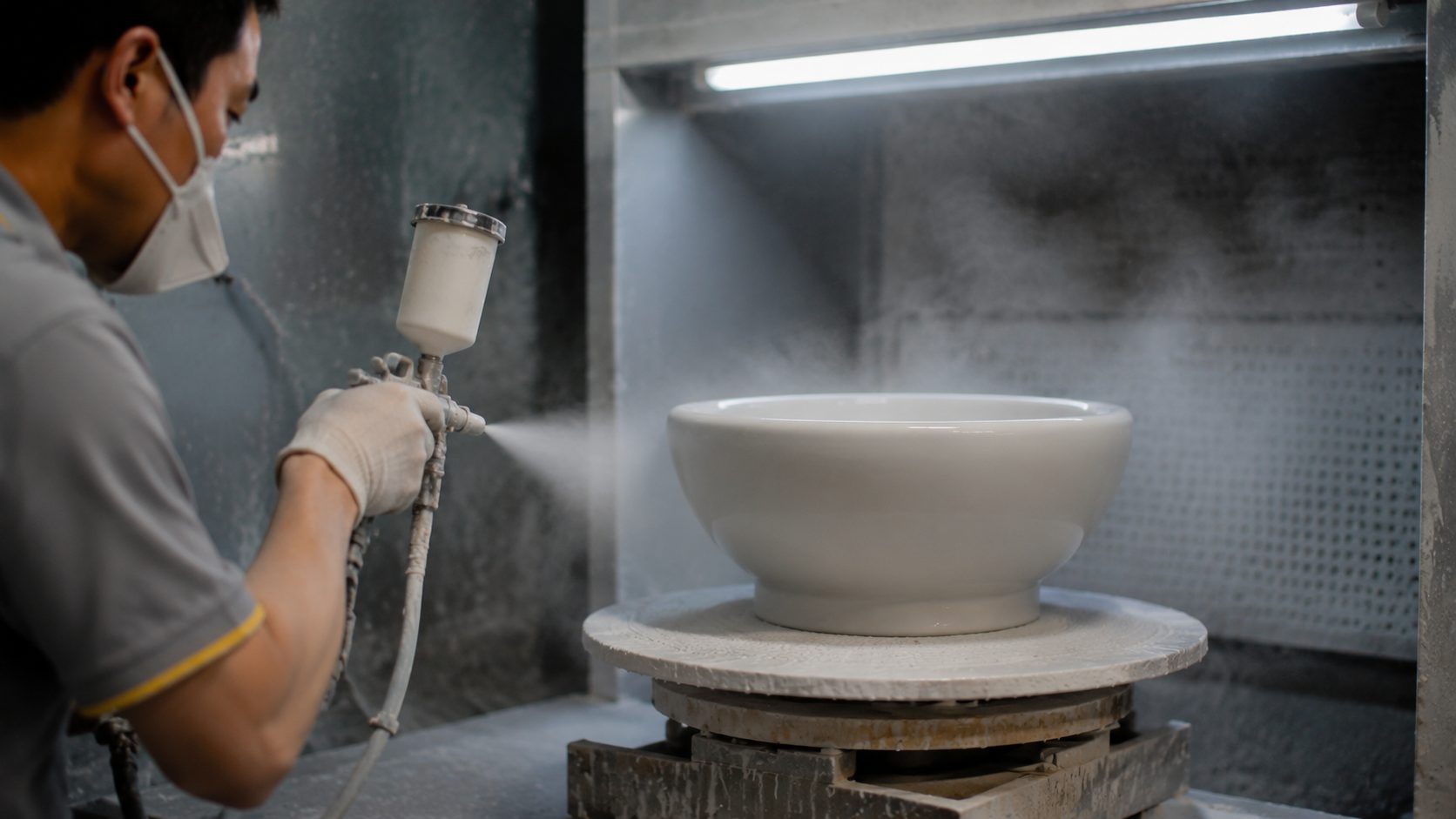
2. Every colour is its own glaze batch. Each colour is a separately mixed batch of glaze slip, and switching colours on the spray line means stopping, cleaning down and setting up again. The more colours and the smaller each colour run, the more of that changeover cost each piece has to carry. This is why MOQ is quoted per model and per colour, not as one lump total — five colours of one basin is five small runs, not one big one. The chemistry behind those colours is its own subject, covered in the raw material behind the glaze.
3. A plaster mould is a consumable. A working plaster mould lasts only one campaign — very roughly 80 casts for domestic plaster and up to about 120 for imported — before water slowly dissolves the detail, edges soften, and the mould has to be replaced to hold dimensions. Tooling therefore has to be paid off across a run of parts. On a catalogue model that cost is already amortised; on a new design it is a fresh investment that needs volume behind it.
03 THE BANDS
Three MOQ bands, and how to fill a container
“What’s your MOQ?” has no single answer, because it depends which of three situations you are in. The ranges below are typical rather than fixed, and every real number moves with size, colour, packing and how busy the floor is.
Where your order sits changes the minimum
| Situation | Typical MOQ (per model, per colour) | Why |
|---|---|---|
| In-stock standard line | Very low — a few to a few dozen | Already cast, glazed and fired; you are drawing down inventory or filling out a container |
| OEM on an existing mould | Around 100–500 | Tooling exists and is amortised; you pay for a production run, not for the mould |
| OEM custom / new mould | Around 500–1,000+ | A fresh mould set has to be paid off, so volume has to justify the tooling |
The practical trick is that the container is the real order-level minimum. Even when a single model sits below a full load, you can combine several models — a few hundred of one basin, a few hundred of another, some toilets — to make up one 40HQ. That keeps each model at a sensible run while still filling the box, and it is usually how first orders and trial orders get done. How many pieces actually fit, and how to mix them without wasting cubic metres, is its own exercise — we walk through it in loading a 40HQ container of sanitary ware, and the wider price-versus-volume picture sits in our wholesale ceramic wash basins guide. One rule holds throughout: confirm MOQ against the specific item, colour and packing — never against a platform sticker price.
04 THE CLOCK
The real lead-time timeline
Lead time is where buyers get surprised, because they picture a single production step and we are actually running a chain. From raw body to finished, packed goods a single model takes on the order of 15 to 25 days depending on size and where it slots into the kiln schedule — and that is before the sea voyage. Here is where the time really goes, stage by stage.
Where the weeks go, from slip to sailing
| Stage | Typical time | What moves it |
|---|---|---|
| 1. Scheduling — queue for kiln slot and moulds | Days to weeks | The least predictable part; worst in peak season |
| 2. Body & glaze prep | 1–2 days | Colour count; whether the slip and glaze are standard |
| 3. Casting & demoulding | Throttled by one cast/mould/day; body then sits 24–48h, sometimes up to ~4 days | Number of moulds; drying speed; ambient humidity |
| 4. Fettling, glaze spray & drying | 1–3 days | Handwork per piece; number of colours |
| 5. Firing | 16–22h first firing (+16–24h if second-fired) | Whole kiln cycle; cannot be compressed |
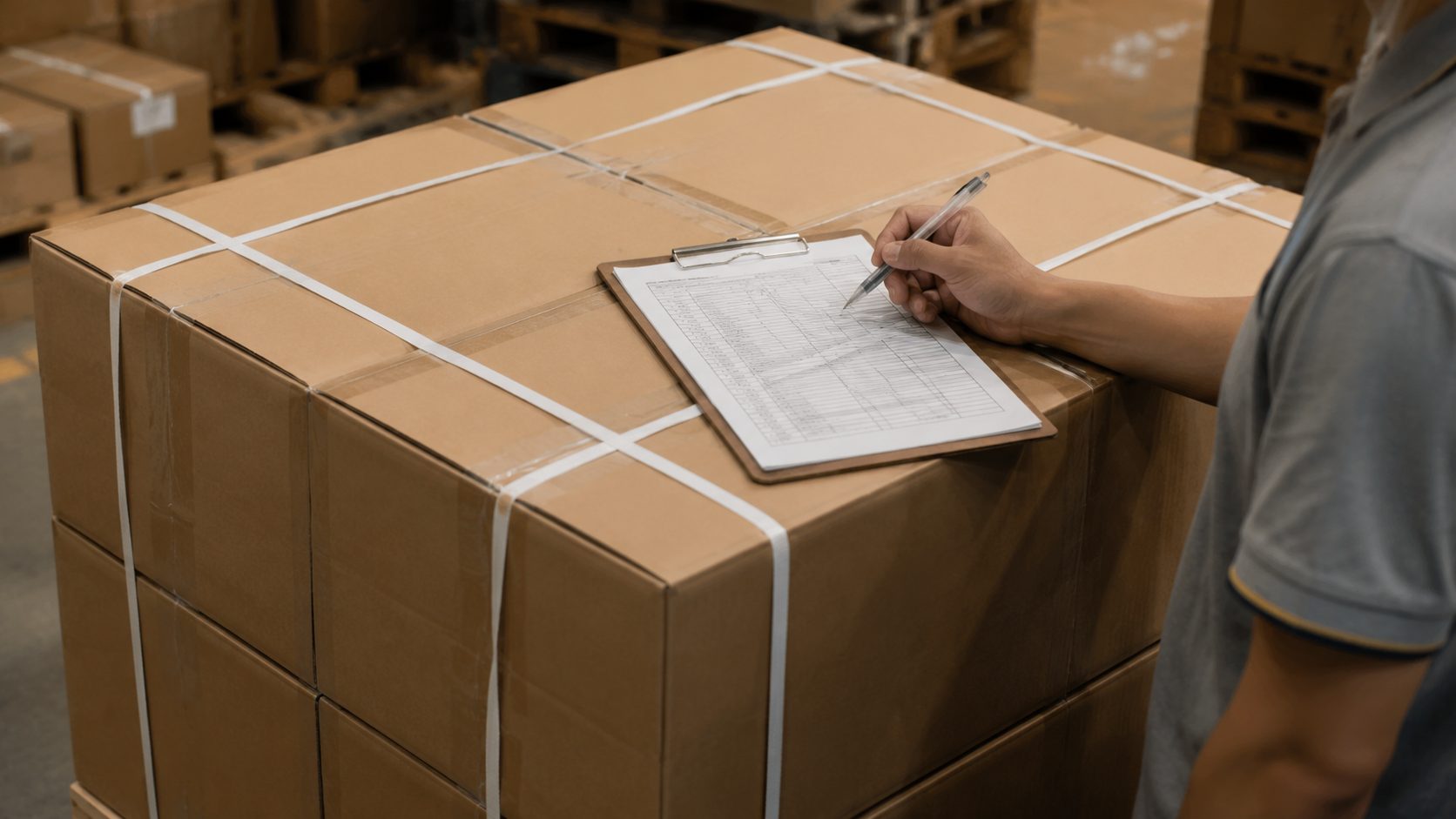
| 6. QC / inspection | 1–3 days | Third-party pre-shipment check can be booked here |
| 7. Packing | 1–3 days | Individual cartons, foam corners; rim and inner corners most fragile |
| 8. Booking, loading & ocean freight | Variable by destination port | Space availability; port congestion; distance |
Add it up three ways and the headline numbers most factories quote start to make sense. In stock ships more or less immediately. A standard catalogue model runs about 15 days to produce. A new-mould OEM product is more like 45 days once you include cutting the tooling and approving a sample — and only then does volume production start. None of those figures is padding; each is the sum of the chain above. Note too that stage 6 is your leverage point: a pre-shipment inspection tied to the balance payment is the cleanest way to hold quality, which we cover in inspecting sanitaryware before shipment.
05 THE CALENDAR
Peak, off-peak and Chinese New Year
The same order placed in March and in December is not the same order. The single biggest disruption on the Chinese manufacturing calendar is Chinese New Year. The official holiday is only 7 to 9 days — in 2026 the eve falls around 17 February — but the real disturbance runs 6 to 8 weeks: lines wind down for roughly three weeks beforehand as migrant workers travel home, and it takes about three weeks afterwards to get back to full output as they return. If you need goods on the water before the holiday, and especially for long ocean transits, plan to place and confirm the order 10 to 12 weeks ahead to lock your production slot.
The MOQ tells you the smallest order a factory will run. The calendar tells you whether it will run on time. Miss the second and the first stops mattering.
The back half of the year has its own squeeze. The run-up to Christmas pulls a wave of orders forward into the third and fourth quarters, factory capacity tightens, ocean freight rates climb and everyone competes for the same container space — so a lead time that is comfortable in spring stretches in autumn. The practical read: if your schedule is flexible, order in the quieter months for the fastest turnaround; if it is not, get in early and lock your slot with a deposit before the queue forms.
06 NEW TOOLING
The timeline for a brand-new model
A product that does not exist yet runs on a longer clock, because the mould has to be created before anything can be cast. The path is: design freeze → cut the master mould → first sample → sample approval → production mould set → pre-production sample (PPS) → mass production. The tooling-and-sample stage alone is on the order of 45 days — a range, not a promise, and driven by how complex the shape is. A smart toilet stretches it further, because the electronics, the seat and the flushing system add their own development and certification time on top of the ceramic.
One step in that chain is worth insisting on: the pre-production sample is the only sample made on your actual mass-production tooling, so it is the one that tells you what the container will really look like — an early hand-made sample can flatter a design the production mould won’t reproduce. This is also where new tooling most often loses time, because drying and firing shrink the body by a meaningful percentage, and if the shrinkage pushes a critical dimension out of tolerance the mould has to be corrected and re-sampled. Building that revision loop into the schedule is the difference between a 45-day tooling stage and a 75-day one. The full new-product workflow, and how we share it with buyers, is set out in our guide to OEM and ODM bathroom products.
07 RISK & SPEED
What blows up a lead time — and how to order faster
Most late shipments are not caused by a slow factory. They are caused by decisions that arrived late, or by a schedule that ignored the calendar. The usual culprits:
Repeated sample revisions and late colour sign-off; certification and packaging decided at the last minute; an order placed straight across Chinese New Year or the Q4 peak; mould rework when firing shrinkage pushes a dimension out of tolerance; a long tail of low-volume, odd-colour SKUs that keeps forcing spray-line changeovers; a failed inspection that sends a batch back for rework; and booking or port congestion at the very end. Any one of these can add a week; two or three together can double a lead time.
Freeze everything once, up front
The single fastest thing a buyer can do is stop the specification moving. Lock the model, the colours, the packing and the shipping marks in one go; favour in-stock or existing-mould catalogue items where you can; consolidate odd colours into your main colour to cut changeovers; give yourself enough runway to clear Chinese New Year; and ask for cut sheets and a loading plan at the quotation stage, not after. Then pay the deposit to hold your slot — an unconfirmed order does not hold a place in the kiln queue.
08 TERMS
Deposit, balance and the order checklist
Payment terms in this trade are more standard than first-time buyers expect. The normal structure is T/T 30% deposit with the 70% balance paid before shipment (or against a copy of the bill of lading before the original is released). That is a routine quotation, not a warning sign — the deposit books your production slot and buys the materials; the balance falls due once the goods are made and ready. Where a new mould is involved, the tooling fee is usually listed separately, commonly prepaid and then amortised or partly refunded once an agreed volume is reached, so it is not simply a sunk cost if you go on to order in quantity.
The one protection worth writing into every order: tie your 70% balance to a pre-shipment inspection. Have the goods checked to an agreed AQL before you release the final payment, and if they fail, they do not ship until they are put right. That single clause turns the payment schedule from a leap of faith into a controlled step, and it is the natural companion to the QC stage in the timeline above.
Confirm before the deposit
Model and colour, and therefore MOQ per model per colour; whether it is in stock, on an existing mould, or a new mould; the tooling fee and how it is amortised; a realistic lead time against your actual mix, not a slogan; where it falls relative to Chinese New Year and the Q4 peak; the packing spec — individual cartons, foam corners, master carton; the loading plan and how many fill your container; payment terms and the inspection tied to the balance; and the load port and destination for a real transit estimate.
We are a Chaozhou-based ceramic sanitary ware factory — not a trading company — producing basins, toilets, smart toilets, urinals and bathroom cabinets, with OEM and ODM adaptation for buyers worldwide. Because we cast, glaze and fire in-house, we can give you a lead time against your real order rather than a generic number, and tell you honestly whether a date clears Chinese New Year or not. Send us the model, the quantity, the colours and your target arrival, and we will come back with the MOQ, a stage-by-stage schedule and a quotation. WhatsApp +1 213 216 0960.
MOQ and lead time are not obstacles a factory invents; they are the honest shape of how ceramic is actually made — one cast a mould a day, one kiln car at a time. Plan around the mould and the calendar, freeze your specification early, and tie the balance to an inspection, and the order that looked slow on paper becomes the one that arrives on time.
FAQ COMMON QUESTIONS
Frequently asked questions
What is the MOQ for ceramic sanitary ware?
There is no single figure — it depends on the situation. In-stock standard lines can go very low, a few to a few dozen pieces, because they are simply drawn from inventory. An OEM item on an existing mould is commonly around 100–500 pieces per model per colour, since the tooling is already paid off. A custom design that needs a new mould is usually around 500–1,000 or more per model, so the tooling cost can be amortised. MOQ is always counted per model and per colour, not as one total, and a mixed 40HQ container lets you combine several models to reach a workable order. Always confirm against the specific item rather than a platform sticker price.
Why do factories set a minimum order quantity?
Three costs drive it. First, a tunnel or shuttle kiln is fired by the full kiln car in a 16–22 hour cycle (plus 16–24 hours if a second firing is needed), so a few pieces still burn a whole cycle. Second, every colour is a separate glaze batch with a spray-line changeover, so small colour runs carry heavy setup cost. Third, a plaster mould lasts only about 80–120 casts before it wears out, so tooling has to be spread across a run. Underneath all three is a physical fact: one plaster mould casts about one body a day, so mould count sets the ceiling on output.
How long does it take from order to shipment?
For production alone, an in-stock item ships almost immediately, a standard catalogue model takes around 15 days, and a new-mould OEM product is nearer 45 days once tooling and sample approval are included — all before ocean freight. The production chain runs scheduling, body and glaze prep, casting and demoulding (throttled to about one cast per mould per day), fettling and glaze spray, firing (a 16–22 hour cycle), QC, packing and then booking and loading. Sea transit is added on top and varies by destination port.
Can I mix several models to reach the MOQ?
Yes, and it is the normal way to handle first and trial orders. A full container is the real order-level minimum, so you can combine several models — some of one basin, some of another, a batch of toilets — to fill a 40HQ while keeping each model at a sensible production run. How many pieces fit and how to mix them without wasting space is covered in our guide to loading a 40HQ container of sanitary ware.
What should I watch out for when ordering before Chinese New Year or in peak season?
Chinese New Year has an official holiday of only 7–9 days, but the real disruption runs 6–8 weeks, because lines wind down for about three weeks before as workers travel home and take about three weeks after to reach full output again. To ship before the holiday, place and confirm the order 10–12 weeks ahead to lock your slot. The Q4 run-up to Christmas is the other squeeze: capacity tightens, freight rates rise and container space competes, so lead times stretch. If your schedule allows, order in the quieter months.
How does payment work, and how is the mould fee handled?
The standard structure is T/T with a 30% deposit and the 70% balance paid before shipment, or against a copy of the bill of lading before the original is released. This is routine, not a warning sign — the deposit books your slot and buys materials, and the balance falls due when the goods are ready. A new-mould tooling fee is usually listed separately, commonly prepaid and then amortised or partly refunded once an agreed volume is reached. Tie the 70% balance to a pre-shipment inspection to an agreed AQL so quality is confirmed before you release final payment.