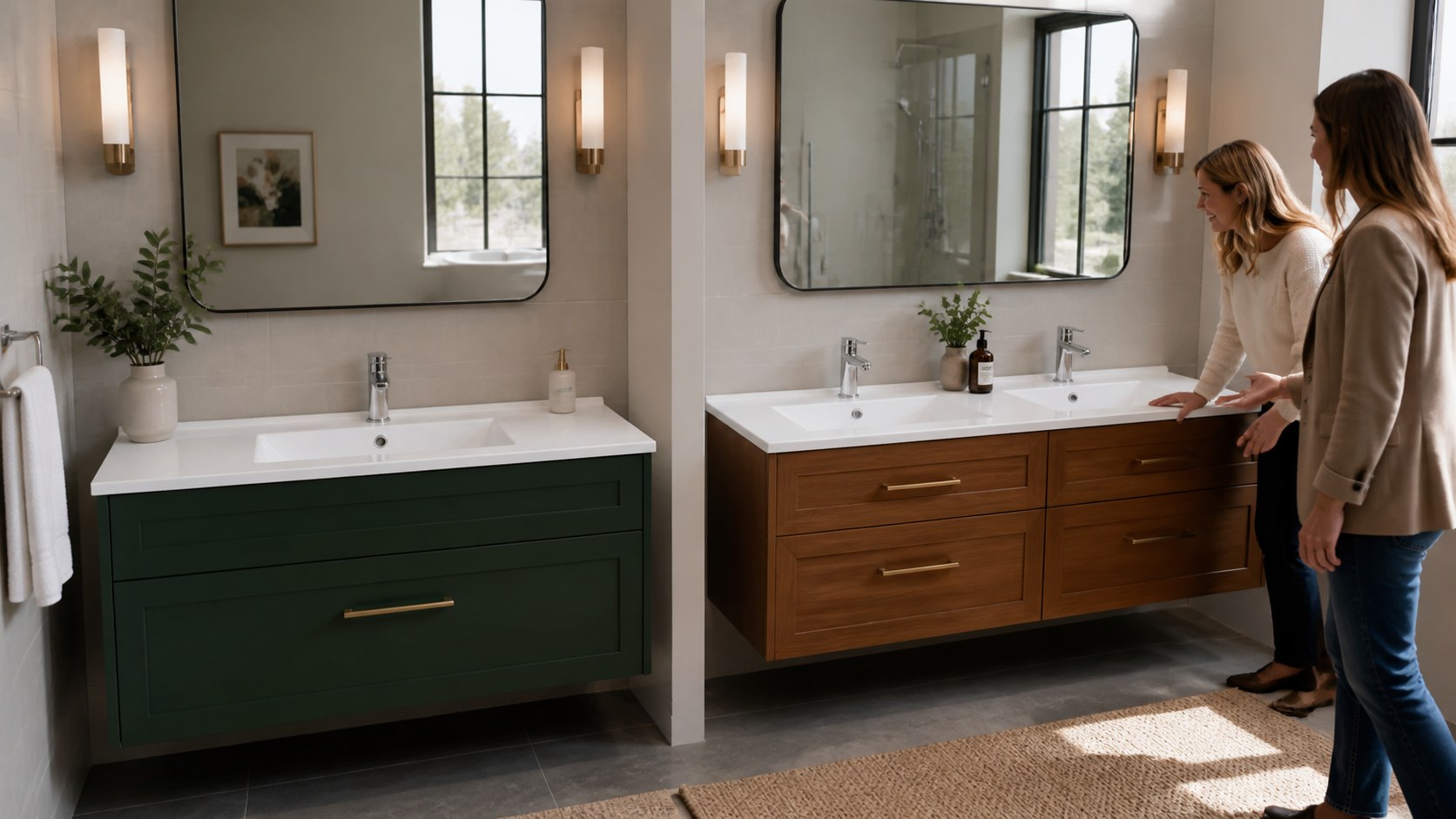
A single vs double sink vanity decision affects far more than bowl count. It changes simultaneous use, dry counter space, cabinet drawers, faucet and waste quantities, cleaning and long-term maintenance. This guide compares Chengda VB118, VB119 and VB120 so hotel, apartment and furniture buyers can choose from the real routine and approve the complete vanity before production.
Key takeaways
- Study the routine: add a second bowl only when users repeatedly need running water at the same time.
- Protect the cabinet: every bowl creates a wet service zone that must clear support, drawers and future maintenance.
- Approve the assembly: test ceramic, cabinet, faucets, wastes, mirrors and room clearance together.
01 THE REAL DECISION
Is a single or double sink vanity better?
A double vanity is better when two people regularly need running water at the same time and the room can support two comfortable standing positions. A single vanity is often better when use is sequential, when dry counter space matters more, or when storage and simple servicing are priorities. Bowl count should follow the routine, not room prestige.
Start with a short occupancy study. Who uses the bathroom, at what times, and which tasks actually require a bowl? Tooth brushing and face washing may overlap; hair styling, skin care and packing a toiletry bag usually need mirror, light, sockets and dry deck rather than a second drain. In many guestrooms and apartments, one generous bowl plus usable counter can serve the real routine more efficiently than two crowded bowls.
Then test the complete room. Door and shower swings, front circulation, side walls, mirror zones, lighting, cabinet drawers and service routes all affect the answer. A wide wall does not automatically make a two-bowl vanity practical. Approve one full-size layout before fixing the ceramic, cabinet and plumbing specification.
02 PRODUCT OPTIONS
How do Chengda VB118, VB119 and VB120 compare?
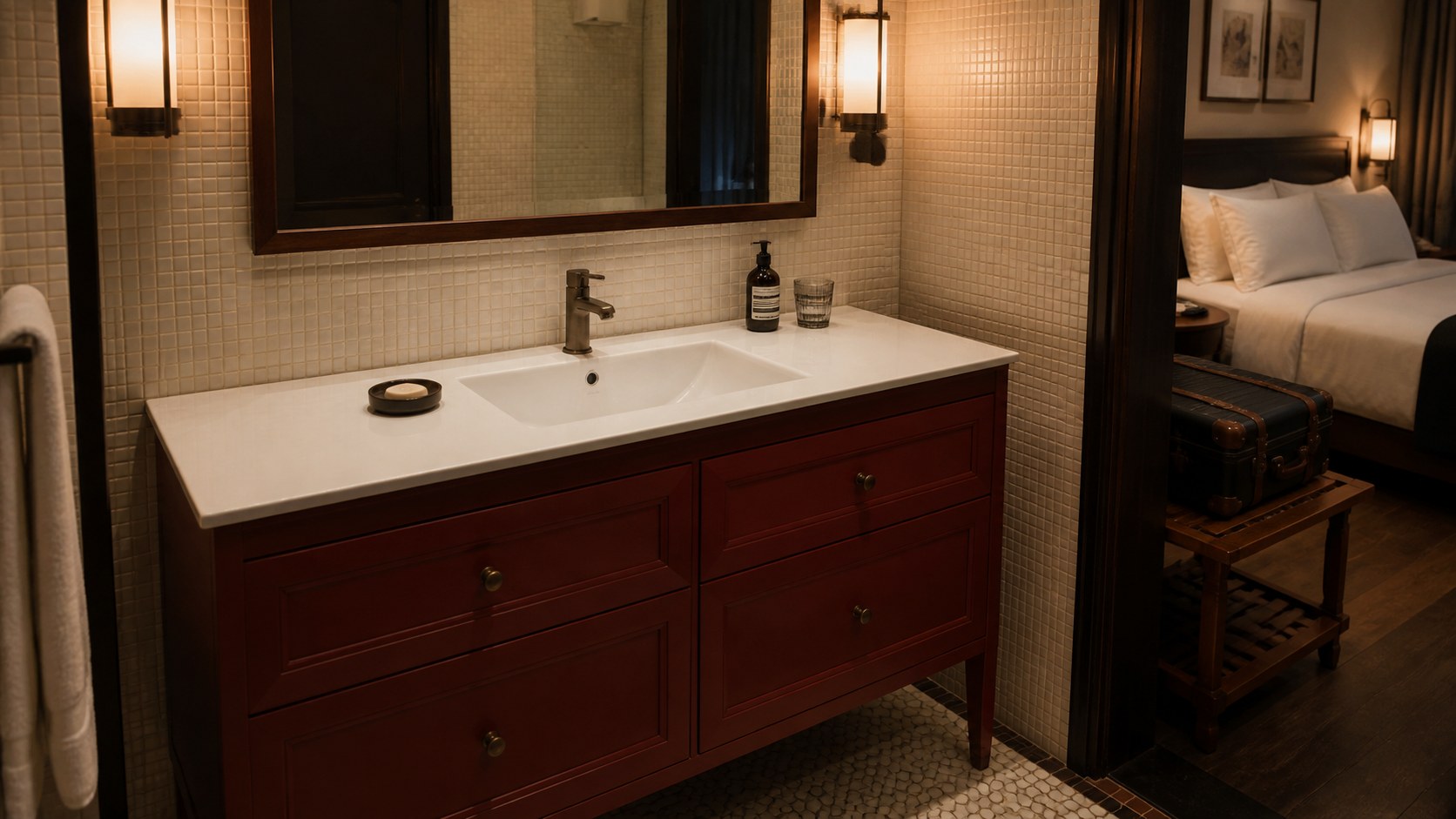
VB118 is a 1210 x 465 x 170 mm one-piece gloss-white ceramic vanity top with one centred rectangular bowl. It has one ceramic faucet hole behind the bowl, one overflow and one 45 mm drain. Its width can suit a substantial vanity while retaining the simplicity of a single washing station. The finished ceramic top sits directly and evenly on a matching cabinet; it is not a vessel basin on a separate stone slab.
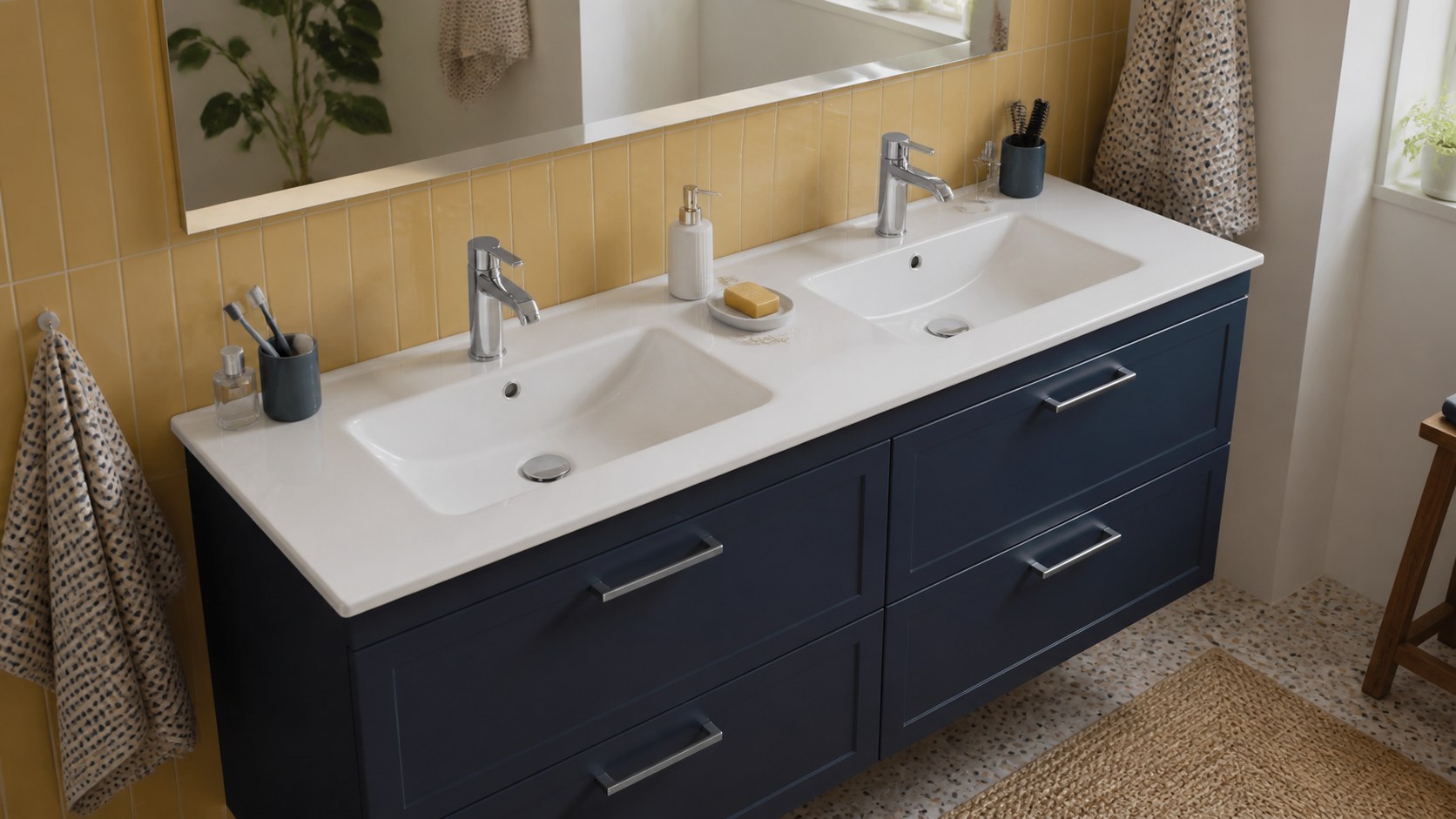
VB119 measures 1220 x 470 x 170 mm and provides two separate rectangular bowls. Each bowl has its own faucet hole, overflow and 45 mm drain, so the completed assembly requires exactly two faucets and two waste routes. Its overall width is close to VB118, but the second bowl changes the counter, cabinet, mirror and plumbing plan far more than the extra 10 mm of nominal width.
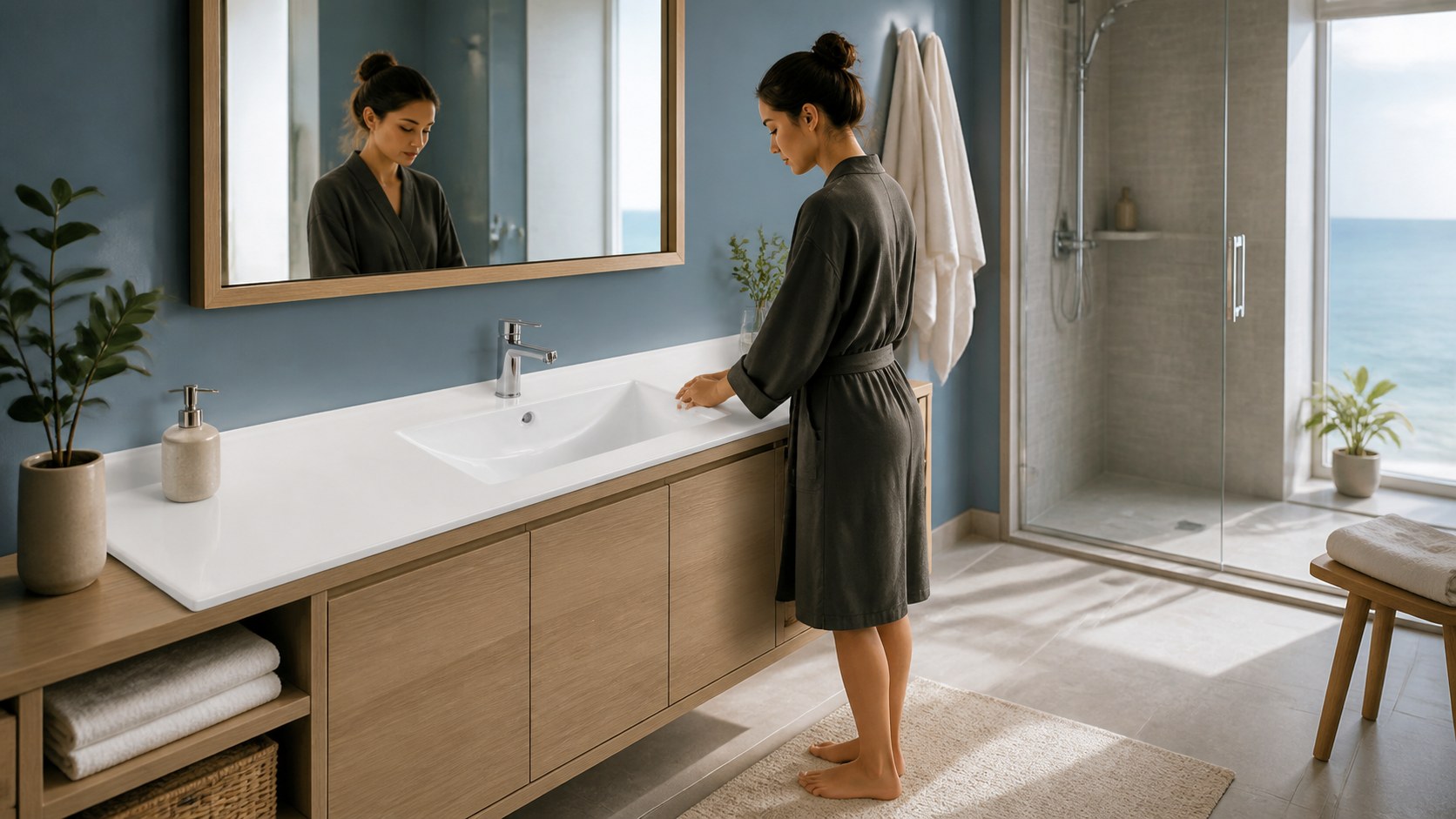
VB120 measures 1510 x 465 x 170 mm and returns to one centred bowl, with long ceramic decks on both sides. It suits projects that have a long wall and value shared grooming space, clear landing areas or fuller side storage without maintaining two wet stations. Compare these three signed products by bowl count, usable deck and cabinet service zones rather than by width alone.
03 USER ROUTINE
When does a second basin improve simultaneous use?
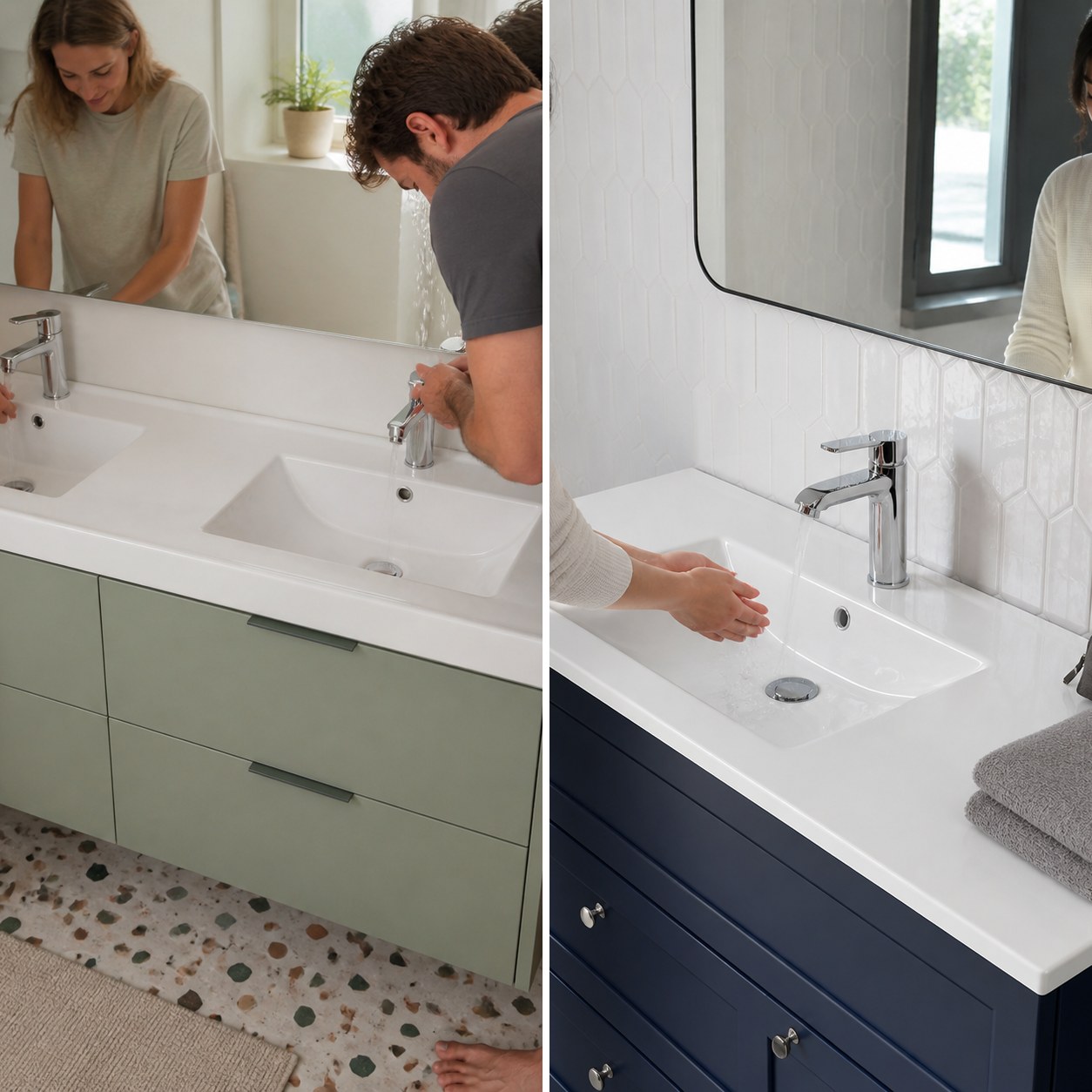
Two bowls create real value when users repeatedly wash, brush or shave at the same time. Both people need a natural standing position, their own faucet reach and enough shoulder room to move without crossing arms. The mirror and task lighting must serve both positions, and frequently used accessories should not force one user into the other's wet zone. A lifestyle photograph cannot prove those relationships; a full-size mock-up can.
If most overlapping tasks are dry, the second bowl may not solve the bottleneck. One person can wash at VB118 or VB120 while another uses the ceramic deck for grooming, provided the mirror, lighting and electrical layout support that routine. This arrangement can also leave a clearer place for a child's step stool, a hotel toiletry case or housekeeping items without placing them between two faucets.
Observe the busiest fifteen minutes of the intended routine, then reproduce it at the mock-up. Check approach, elbows, water splash, towel reach, open drawers and the ability to pass behind a user. For hotel or apartment programmes, test each materially different room type instead of assuming that one large sample represents every plan.
04 COUNTER & STORAGE
How does bowl count change counter space and cabinet storage?
Every bowl consumes ceramic deck and creates an underside volume that the cabinet must respect. VB119's two bowls reduce uninterrupted dry surface and establish two drain zones. That can be the right trade for two simultaneous users, but it leaves fewer broad areas for grooming tools, guest belongings or a continuous worktop. Keep soap and wet accessories close to each bowl while preserving a wipeable dry zone.
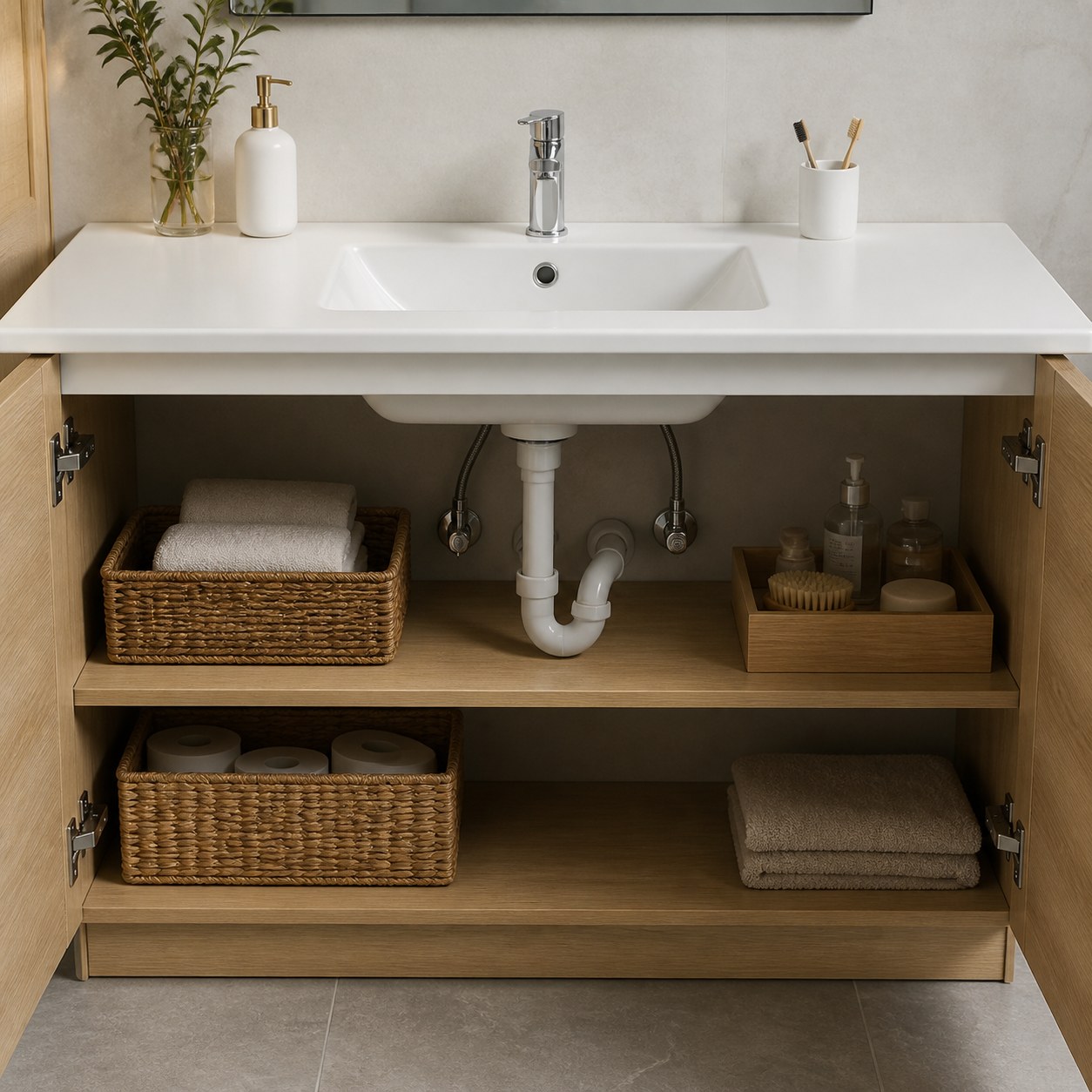
Below the top, two bowls usually interrupt more of the upper cabinet. Each waste body, tailpiece, trap, faucet shank, hose and shut-off needs installation and service space. Drawers can use engineered cut-outs, but no pipe should cross a drawer path. VB118 and VB120 concentrate the wet services near the centre, which can allow fuller drawer stacks or shelves to either side when the furniture is designed from the real ceramic underside.
Do not select storage from a front elevation. Overlay the bowl profile and every fitting on the cabinet drawing, then dry-fit the complete assembly. Open every door and drawer, tighten the faucet and waste, and confirm that a technician can reach valves and traps later. The cabinet must support the long ceramic top evenly at the approved points without twisting it against an uneven wall.
05 FAUCETS & DRAINAGE
What plumbing changes with a double sink vanity?
Bowl count sets the minimum fixture count. VB118 and VB120 each require one compatible single-hole faucet, one overflow-compatible waste and one trap route. VB119 requires two of each wet station: two faucets, two wastes and two independently coordinated drain paths. The branches may later connect according to the project's approved plumbing design, but the ceramic should never be shown or ordered with one shared faucet between two bowls.
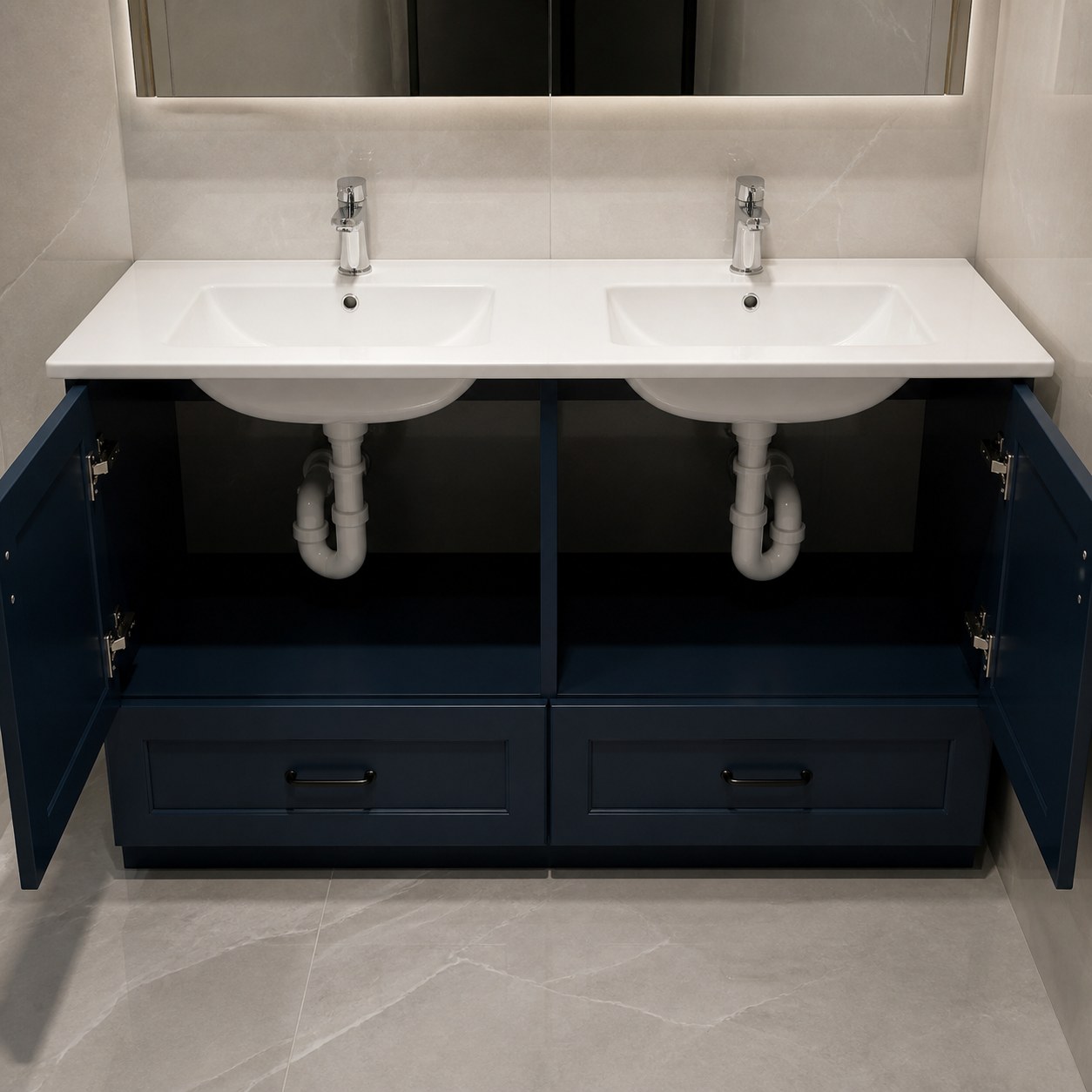
Check faucet base, shank access, spout reach, handle movement and stream landing on every bowl. Water should arrive near the intended washing zone without striking the near wall and causing avoidable splash. Because these tops include overflows, the selected waste must allow the overflow path to discharge. Confirm the 45 mm ceramic opening, waste body, seals and destination-market connection as one assembly.
A two-bowl water test should run both stations, first separately and then together at the project's expected pressure. Observe flow, drainage, residual water, overflow operation and leakage while opening the cabinet for inspection. Record the approved faucet, waste and trap codes with the signed sample so a later substitution cannot quietly change clearance or performance.
06 PROJECT FIT
Which projects benefit from single or double basins?
A family bathroom may justify VB119 when two people share the same morning deadline. A principal ensuite can also benefit when both users genuinely need water together. In a boutique hotel room, VB118 often keeps operation simple while leaving useful deck and luggage clearance. VB120 can serve a long serviced-apartment vanity where one wet station and generous shared grooming space fit the occupancy better than two bowls.
Commercial and hospitality decisions should include maintenance. A second bowl doubles several components that housekeeping or engineering staff must clean, inspect and eventually replace. It may also keep a bathroom usable when one station is temporarily unavailable, but that benefit should be weighed against additional faucets, wastes, traps, sealant zones and stock.
Do not infer an accessibility result from bowl count or width. Mounting height, knee and toe space, faucet controls, reach ranges, circulation and local requirements must be assessed for the destination. A project may need a dedicated compliant basin arrangement rather than simply converting a wide domestic vanity to one or two bowls.
07 QC & PACKING
How should long single and double vanity tops be inspected?
Inspect the production unit against the signed model and drawing. Verify overall length, depth and height; exact bowl count and centres; faucet-hole count; overflow and drain openings; rim line; base support areas; glaze coverage and visible surface quality. VB119 must have two complete, equal wet stations. VB118 and VB120 must not acquire a second hole or bowl through a catalogue or packing mix-up.
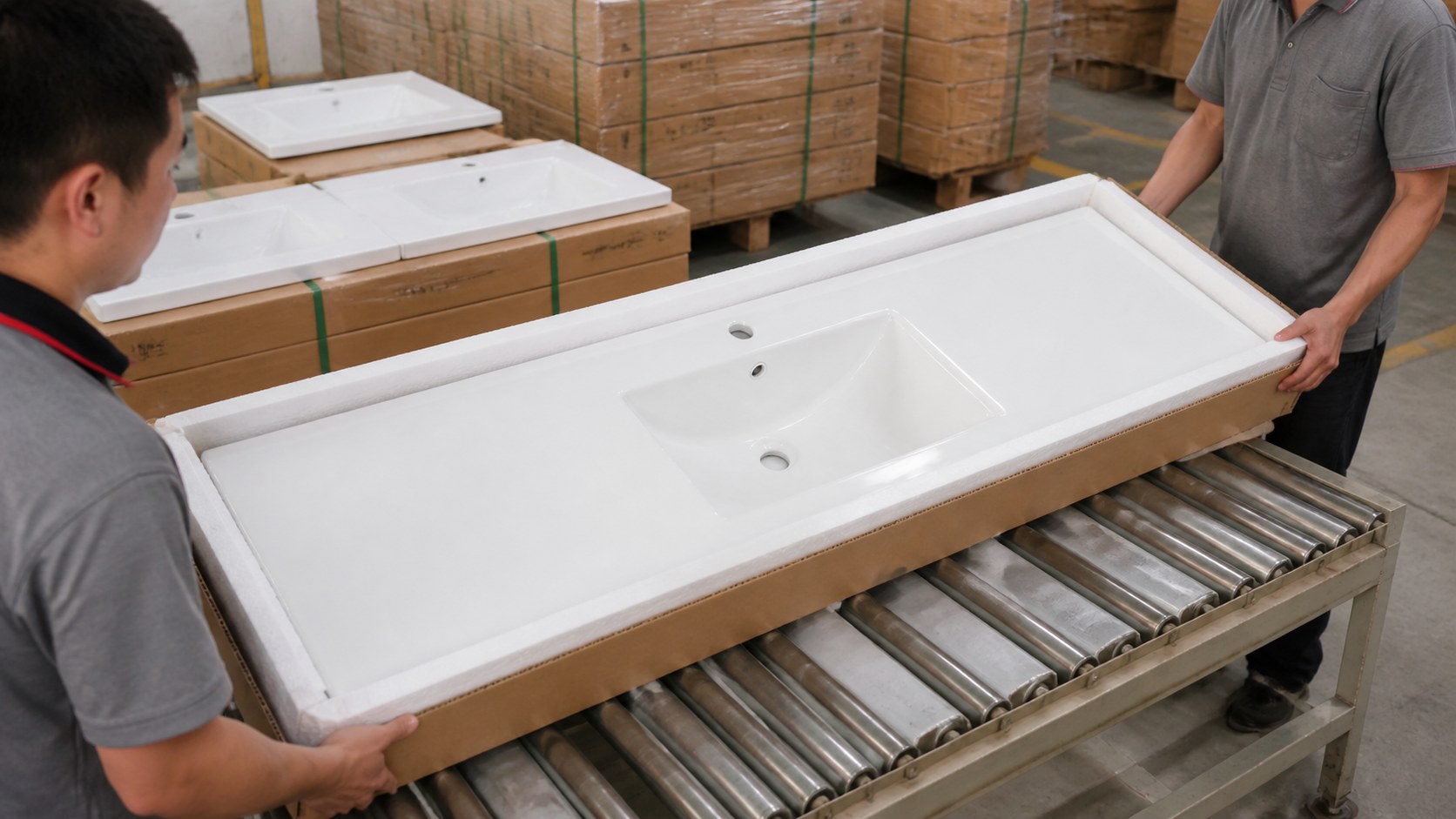
Use a padded, level bench that supports the full ceramic length. Never balance a 1210-1510 mm top on one end or a narrow edge while measuring. Dry-fit a sample to the approved cabinet, then run water through the final or technically identical faucets and wastes. Reopen doors and drawers after the test to check for leaks and service conflicts.
Packing must protect both ends, the front edge, bowl volumes and long dry decks. Use model-specific moulded protection, a reinforced carton and a validated pallet pattern. Keep loose fittings away from the glaze. Before loading, compare carton identification with bowl count and model, and randomly open packed units to verify the correct ceramic and protection method.
08 ORDER SPECIFICATION
What should a single or double vanity order include?
State the exact model and revision, finished ceramic dimensions, bowl and faucet count, cabinet size, support detail, mounting height, faucet codes, overflow-compatible wastes, trap routes, service positions, drawer clearances, wall allowance, mirror and lighting coordination, signed sample, inspection method, packing, pallet and spare quantity. Attach a room schedule that separates every materially different vanity type.
Before volume production, approve both the ceramic and the assembled vanity. Chengda can confirm the product geometry, openings and ceramic quality; the furniture maker must confirm support, fronts, drawers and moisture-resistant details; the project team must confirm circulation, services and destination requirements. The most useful approval is a working mock-up with the intended users and maintenance team, not an isolated top on a showroom stand.
Choose VB119 when two independent wet stations solve a demonstrated overlap. Choose VB118 when a substantial 1210 mm top needs one simple centre station, or VB120 when a 1510 mm run benefits from one bowl and long side decks. Send the room plan, occupancy, cabinet drawing, faucet and waste specification, destination and quantity so the quotation reflects the complete project rather than bowl count alone.
Prove the second bowl before you pay for it
Users; overlap; wet tasks; room width; front clearance; standing positions; mirrors; lighting; dry deck; cabinet support; drawers; faucet count; wastes; service access; full mock-up and maintenance review.
FAQ COMMON QUESTIONS
Frequently asked questions
Is a double sink vanity worth it?
It is worthwhile when two people regularly need water at the same time and the room provides two comfortable standing, mirror and service zones.
Does a double vanity need two drains?
Each bowl needs its own compatible waste and trap path. Downstream branches must follow the approved plumbing design for the destination.
Can a 1200 mm vanity have one sink?
Yes. Chengda VB118 is 1210 mm wide with one centred bowl, while VB119 is 1220 mm wide with two bowls. Routine and storage matter more than width alone.
What is the advantage of one bowl on a long vanity?
A single centre bowl can preserve broad dry deck, simplify maintenance and allow fuller side storage when the cabinet is designed around one wet service zone.
Which Chengda model has two bowls?
VB119 is the double-bowl model at 1220 x 470 x 170 mm. Each bowl has its own faucet hole, overflow and 45 mm drain.
What should be tested in a vanity mock-up?
Test standing positions, door and drawer movement, mirror and light, faucet reach, splash, drainage, leaks, service access and cleaning with the final room layout.