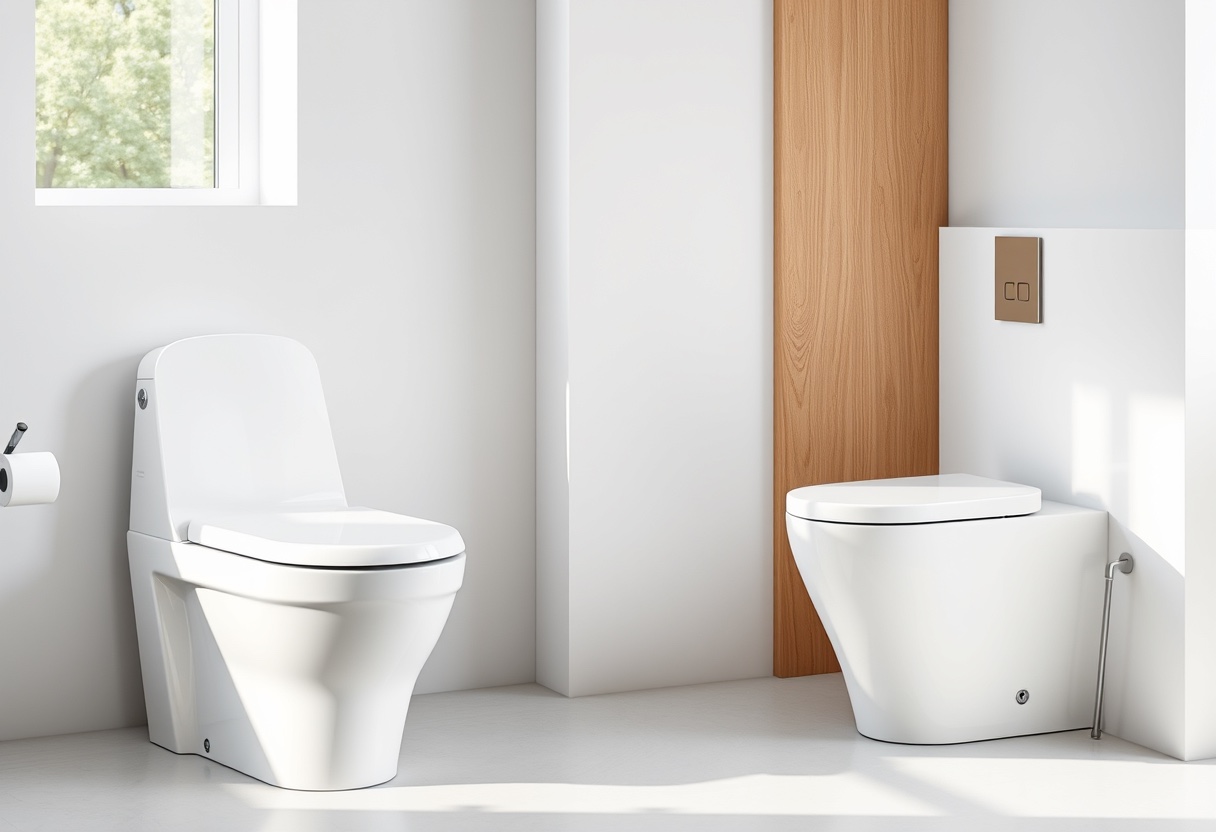
For importers, project buyers and retailers, the question of smart toilet vs regular toilet is not really about gadgets — it is about price tier, installation infrastructure, certification, and after-sales load. Both are ceramic fixtures at heart, but one carries electronics that change how you spec, ship, and support it. This guide breaks down the practical differences a B2B buyer needs to settle before placing a container order.
Key takeaways
- Power is the dividing line — a smart toilet needs a grounded, GFCI/RCD-protected outlet and the correct voltage for its destination; a regular toilet needs none.
- Certifications stack up — smart toilets add an electrical/EMC layer on top of the plumbing and flush standards every ceramic toilet must meet.
- Choose by channel — regular toilets win on volume and budget projects; smart toilets earn margin in hotels, accessibility and premium residential.
01 THE CORE DIFFERENCE
What actually separates the two categories
A regular ceramic toilet is a mechanical fixture. Pressing the handle releases tank water that clears the bowl by gravity (or a pressure-assisted variant). There are no electronics, no power supply, and almost nothing to fail in the field.
A smart toilet — also called an intelligent bidet toilet — keeps that ceramic body but adds an electronic seat module: warm-water washing, a warm-air dryer, a heated seat, deodorizing, automation such as auto-flush and auto lid open/close, plus a remote and side panel. The single biggest sourcing distinction is simple: a smart toilet requires electricity, and a regular toilet does not.
The ceramic still matters on both. A smart toilet is a vitreous-china fixture with electronics on top — glaze quality, vitrification and water absorption remain the durability fundamentals.
02 FEATURE CHECKLIST
What a smart toilet adds, as a spec sheet
Treat the feature gap as a checklist you can quote against, not a marketing list. Core smart functions include warm-water washing (rear and feminine, often with adjustable pressure, oscillating or pulsating modes and a movable nozzle), a multi-level heated seat, a warm-air dryer, a deodorizer, a night light, auto-flush by sensor, automatic lid open/close, and multi-user memory presets. Higher tiers add foot-sensor opening, UV or self-cleaning nozzles, and app/Wi-Fi control.
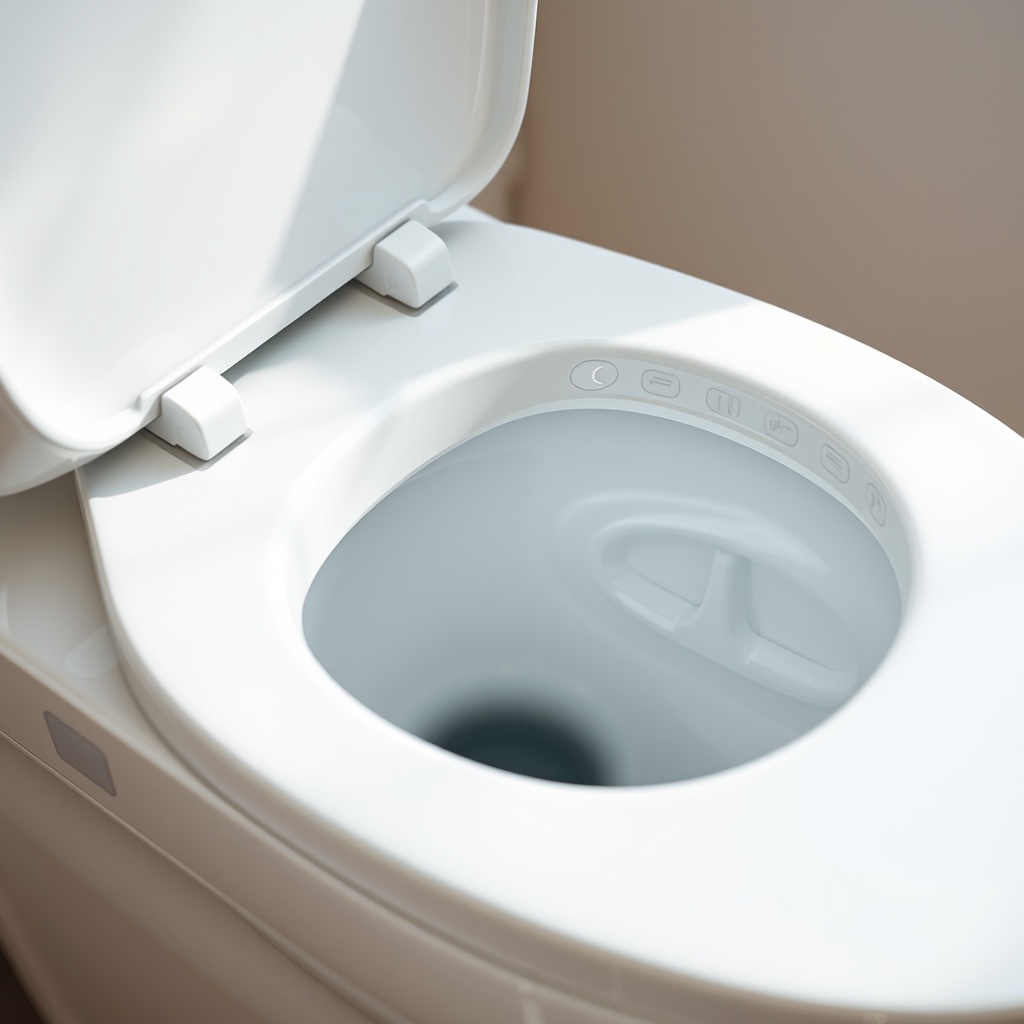
Inside the smart category, the water-heating method is the key reliability and cost divider. Instant (tankless) heating gives unlimited continuous warm water and a slim profile, but draws much higher peak power — up to roughly 1400W. Storage-tank heating draws less (around 600W peak) and is proven, but warm water runs out after about 30 seconds and the tank adds bulk. Buyers serving cold-inlet markets should weigh this carefully.
03 POWER & PLUMBING
The electrical gate distributors cannot skip
This is where most smart-toilet deals stall. A smart toilet needs a grounded, GFCI-protected (North America) or RCD-protected (EU/UK) outlet near the bowl — typically within about a metre, 15–30 cm off the floor behind the unit, on a 15A circuit or better. Many bathrooms in target markets simply do not have one, so outlet availability is a genuine pre-sale question.
Match voltage and plug to the destination
120V/60Hz for North America and Japan; 220–240V/50Hz for Europe, the UK, Australia, the Middle East and most of Asia. Wrong voltage or plug type makes the unit unsellable, so confirm it on every purchase order.
Plumbing is more forgiving. A smart toilet taps the existing cold supply — no separate hot line — and wants a standard 1/2-inch feed at roughly 0.1–0.55 MPa (20–80 PSI). Low-pressure markets may need a booster pump, a common after-sales complaint worth pre-empting. Note that many tankless models rely on supply-line pressure or an internal pump to flush, so minimum incoming pressure becomes a real install requirement.
04 PRODUCT ARCHITECTURES
Integrated, add-on seat, and wall-hung
Two architectures cover most price tiers. An integrated smart toilet is a one-piece ceramic body with the bidet and electronics built in — cleaner look, more reliable as an engineered system, factory-fit, higher price. An add-on bidet/smart seat retrofits onto a standard bowl — far cheaper, DIY install in under an hour, and it lets buyers upgrade existing SKUs, but it leaves a visible cord and hose and can look bolted-on. Many distributors stock both to span the price ladder.
Smart toilet vs regular toilet at a glance
| Factor | Regular ceramic toilet | Integrated smart toilet |
|---|---|---|
| Power | None required | GFCI/RCD outlet, matched voltage |
| Core functions | Gravity / pressure flush | Wash, dry, heated seat, auto-flush |
| Certifications | Plumbing + flush (cUPC, EN997, WRAS, WaterSense) | Above + electrical/EMC (CE, UL/ETL, PSE, SAA) |
| Indicative retail | ~USD 100–500 | ~USD 600 to 2,000–5,000+ |
| After-sales | Body/glaze warranty, near-zero field failure | Split warranty + spare parts & consumables |
| Shipping | Plain ceramic, robust | Moisture-resistant, shock-protected, lower per-container |
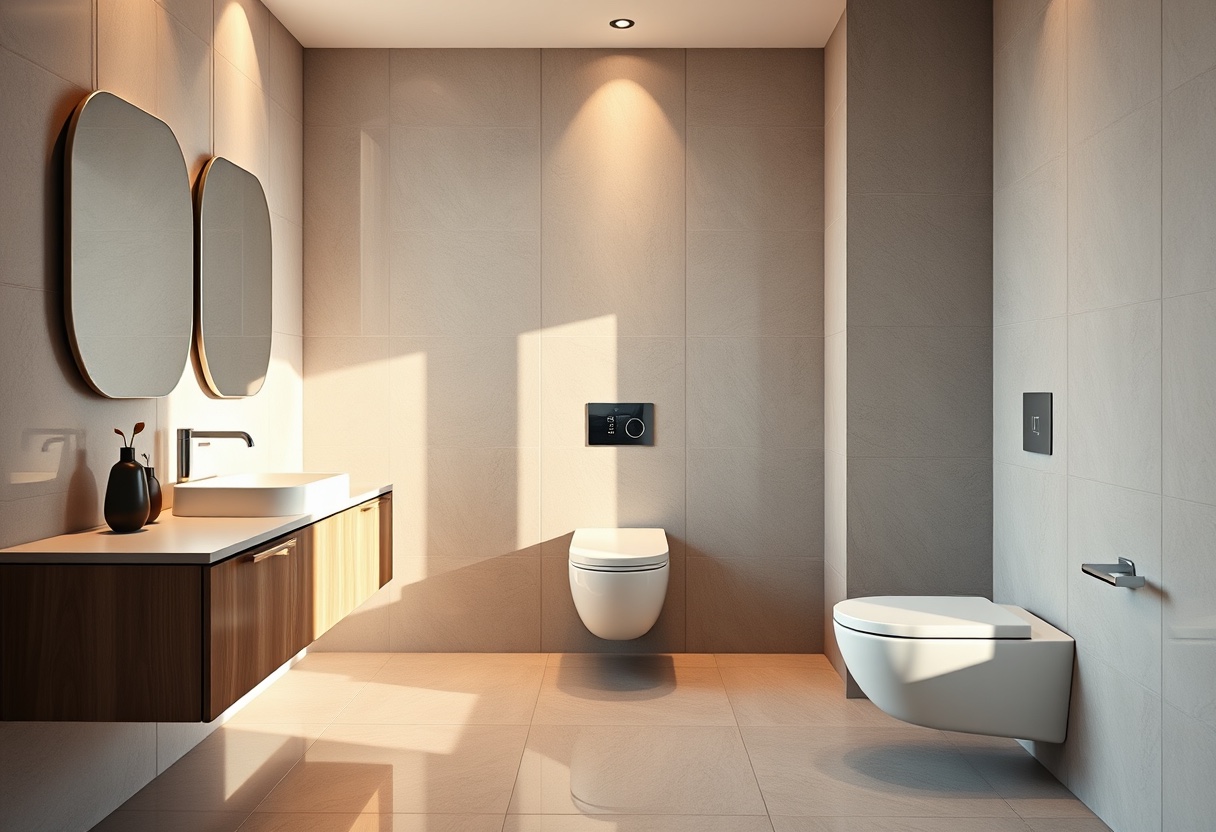
Wall-hung smart toilets pair a wall-mounted bowl with a concealed in-wall tank/carrier — premium and space-saving, but harder to spec. The carrier frame and actuator plate must be specified together, and many wall-hung seat shapes limit add-on seat compatibility, which is a frequent project-buyer pain point.
05 COST, CERTS & SUPPORT
Where the real B2B differences live
On price, regular toilets are commodity items with very low landed cost. Add-on bidet seats sit in the middle. Integrated smart toilets run from entry-level online brands up to premium Toto/Kohler-class units. OEM/ODM factory pricing from Guangdong sits well below Western retail — that gap is the core margin story for importers.
Certifications stack, they do not substitute
All toilets need plumbing and flush approval — cUPC/UPC (US, Canada), CE/EN997 (EU), WRAS (UK), plus water-efficiency labels (WaterSense, WELS) and MaP flush performance. Smart toilets add electrical and EMC marks (CE, UL/cUL or ETL, PSE, SAA) and, for wireless remotes, radio approval (FCC, RED). Certification support varies by product and market — request available test reports before ordering.
After-sales is the structural difference. A smart toilet has more parts — pump, heater, nozzle, sensors, control board — and consumables like water and deodorizer filters and remote batteries. Buyers should require a split warranty (longer on the ceramic body, shorter on electronics), spare-parts supply, service manuals, and a clear RMA path. Electronics are also heavier-value and humidity-sensitive in transit, which affects packaging, palletization and freight per unit.
06 HOW TO CHOOSE
A sourcing rubric by channel
Decide by market positioning, bathroom electrical infrastructure, destination certifications, target price point, and your own after-sales capacity. Then confirm voltage/plug, water pressure, outlet availability and seat/bowl shape before ordering containers.
Smart toilets fit if
- You serve hotels, premium residential, senior-living or smart-home channels
- Bathrooms have (or can add) a GFCI/RCD outlet
- You can carry spare parts and a split warranty
- You want higher margin and premium positioning
Regular toilets fit better if
- You supply budget housing, rental or public projects
- Sites have no power or unstable electricity
- You need simple installation and near-zero after-sales
- Volume and lowest landed cost drive the order
As a ceramic sanitary ware manufacturer in Guangdong, China, Chengda produces both regular ceramic toilets and integrated smart toilets, with OEM/ODM support for branding, voltage/plug, function set and packaging. If you are comparing tiers for a real order, the smartest move is to request specs, available certificates and a sample before committing.
In the end, smart toilet vs regular toilet is a fit decision, not a verdict — match the product to your market, your infrastructure and your after-sales reach, and the right choice usually picks itself.
FAQ COMMON QUESTIONS
Buyer FAQ
What is the difference between a smart toilet and a regular toilet?
A regular toilet is a mechanical gravity or pressure-assisted ceramic fixture with no electronics. A smart toilet keeps the ceramic body but adds an electronic seat with warm-water washing, a heated seat, a dryer, deodorizing and automation. The defining gap is that a smart toilet needs electricity and a regular toilet does not.
Do smart toilets need electricity, and what voltage applies to my market?
Yes. They require a grounded, GFCI/RCD-protected outlet near the bowl. Voltage must match the destination: 120V/60Hz for North America and Japan, 220–240V/50Hz for Europe, the UK, Australia, the Middle East and most of Asia. We build to your market's voltage and plug type per order.
Does a smart toilet need special plumbing or a hot water line?
No separate hot line is needed — it taps the existing cold supply through a standard 1/2-inch feed. Aim for roughly 0.1–0.55 MPa (20–80 PSI) inlet pressure; very low-pressure sites may need a booster pump, which is worth flagging to end users in advance.
Should I choose tankless or storage-tank heating?
Tankless (instant) heating gives unlimited continuous warm water and a slimmer body but draws up to about 1400W. Storage-tank heating draws around 600W and is proven, but warm water lasts only about 30 seconds and adds bulk. Choose based on usage intensity and electrical capacity at the site.
What certifications do smart toilets need versus regular toilets?
Every toilet needs plumbing and flush approval (cUPC/UPC, CE/EN997, WRAS, plus WaterSense/WELS and MaP). Smart toilets add an electrical/EMC layer (CE, UL/cUL or ETL, PSE, SAA) and radio approval for wireless remotes. Certification support varies by product and market, so request available test reports before ordering.
Can you supply both 110V and 220V, and do OEM/ODM?
Yes. We supply units matched to the destination voltage and plug, and offer OEM/ODM customization of logo, packaging, function set and remote/app language. MOQ is negotiated per model and mixed container — contact us for current terms, catalog and a quote.