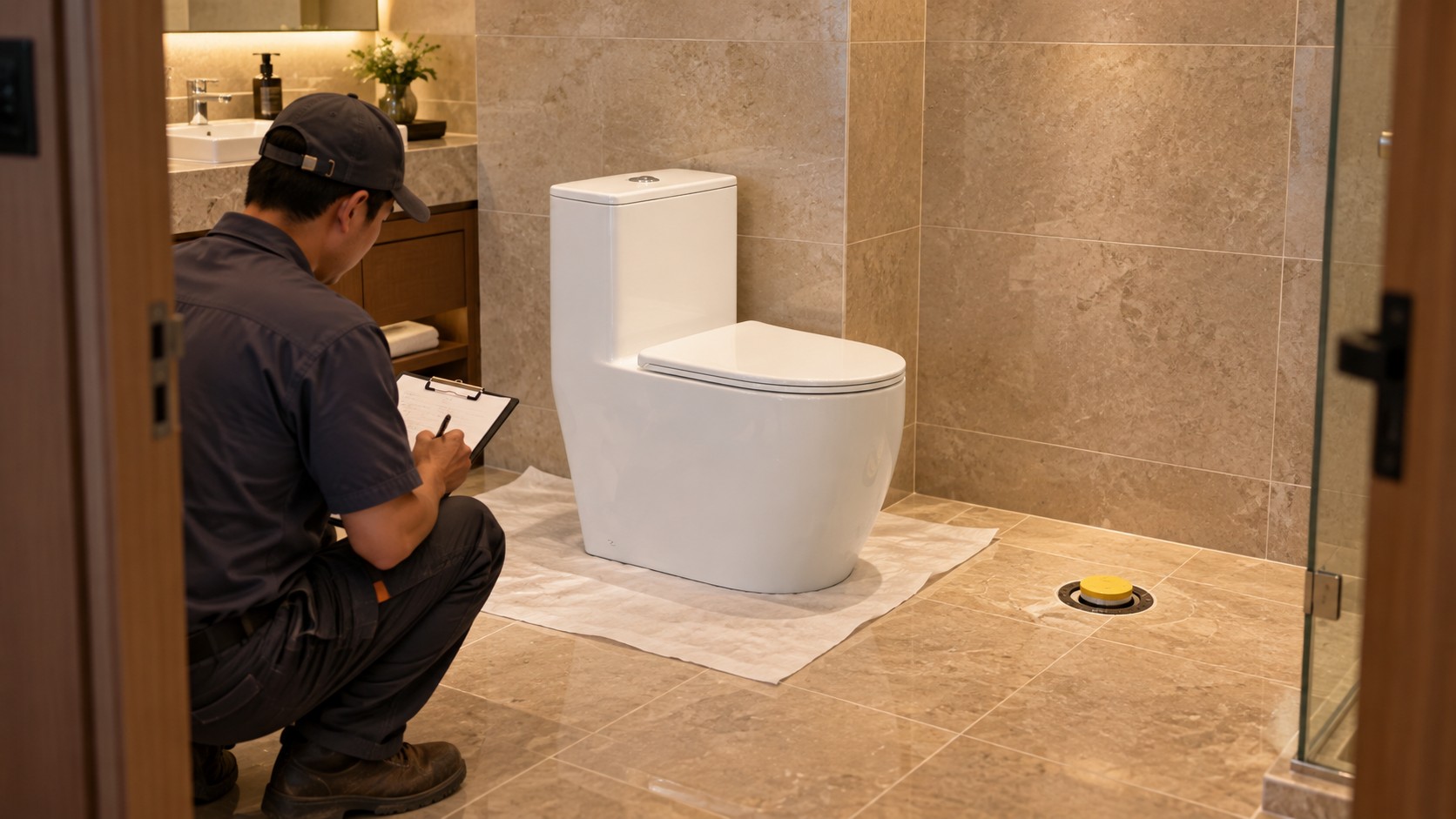
The toilet rough-in size is the distance from the finished wall behind a floor-mounted toilet to the centreline of its waste outlet. With an installed toilet, the closet bolts usually provide the most practical centreline reference. The dimension determines whether the selected bowl and tank can sit in their intended position without hitting the wall or leaving an excessive gap. It should be checked before a replacement toilet is ordered, quoted or loaded for a project.
Ten, twelve and fourteen inches are familiar North American nominal sizes, while other markets commonly specify metric set-outs and different outlet arrangements. Those labels are useful only when matched to the exact product drawing. Wall finish thickness, skirting, an offset flange, a concealed adapter and the real ceramic footprint can change the installation. This guide explains a disciplined way to measure and approve the fit without treating one nominal number as universal.
Key takeaways
- Measure from the finish: Use the finished wall surface, not the face of a baseboard or decorative trim.
- Find the true centre: Measure to the closet-bolt or flange centreline, not to the front or rear of the ceramic base.
- Approve the drawing: Nominal rough-in, overall projection, rear clearance and supply position must be checked together.
01 CORE DIMENSION
What does toilet rough-in size mean?
For a conventional floor-outlet toilet, rough-in describes the horizontal distance from the finished rear wall to the centre of the closet flange. When the toilet is still installed, the centre of the two floor bolts is normally aligned with that flange centre. The rough-in is not the distance to the back of the tank, the front of the bowl or the edge of the base. These are separate dimensions on a product specification sheet.
The dimension matters because the trapway and outlet are built into the ceramic at a fixed relationship to the tank and bowl. If the room is shorter than the toilet's required rough-in, the tank or body may contact the wall before the outlet aligns. If the room is longer, the toilet may install but leave an unintended rear gap. Model-specific adapters can sometimes change the effective rough-in, but compatibility must be documented rather than assumed.
02 MEASURING METHOD
How do you measure toilet rough-in with the toilet installed?
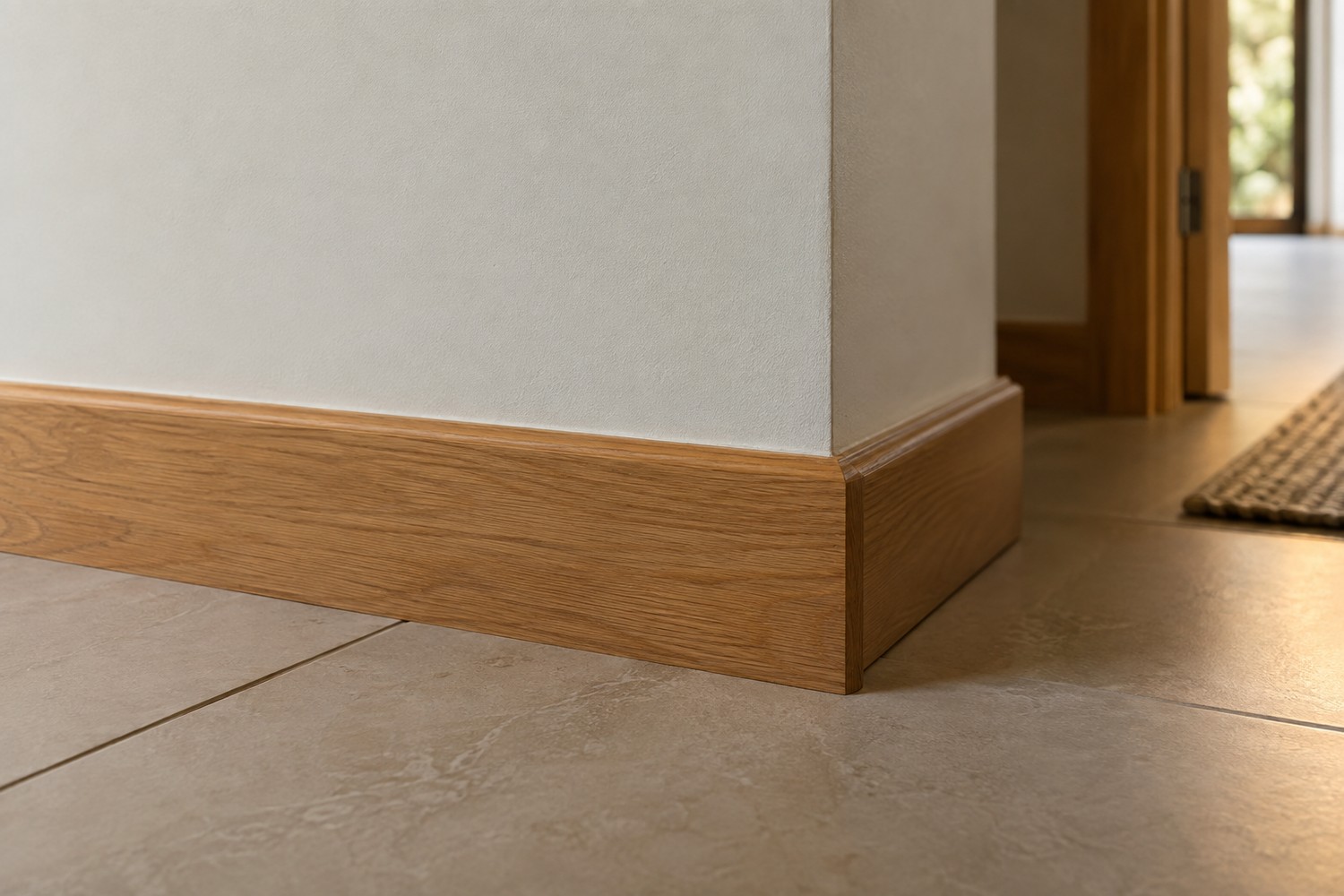
For a conventional toilet with exposed flange bolts, hold the tape horizontally from the finished rear wall to the centreline of a confirmed flange bolt. Keep it perpendicular to the wall. Pass above the baseboard and use a square to transfer the bolt centreline to the tape level if necessary. On four-bolt or skirted toilets, do not assume a visible fixing marks the waste outlet: check the installation drawing to identify the flange centre, or have an installer expose the flange when it cannot be verified.
Record measurements on both accessible sides, including any difference caused by an uneven wall. Check the tightest wall-to-body clearance against the exact drawing rather than averaging inconsistent readings. Photograph the wall finish and reference points, and note any tile or wall panels still to be added. A reading taken before the final finish is fitted must be adjusted for the remaining build-up.
03 OPEN FLANGE
How do you measure after the old toilet is removed?
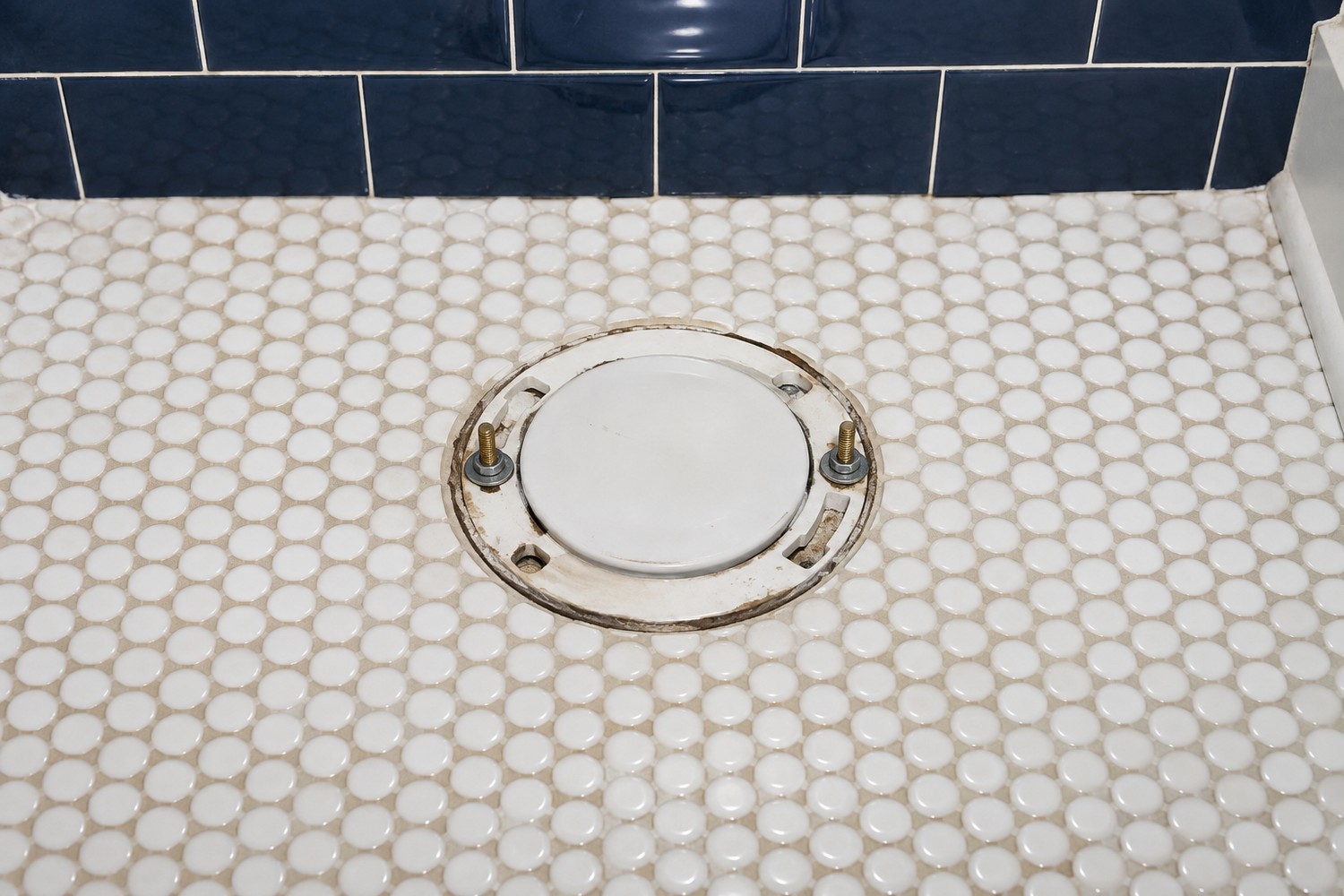
With the old toilet removed, measure from the finished wall to the centre of the closet flange or waste opening. A flange centre is more direct than a bolt cap, but first confirm that the flange is correctly positioned, securely fixed and suitable for the planned toilet. Record whether the flange sits above, level with or below the finished floor, because flange height affects sealing and installation work even though it does not change the horizontal rough-in.
Protect the open waste and follow safe site practice while measuring. Check for an offset flange, non-centred bolts, damaged fixings or previous repair work. These conditions can make an apparently simple number misleading. A renovation team should resolve the flange condition and finished-floor level before releasing a final toilet order, particularly when many rooms repeat the same detail.
04 NOMINAL OPTIONS
What is the difference between 10, 12 and 14-inch rough-ins?
A 12-inch rough-in is widely used for current North American residential toilets, while 10-inch models help where the outlet is closer to the wall and 14-inch options address a farther set-out. The numbers are nominal system choices, not permission to round any reading to the nearest label. A measured value must fall within the installation range shown for the exact toilet and any approved adapter.
A toilet designed around one rough-in may have a different tank location, overall projection or adapter from another version that looks identical in a catalogue thumbnail. Never substitute only by appearance. Retailers and importers should keep the rough-in option in the SKU description, carton mark and order confirmation so the warehouse does not mix visually similar ceramic bodies or conversion parts.
05 SITE ERRORS
What toilet rough-in measurement mistakes cause poor fit?
The most common mistakes are starting at the baseboard, measuring diagonally, using the rear edge of the ceramic as the endpoint, or reading to the near edge of a bolt cap instead of its centre. Other errors appear when a new tiled wall or thicker panel is added after measurement. A quarter-inch difference may not matter for one model and may matter for another; only the dimensional drawing establishes the permitted tolerance.
Another mistake is checking rough-in alone. Door swing, bowl projection, side clearance, tank-lid access, water-supply position and the footprint left by the old toilet can all reject an otherwise compatible model. A complete replacement survey should capture these surrounding conditions in the same visit.
06 GLOBAL SPECIFICATION
How should importers specify toilet set-out in metric markets?
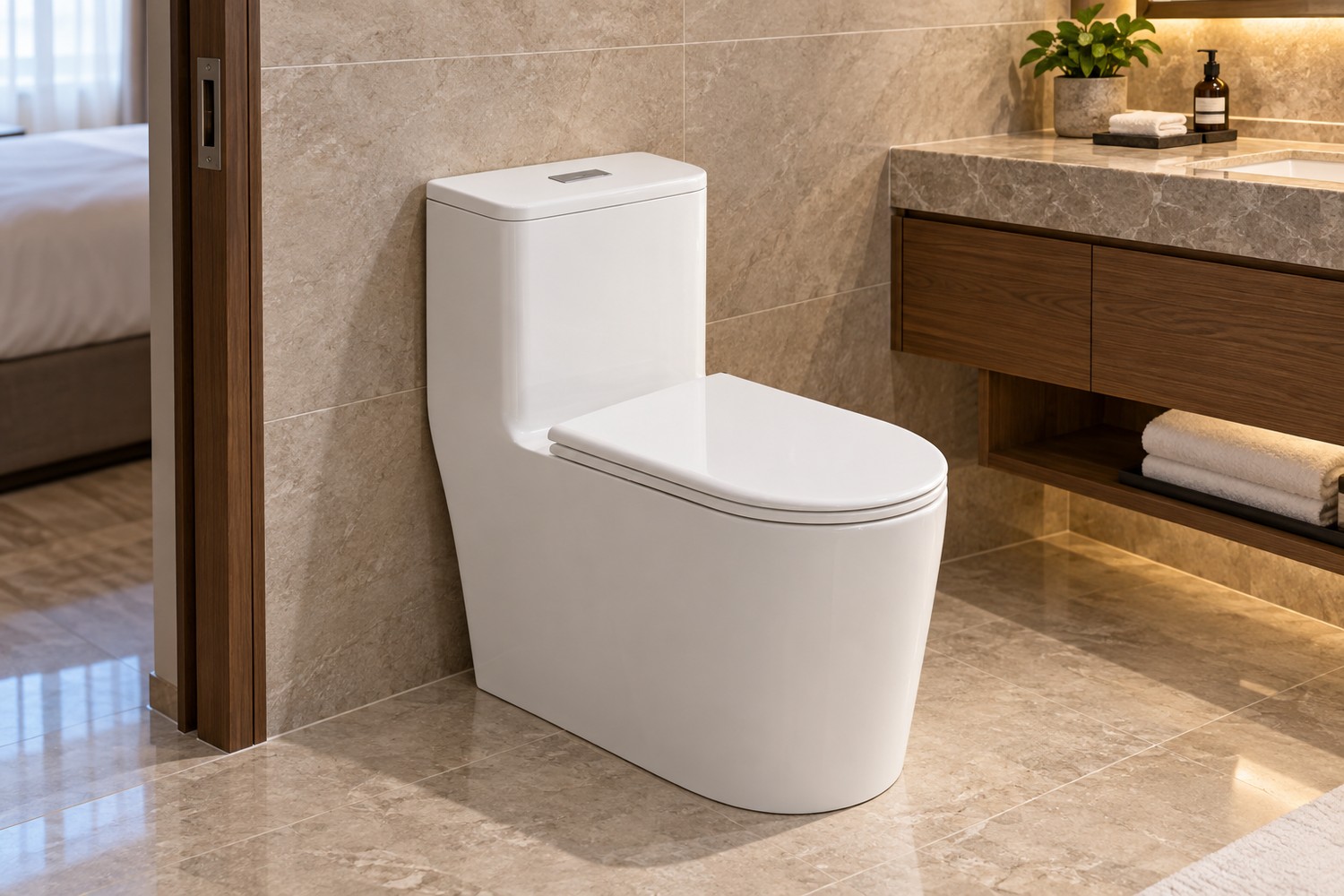
Many export markets describe the floor outlet by a metric set-out, often measured from the finished wall to the outlet centreline. P-trap or wall-outlet toilets use a different vertical and horizontal coordination. The buyer should state the destination market, outlet direction, required set-out and applicable local standard in the enquiry. The factory should respond with the exact model drawing rather than translating an inch label loosely.
For multi-country ranges, keep a compatibility matrix linking each bowl, trap type, adapter and market package. Samples should be dry-fitted to a representative flange or connector before a full order. This prevents a familiar model name from hiding different plumbing interfaces between regions.
07 BUYER CONTROL
What should buyers approve before ordering replacement toilets?
Approve the dimensioned ceramic drawing, rough-in or set-out range, outlet type, overall length and width, finished seat height, water-supply location, fixing method and included connection parts. Ask whether alternate rough-in versions use the same ceramic or a specific adapter. If certification is required, request documents for the exact configuration and market; support varies by product and destination.
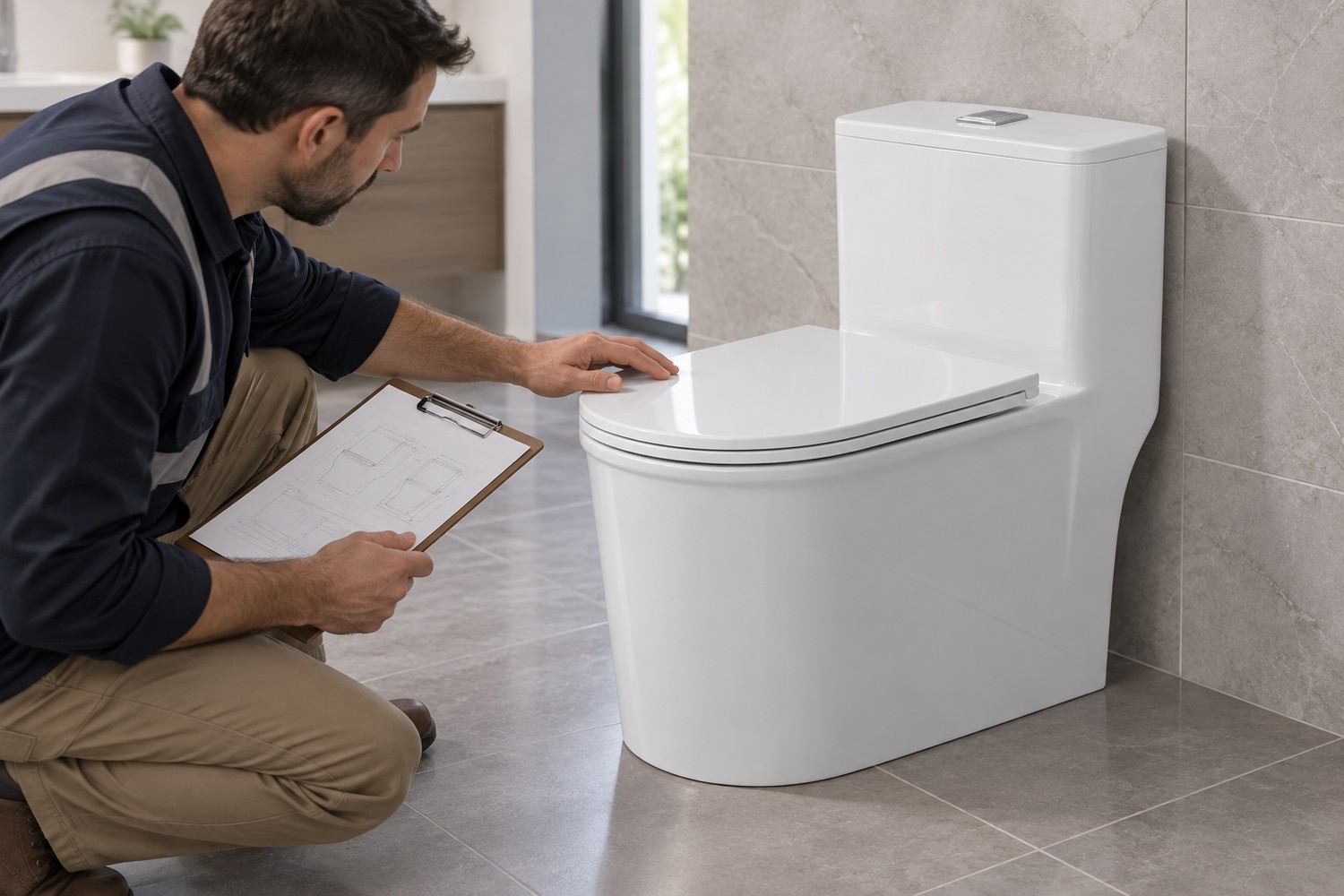
For hotel, apartment or retail programmes, measure a representative sample of rooms instead of assuming every existing outlet is identical. Build one controlled mock-up, check wall and door clearances, connect and leak-test it, then freeze the approved SKU. Chengda can review buyer drawings and product requirements for ceramic toilet sourcing, but final installation must follow the selected product documents and local plumbing rules.
08 REPLACEMENT SURVEY
Can the old toilet itself confirm the required rough-in?
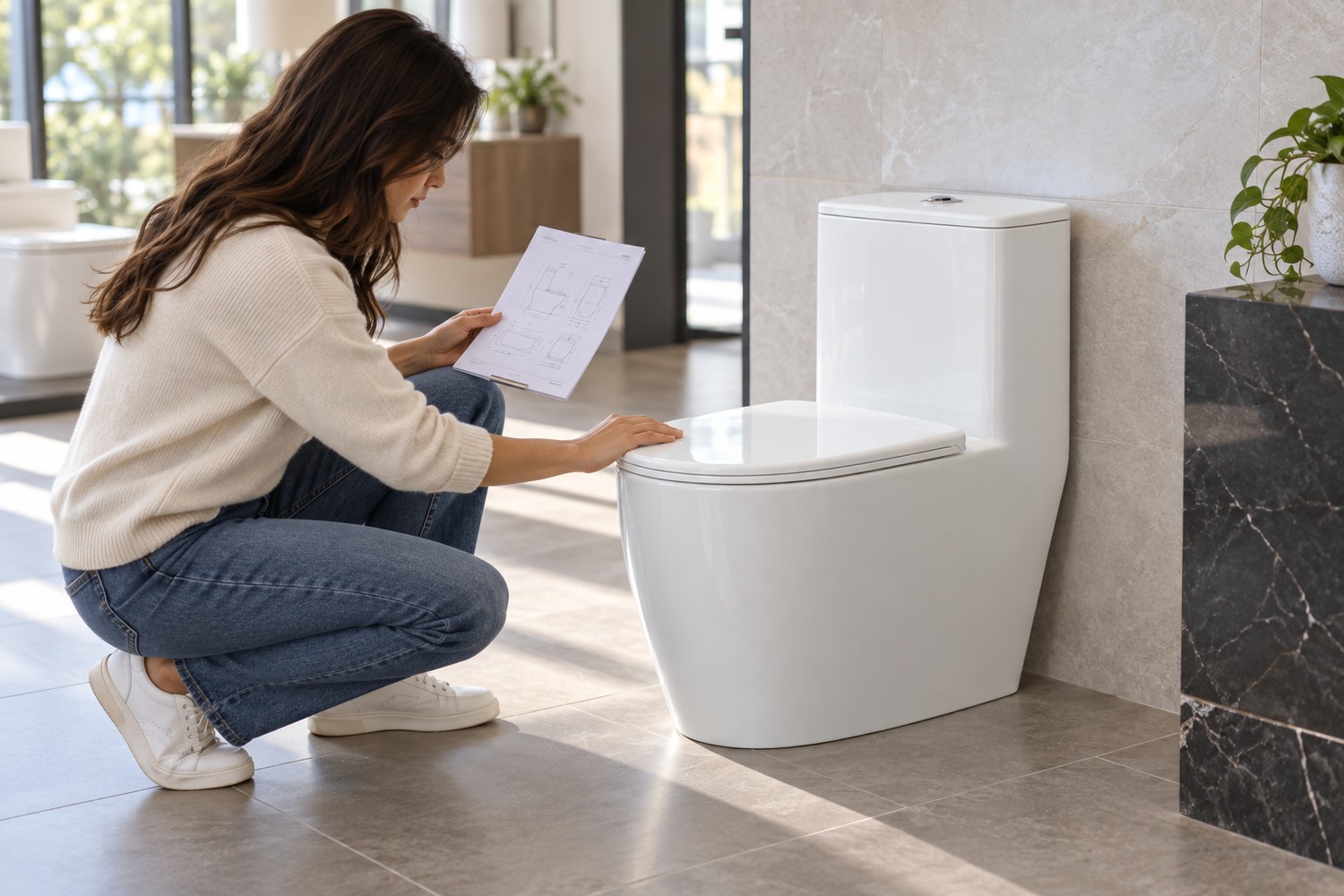
The existing toilet is evidence, but it is not conclusive by itself. It may have been installed with a conversion adapter, offset flange or unintended rear gap. The tank may also have been replaced with a different component. Record its model markings and photograph the base, bolts, rear clearance and supply, but still measure from the finished wall to the outlet centreline. If the room has been retiled or lined since the original installation, compare old and new finished planes.
For a large renovation, tag each surveyed toilet and link the room number to its measurements. Separate verified values from assumptions and note inaccessible conditions. This creates a purchasing schedule that can be checked before the heavy ceramic units ship. Where readings fall between nominal options, ask the installer and supplier to review the flange, adapter and exact drawing rather than selecting the closest carton label by instinct.
09 ORDER CHECKLIST
Which toilet rough-in details belong on the purchase order?
The purchase order should name the toilet model, outlet type, nominal rough-in or metric set-out, any adapter code, flush configuration, seat and fixing-kit references, colour, quantity and carton identification. Attach the approved drawing revision. If different rough-ins share a shipment, segregate them by SKU and use clear outer-carton marks to protect site distribution.
A correct toilet rough-in size is therefore a verified interface, not a guessed number. Measure from the finished wall, find the true outlet centreline and approve the whole footprint. For wholesale or project supply, send Chengda the room measurements, target market and required toilet type to request suitable model information and OEM/ODM support.
FAQ COMMON QUESTIONS
Frequently asked questions
What is the most common toilet rough-in size?
Twelve inches is common in North American housing, but 10-inch and 14-inch models also exist. Always measure and use the exact model drawing.
Do I measure toilet rough-in from the wall or baseboard?
Measure from the finished wall plane, not from the face of a baseboard, skirting or trim.
Can a 12-inch rough-in toilet fit an 11-inch measurement?
Do not assume so. Compare the actual finished-wall measurement with the manufacturer's permitted installation range for that exact model.
Can an adapter change a toilet rough-in?
Some product systems offer model-specific adapters, but the bowl, adapter, outlet and room must be approved as one compatible system.
How do I measure a four-bolt toilet?
Identify which fixings locate the flange using the installation drawing. Do not average the bolt positions or assume every visible fixing marks the outlet. If the centre cannot be verified, have an installer expose the flange and measure directly.
Is toilet rough-in the same as toilet projection?
No. Rough-in locates the outlet from the wall; projection is the overall distance from the wall to the front of the bowl.