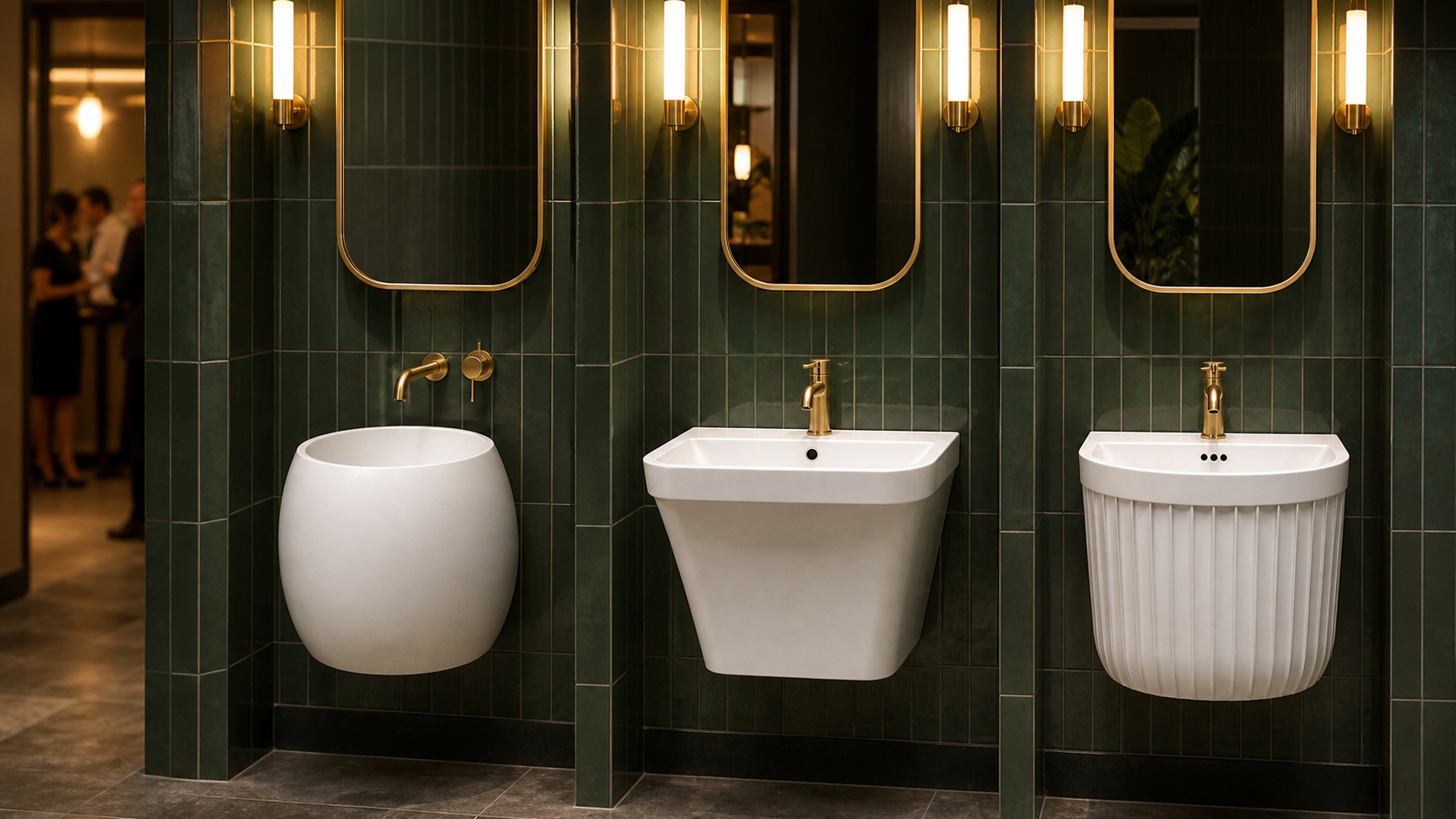
A wall hung wash basin can give a small bathroom clear floor space and a strong architectural identity without a vanity cabinet or pedestal. The apparent simplicity depends on careful work behind the wall: reinforcement, fixing centres, water and waste rough-ins, faucet selection and service access. This guide helps importers, designers and project buyers choose a ceramic wall mounted bathroom sink by real size, shape, installation risk and maintenance needs.
Key takeaways
- The wall is part of the system: reinforcement and rough-ins must be approved before finishing.
- Compact means complete projection: judge the body, user movement and door swing, not width alone.
- Keep configurations model-specific: accessibility, faucet mounting and overflow details require exact-SKU checks.
01 PRODUCT DEFINITION
What is a wall-hung wash basin?
A wall-hung wash basin is fixed directly to a prepared wall without a floor pedestal, vanity cabinet or countertop supporting it. In Chengda's WB range, the ceramic body extends downward as part of the visible design, so the product can appear sculptural while leaving the floor clear. It is different from a conventional shallow wall basin paired with exposed brackets, and different from a pedestal basin whose column reaches the floor.
The clear floor line can make a compact powder room easier to clean and visually less crowded. At the same time, the wall must carry the product, user loads defined by the installation system and normal service forces. Buyers therefore need the basin drawing, fixing method, wall construction, plumbing centres and installation height before finishing the room.
Wall-hung is an installation category, not a guarantee that every model fits every wall or regulation. The exact ceramic body, fixing points, faucet, trap and room clearance must be approved as one assembly.
02 SHAPE & SIZE
Which wall-hung basin shape suits a small bathroom?
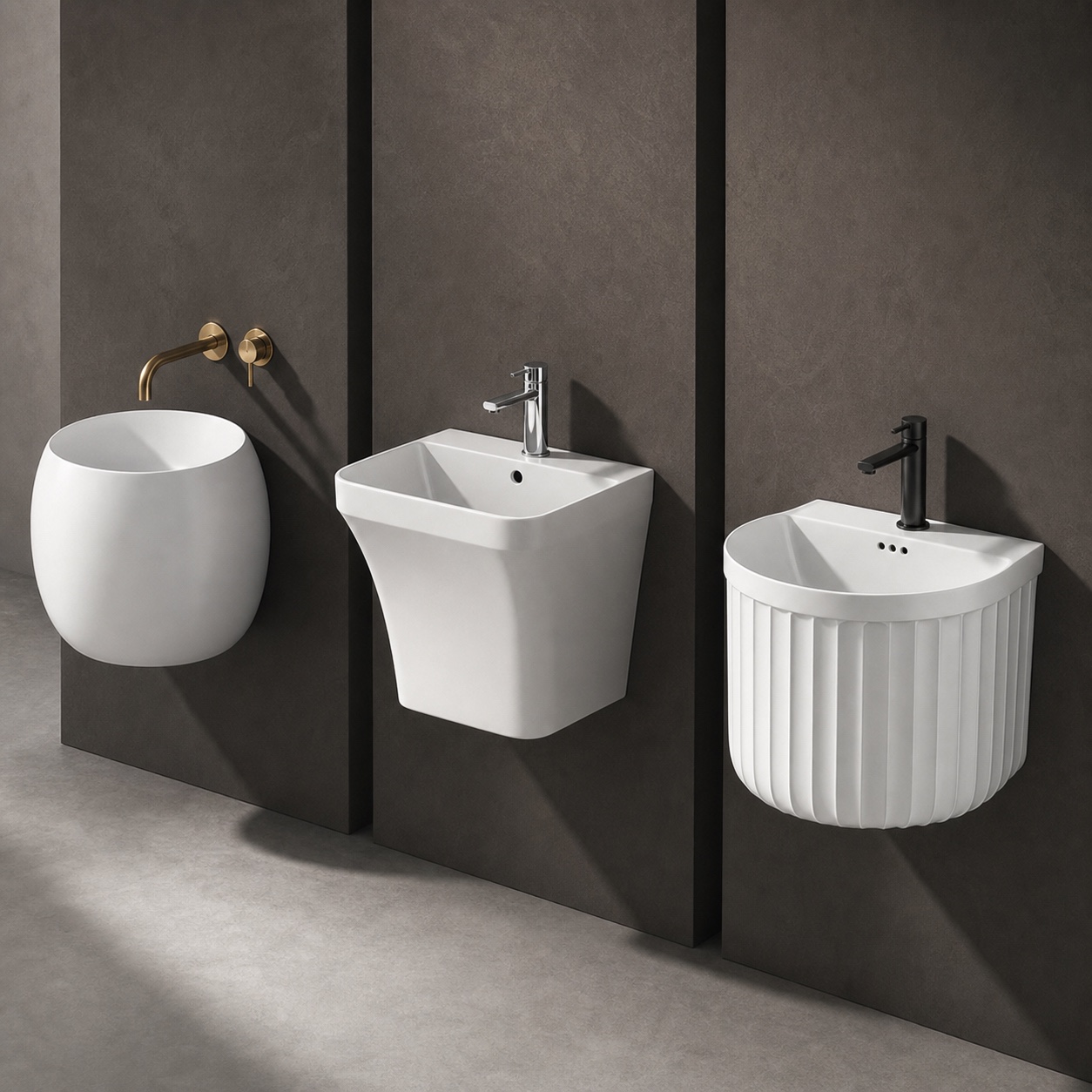
Start with available wall width, projection into the room, door swing, circulation, user position and cleaning access. A rounded body can soften a tight room and reduce sharp-looking corners. A compact square model creates a more architectural line. A fluted body adds texture and may serve as the main visual feature where there is no vanity furniture.
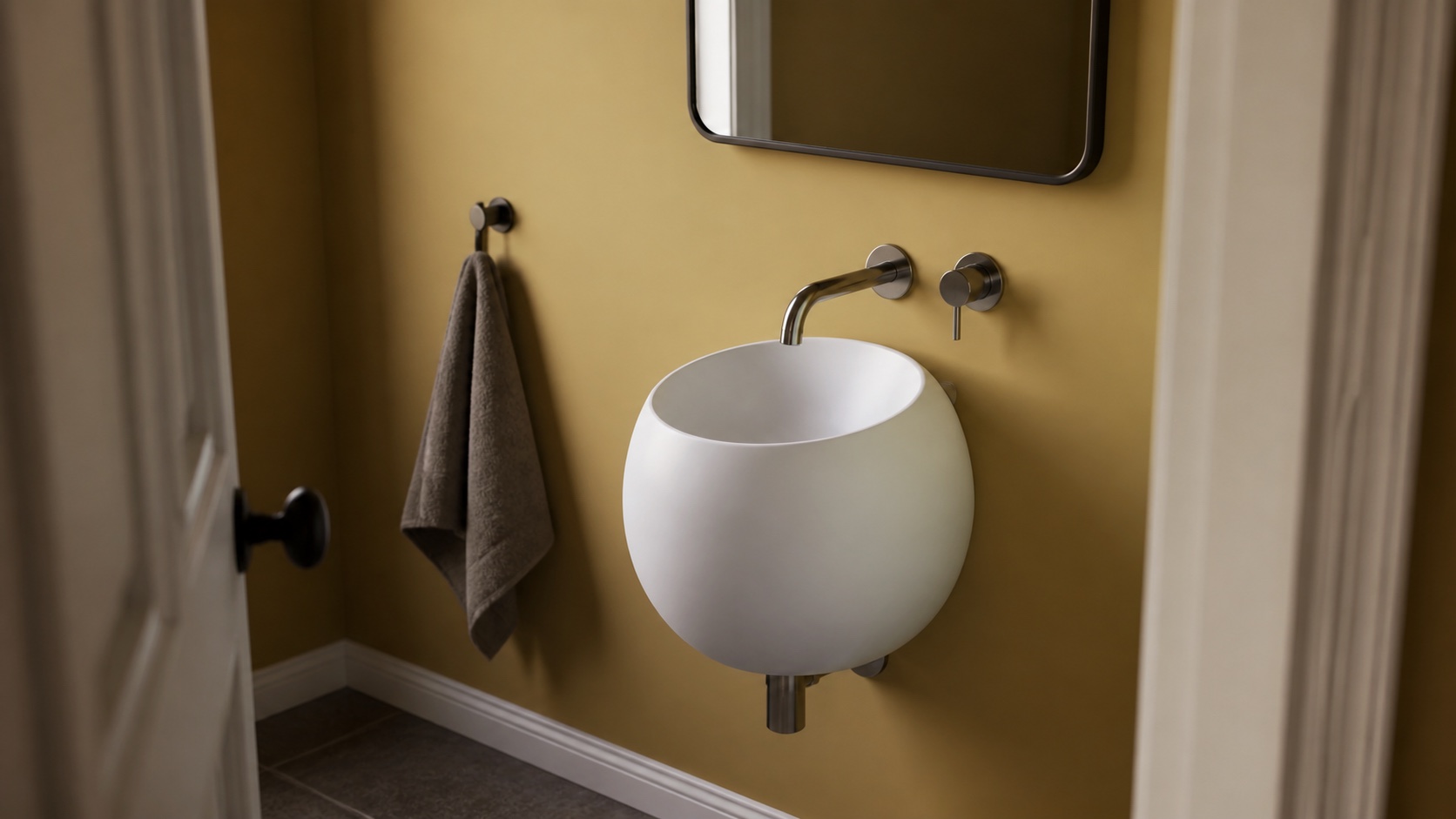
Chengda WB100 is a rounded 515 × 515 × 440 mm wall-hung basin with a clean open-bowl profile suited to a wall-mounted faucet. WB104 is a compact square form at 360 × 415 × 445 mm, while WB108 measures 420 × 420 × 390 mm and has a rounded fluted body; their product references show ceramic faucet decks and overflow openings. The range uses a 45 mm drain opening. Final tap-hole and overflow configuration must remain tied to the signed SKU drawing and sample rather than copied from another model. Dimensions should be checked against the real room and wall, not compared by width alone.
Body depth affects more than appearance. It influences knee approach, trap routing, perceived scale and how far the product projects from the wall. Review front, side and top views, then test a sample in a full-height mock-up before committing to repeated rooms.
03 WALL & FIXINGS
What wall structure does a wall-hung basin need?
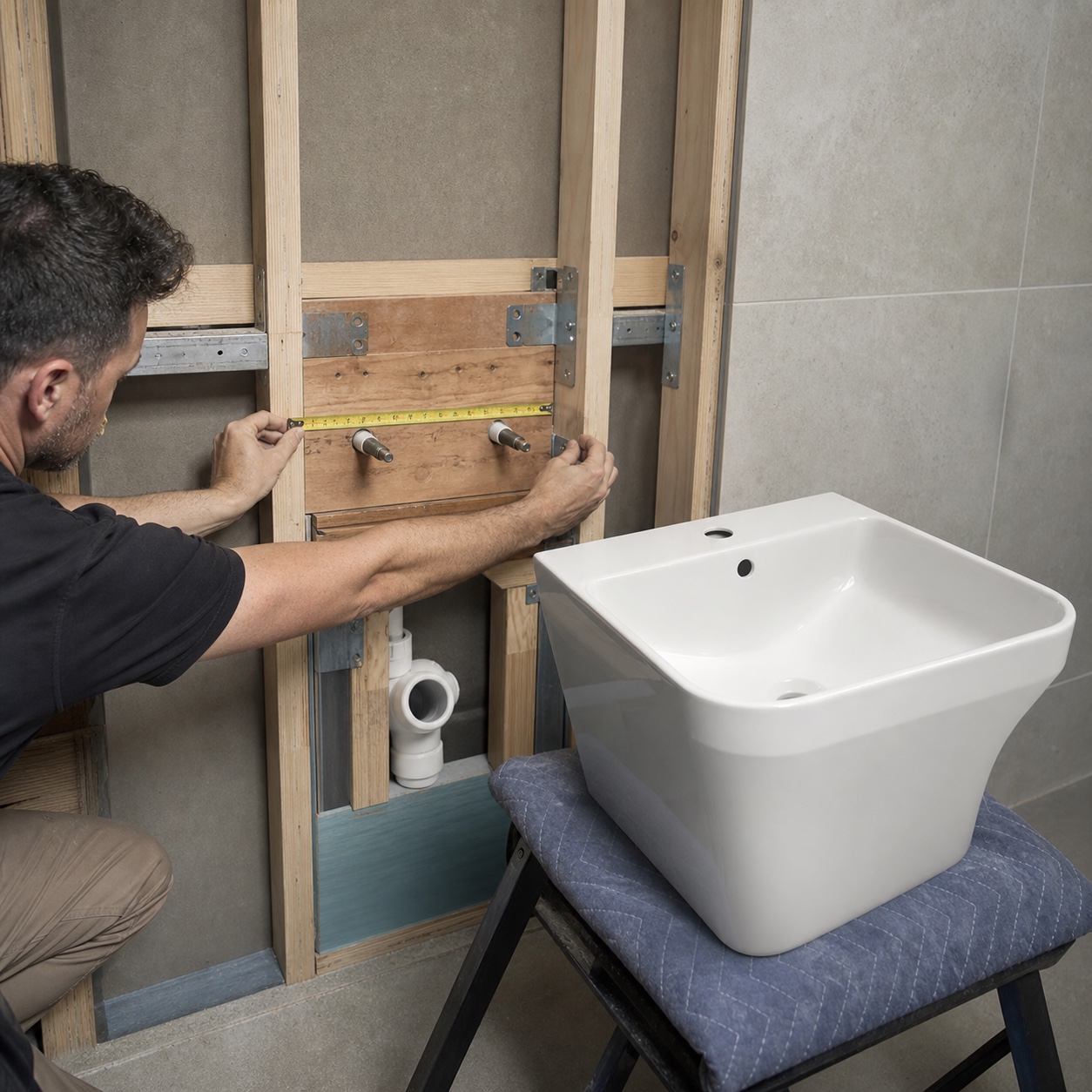
The finished tile or wallboard is not the structural support. Fixings must connect to reinforced framing, masonry or an approved carrier designed for the wall and basin. Confirm fixing centres, anchor type, edge distances and permissible wall loads with the project engineer or installation-system provider. Do not select generic anchors by appearance.
Coordinate reinforcement before the wall closes. Mark the final floor level, basin height, water supplies, waste centre, faucet connection and access points on one drawing. A small error in rough-in position can force visible pipe offsets or prevent the ceramic from seating flat against the wall.
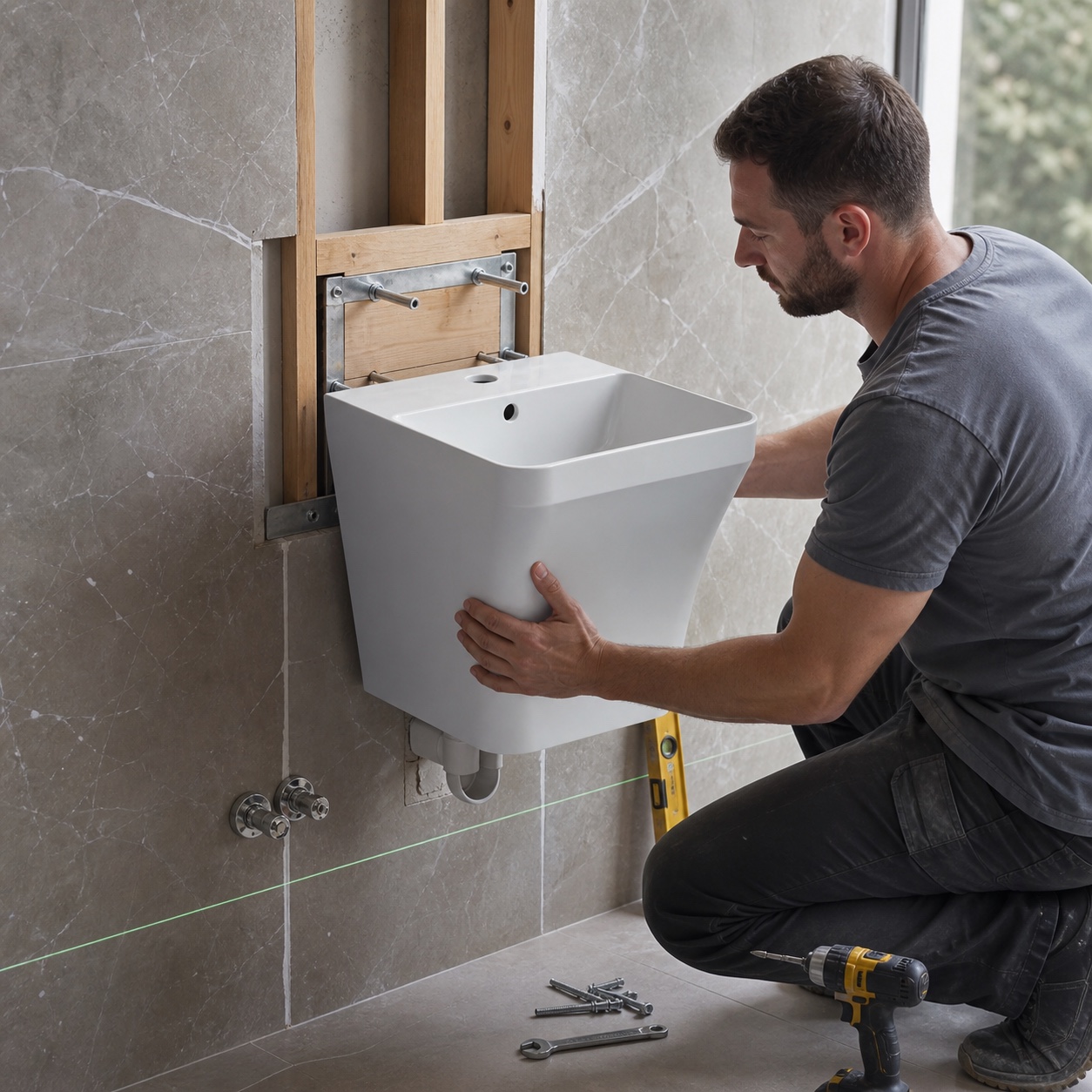
During installation, protect the glaze, lift the basin with suitable people and support, tighten fixings evenly and avoid point stress. The product must sit securely without rocking or relying on sealant to hide a structural gap. Follow the basin instructions and local building rules.
04 FAUCET & PLUMBING
How should the faucet and drainage be planned?
Faucet mounting is model-specific. WB100's clean open-bowl form is coordinated with a wall-mounted faucet, while WB104 and WB108 use a compatible basin mixer through the ceramic deck. Confirm base diameter, shank length, fixing access, spout reach and water landing on the exact model. A countertop faucet is impossible because there is no counter, and moving a faucet between wall and ceramic changes the approved installation.
Overflow configuration is also model-specific: the WB104 and WB108 references show overflow openings, while WB100 should be confirmed by drawing and signed sample. Specify a compatible waste and understand the destination market's requirements. Test the chosen faucet flow and bowl geometry to control splash, drainage and overflow performance where fitted.
Plan the trap and supply connections so they remain serviceable while supporting the intended clean appearance. Depending on the model and wall system, plumbing may be partly concealed by the ceramic body or coordinated behind it. Do not create inaccessible joints merely to hide every pipe in a photograph.
05 ROOM PLANNING
How do wall-hung basins save space in practice?
Removing a floor pedestal or vanity can free visual and cleaning space, but usable room area depends on projection, door movement and circulation. Tape the basin outline on the floor and wall at full scale. Check whether a person can stand comfortably, open the door, reach the faucet and pass without striking the ceramic body.
Storage moves elsewhere. A mirror cabinet, wall shelf or recessed niche may hold toiletries, but it must not interfere with headroom, faucet use or maintenance. Soap and towel accessories should sit within natural reach without crowding the bowl. Keep electrical fittings and splash zones coordinated by the project professional.
For a dramatic sculptural basin, give the product enough clear wall around it. In very tight rooms, the most decorative or deepest model may not be the most practical. Compactness should be judged by complete projection and movement, not only a narrow front width.
06 PROJECT APPLICATIONS
Where do wall-hung basins work best?
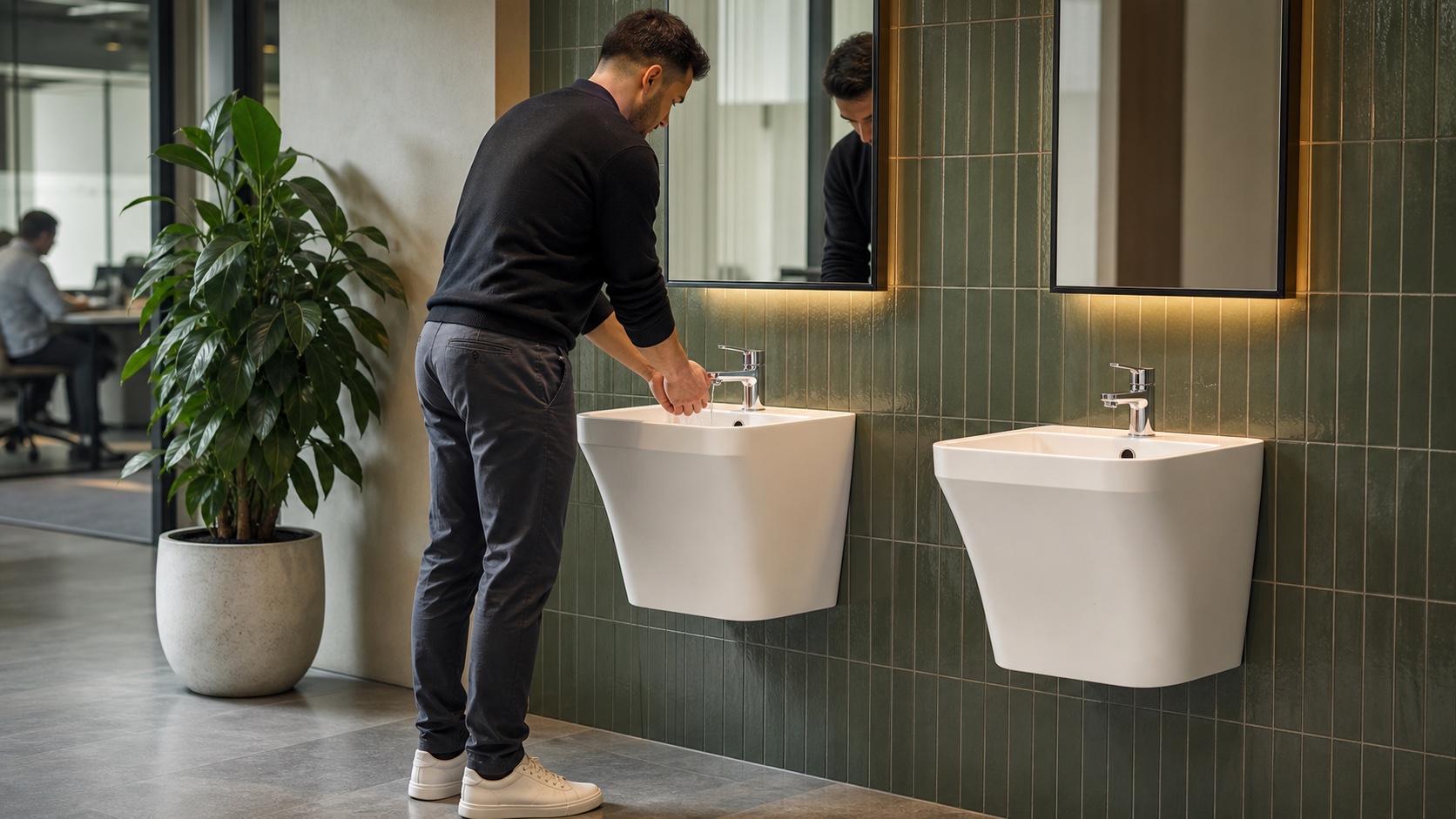
Wall-hung ceramic basins can work well in boutique hotel powder rooms, restaurants, retail spaces, offices and compact residential guest bathrooms. They provide a strong visual identity without requiring furniture and make the floor below accessible for routine cleaning. A coordinated shape family can help designers repeat one concept across several room sizes.
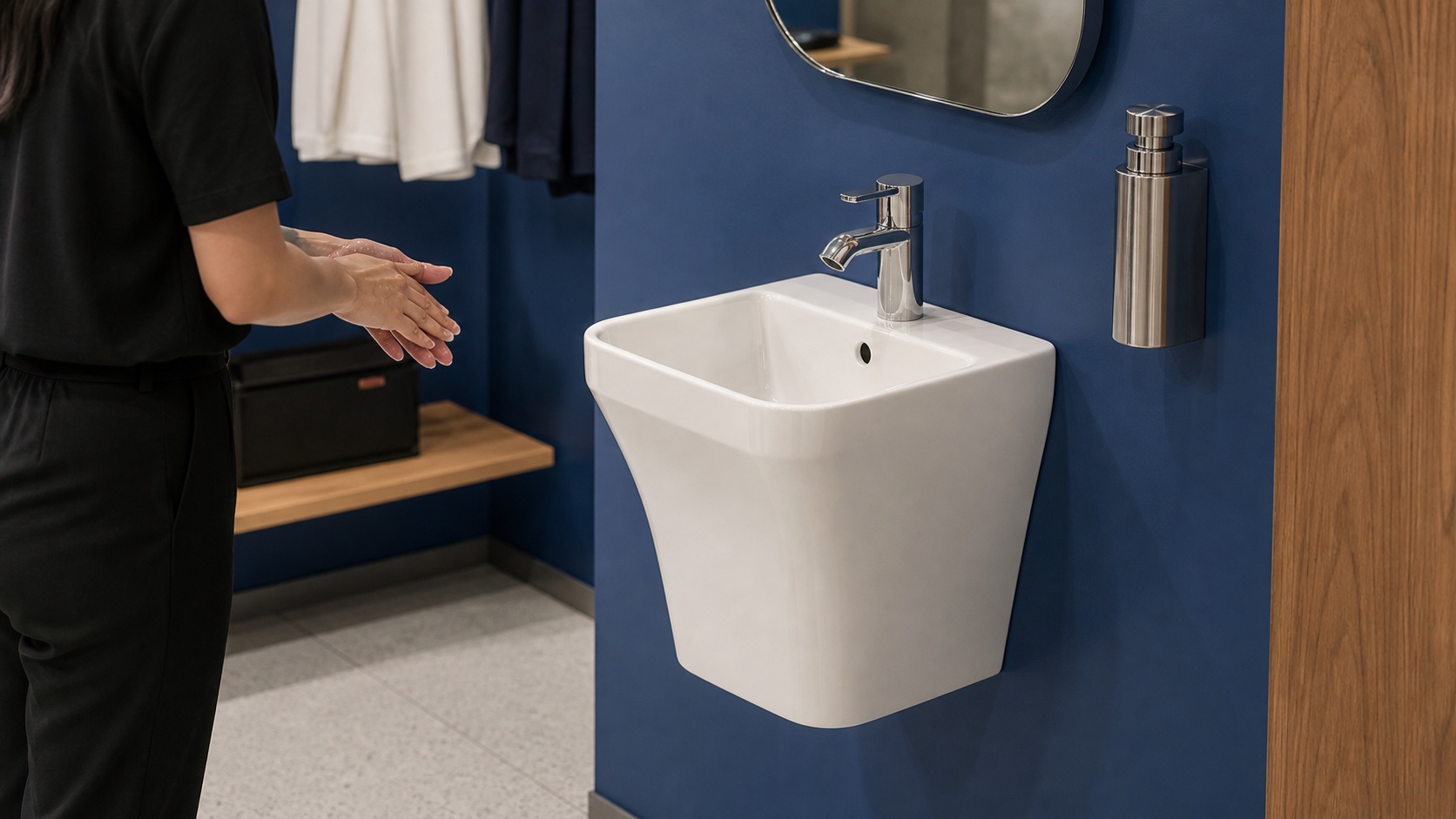
Commercial areas need more than visual appeal. Consider traffic, vandal resistance, cleaning method, access to fittings, spare availability and how quickly a damaged unit can be replaced. Record the exact fixing and rough-in data in the facilities file so maintenance teams are not forced to rediscover concealed conditions.
Accessibility must be assessed separately. Some sculptural wall-hung bodies may not provide required knee or toe clearance. Where a project must meet ADA or another local standard, the designer should verify rim height, clear floor space, knee clearance, exposed pipe protection and faucet operation for the exact model. Do not market an untested basin as compliant.
07 QUALITY CONTROL
What should buyers inspect before shipment?
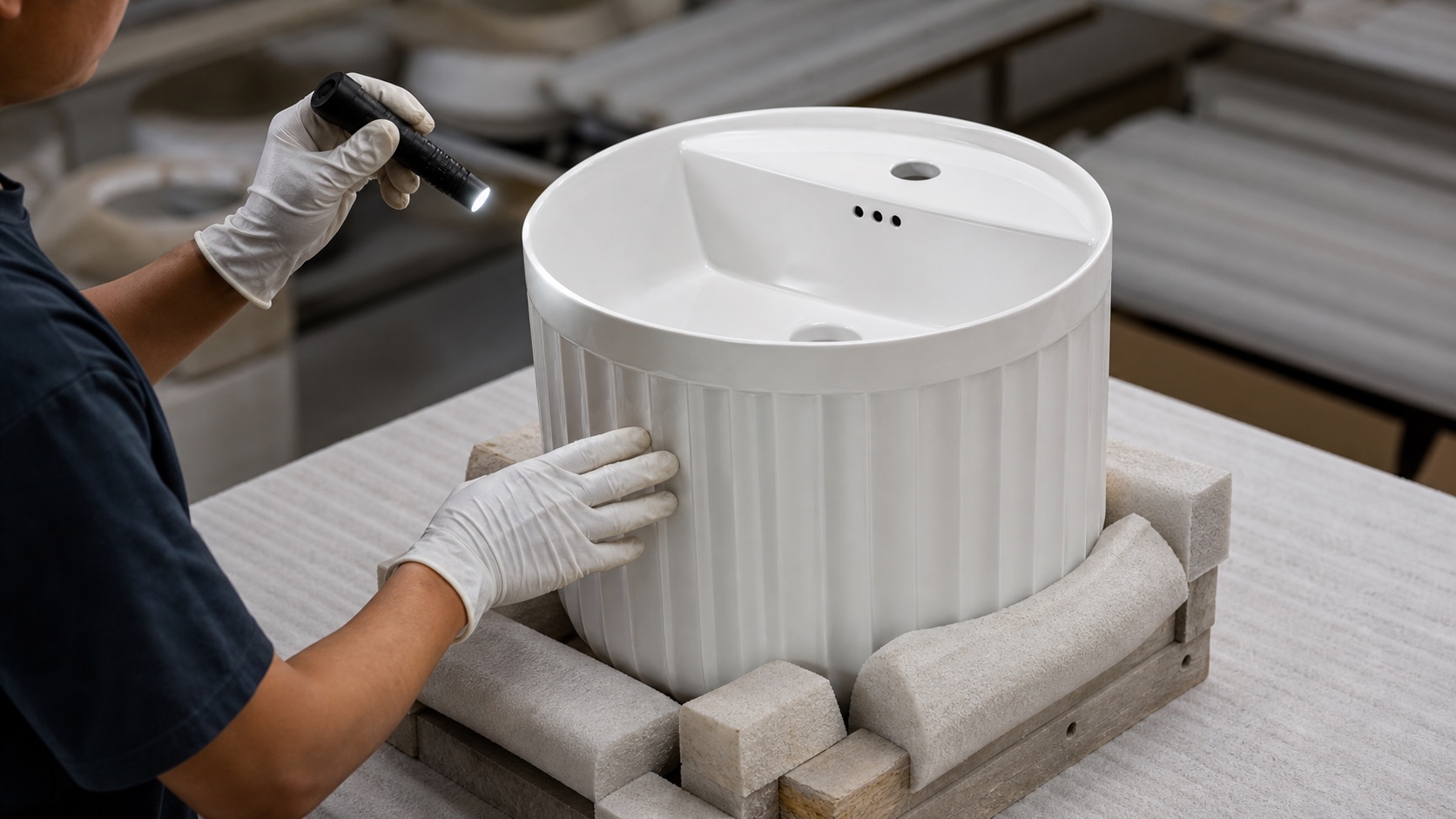
Inspect overall dimensions, wall-contact surface, fixing locations, basin level, bowl symmetry, faucet hole, drain, glaze coverage and body shape against the signed sample. A sculptural body makes distortion or inconsistent lines more visible, especially on square or fluted models. Define the primary viewing angles and lighting for appearance inspection.
Use a stable wall gauge or approved fixture to verify that production basins seat correctly and that fixing points remain accessible. Assemble the specified faucet and waste on random units, run water and check splash, drainage, overflow where fitted and leakage. Confirm the exact faucet and waste configuration for every SKU in the order file.
Packing must protect the full ceramic body, wall interface, corners, flutes and top deck. Do not let the product stand on a vulnerable edge inside the carton. Use model-specific protection, keep accessories isolated and validate handling and stacking with the actual packed unit.
08 ORDER CONTROL
What belongs in a wall-hung basin specification?
Specify the SKU and revision, external dimensions and projection, ceramic weight where verified, fixing centres and approved hardware, wall construction responsibility, mounting height, water and waste centres, model-specific faucet position, overflow configuration, compatible waste, trap route, sealant, signed sample, inspection gauge, carton and spares. Mark whether any fittings are supplied with the basin.
Chengda offers rounded, square and fluted wall-hung ceramic basins for hospitality, commercial and residential buyers. Send the room plan, wall construction, required projection, design direction, faucet and waste standard, target market and quantity. We can shortlist WB models and coordinate samples, drawings, QC and export packing.
A successful wall-hung basin project begins behind the finished wall. When structure, rough-in, ceramic, faucet and service access are decided early, the final room can look simple without making installation or maintenance uncertain.
Plan what the finished wall will hide
SKU; revision; dimensions; projection; verified weight; fixing centres; hardware; wall reinforcement; mounting height; water and waste centres; model-specific faucet; overflow and waste; trap access; signed sample; QC and packing.
FAQ COMMON QUESTIONS
Frequently asked questions
Does a wall-hung basin need a pedestal or cabinet?
No. It fixes directly to a properly reinforced wall using the approved hardware and leaves the floor below clear.
Can a wall-hung basin be installed on plasterboard?
The finish board alone is not structural. The wall needs approved reinforcement, framing, masonry or a carrier connected to the fixing system.
Where is the faucet installed on these WB models?
The product references indicate a wall-mounted faucet for WB100 and ceramic-deck faucets for WB104 and WB108. Confirm every configuration on the signed SKU drawing and sample.
Do these wall-hung basins have an overflow?
The WB104 and WB108 references show overflow openings; WB100 must be confirmed by the signed drawing and sample. Specify the waste by exact SKU.
Are all wall-hung basins accessible?
No. Accessibility depends on the exact rim height, body depth, knee and toe clearance, floor space, pipes and controls under the applicable local standard.
What should be inspected before shipment?
Check wall-contact surfaces, fixing locations, dimensions, body lines, model-specific faucet and overflow configuration, drain, glaze, gauge fit, water test and packing.