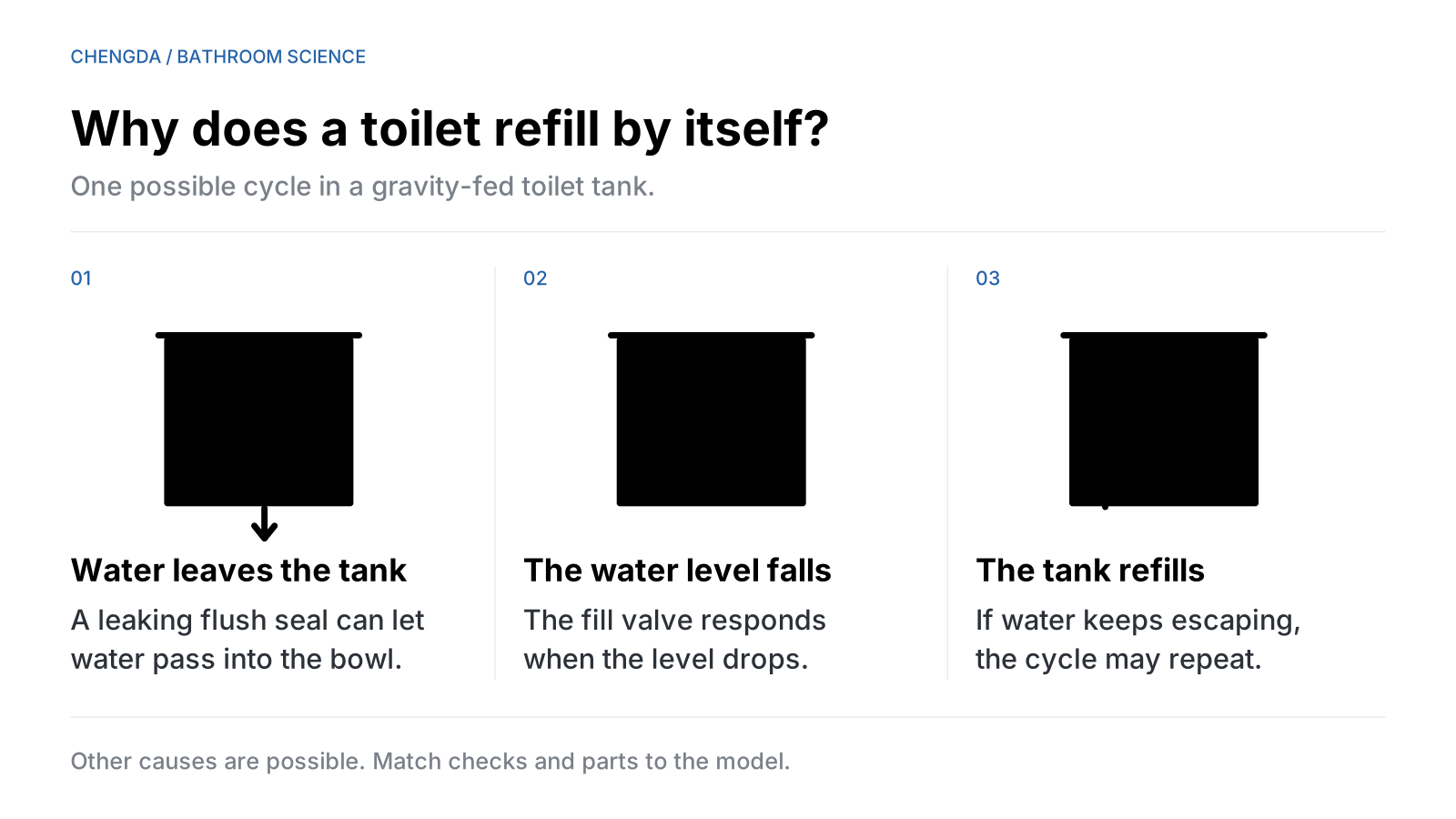
A toilet that briefly refills when nobody has flushed is often replacing water that has escaped from its tank. The falling water level triggers the fill valve again. This is sometimes called ghost flushing, although what you hear may only be a refill, without a complete flush.
That distinction matters: the part making the noise is not necessarily the part causing the problem. Start by identifying when water moves and where it goes. This guide covers conventional gravity-fed cisterns; pressure-assisted, concealed and electronic systems need their own model instructions.
01 HOW IT WORKS
What should happen during a normal flush?
A conventional tank stores water between uses. The flush valve releases that stored water into the bowl, then its flapper or other seal closes the outlet. The fill valve admits replacement water and should stop at the specified tank level. These are separate jobs: one valve controls the outlet and the other controls the incoming supply.
On many models, a small refill hose also directs water toward the bowl during refilling. Flow through that route immediately after a flush can therefore be normal. It is the later restart, or failure to stop, that needs explaining. EPA's toilet-leak guidance describes how the flapper retains water between flushes.
Think of the sequence as release, refill, then hold. A useful observation is whether the toilet reaches the quiet holding stage and remains there. There is no single refill duration that proves every toilet is healthy: the model and supply conditions differ.
02 HOW IT WORKS
Three similar sounds, three different observations
Listen to one complete cycle before changing anything. Record the pattern in ordinary language; this helps separate a routine refill from a fault that returns when the bathroom is unused.
| What happens | What it suggests | What to observe next |
|---|---|---|
| Refills after a flush, stops, then stays quiet | A normal sequence, if water levels also remain stable | Check for later restarts rather than timing this sound alone |
| Stops, then briefly refills with no use | Tank water may be escaping between flushes | Look for falling tank level, bowl movement or external moisture |
| Keeps admitting water and never settles | Inlet shutoff, water-level setting or an outlet leak needs checking | Observe whether water enters the overflow or the tank stays below its set level |
03 HOW IT WORKS
Intermittent refilling: where is the stored water going?
A poor seal at the flush-valve outlet can let water creep into the bowl. As the tank level falls, the fill valve responds and restores it. The floor can remain completely dry. Kohler's intermittent-running guidance identifies worn flapper or canister seals and interference with the operating mechanism among the possible causes.
A chain that holds a flapper slightly open, debris on a sealing surface, or a damaged valve seat can produce similar symptoms. A push-button mechanism may use rods or a cable instead of a chain, so copying a chain adjustment onto every toilet is inappropriate. Identify the installed mechanism first.
Look at the whole sealing path. Replacing a rubber part will not correct a damaged surface against which it must close, and a newly fitted part is not proof that its shape is right. Korky's running-toilet guide separates these checks.
04 HOW IT WORKS
Continuous running: distinguish the inlet from the overflow
The overflow provides a route from the tank toward the bowl if water rises too high. If water keeps spilling into it after the normal refill should have ended, investigate the specified water level and the fill valve's ability to shut off. A float setting or debris inside the inlet valve can be involved; the sound alone does not distinguish them.
By contrast, a tank that cannot reach its normal level may be losing water through its outlet while the inlet keeps replenishing it. Both situations sound like running water, but their paths differ. Kohler's continuous-running guidance explains inlet and overflow checks. Use the model's marked waterline and instructions; do not plug the overflow or raise the level to hide another problem.
05 HOW IT WORKS
A small refill hose can create a separate leak path
A wrongly positioned refill hose can allow water to siphon out of the tank. This possibility deserves attention if the problem began immediately after valve work, even when the main flush seal looks sound.
The correct arrangement depends on the valve. Some hoses use a retaining clip; some connect to a designated port on a canister. Kohler's hose-position guidance illustrates that difference. Compare the actual routing with the manufacturer's diagram. Pushing a loose hose farther into a tube is not a universal fix.
06 HOW IT WORKS
A dye test checks whether tank water reaches the bowl
Let the normal flush and refill finish, so the tank has returned to its specified level before adding the dye. For an accessible conventional cistern, EPA WaterSense describes a simple test: put a couple of drops of food colouring or a toilet leak-detection dye tablet into the tank, wait 10 minutes without flushing, and inspect the bowl. Flush immediately after the check to avoid staining. Follow any product-specific restrictions and handle the ceramic lid carefully.
Colour appearing in the bowl shows that tank water has reached it without a commanded flush. It does not, by itself, identify which component needs replacement. Combine the result with the observed water level and overflow behaviour.
A negative result is a snapshot, not proof that an intermittent fault can never recur. Note whether the unwanted refill happened during the observation. If it did not, give that context to the person investigating, rather than reporting only that the toilet passed a test.
07 HOW IT WORKS
Water outside the toilet changes the priority
Water at the supply connection, tank bolts or the joint between a separate tank and bowl needs its own inspection. An internal leak test does not clear those external connections. Korky's tank-to-bowl guidance also cautions that overtightening fasteners can crack porcelain.
If water is escaping onto the floor, stop using the toilet and isolate its supply if the accessible shutoff operates normally. Do not force a seized valve. Arrange professional help for a cracked tank, inaccessible connections, a shutoff that will not close, or uncertainty about the source. Do not dismantle a concealed or pressurised system using generic gravity-tank instructions.
08 HOW IT WORKS
Give the repairer a pattern, then verify the repair
A short report is more useful than a guess at the failed part: the toilet model, whether the sound is continuous or intermittent, whether anyone used it beforehand, visible bowl movement, the dye-test result, and any recent valve work. A photo of the undisturbed tank layout can preserve information before adjustments change it.
After maintenance, check both stages again: does filling stop as specified, and does the toilet remain quiet when left unused? Include the period in which the symptom previously occurred. For parts, use the manufacturer's model information rather than appearance alone. Our single-flush and dual-flush explanation provides background on the operating choices, but the installed valve determines the service procedure.
Technical references
- Kohler: Toilet Occasionally Leaking or Running
- Kohler: Toilet Constantly Leaking or Running
- Kohler: Tank Leak — Fill Valve Hose Position
- US EPA WaterSense: Home Maintenance
- US EPA WaterSense: Fix a Leak Week
- Korky: How to Fix a Running Toilet
- Korky: How to Fix a Leak Between Toilet Tank and Bowl
- Kohler: Water Running Sporadically — Standard Toilet Tank and In-Wall Tank
- Miami-Dade Water and Sewer — Leak Detection Tips
FAQ COMMON QUESTIONS
Frequently asked questions
Does ghost flushing mean the fill valve is broken?
Not necessarily. The fill valve may be responding normally to a falling tank level. Identify the water-loss path before deciding whether the inlet valve, flush seal or another component needs attention.
Can a toilet leak when the floor is dry?
Yes. Water can move from the tank into the bowl and drain away internally. A dry floor does not rule out that route; observing the tank and using an appropriate dye test can help.
Will any replacement flapper or seal work?
No. Match the toilet and flush-valve requirements. Canister seals, flappers and other mechanisms are not interchangeable simply because their overall sizes look similar. Check model documentation before choosing a part.
Should I lower the tank level to stop the noise?
Only adjust it to the manufacturer's specified setting. A level that is too high can send water into the overflow, but lowering it does not repair a leaking outlet seal and may change flushing performance.