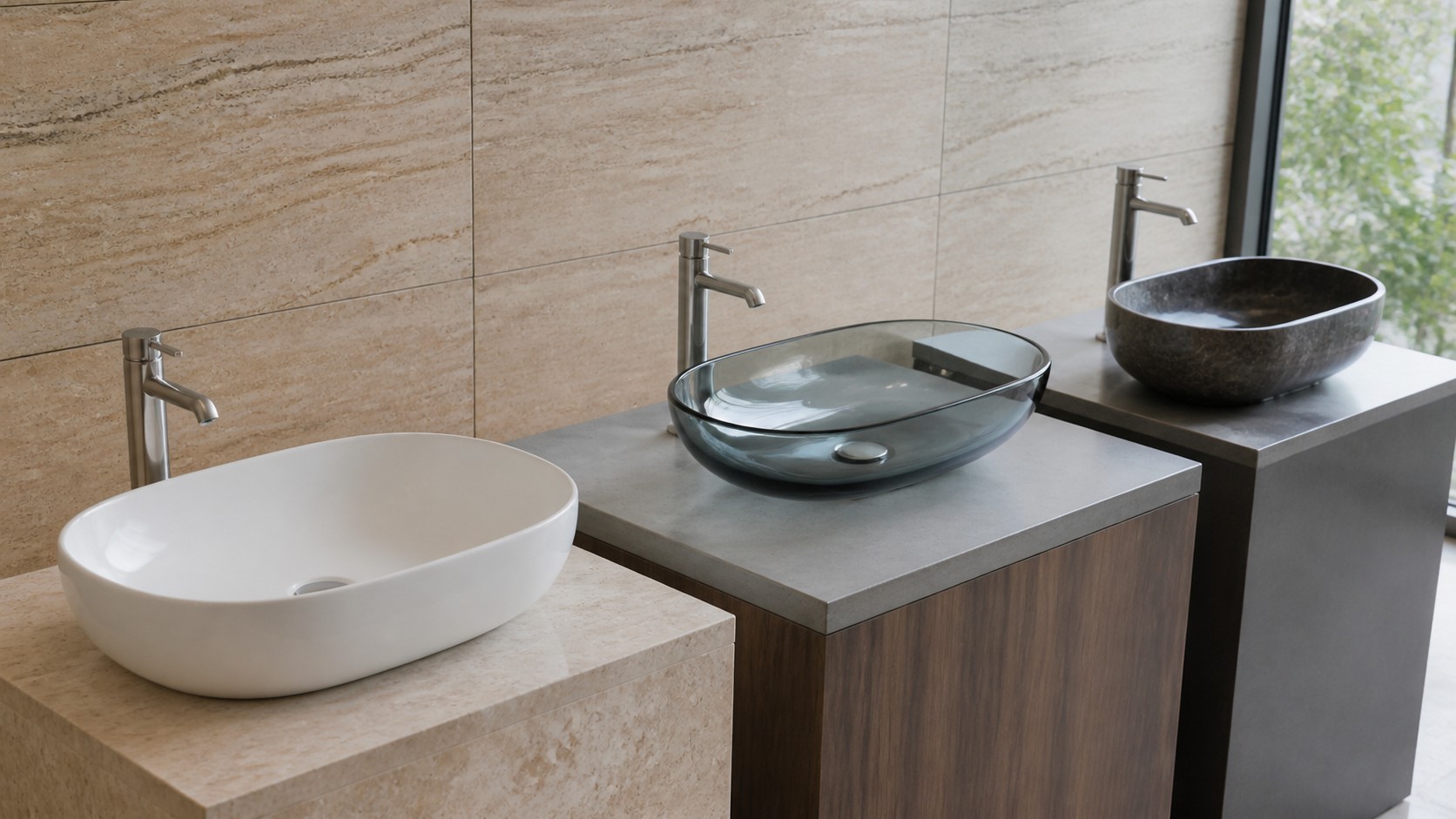
There is no single best vessel sink material for every bathroom. Ceramic, tempered glass and natural stone can all make a good above-counter basin, but they behave differently under hard water, daily wiping, dropped objects, repeated project orders and installation loads. The right answer depends less on a showroom photograph than on who will use the room, who will maintain it and how consistently the same specification must be supplied.
This guide compares the three materials as working bathroom products rather than decorative objects. It looks at surface care, visible water marks, impact risk, weight, support, replacement and batch consistency. Exact performance still belongs to the selected model: always read its current product sheet, installation instructions and care guide, and treat those documents as more authoritative than a general material label.
Key takeaways
- Ceramic is the practical all-rounder: a fired, glazed surface, familiar cleaning routine and repeatable white finish make it a strong default for homes and multi-unit projects.
- Tempered glass is chosen for light and colour: it can create a striking focal point, but water spots and edge condition are more visible and the exact care instructions matter.
- Natural stone is chosen for individuality: every piece can look unique, while weight, porosity, sealing and variation require closer control.
01 START WITH USE
How should you choose a vessel sink material?
Begin with the room. A family bathroom sees toothpaste, cosmetics, hard-water droplets and hurried cleaning every day. A powder room may be used less often and can support a more expressive surface. A hotel, apartment or retail programme adds another demand: replacements should match, care instructions must be simple, and every approved basin needs to arrive with the same critical interfaces. These use cases can point to different materials even when the design brief looks similar.
Compare five questions before colour: How visible will dried water be? What cleaners will actually be used? Can the vanity and counter support the basin? How likely is impact from bottles or tools? Does the buyer need repeatable appearance across many rooms? Also confirm shape, footprint, finished rim height, overflow, faucet arrangement and drain compatibility. Material does not rescue a basin that is the wrong size or paired with the wrong water stream.
02 CERAMIC
Why choose a ceramic vessel sink?
A ceramic bathroom basin is formed and fired, then normally protected by a glazed surface. Terms such as ceramic, porcelain and vitreous china are sometimes used loosely in retail, so the product specification should identify what is actually supplied. The practical attraction is familiar: a smooth glazed bowl, broad shape choice and a surface that is straightforward to wipe with non-abrasive products approved by the maker. White ceramic also coordinates easily with toilets and other sanitaryware.
Ceramic is hard but not unbreakable. A heavy object can chip an exposed rim, and excessive force at the drain or an uneven support point can crack a basin. Repairs rarely become invisible. Even so, ceramic offers strong visual consistency for repeated rooms because colour, gloss and form can be controlled against an approved sample. Buyers comparing other manufactured materials can also read our ceramic basin vs resin basin guide.
03 TEMPERED GLASS
What is a tempered glass vessel sink like?
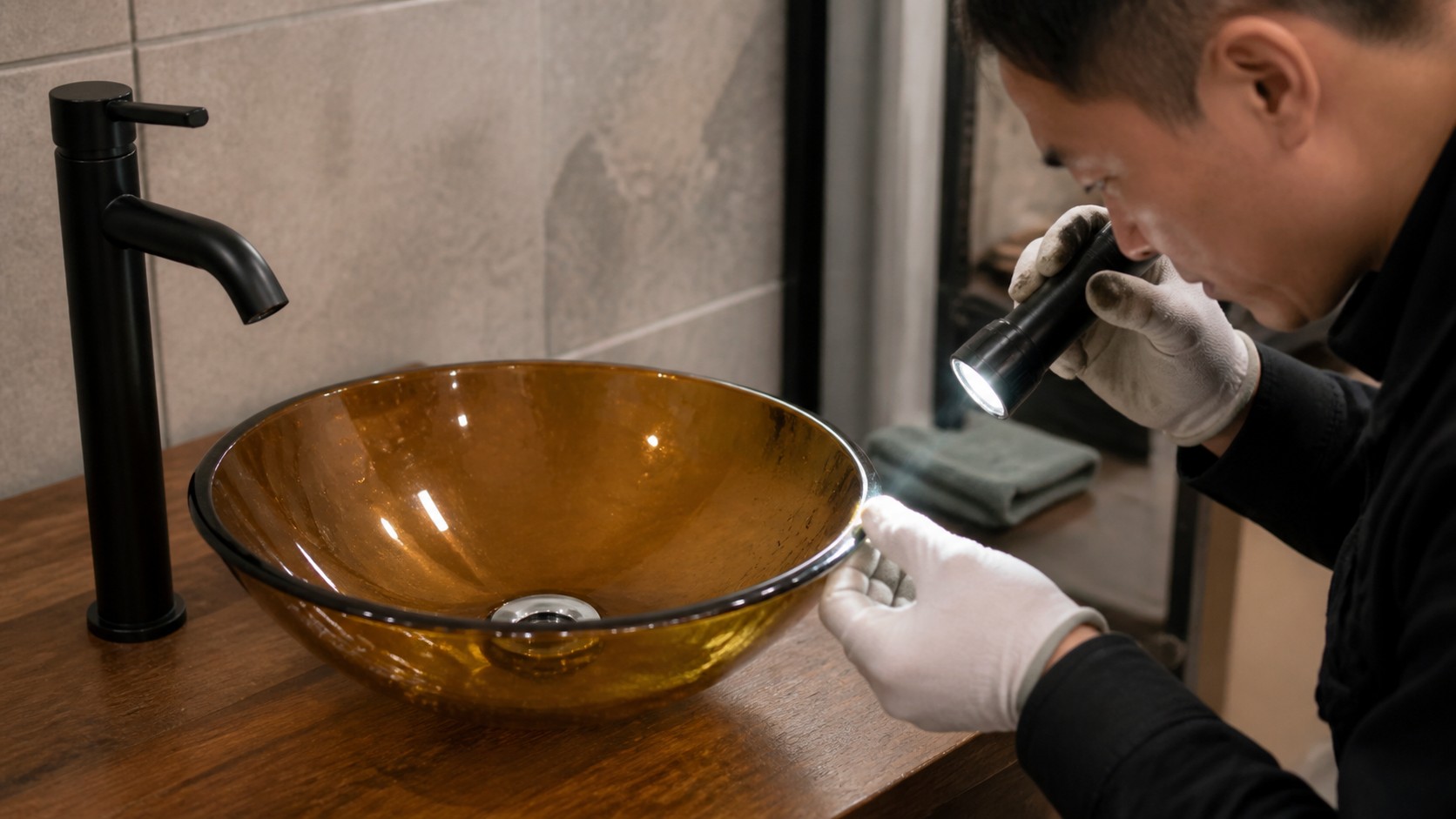
Glass is the most visually transparent choice. Clear, frosted, tinted and patterned surfaces can catch light in a way an opaque basin cannot, which is why glass vessels are often specified as a feature. For a bathroom sink, verify that the exact product is made and tested for its stated use; never assume that any decorative glass bowl is a plumbing fixture. Tempered glass is designed to improve resistance and change how breakage occurs, but it is not damage-proof.
Daily appearance is the main trade-off. Clear and dark glossy glass can show mineral droplets, fingerprints and soap film quickly, especially under bright vanity lighting. Abrasive pads can dull or scratch a finish, while a damaged edge needs professional assessment rather than concealment. Follow the maker's limits for cleaners and temperature change. For a project, approve colour, pattern, thickness, edge quality and underside finish from production-intent samples because transmitted light exposes variation.
04 NATURAL STONE
What changes with a natural stone vessel sink?
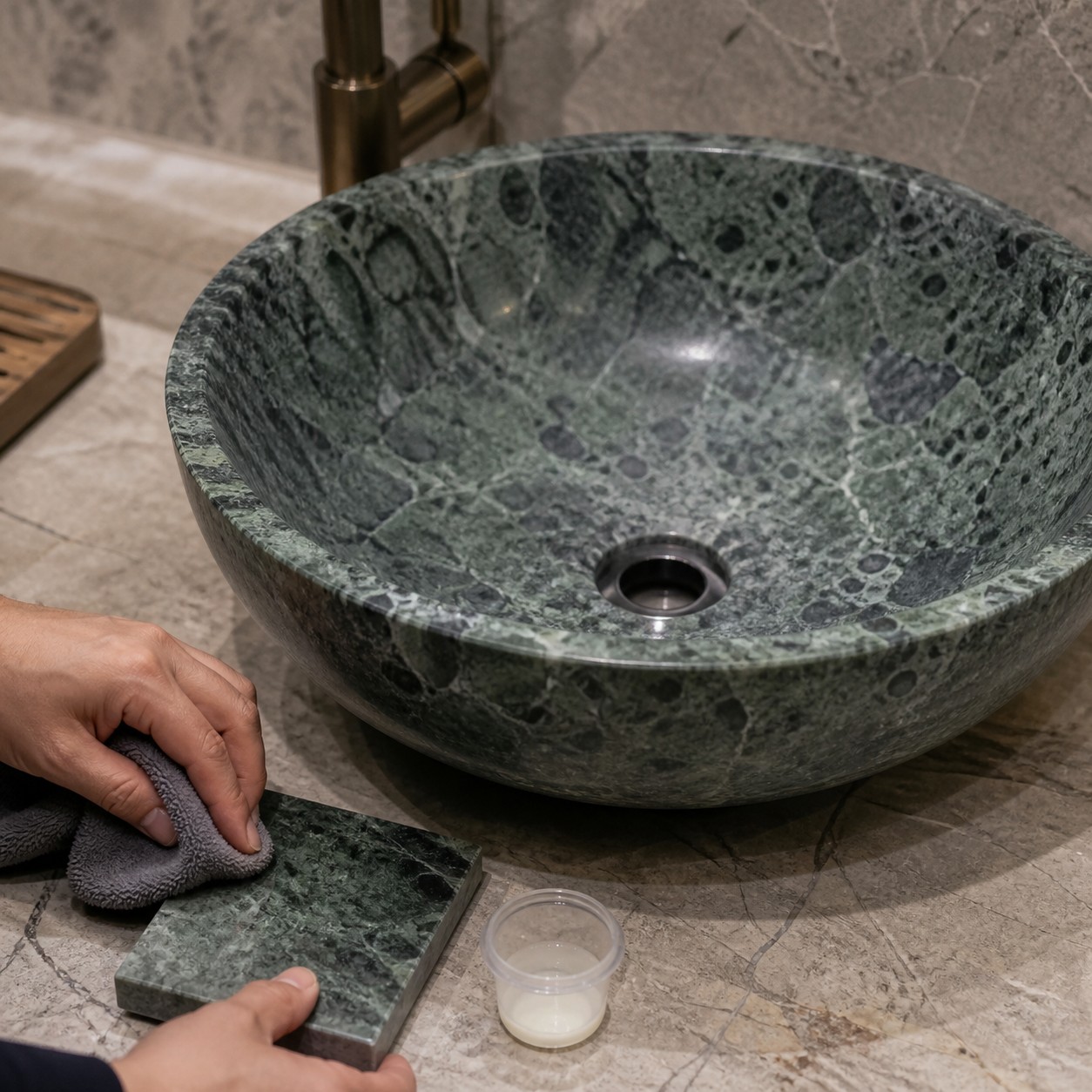
Natural stone makes every basin materially individual. Veining, mineral marks and tonal movement are part of the appeal, not defects that can always be eliminated. Granite, marble, travertine and other stones do not share one performance profile. Their porosity, absorption, acid sensitivity and surface finish vary, so a seller's model-specific care and sealing instructions matter more than the broad word stone. A sample should be judged in the same lighting and finish intended for the room.
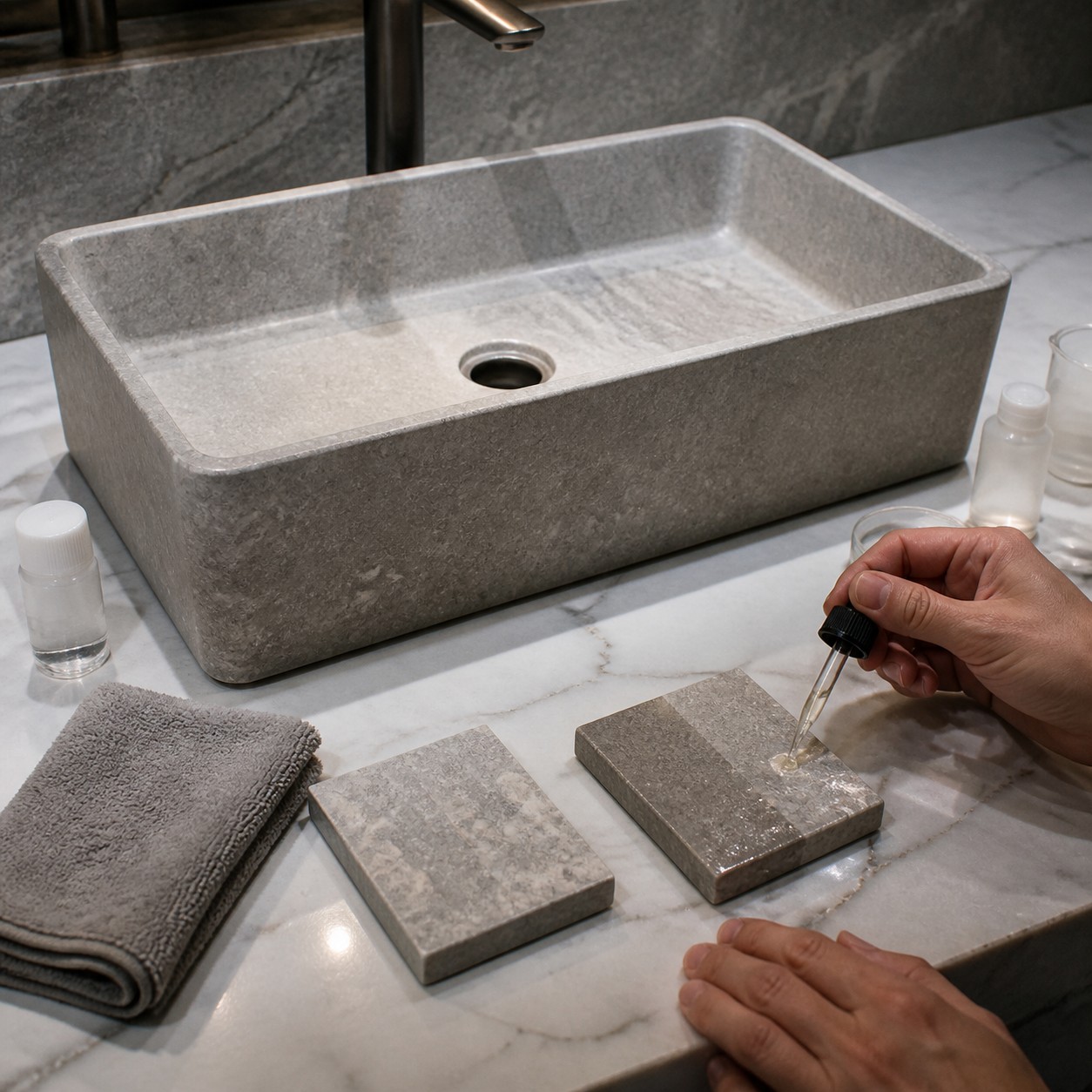
Stone is usually the heaviest of these three options. The vanity, top and contact area must carry the real basin safely without point loading, rocking or relying on drain pipework as support. Some stones or finishes may require periodic sealing; marble and other calcite-rich stones can etch when exposed to acidic products even if liquid does not immediately stain. Natural variation also means replacements may coordinate rather than match exactly, an important distinction for hotels and developments.
05 REAL-WORLD DURABILITY
Which vessel sink material is most durable?
Durability depends on the event. Ceramic resists routine scratching and staining well but can chip under a sharp heavy impact. Tempered glass handles normal use when correctly manufactured and installed, yet edge damage is serious and no glass should be described as unbreakable. Dense stone can feel exceptionally substantial, but a thin vulnerable edge may chip and a porous or acid-sensitive surface can change through use. A single winner therefore hides the failure mode that matters.
For a busy shared bathroom, evaluate the whole service cycle: ordinary cleaners, metal cosmetic containers, jewellery, hard water, replacement availability and the skill of maintenance staff. Ask suppliers for the applicable care guide, warranty limits and inspection criteria. Do not infer impact ratings from thickness alone or transfer one model's claims to another. If safety glazing, accessibility or other rules apply in the destination market, confirm the exact product documentation and local requirements before approval.
06 CARE & WATER MARKS
Which vessel sink material is easiest to keep clean?
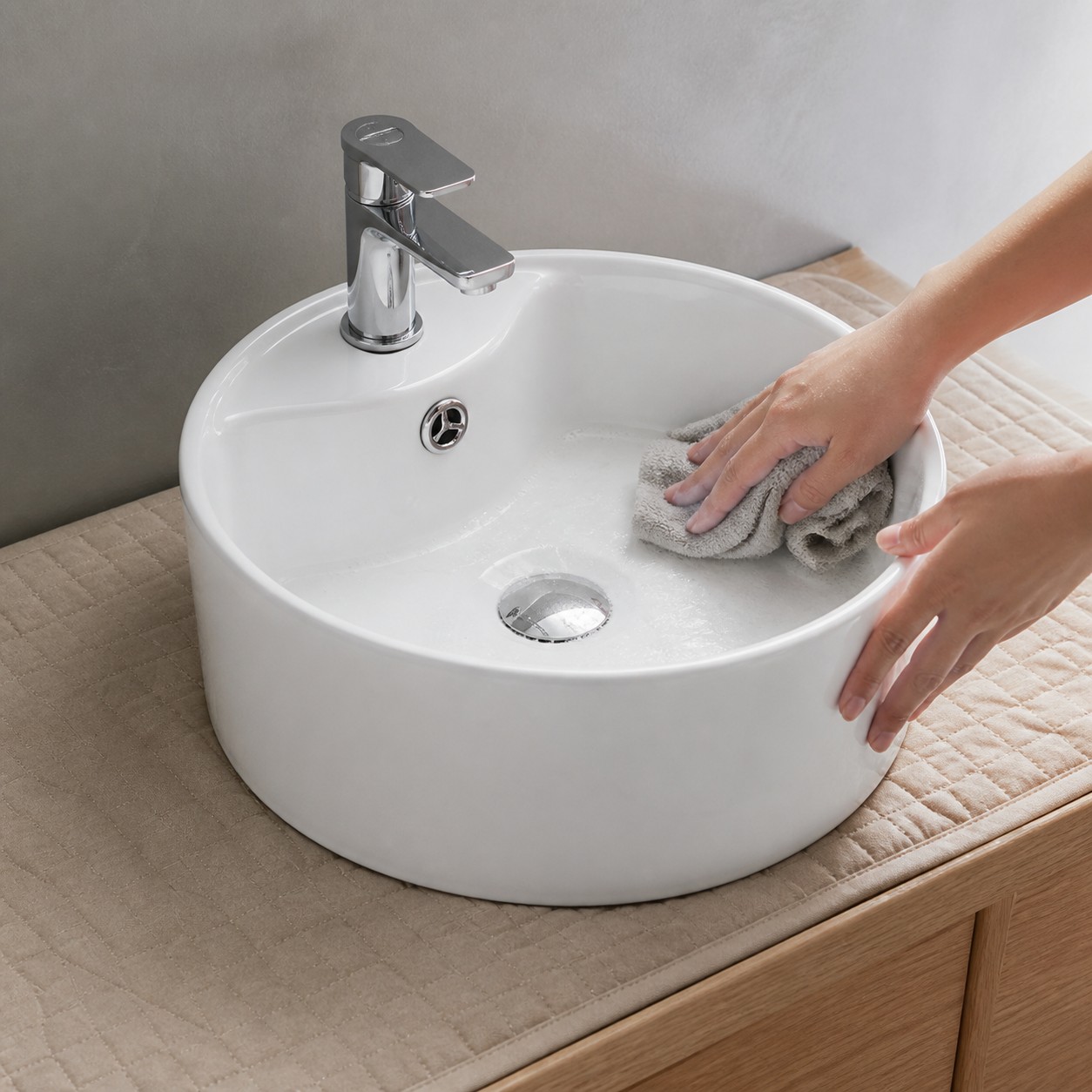
Glazed ceramic is usually the least demanding visual choice because a pale opaque surface hides some dried droplets and accepts a simple soft-cloth routine. Tempered glass is also smooth, but clear or dark finishes reveal mineral spots sooner. Natural stone varies: a polished dense stone may wipe easily, while textured or porous material can retain residue and may need a pH-appropriate cleaner. The finish often changes daily care as much as the base material.
Across all three, rinse residues, wipe standing water and use only products permitted by the manufacturer. Avoid making vinegar, bleach, abrasive powder or a scouring pad a universal recommendation; a method suitable for one surface can dull, etch or weaken another. Hard-water deposits are easier to prevent than remove. The routine in our ceramic bathroom sink cleaning guide applies to glazed ceramic, not automatically to glass or stone.
07 INSTALL AS A SYSTEM
How does material affect vessel sink installation?
Material changes handling and support, but the exact basin controls the installation. Check the underside contact geometry, mounting method, sealant, drain opening, overflow configuration, counter passage and faucet clearance in the current instructions. A mounting ring is not universal. The drain must not be tightened as a substitute for stable support, and pipework must not pull the bowl sideways. Heavy stone may need additional structure and extra lifting control; exposed glass edges demand careful handling.
Approve the complete assembly before cutting. Place the actual basin, faucet and drain on a full-size counter template, then confirm reach, splash behaviour, cleaning access and service space below. Our vessel sink size guide covers the measurement chain, while the ceramic vessel sink installation guide explains why the product template and manufacturer instructions must control the work.
08 SPECIFY THE OUTCOME
Which vessel sink material should a project specify?
For repeated apartments, hotels and broad retail ranges, ceramic is often the most balanced starting point: familiar care, coordinated sanitaryware appearance and controllable production standards. Glass suits a design-led accent range when water marks and edge care are accepted. Natural stone suits premium rooms where variation is intentional and the maintenance team understands the finish. These are fit recommendations, not declarations that one material is always superior.
Write the purchase specification around measurable outcomes. Name the material and finish, approved sample, colour tolerance, critical dimensions, basin weight, overflow and faucet-hole arrangement, drain interface, underside quality, packaging tests and required documents. Include replacement expectations and a cleaning guide. Then approve a production-intent sample installed on the intended counter. The best vessel sink material is the one whose beauty, maintenance, installation and supply consistency all fit the same project.

FAQ COMMON QUESTIONS
Frequently asked questions
What is the best material for a bathroom vessel sink?
Ceramic is a strong all-round choice for easy care and repeatability; tempered glass prioritises colour and light; natural stone prioritises unique appearance. Confirm the exact model and room needs.
Is a ceramic vessel sink better than glass?
It is usually more forgiving of visible water spots and easier to coordinate across repeated rooms. Glass may be better when transparency, colour or a statement finish is the main goal.
Can a tempered glass vessel sink break?
Yes. Tempering improves performance but does not make glass unbreakable. Protect the edges, follow the installation instructions and replace or professionally assess a damaged product.
Does a stone vessel sink need sealing?
Some stones and finishes do, while others have different care requirements. Follow the selected product supplier's written instructions rather than a universal schedule.
Which vessel sink material shows the fewest water spots?
A light, opaque glazed ceramic surface is generally more visually forgiving than clear or dark glossy glass, but water chemistry, lighting and finish also matter.
Is a heavy stone vessel sink suitable for any vanity?
No. Verify the actual basin weight, contact geometry, countertop and cabinet support with the suppliers and installer before approval.