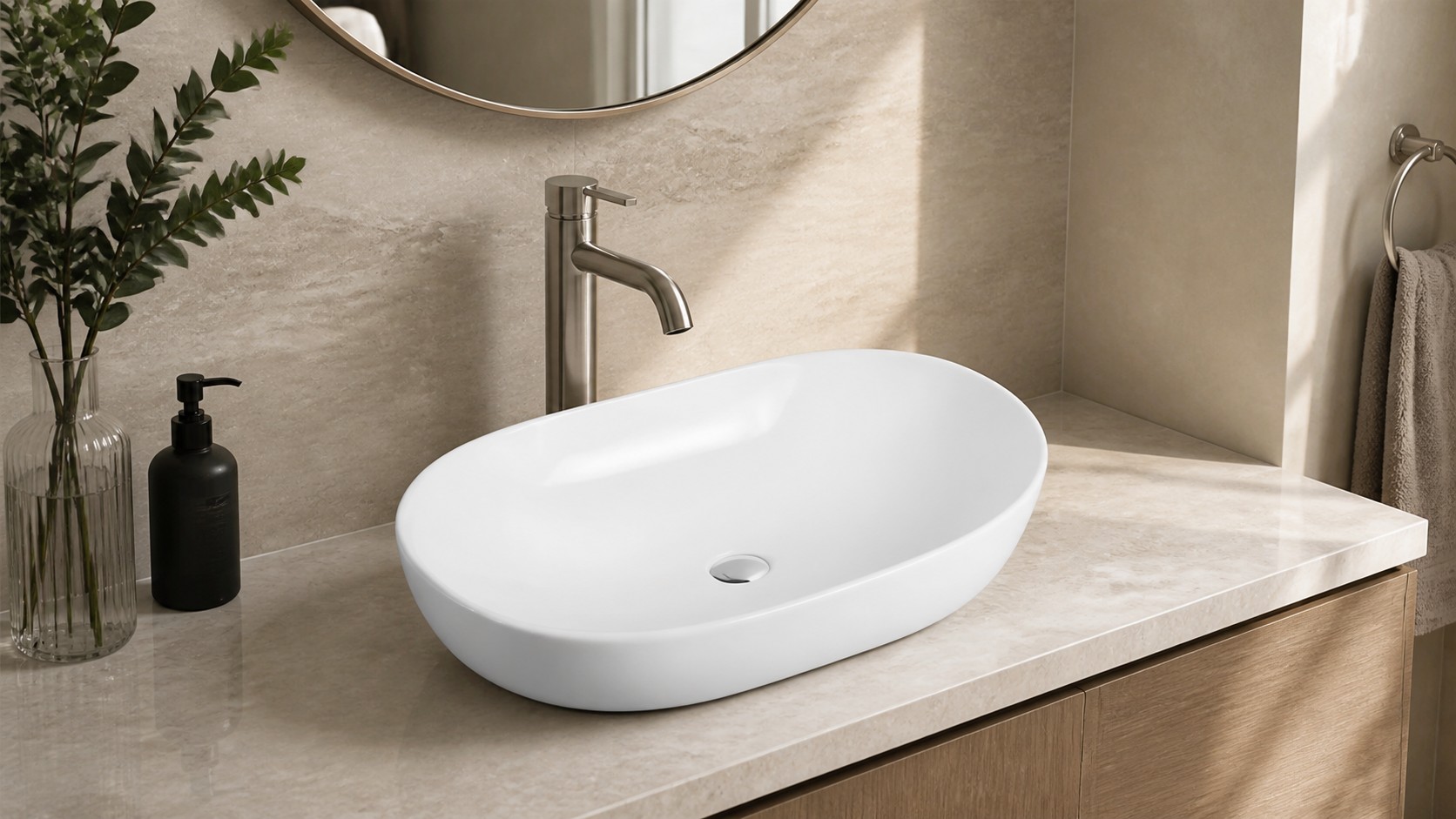
The answer to does a vessel sink need a backsplash is not an automatic yes or no. A backsplash or upstand can protect a vulnerable wall and finish the counter-to-wall joint, but some bathrooms use full-height tile, stone or another washable wall system instead. Other installations leave the basin away from the wall and show little splash in actual use. The right decision comes from the whole assembly, not from the basin label alone.
A vessel sink raises the rim above the countertop, which changes the relationship between the wall, faucet, handles and cleaning space. It does not prove that every wall will get wet, nor does it make a particular backsplash height universally correct. This guide separates code, product instructions, material protection and practical testing so homeowners, designers and project buyers can approve a detail that stays clean and serviceable.
Key takeaways
- No global mandate: A vessel sink does not by itself create one universal backsplash requirement; verify local rules and the selected wall system.
- Protect the weak points: Review the counter-to-wall joint, penetrations, absorbent finishes and areas reached by repeated splash.
- Keep working clearance: A backsplash must not block faucet handles, spout service, basin cleaning or the gap around the ceramic.
01 DECISION FRAME
Is a backsplash required behind a vessel sink?
A vessel sink does not create one worldwide rule requiring a separate backsplash. The applicable building or plumbing rules, room use and approved wall assembly govern the project. A short stone upstand, full-height tile, solid-surface wall panel or another washable finish can each provide protection. In some dry powder rooms, a properly finished wall and sealed counter joint may be accepted; in higher-use rooms, more durable protection is often sensible.
Do not confuse “not universally mandatory” with “unnecessary.” Kohler describes its Solid/Expressions backsplash as a component that helps protect the wall from water damage, while other Kohler vanity pages list side splashes as separate coordinating options. Those are product choices, not a declaration for every bathroom. Ask the designer and local authority what the room requires, then document the selected wall system rather than assuming the ceramic vessel itself supplies wall protection.
02 EXPOSURE
What makes one vessel sink splash the wall more than another?
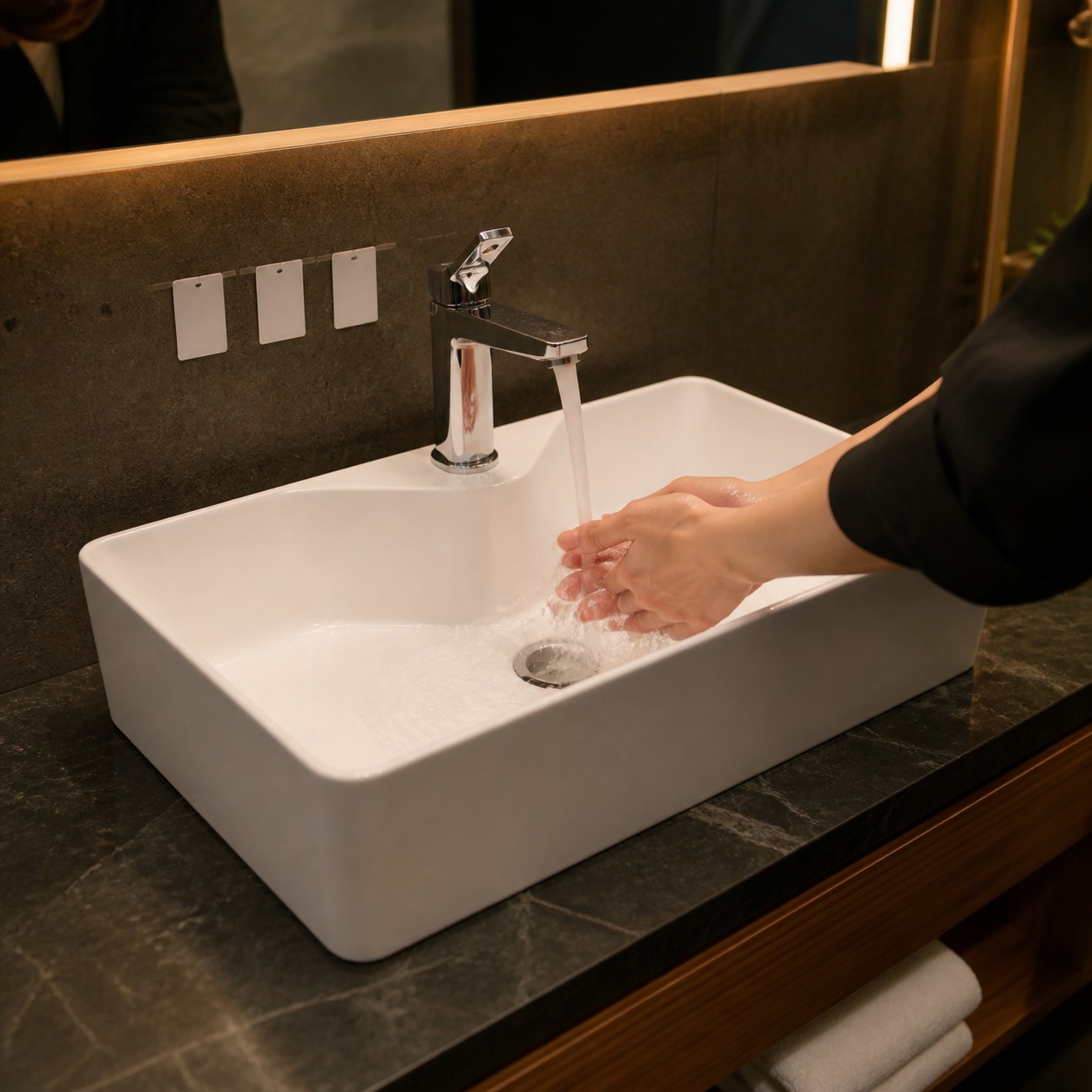
Wall exposure depends on basin-to-wall distance, rim and bowl geometry, faucet height and reach, stream angle, aerator, supply pressure and user behaviour. A stream landing on a steep bowl wall or drain cap can send droplets outward; a well-aimed stream landing in a useful bowl area may remain controlled. Toothbrushing, face washing and children's use can reach farther than a simple hand-washing demonstration.
The above-counter rim changes the geometry but does not predict splash by itself. Review the exact product pair using the vessel sink splashing guide. A backsplash manages water that reaches the wall; it cannot correct a badly matched faucet, unstable pressure or unsuitable stream landing. Solve the source first, then size wall protection for the residual exposure that remains during realistic use.
03 MATERIAL SYSTEM
Which wall finishes need more protection?
Painted gypsum, wallpaper, timber veneer and unsealed joints deserve careful review because repeated wetting, cleaning products and slow-drying edges can damage the finish. Tile, stone, glass and solid surface are generally easier to wipe, but the face material alone is not the whole system. Grout, sealant, board, adhesive, penetrations and the transition to the countertop must all be appropriate for the specified exposure and installed to their manufacturers' instructions.
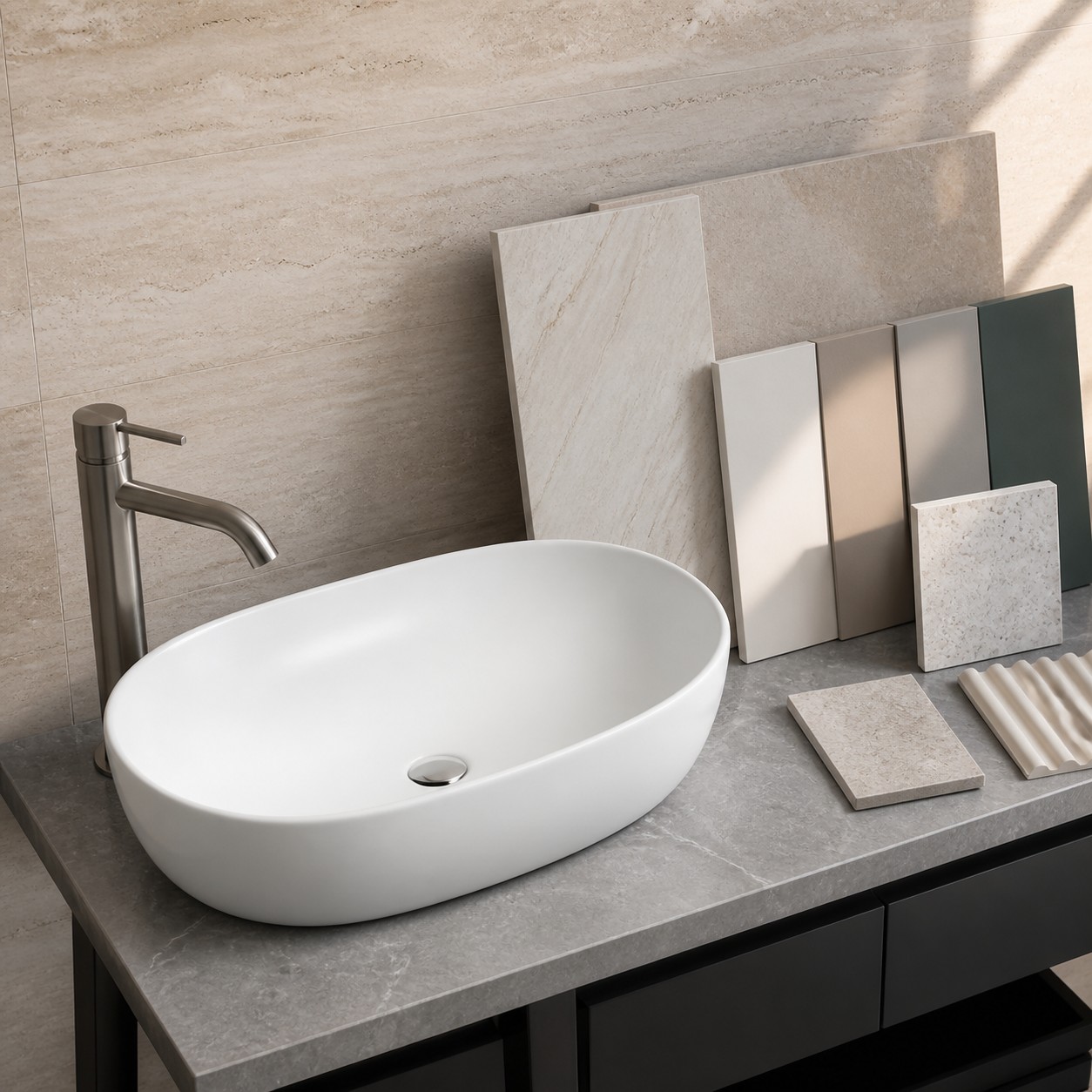
Treat a backsplash as a wall-protection assembly, not a decorative strip floating over an untreated joint. Confirm substrate preparation, edge finishing and compatibility between stone, tile, counter and sealant. Where a faucet penetrates the wall, detail sleeves, escutcheons and seals without trapping water. The ICC plumbing framework requires fixtures to allow cleaning around them and calls for watertight joints where fixtures contact walls or floors; it does not say every vessel sink must use one standard upstand.
04 COVERAGE
How high and wide should the backsplash be?
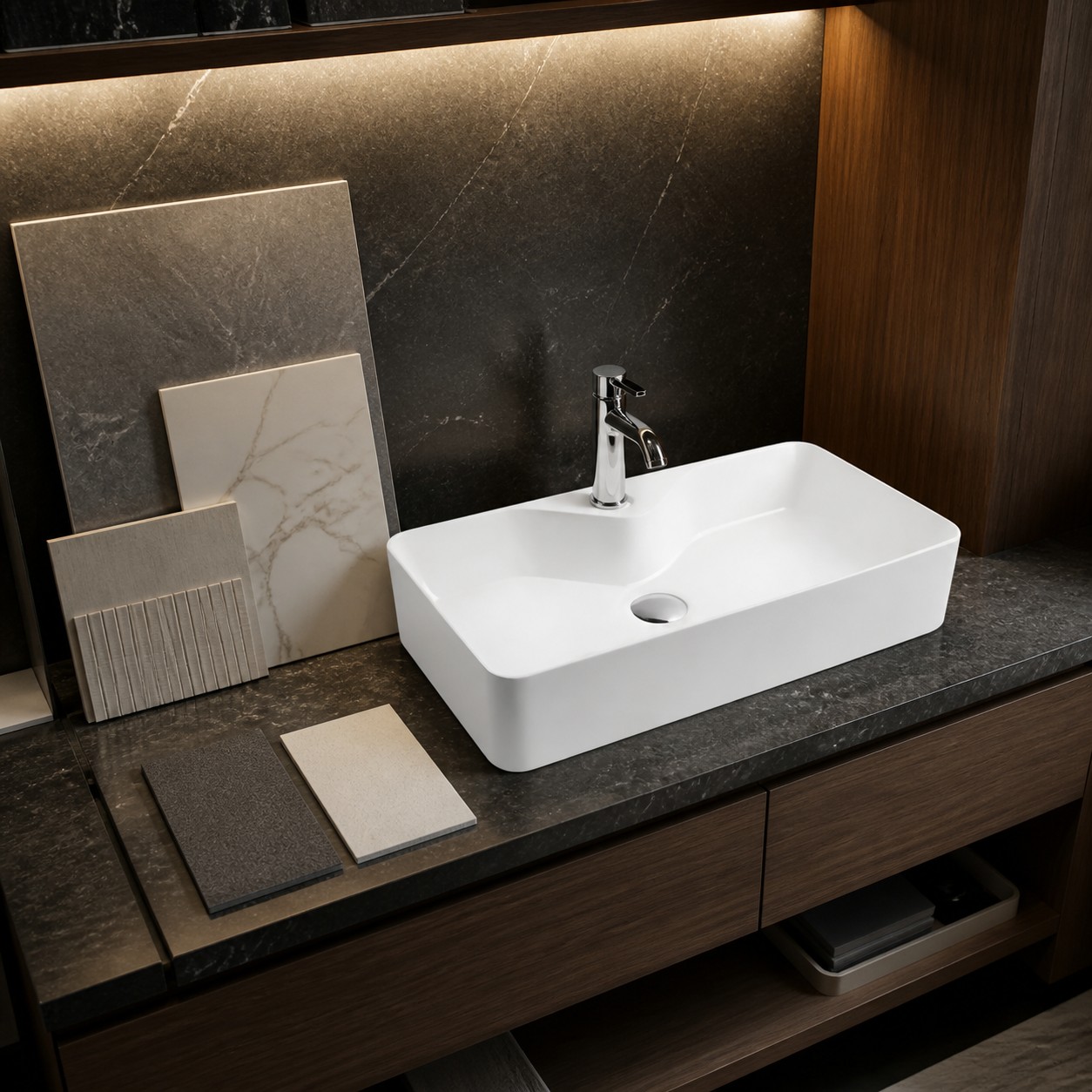
There is no universal backsplash height for a vessel sink. Start with the counter-to-wall joint, then map the wet area found in the real splash test. A short upstand may protect the lowest joint, while a taller panel or full-height washable finish may better suit a wall-mounted faucet, busy family bathroom, hotel vanity or finish that is difficult to repair. Side returns can matter in a corner even when the rear wall is protected.
Width should follow exposure and visual joints rather than only the basin width. Include the faucet zone, handle movement and likely wiping path, but avoid narrow pieces with fragile edges around penetrations. Coordinate mirror bottom, electrical accessories and wall cabinets. If the protection stops below a wall-mounted spout, specify how the finish and penetrations above remain cleanable. Record all extents from finished counter and wall datums instead of relying on a marketing phrase such as “standard four-inch backsplash.”
05 WORKING SPACE
How much clearance do the faucet and basin need?
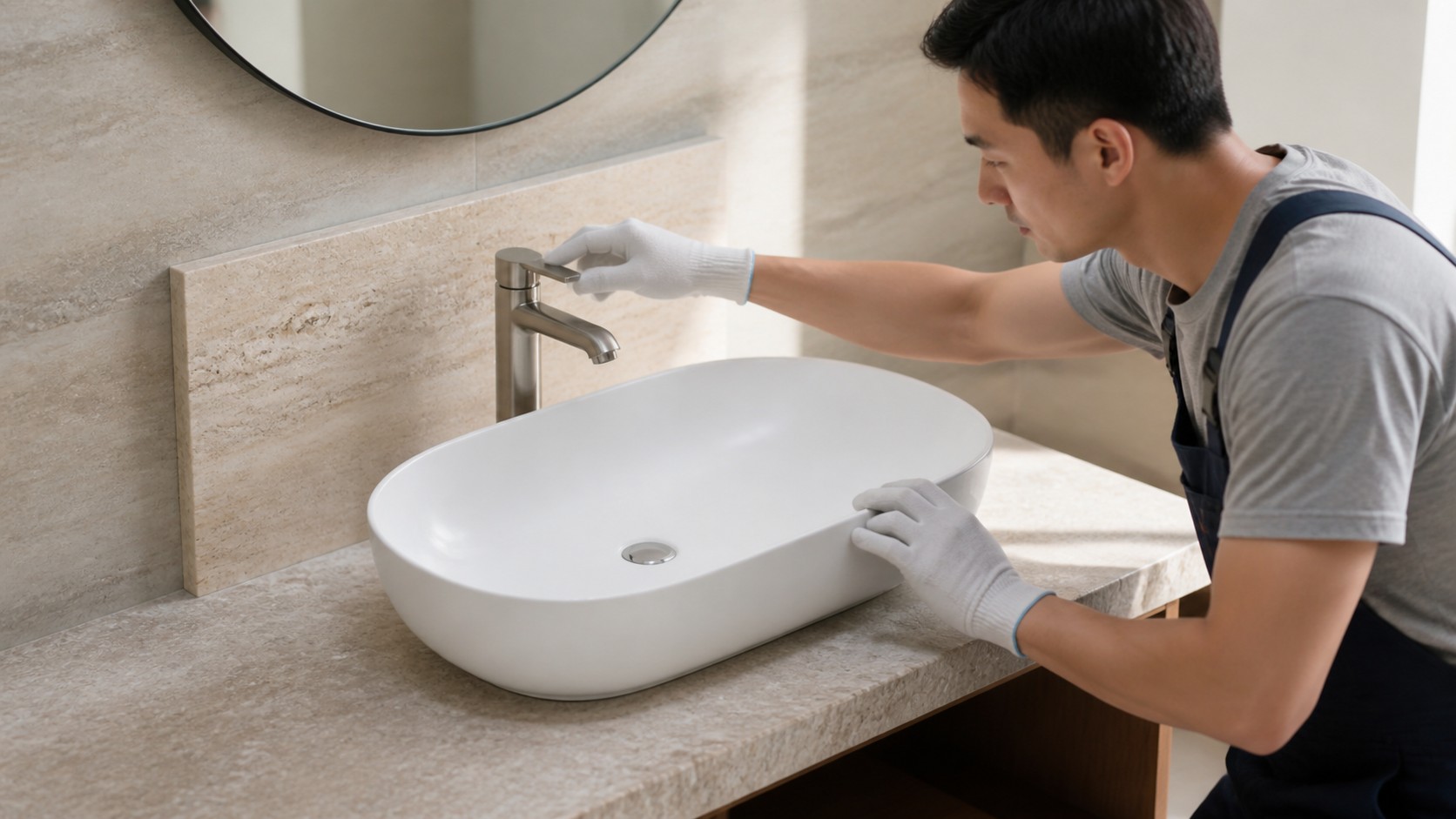
The backsplash must not steal the space required by the selected basin and faucet. Check spout body, handle travel, cartridge or aerator service, mounting nuts and supply hoses. Also preserve a practical cleaning gap between the ceramic and wall. A narrow slot that cannot accept a cloth will collect dust, soap and standing droplets even if the wall surface itself is waterproof.
Use named product instructions rather than turning one recommendation into a global rule. Kohler's Conical Bell vessel installation guide recommends at least 25 mm between specified basin, faucet components and backsplash or wall for that layout, while Moen's sink instructions tell installers to confirm adequate space among the backsplash, faucet, fixtures and cabinets. The exact approval still comes from the selected models, handle envelope and full-size placement. The basin height and faucet guide covers spout and stream coordination.
06 DETAILS & CARE
How should joints and cleaning access be handled?
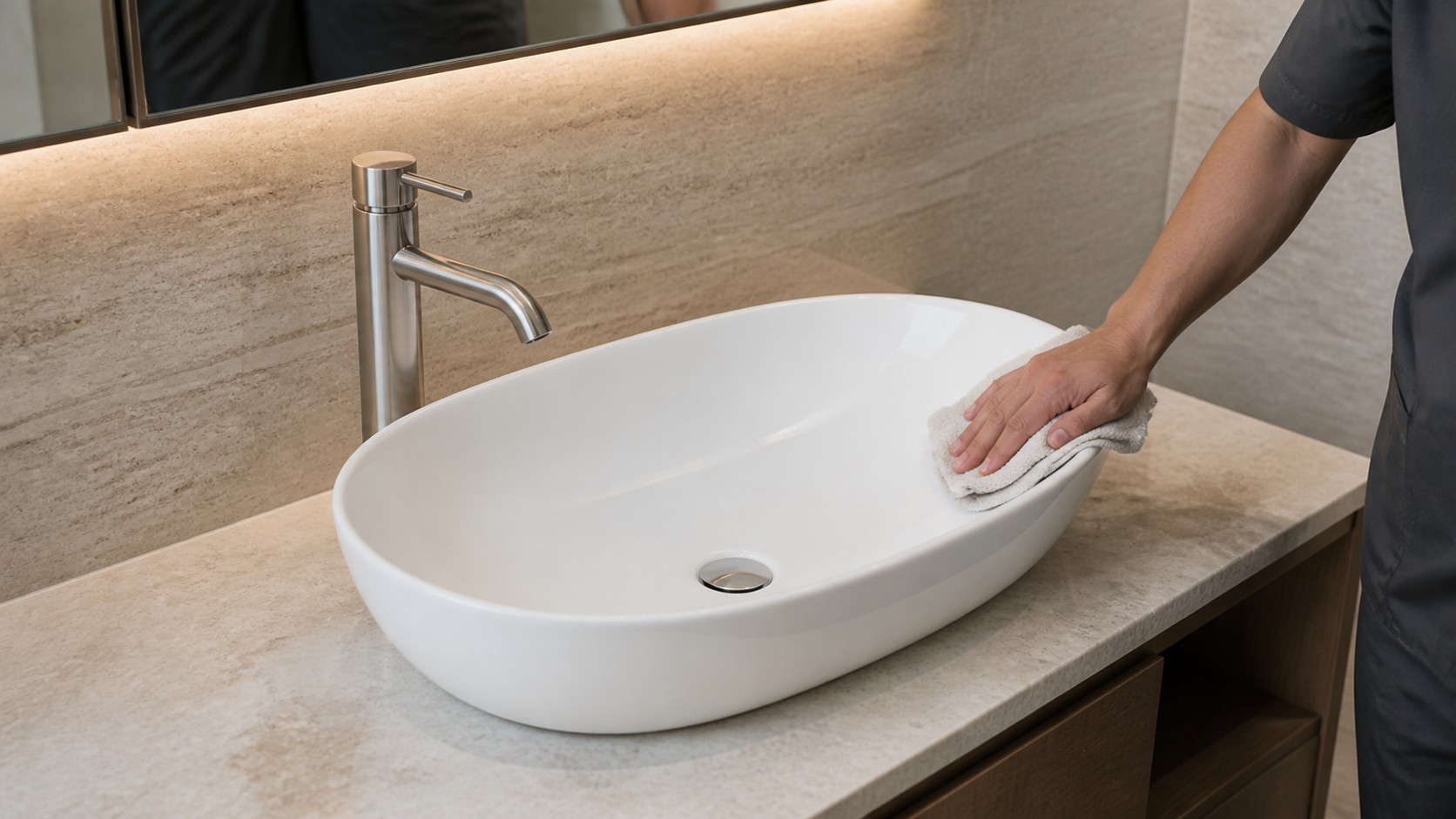
Detail the counter-to-backsplash joint, vertical corners, top edge and all faucet penetrations. Use the sealant, primer, joint width and backing specified by the material-system manufacturers; do not assume grout alone is a flexible movement joint. Keep the joint continuous and inspectable. Avoid ledges that slope toward the wall or deep recesses that hold water behind the vessel sink.
Cleaning should be possible without aggressive tools that scratch glaze, stone or fittings. Leave room to wipe the basin base, rear counter, backsplash face and sealant line. Choose compatible cleaners for each material, and replace failed sealant rather than covering it with another bead. The ceramic bathroom sink cleaning guide explains routine basin care; the wall and joint manufacturers' care instructions still control their own materials.
07 REAL-WORLD TEST
How do you test the wall protection before approval?
Install the production-intent basin, faucet, aerator, drain and countertop on a full-size mock-up with the proposed wall finish or a marked substitute. Begin with dry surfaces and removable absorbent cards on the rear and side zones. Run low and normal flow, wash hands at realistic positions, operate both hot and cold, and repeat activities likely in the room. Record where droplets land rather than judging from one photograph.
Check immediately and after a short standing period for water at the counter joint, behind the basin, around penetrations and on adjacent finishes. EPA WaterSense flow labels address water efficiency and performance criteria; they do not certify that every faucet-and-bowl pairing will be splash-free. If exposure is excessive, adjust the approved faucet, aerator, pressure, stream landing or basin position and repeat. Size the backsplash only after the source and remaining wet zone are understood.
08 PROJECT CONTROL
What should a project backsplash specification include?
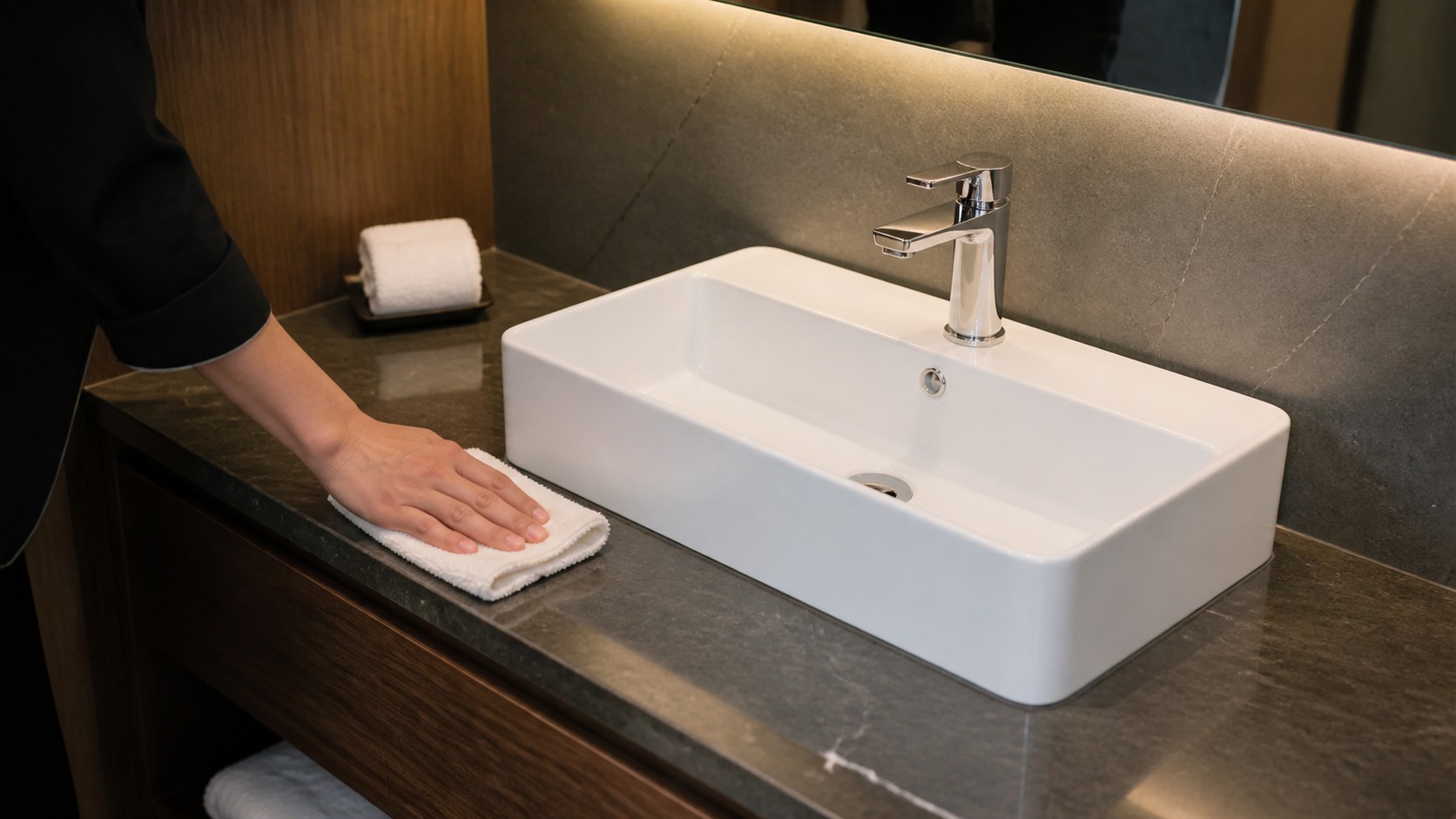
Record room type, basin and faucet models, distance to finished wall, backsplash material, substrate, height, width, side returns, edge treatment, joint and sealant system, penetrations, mirror relationship and cleaning method. Attach the splash-test result and an elevation with finished datums. For hotels or apartments, approve one representative room and keep photographs of the signed sample so installers do not improvise different gaps floor by floor.
Coordinate the detail with the vessel sink size guide and the current basin drawing before stone or tile is cut. Inspect substrate, alignment, seals and cleaning clearance at handover, then include joint maintenance in the owner's information. A good vessel sink backsplash is neither an automatic accessory nor an afterthought: it is the smallest durable wall-protection system proven to handle the room's real water exposure without compromising the faucet or service space.
FAQ COMMON QUESTIONS
Frequently asked questions
Can I install a vessel sink without a backsplash?
Possibly, if local requirements allow it and the approved wall finish, sealed counter joint, clearances and splash test show adequate protection.
How high should a backsplash be behind a vessel sink?
There is no universal height. Protect the counter joint and the wet zone demonstrated by the exact basin, faucet, room use and wall material.
Is tile behind a vessel sink enough?
Tile is only the visible layer. The substrate, adhesive, grout or joints, sealant, penetrations and transitions must form a suitable complete system.
How much gap should be left between a vessel sink and backsplash?
Follow the exact basin and faucet instructions and leave enough room for handle movement, installation, service and cleaning; do not apply one model's clearance universally.
Does a wall-mounted faucet require a taller backsplash?
Not automatically, but its wall penetrations, stream path and likely wet zone may favour a taller washable finish. Confirm with the full assembly and splash test.
Will a backsplash stop a vessel sink from splashing?
It protects the wall from residual droplets but does not fix poor faucet reach, stream landing, flow, pressure or bowl matching. Correct those causes first.