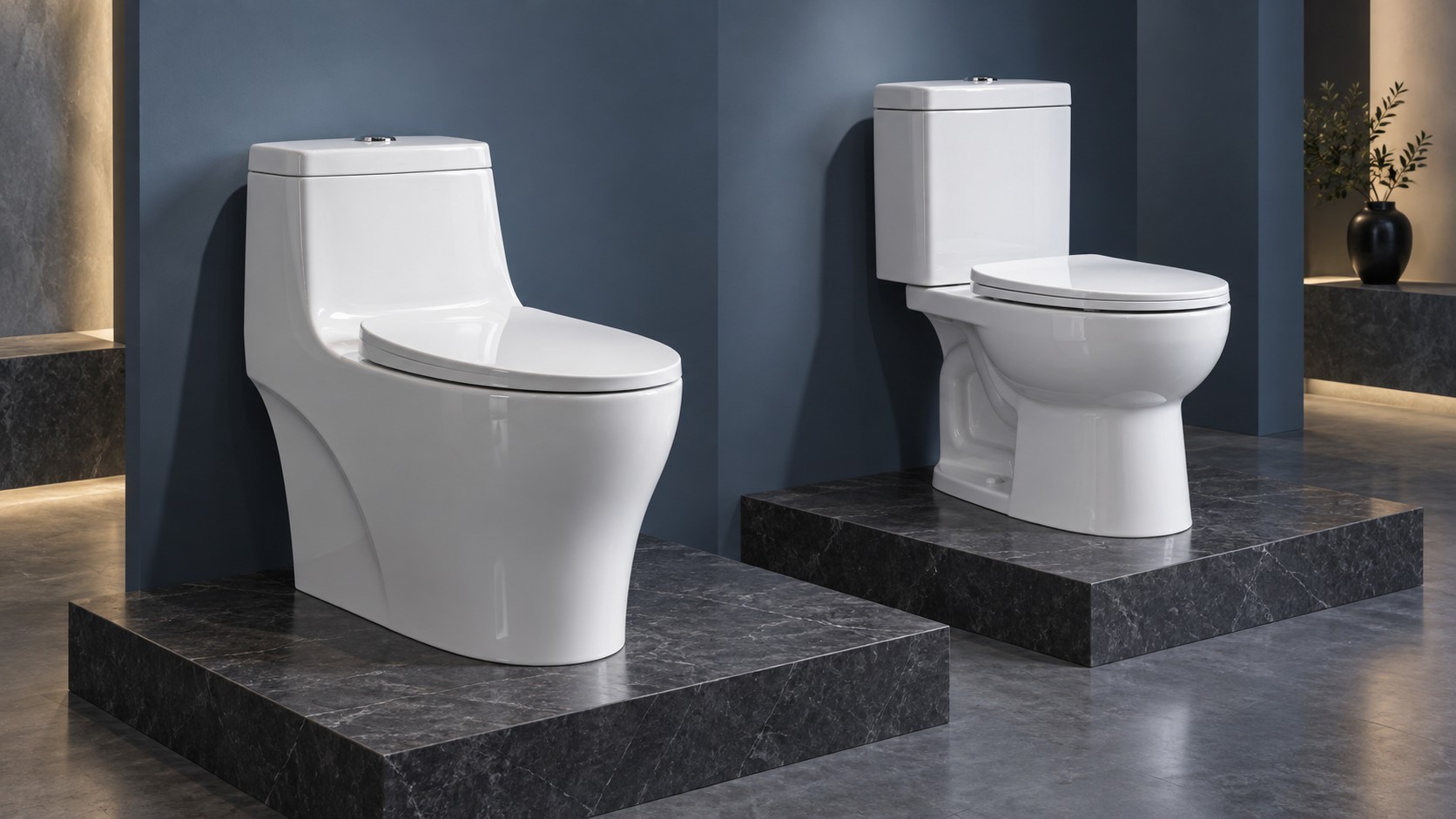
A one-piece vs two-piece toilet decision is often reduced to a cleaner silhouette versus a lower price. That leaves out the issues that matter after the showroom: carton size, breakage exposure, lifting, floor access, tank-to-bowl sealing, spare parts and whether the approved bowl and cistern still match when repeat orders arrive.
Neither construction guarantees a stronger flush, lower water use or easier installation. Performance belongs to the complete tested model and its fittings. The useful comparison is therefore operational: which format fits the room, installer, sales channel, warehouse and after-sales system for the project? For the homeowner-level cleaning and installation overview, start with our general one-piece vs two-piece toilet comparison; this guide focuses on bulk-order operations.
Key takeaways
- Compare complete models: Construction type alone does not prove flushing performance, efficiency or comfort.
- Price the landed risk: Include packaging volume, handling, damage, installation time and spare-parts support.
- Freeze the configuration: Bowl, cistern, trim, seat, connector and carton must match the approved sample.
One-piece vs two-piece buyer matrix
| Decision | One-piece check | Two-piece check |
|---|---|---|
| Handling | Whole-unit weight and access | Two lifts and assembly control |
| Cleaning | Integrated tank-to-bowl body | Joint and contact surfaces |
| Installation | Fixing and connector access | Gasket, bolts and tank level |
| Logistics | Carton cube and full-unit damage | Pairing and component control |
| Service | Internal parts and full ceramic body | Internal parts plus tank compatibility |
01 BASIC FORMAT
What is the difference between a one-piece and two-piece toilet?
A one-piece toilet forms the bowl and cistern body as one ceramic assembly, although the seat and internal fittings remain separate service parts. A two-piece toilet uses a separate bowl and ceramic cistern joined during installation. Product names such as close-coupled, back-to-wall or siphonic describe other attributes and should not be treated as synonyms for one-piece or two-piece construction.
Ask for the exact section drawing, overall dimensions, rough-in, outlet direction, fixing method and included components. Two products can share the same construction label while differing greatly in projection, seat height, water surface, trapway, tank trim and installation access. Compare model to model, not category to category.
02 CLEANING AND JOINTS
Does a one-piece toilet stay cleaner?
A one-piece shell removes the external tank-to-bowl joint and usually leaves fewer ledges around that connection, so routine wiping can be simpler. It still has seat hinges, fixing points, a flush interface and floor or wall junctions that collect dust. Rimless or skirted styling may affect cleaning more than the number of ceramic pieces.
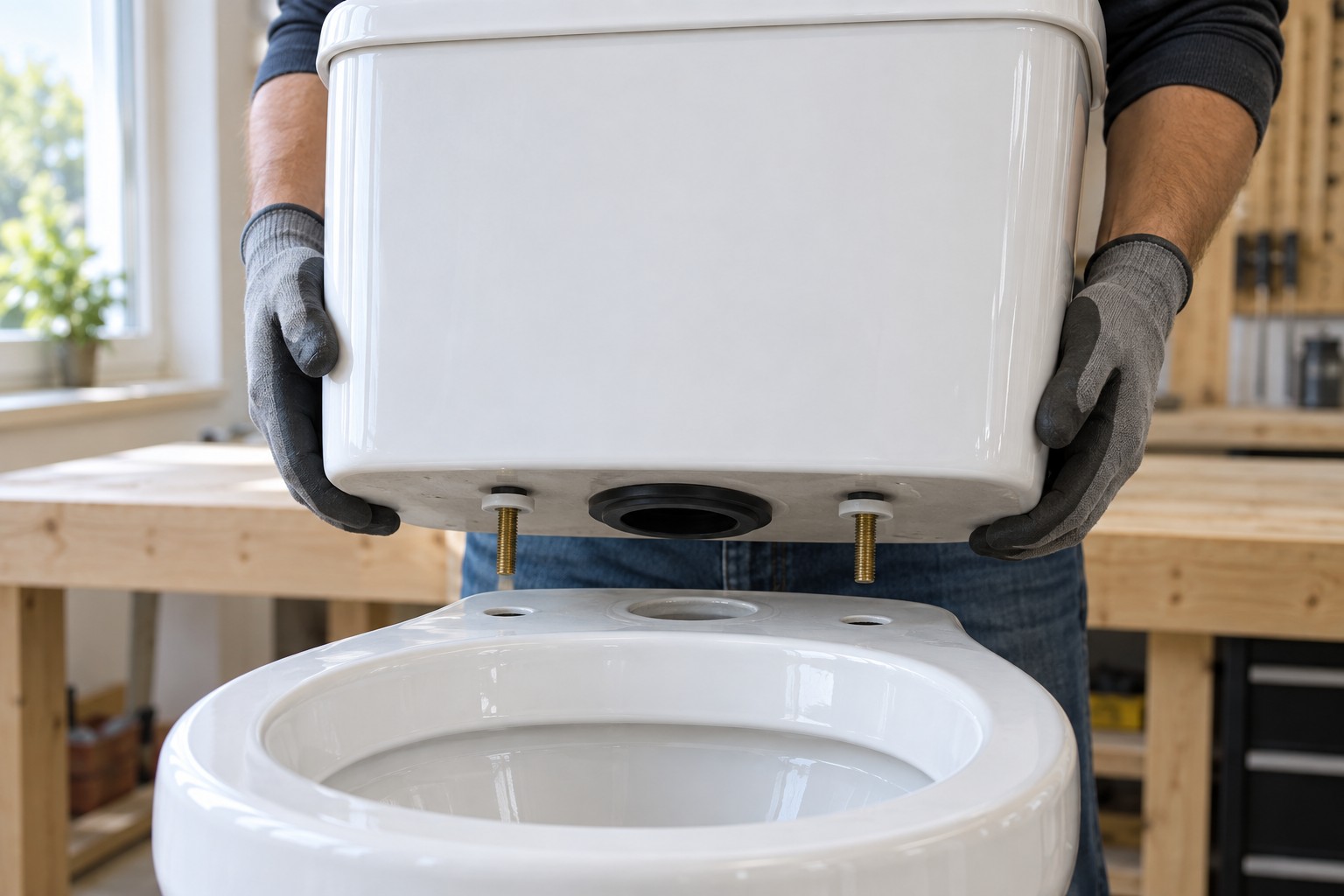
A two-piece model adds a bolted joint, gasket and contact surfaces between tank and bowl. This is not automatically a defect: it is a controlled serviceable connection. Buyers should check gasket specification, bolt access, tank stability and the approved tightening method. A poorly matched or over-tightened joint can leak or stress the ceramic regardless of price.
03 INSTALLATION
Which toilet is easier to carry and install?
One-piece toilets arrive as a larger and heavier ceramic unit. Fewer assembly steps may save time at the fixture, but safe lifting, stair access, narrow doorways and accurate placement become more important. Confirm how installers reach floor fixings and the outlet connector after the body is lowered into position.
Two-piece toilets divide the carrying weight and can be easier to move through constrained sites. The installer must then assemble and level the cistern, fit the gasket and confirm tank-to-bowl contact. The better option depends on site labour and access. A mock installation with the actual connector reveals more than a generic promise of easy fitting.
04 PERFORMANCE
Does one construction flush better or use less water?
No general rule makes one construction flush better. Bowl geometry, trapway, water delivery, flush valve, fill valve, tank waterline and the tested volume act as a system. Compare laboratory evidence and factory approval records for the exact configuration. A shape that looks modern can still perform poorly if the water path or fittings are mismatched.
Where efficiency labels or market certification are required, verify the exact model and components named in the listing. EPA WaterSense, for example, evaluates qualifying tank-type toilets against water-efficiency and performance criteria. A label on a similar family model does not automatically cover a changed bowl, tank or valve.
05 PACKAGING AND LANDED COST
How does construction affect shipping and breakage risk?
A one-piece toilet usually needs a larger carton and concentrates more value in one ceramic unit. Carton cube, pallet pattern, container utilization and manual handling can therefore change the landed cost. The same integrated shape can reduce loose-component mistakes, but damage to either the bowl or cistern normally affects the whole unit.
Two-piece sets can be packed together or managed as matched cartons, depending on the supplier. This may improve handling flexibility, but creates pairing risk: the correct bowl, tank, fittings and seat must stay together through warehouse and delivery. Approve packaging by drop and handling requirements appropriate to the sales channel, then inspect real packed samples.

06 AFTER-SALES
Which format is easier to repair and support?
Most routine service involves the seat, fill valve, flush valve, button or seal rather than replacing ceramic. Check whether those parts are accessible without removing the toilet and whether local replacements match thread, height, actuation and flow requirements. Keep part codes and adjustment limits in the product file.
A two-piece cistern can sometimes be replaced separately if a compatible part remains available; a one-piece body removes the joint but may make a ceramic break a full-unit issue. Do not assume long-term interchangeability. For repeat orders, lock mating dimensions and retain approved spare kits before the supplier changes a component generation.
07 BUYER DECISION
What should a bulk buyer approve before ordering?
Approve the exact model drawing, rough-in, outlet, seat height, flush volume, trim codes, seat, connector, fixing access, carton dimensions, net and gross weight, pallet plan and spare-parts list. Compare landed cost rather than ex-factory unit price. Include a production sample, installation trial and packaging review in the approval route.
Choose one-piece when the integrated appearance and wiping convenience justify handling and replacement trade-offs. Choose two-piece when divided handling, component service and commercial flexibility fit the channel better. Chengda can prepare matched product and packing information, but the final decision should follow the destination market, site and service plan.
FAQ COMMON QUESTIONS
Frequently asked questions
Is a one-piece toilet always more expensive?
Often, but not universally. Ceramic complexity, fittings, packaging, freight, brand and order volume all affect landed cost.
Can one-piece toilets flush better?
Construction alone does not decide performance; compare the exact tested bowl, cistern fittings, waterline and flush volume.
Which type is easier to install?
One-piece units avoid tank assembly but are heavier; two-piece units are easier to carry but require a controlled tank-to-bowl connection.
Can a two-piece tank fit another bowl?
Only when the manufacturer confirms the interface, gasket, bolt spacing, water path and approved configuration.