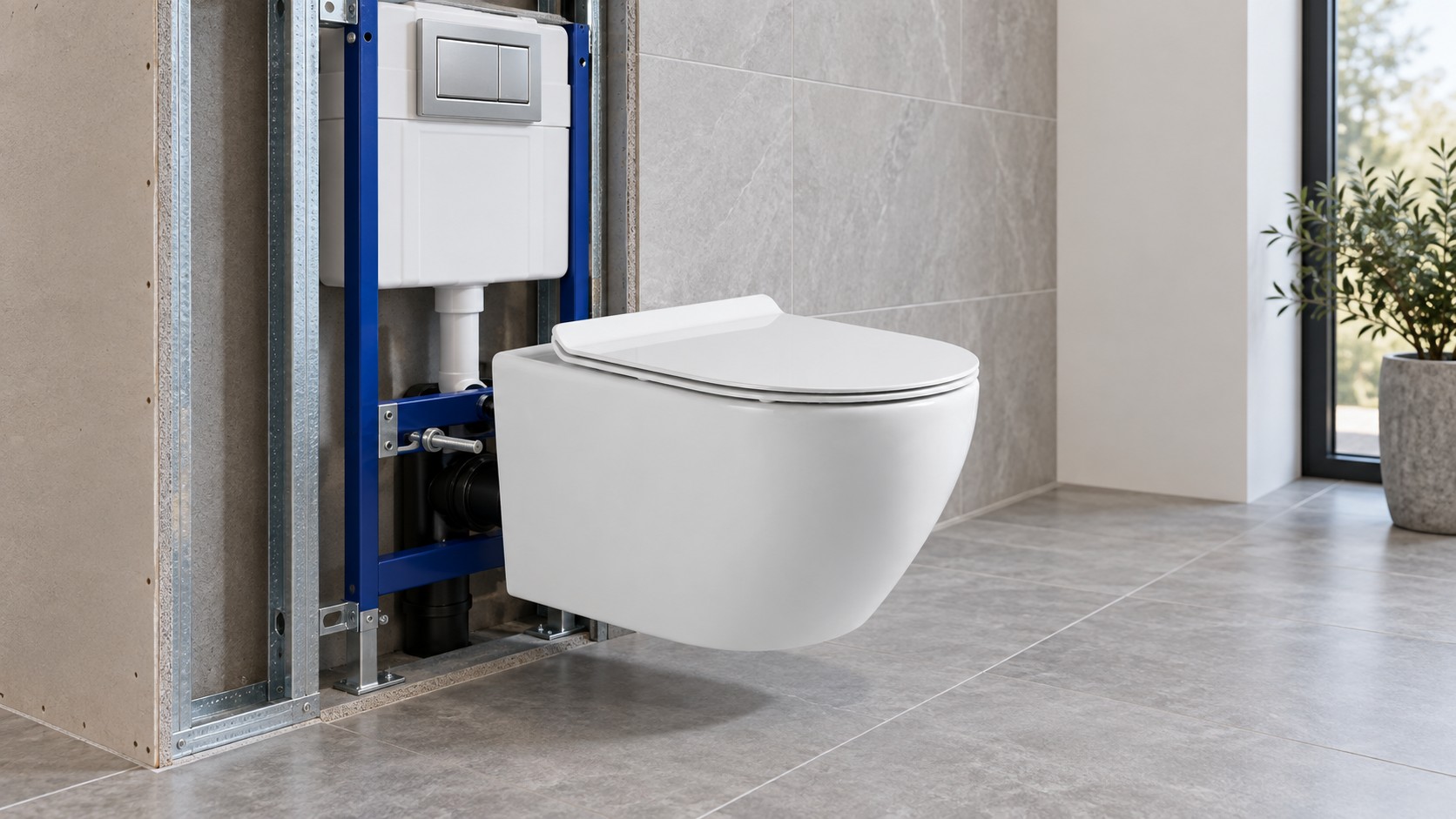
The real wall hung toilet pros and cons come from the complete system, not from the ceramic bowl alone. A wall-hung toilet can open the floor for cleaning, reduce visual bulk and allow the mounting height to be selected during rough-in. It also requires a compatible carrier, concealed cistern, wall build-up, horizontal waste connection, flush plate and planned service access. That makes early coordination more important than with a simple floor-to-floor replacement.
For new construction or a full renovation with open walls, these requirements can be integrated into the programme. For a finished bathroom, conversion may involve plumbing changes, framing, waterproofing, wall finish and extra labour. This guide separates practical advantages from project costs so homeowners and professional buyers can decide from drawings, access and lifetime maintenance rather than appearance alone.
Benefits, trade-offs and conditions
| Decision area | Potential benefit | Cost or condition |
|---|---|---|
| Cleaning | Open floor below the bowl | Wall joints and plate still need access |
| Visual space | Less visible ceramic bulk | A new prewall may reduce usable room depth |
| Seat height | Set during rough-in within the carrier range | Hard to change after wall closure |
| Installed cost | Coordinated premium system | Carrier, wall work, finish restoration and labour |
| Repairs | Routine valves may be reached through the plate | Hidden leaks or structural faults can need deeper investigation |
Key takeaways
- The open floor is a real benefit: Cleaning is simpler around a bowl with no floor pedestal, and the room can feel less crowded.
- The wall becomes part of the product: Carrier, anchors, cistern, connectors and finish must be coordinated before closure.
- Service access must be designed: Choose a supported system whose working parts can be reached through the intended opening.
01 HOW IT WORKS
What is included in a wall-hung toilet system?
A wall-hung toilet combines a visible ceramic bowl with a structural carrier, concealed cistern, inlet, waste connection, actuator plate, seat and finished wall. The carrier supports the bowl and the plate normally covers the routine cistern service opening.
Those parts must be approved as one package. Use the separate bowl-to-carrier compatibility checks for rod spacing, connectors, flush settings and interface verification.
02 PRACTICAL BENEFITS
What are the main advantages of a wall-hung toilet?
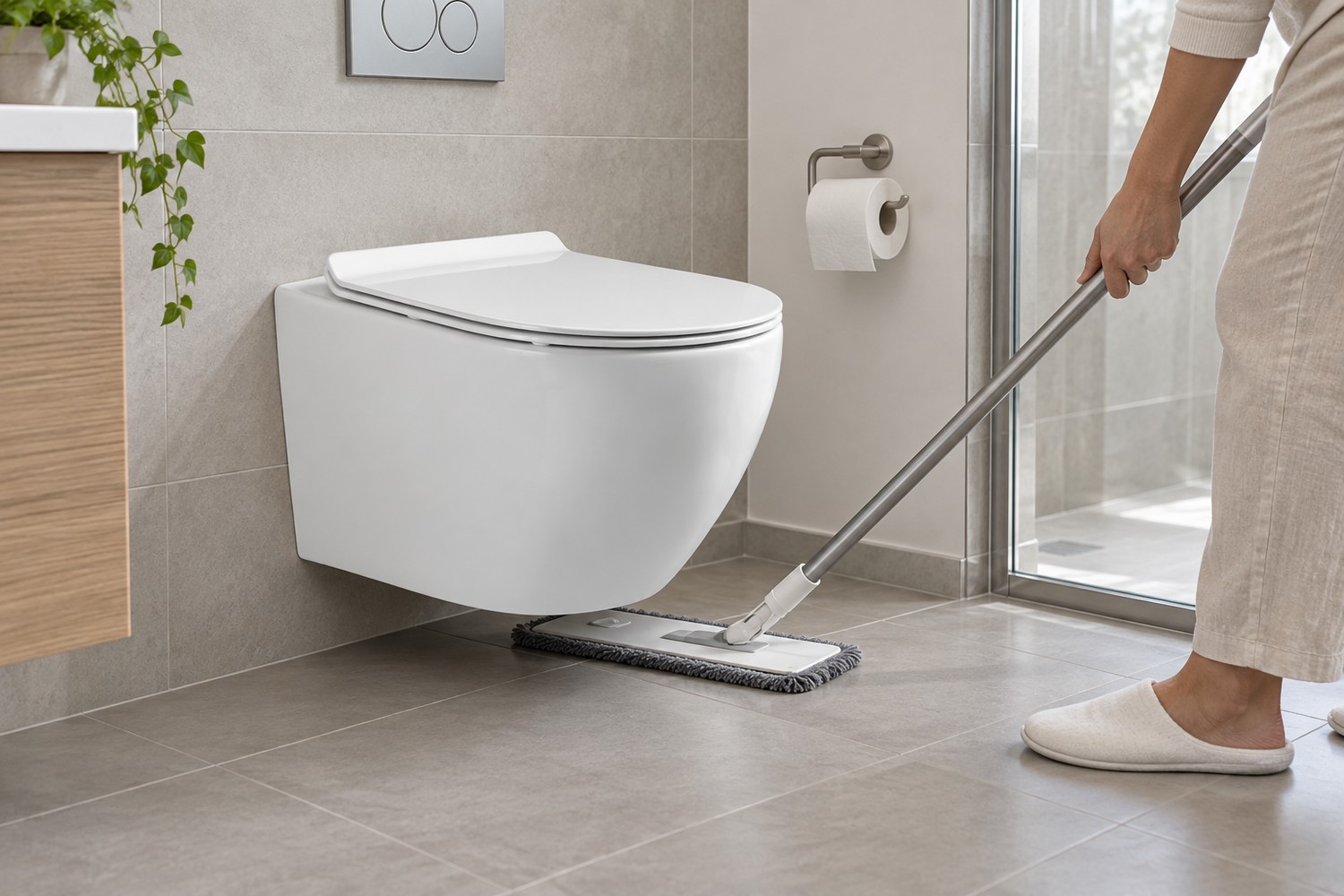
With the pedestal removed, the finished floor continues beneath the bowl. A mop can reach the area without tracing a ceramic base, which is useful in small bathrooms and high-cleaning environments. The floating form also reveals more continuous floor, helping the room feel visually lighter. This is an everyday maintenance and design benefit, although it does not replace good cleaning practice.
Many carrier systems permit the bowl height to be set during installation, allowing the design team to match an approved finished seat level. The visible projection can be compact because the tank moves into a wall or prewall. These advantages are strongest when the wall system is already part of a planned construction project.
03 SPACE REALITY
Does a wall-hung toilet really save bathroom space?
A wall-hung bowl can reduce visible depth and keep the floor open, but the carrier and cistern still occupy physical space. Compare both completed options from the same original structural-wall or room datum. If a prewall is added, include its frame, board, tile and services before claiming a saving. Detailed compact examples remain in the short-projection wall-hung dimensions guide.
Door movement and required user clearance may matter more than ceramic depth. Draw both completed wall faces, the front of each bowl and every moving obstruction on one scaled plan before deciding.
04 CONSTRUCTION COST
Why is wall-hung toilet installation more involved?
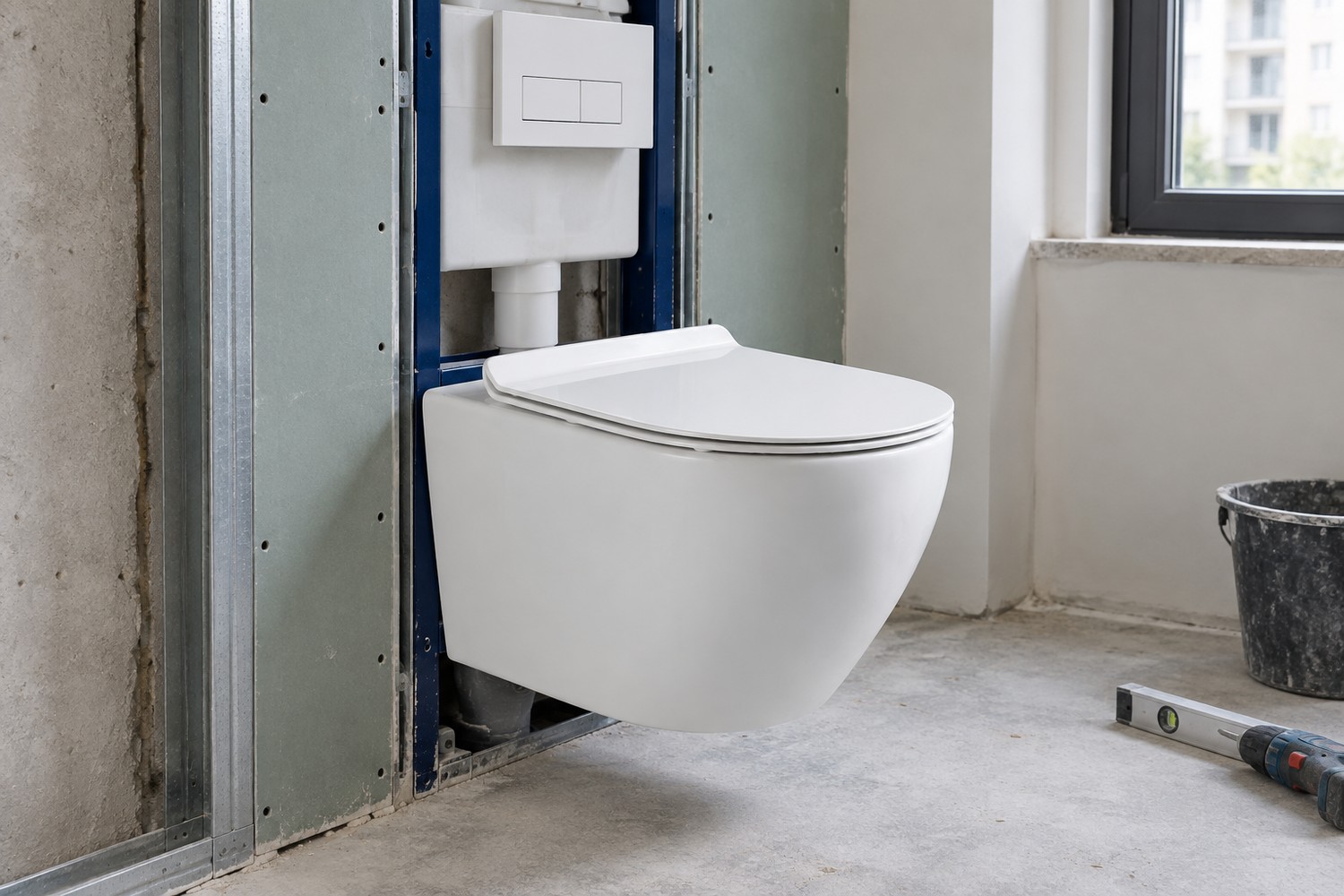
Total installed cost can include the carrier and cistern, actuator plate, connectors, opening or building the wall, relocating waste and supply, waterproofing, board and tile, finish restoration and skilled labour. Quote these items as one scope instead of comparing a ceramic bowl price with a complete floor-mounted toilet.
Coordination also carries cost: the height, outlet, wall build-up and service opening must be fixed before closure. The separate installation planning and wall preparation guide covers the construction sequence.
05 LIFETIME ACCESS
Are wall-hung toilets hard to repair?
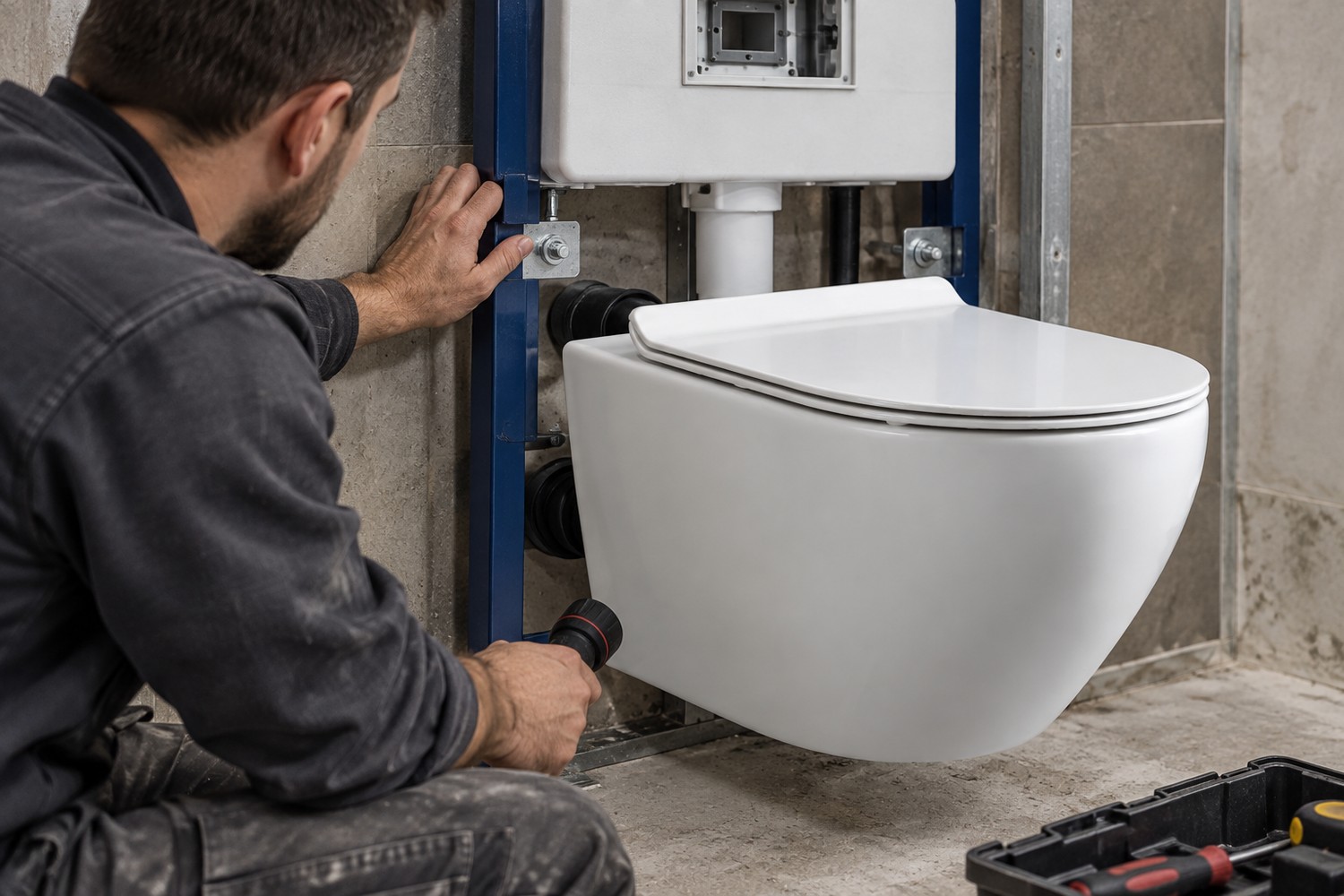
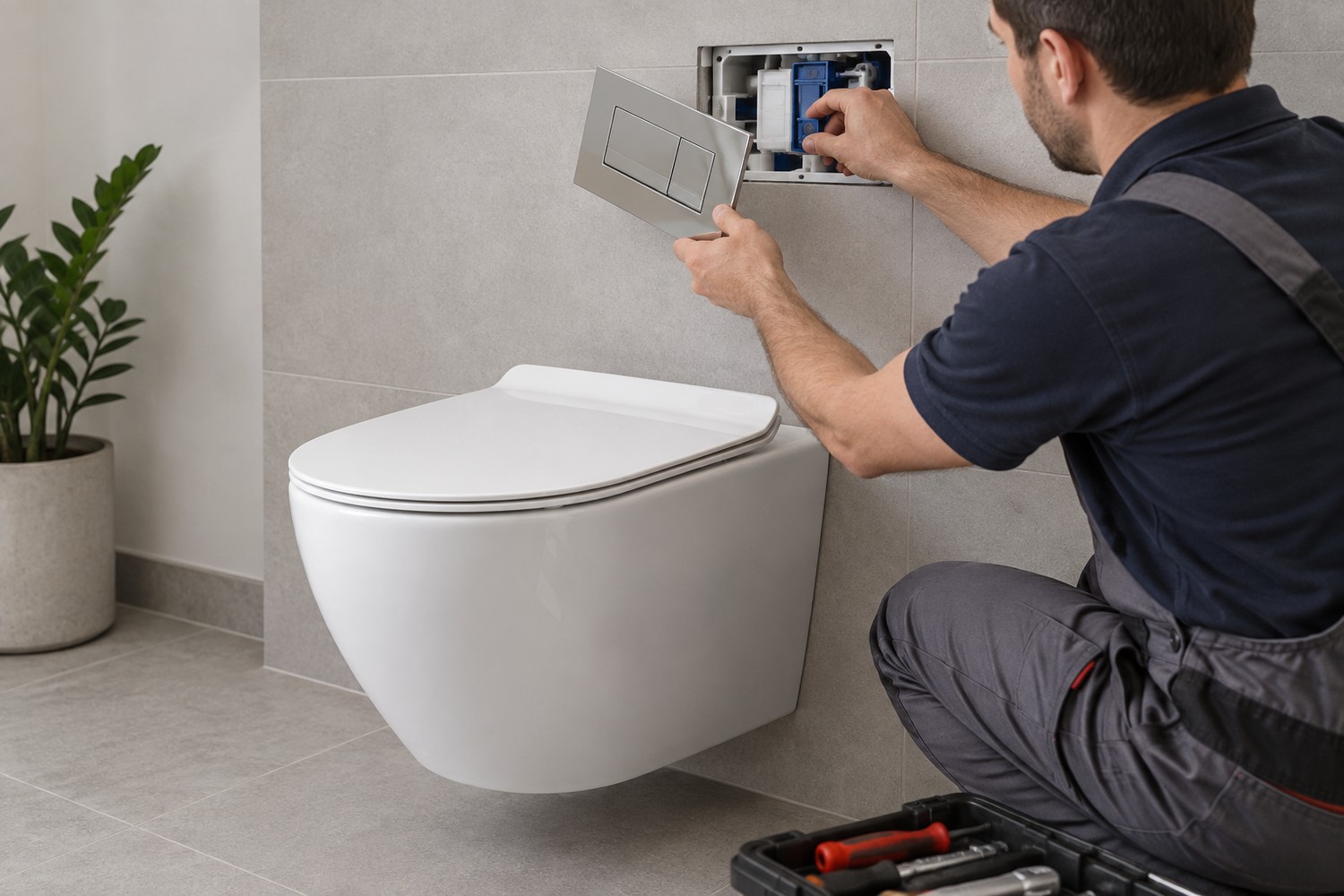
Routine cistern valves may be reached through a removable actuator plate; Geberit describes tool-free access for its own system. Treat that as one manufacturer example, not a promise for every concealed cistern.
Connector leaks, damaged anchors or non-serviceable hidden parts can require deeper investigation or selective opening. Before buying, distinguish plate-access valve service, faults that may need wall investigation, and who will stock the exact plate, valve, seal and connector in the destination market.
06 TRADE-OFFS
What are the disadvantages of a wall-mounted toilet?
The complete purchase includes the bowl, compatible carrier and cistern, actuator plate, connectors, seat and installation materials. Labour may include opening or building a wall and restoring its finish. The height and hidden interfaces become difficult to change after closure. These costs can outweigh the visual and cleaning benefits in a simple replacement project.
The specification also carries compatibility risk. A replacement bowl must match the existing carrier interfaces; an unsupported plate or valve can complicate maintenance years later. For markets with limited concealed-system service networks, a conventional floor toilet may be easier to support. The right choice depends on the project's supply chain, not a universal ranking.
07 BEST USE CASE
When is a wall-hung toilet worth choosing?
Wall-hung systems are strongest in new construction or full renovation where the carrier, wall and services can be planned together. A like-for-like replacement, limited budget, unsuitable wall or weak local parts support often favours a floor-mounted option.
Project-fit decision
| New build or full renovation | Consider wall-hung when the full system and service plan can be designed before closure. |
|---|---|
| Replace one existing toilet | Price the wall, plumbing and finish work before assuming the visual benefit is worth it. |
| Parts support is uncertain | Choose only after the destination team accepts named spares and responsibilities. |
A skirted or back-to-wall floor-mounted toilet may offer a cleaner visual base with a simpler service model; compare alternatives in the close-coupled versus back-to-wall guide.
08 PROCUREMENT
What should project buyers approve before ordering wall-hung toilets?
Before requesting a quote, provide the intended carrier, wall section, finished-floor datum, outlet and supply, target seat height, plate, room drawing, destination market and quantities. Assign who supplies the carrier, connectors, seat, plate and future spares. Use the carrier compatibility guide for the technical release.
Chengda can help compare wall-hung ceramic bowls and dimensional information, but the project team must approve the complete installed system and service responsibility.
09 SAMPLE CONTROL
How should a wall-hung toilet sample be tested before a bulk order?
Before a bulk order, obtain one complete-system sample record: named carrier and connectors, bowl and seat revision, finished wall build-up, stability and water test, plate access, cleaning access and user clearance. Keep the approved interface documents with the sample.
If the carrier generation, connector kit, bowl revision, wall thickness or responsible parts supplier changes, reopen compatibility approval. A sample result applies only to the tested combination.
FAQ COMMON QUESTIONS
Frequently asked questions
Do wall-hung toilets save space?
They can reduce visible projection and open the floor, but the carrier, cistern and finished prewall depth must be included in the comparison.
Can a wall-hung toilet fall off the wall?
A correctly selected carrier and properly anchored installation are designed to support the bowl. Capacity and fixing requirements are model-specific and must be followed.
Can a concealed cistern be repaired without breaking tiles?
Routine working parts are often accessed through the flush-plate opening, but not every possible fault is guaranteed to be reachable there.
Is a wall-hung toilet good for renovation?
It suits full renovations with open walls better than cosmetic replacements, because plumbing, framing and finishes must be coordinated.
Are wall-hung toilets easier to clean?
The open floor around the bowl is easier to reach because there is no floor pedestal, though the bowl and surrounding wall still require normal care.
Can any wall-hung bowl fit any carrier?
No. Rod spacing, inlet, waste, connectors, contact surface and operating conditions must be checked as a compatible system.