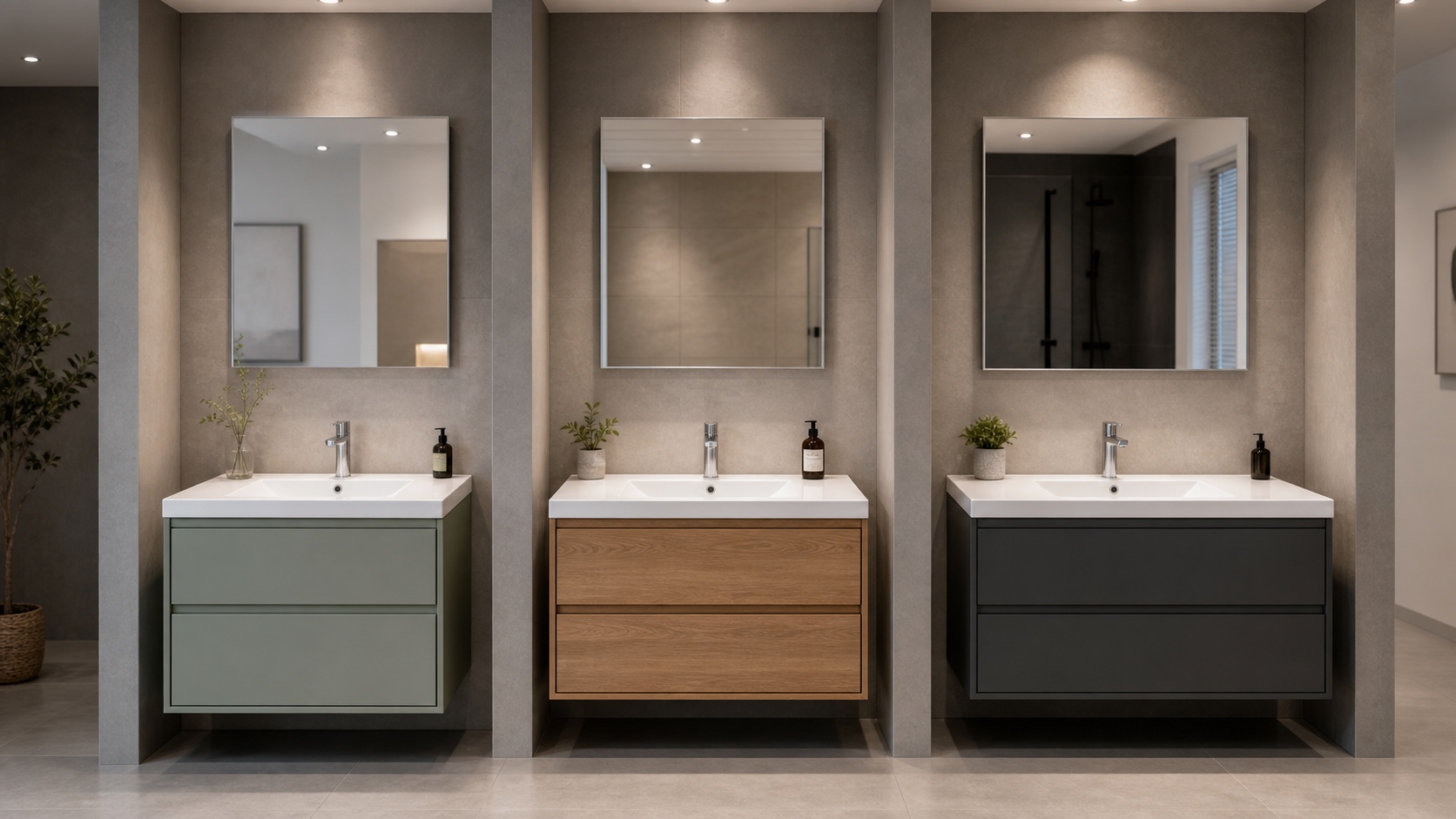
A thin rim vanity basin can give bathroom furniture a cleaner, lighter appearance, but the buying decision is more technical than choosing a width from a catalogue. Importers and cabinet manufacturers must coordinate the ceramic basin, furniture carcass, top support, drawer, tap, drain and installation tolerance. Two products sold as “800 mm vanity basins” may have different projections, underside shapes and drain centres. This guide explains how to build a ceramic vanity basin range that fits the cabinet in production, not only in a showroom photograph.
Key takeaways
- Nominal width is not enough: external size, projection, underside support and plumbing centres all affect the cabinet.
- Approve a physical system: dry-fit production-representative ceramics on the real cabinet before locking tooling or board cutting.
- Control ceramic variation: the cabinet and support method need enough tolerance for fired ceramic, without leaving visible gaps.
01 PRODUCT DEFINITION
What is a thin-rim vanity basin?
A thin-rim vanity basin is a ceramic fixture designed to form the upper wash surface of a bathroom cabinet. Its front and side edge appears slimmer than a conventional furniture basin, while the ceramic still provides the bowl, tap deck, overflow and outer top surface. The basin normally rests on or is fixed to a cabinet structure designed for that exact family.
It should not be confused with a countertop vessel basin. A vessel basin sits as a separate bowl on a worktop, so the worktop remains visible around it. A vanity basin replaces most or all of that top surface and defines the cabinet width. It is also different from a classic wall-hung basin, even when wall fixings provide additional security.
“Thin rim” is a design description, not one universal measurement. The visible edge, hidden strengthening geometry and support surface can vary by model. Buyers should approve the complete cross-section rather than request the thinnest possible edge without checking strength, firing behaviour and packing.
02 SIZE RANGE
Which vanity basin sizes should a buyer stock?
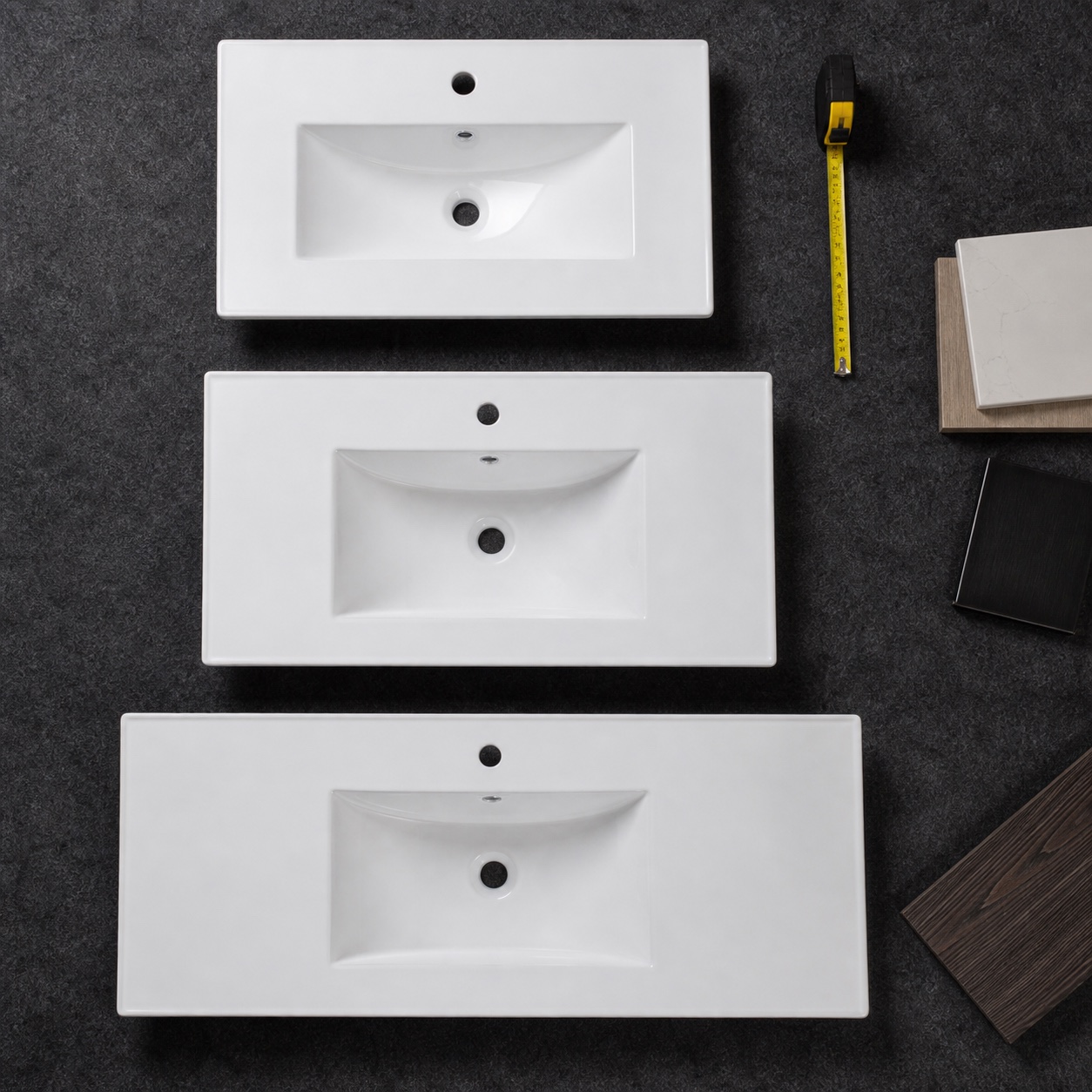
Start with the furniture programme, target rooms and local retail conventions. Compact guest bathrooms may need a narrow projection. Main bathrooms often use 600–900 mm single-bowl units, while larger apartments and hotels may use wider tops with landing space or double-user layouts. A useful range is not simply every 100 mm step; it covers real cabinet modules without duplicating slow-moving sizes.
Chengda’s product library shows why exact dimensions matter. VB107 is 610 × 360 × 170 mm, giving a shallow projection for narrow rooms. VB114 is 810 × 470 × 180 mm, a broader everyday furniture format. VB118 is 1210 × 465 × 170 mm for a wide cabinet. These are external ceramic dimensions, not automatic cabinet cutting dimensions. The cabinet maker still needs the approved underside and support information for the exact SKU.
Record both millimetres and inches for export sales, but keep one manufacturing master. Avoid rounding 610 mm to “24 inches” and then asking a furniture factory to build exactly 24.000 inches. State which dimensions are nominal sales names and which are inspection dimensions with agreed tolerances.
03 CABINET MATCHING
How do you match a ceramic vanity basin to a cabinet?
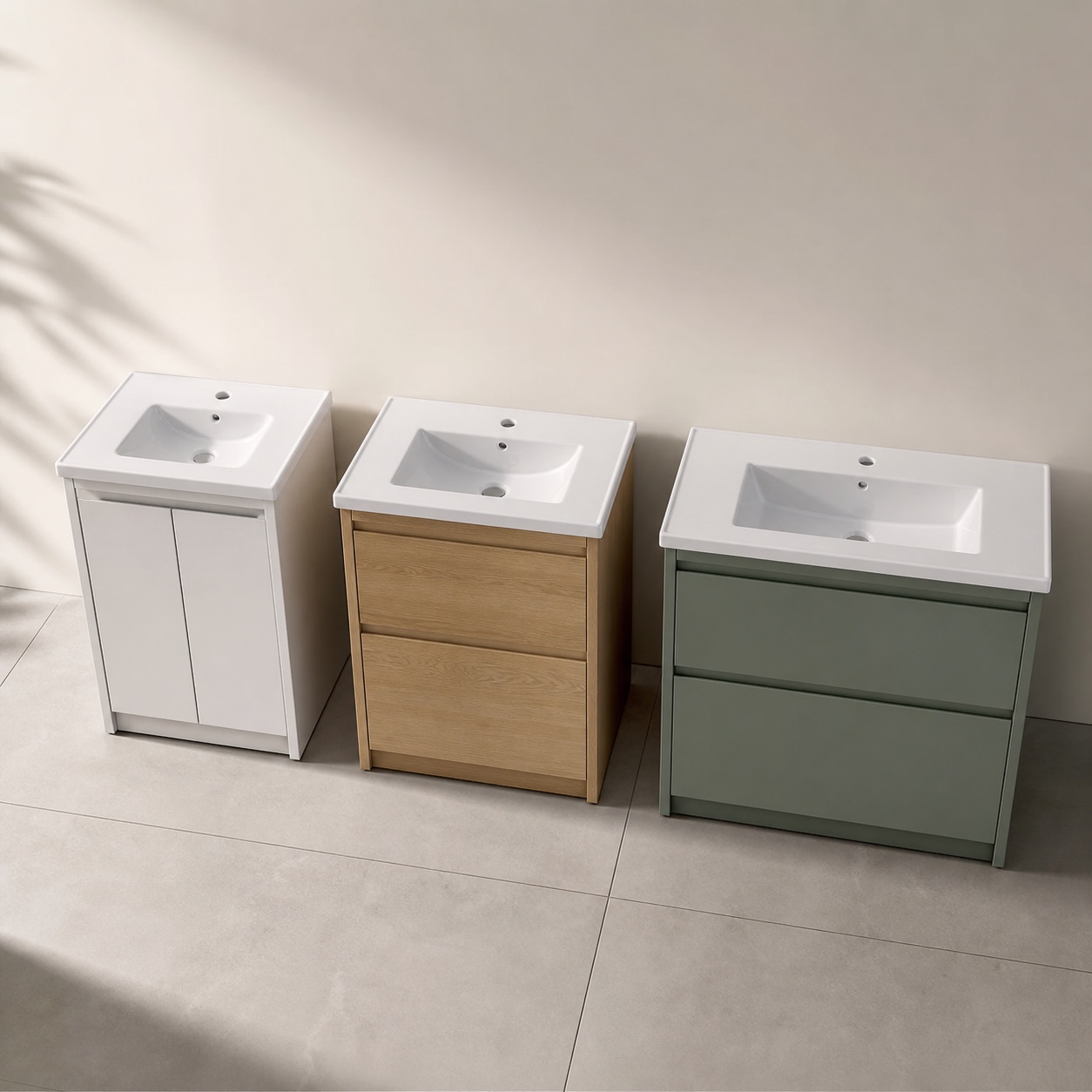
Begin with the external width and depth, then inspect the underside. Identify the areas that may carry load, the bowl envelope, drain body, overflow channel, tap shank and fixing points. Confirm the intended overhang or flush relationship at the front and sides. A cabinet top rail that looks clear in plan view may collide with the sloping bowl below.
Next, model the real tolerance chain: fired ceramic width and flatness, cabinet board thickness, edge banding, carcass squareness, wall variation and installer adjustment. Do not make the furniture opening so tight that a basin at one end of the approved ceramic tolerance cannot be installed. Do not make it so loose that the joint becomes visibly uneven or depends on a thick bead of sealant.
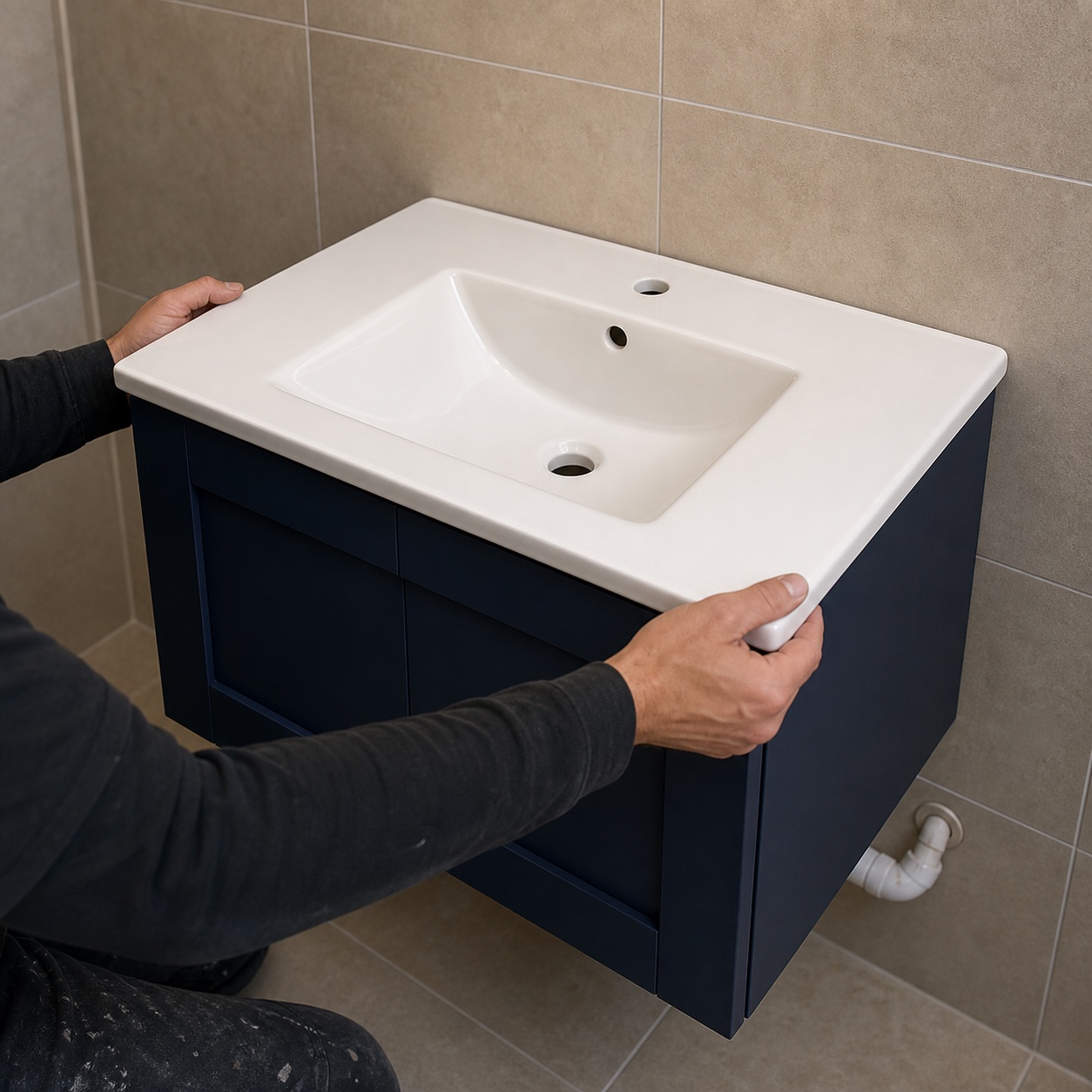
A technical drawing is not always a cutting template. Drawings explain dimensions; a template defines a cut or support profile for a particular installation method. Mark revision numbers on both. Before mass production, place at least several representative basins from the approved process on a real cabinet and check rocking, contact, overhang, wall fit and fastening access.

04 BOWL & SURFACE
Which bowl details affect daily use?
External size tells only part of the story. Compare internal bowl length, width and usable depth; drain position; rear slope; corner radius; overflow location; and the landing space beside the bowl. A long outer basin with a compact centred bowl creates storage space, while a wider bowl may suit hospitality use but reduce the dry deck.
Inspect how water returns from the tap deck to the bowl. Flat-looking ceramic surfaces still need controlled falls so routine splashes do not remain against the wall or cabinet joint. Check the transition around the tap hole and overflow. Sharp visual lines should not create difficult-to-clean internal corners or thin glaze coverage.
Rim appearance also affects handling. Workers and installers naturally grip long basins at the edges. Packaging and instructions should support the body rather than encourage lifting by a vulnerable corner. Thin-rim design must be evaluated together with ceramic section, firing support and carton protection.
05 TAP & DRAINAGE
How should the tap, overflow and drawer be coordinated?
Confirm the tap-hole diameter and centre, available deck depth, mixer base size, shank length and access for the fixing nut. The tap body must clear the backsplash and mirror cabinet, while the spout should deliver water toward the bowl’s useful centre. A fashionable tall mixer is not automatically correct for a shallow integrated vanity basin.
Below the ceramic, map the drain, overflow route, trap and supply hoses against the drawer. The top drawer may need a shaped cutout, reduced depth or a space-saving trap. These decisions should be made with real fittings, because catalogue silhouettes rarely show the full locknut, hose bend and service clearance.
Specify whether the waste is supplied, whether the overflow requires a compatible slotted waste, and who provides the trap. Confirm destination-market thread and pipe conventions. Water-test the approved combination for drainage, leakage, overflow function and splash before the cabinet drawing is released.
06 PROJECT APPLICATIONS
Where do thin-rim vanity basins work best?
They are well suited to coordinated furniture collections, apartment developments, hotel guestrooms and retail programmes where buyers want one ceramic language across several cabinet widths. A shallow-projection model can help a narrow room, while a wide basin with landing space can create a premium main-bathroom offer.

For projects, control the entire room schedule. Record the basin and cabinet model together, plus tap, waste, mirror, wall finish and installation height. If several factories supply different parts, appoint one drawing as the dimensional master and close every conflict during sample approval.

For retail, show customers the complete fitted cabinet rather than a ceramic basin alone. Keep spare model identification accessible after installation. The visual simplicity of a thin rim is valuable, but the long-term product is the full washplace: ceramic, storage, plumbing and service access.

07 QUALITY CONTROL
What should importers inspect on ceramic vanity basins?
Check overall dimensions, diagonal difference, top flatness, edge straightness, wall-side line, bowl symmetry, drain and tap-hole position, overflow opening, glaze coverage and visible surface defects. Test the basin on the approved cabinet gauge. A product can pass a loose dimensional check yet rock on the furniture or leave an uneven front line.
Use a written inspection method. State where each dimension is measured, how the basin rests during measurement and which surfaces are appearance-critical. Compare production against a signed sample under consistent light. Run water through assembled random units to check drainage, ponding, overflow and leakage.
For a family of widths, inspect visual consistency as well as each SKU. Buyers expect the bowl shape, rim language, tap position and white colour to read as one series. Our ceramic basin glaze guide explains how lighting and sample control affect colour approval.
08 ORDER & EXPORT PACKING
What belongs in a complete vanity basin order file?
Lock the ceramic and furniture relationship
1. SKU and revision. 2. External dimensions. 3. Bowl and underside drawing. 4. Cabinet support method. 5. Agreed ceramic tolerances. 6. Tap-hole data. 7. Overflow and waste. 8. Trap and drawer clearance. 9. Fixing and sealant method. 10. Approved sample. 11. Inspection gauge and defect criteria. 12. Carton, pallet and spare policy.
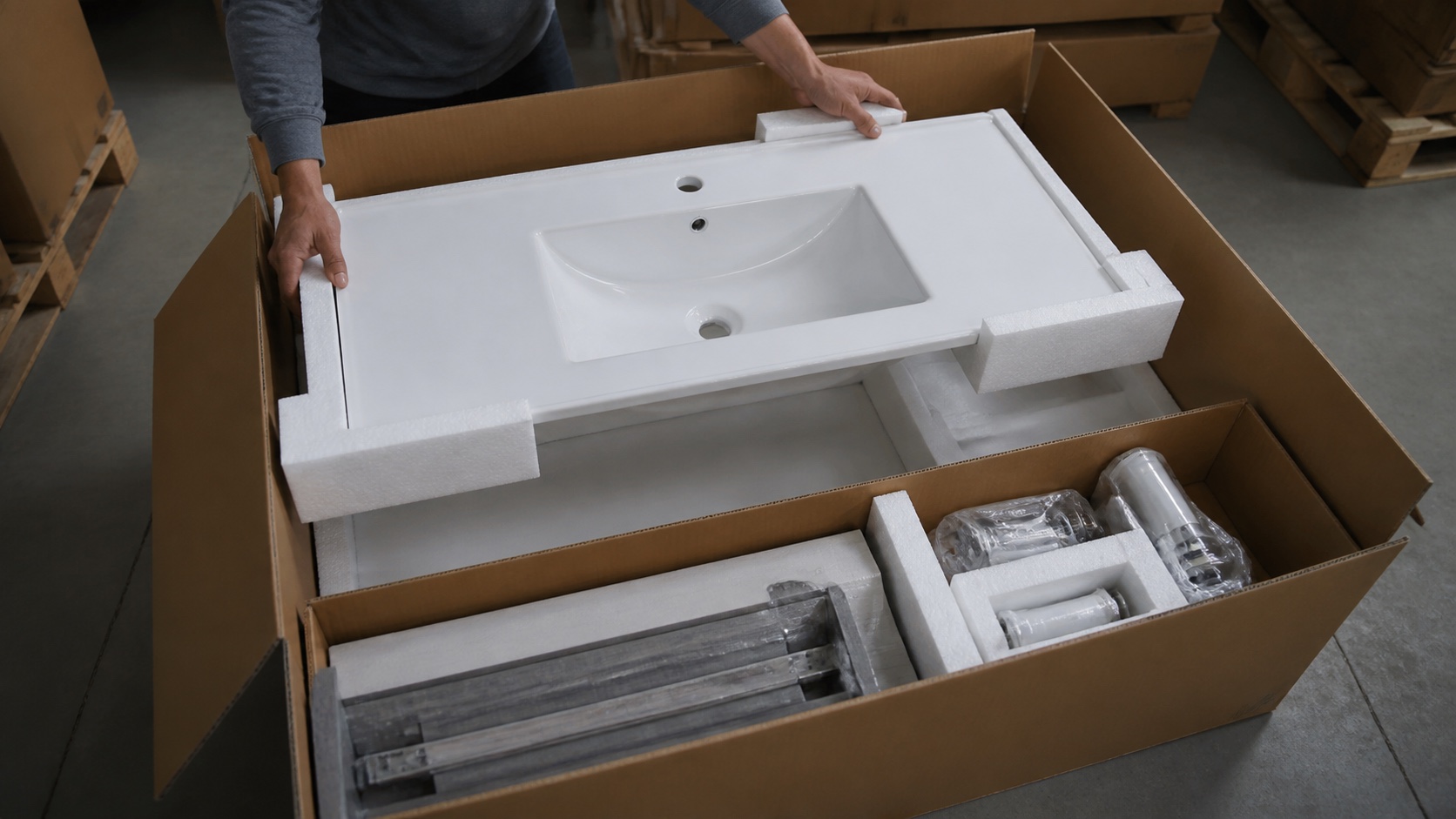
Long ceramic tops need model-specific cushioning. Protect corners, thin visible edges, tap decks and the underside without concentrating load on the bowl. Check how cartons are carried, stacked and palletised. Packaging that survives one individual courier parcel may not be the best system for a full export container, and the reverse is also true.
Run packaging validation on the actual model and pack-out. During pre-shipment inspection, verify carton identity, dimensions, accessories and random fit on the cabinet gauge. Link basin and cabinet labels so mixed sizes are not discovered only at the installation site. See our sanitaryware inspection guide for wider order controls.
Chengda supplies ceramic vanity basins in compact, standard and wide furniture sizes for importers, cabinet manufacturers and projects. Send the cabinet module, required projection, room type, tap and drain layout, finish, target market and quantity. We can shortlist existing VB models and coordinate samples, drawings, quality checks and export packing.
The best thin-rim vanity basin is not simply the lightest-looking ceramic. It is the model that fits the cabinet repeatedly, drains correctly, survives delivery and remains easy to install and service.
FAQ COMMON QUESTIONS
Frequently asked questions
What is a thin-rim vanity basin?
It is a ceramic washbasin designed to sit directly on a matching bathroom cabinet, with a visually reduced front and side rim. It is different from a vessel bowl placed on a separate countertop.
Can one vanity basin fit any cabinet of the same nominal width?
No. Buyers must compare exact external dimensions, underside geometry, support surfaces, drain position, tap-hole centre and the approved fixing method.
Should the cabinet be made before the ceramic sample is approved?
No. Approve production-representative ceramic samples and use them to validate the cabinet top, supports, drawer clearance and installation sequence before mass production.
How much size variation should a ceramic vanity basin allow?
Ceramic firing creates normal dimensional variation. The acceptable tolerance must come from the agreed product specification and be tested against the cabinet and template, not guessed from a nominal size.
Do thin rims break more easily in export shipping?
Thin visual edges need well-designed support and packaging, but damage risk depends on the complete geometry, firing quality and carton system. Packaging should be validated with the actual model.
What files should a cabinet buyer request?
Request a dimensioned drawing, installation instructions, cutout or support template where applicable, approved sample record, tap and drain data, packing specification and inspection criteria.